

Politics
Trump seeks to strike back in crucial State of the Union

- Democrats plan boycotts, silent protests during speech.
- Cost-of-living worries test Trump’s ‘Golden Age’ message.
- Iran questions hang over foreign policy signals tonight.
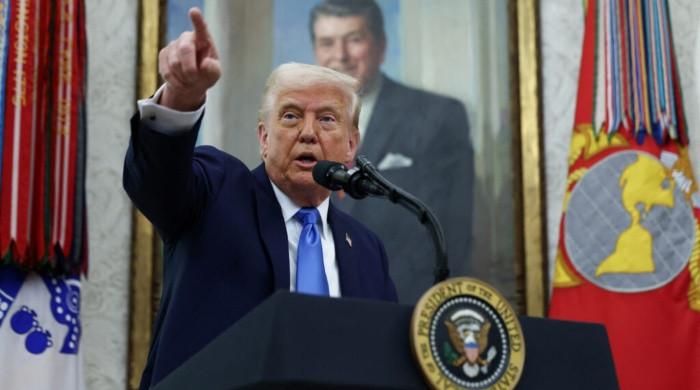
WASHINGTON: US President Donald Trump will try to sell voters on the record of his first year back in power during his State of the Union address Tuesday, despite suffering a series of stinging blows ahead of November’s crucial midterm elections.
After a year of breakneck activity that has stunned America and the world, the 79-year-old Republican’s flagship speech to Congress — which he has largely sidelined — comes at a tense time.
Trump is fuming over a string of recent setbacks, including dismal approval ratings and the Supreme Court striking down his signature tariffs, a cornerstone of his economic agenda.
Adding to the drama, Trump will be speaking right in front of the same justices — including two of his own appointees — whom he branded “fools” over the stunning ruling.
If Democrats win back either the House or Senate in November, it could paralyse the rest of Trump’s second term — and put him at the risk of a possible third impeachment.
But Trump shows no signs of backing down in a speech that is likely to mix a defence of his first year with a launching pad for the midterms.
“It’s going to be a long speech because we have so much to talk about,” Trump said at the White House on Monday.
The president also dismissed “fake” polls including a Washington Post-ABC News-Ipsos poll published on Sunday showing his approval rating at just 39%.
Democrat protests
Democrats are lining up responses including boycotts and silent protests for the address — mandated by the US Constitution which says that the president shall “from time to time give to the Congress information of the State of the Union.”
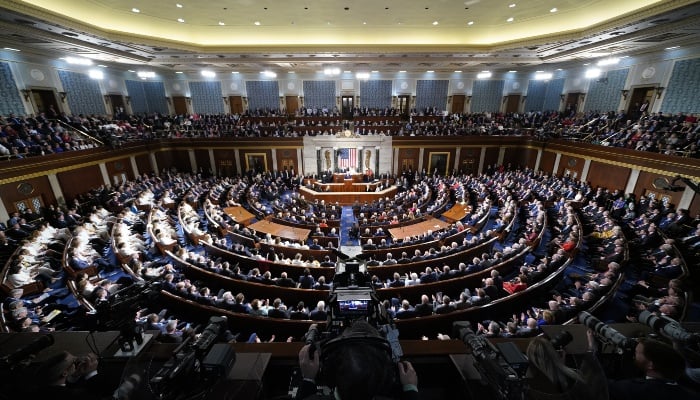
Tina Smith, a Democratic senator from Minnesota, said she would skip it because Trump uses his speeches to “spread lies — not to mention they’re long and boring.”
The speech comes after a year in which Trump has asserted unprecedented executive power, targeted opponents and slapped his name on buildings at home, while upending the world order abroad.
Trump will be keen to tout what his administration says is its success on immigration, especially on cutting crossings over the Mexican border.
But polls show that while voters like his overall stance on immigration, they don’t like the harsh deportation raids in which two US citizens were shot dead in January.
On the economy, he will be selling what he claims is success in cutting inflation and restoring what he calls a “Golden Age” of America.
But billionaire Trump also faces a challenge to convince voters who are still worried about the cost of living — which many blame on the tariffs that the Supreme Court struck down.
Iran tensions
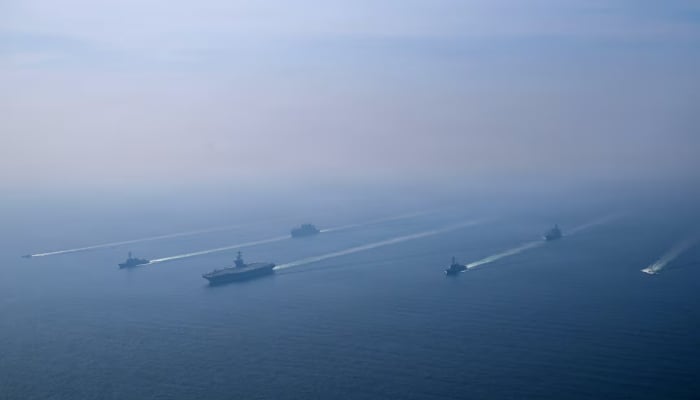
The world will meanwhile be watching for hints from Trump about possible military action against Iran, with a huge US military build-up pressing Tehran to make a nuclear deal.
The key speech has been used to advance foreign policy before — former president George W. Bush fashioned his 2003 State of the Union speech, for instance, to make the case for war with Iraq.
Adding to the interest will be the guests that both Republicans and Democrats bring to watch the address from the gallery, part of a long tradition.
Trump has invited the US men’s ice hockey team after they won Olympic gold for the first time since 1980 by beating Canada 2-1 in Italy.
But the women’s team said they were declining Trump’s invitation, US media reported, a day after the president joked in a call to the men’s team that he would be impeached if he didn’t invite the women.
Two Democratic members of the House of Representatives said they were bringing as guests the family members of a victim of disgraced late financier Jeffrey Epstein.
Trump has denied any links to sex offender Epstein but the scandal continues to nag at his presidency.
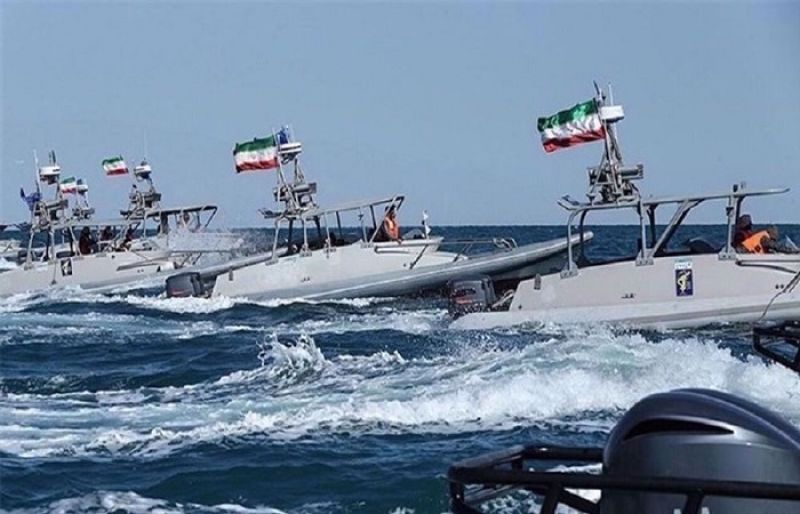
The Islamic Revolution Guards Corps (IRGC) Navy says the management of the Strait of Hormuz has entered a new stage.
The IRGC Navy made the announcement in a post on its social media account on Friday, two days after a temporary Pakistan-mediated ceasefire went into force between Tehran and Washington following the failure of the US and Israel to achieve their objectives after 40 days of war against the Iranian nation.
“The two days of silence in military battle clearly showed to friends and enemies that the management of the Strait of Hormuz has entered a new phase,” it said.
The announcement echoed Thursday’s remarks by Leader of the Islamic Revolution Ayatollah Seyyed Mojtaba Khamenei, who said Iran will “take the management of the Strait of Hormuz to a new stage.”
The United States and the Israeli regime launched their illegal act of aggression against Iran on February 28, but the Iranian armed forces responded by launching 100 waves of missile and drone operations targeting locations in the Israeli-occupied territories as well as US military bases and assets across the region.
Iranian forces also blocked the Strait of Hormuz to oil and gas tankers affiliated with the adversaries and those cooperating with them in an attempt to maintain security at the strategic waterway.
The US sought to form a coalition to open the strategic waterway, asking NATO countries to contribute naval and air assets. However, most of Washington’s allies have declined to commit forces.
Additionally, on Friday, South Korea’s Foreign Ministry said the country will send a special envoy to Iran to examine the situation in West Asia amid conflicting reports about the reopening of the Strait of Hormuz.
It added that the decision had been taken during a telephone conversation between top top Iranian and South Korean diplomats.
Meanwhile, Hamid Hosseini, spokesman for the association of Iranian oil product exporters said that the acceptance of Iran’s proposed provisions about the security and legal regime of the Strait of Hormuz as part of the truce agreement can be one of the most important diplomatic achievements in recent decades.
The strait was previously open, but now some international analysts believe that new conditions could benefit Iran, Hosseini noted.
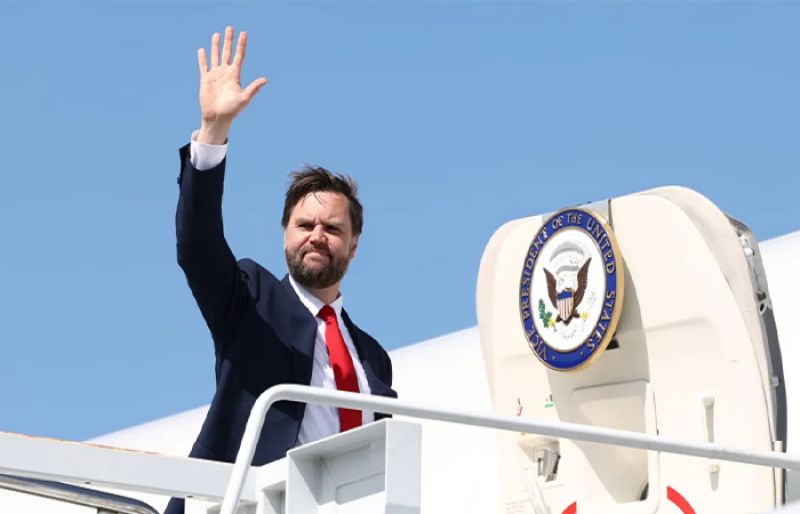
US Vice President JD Vance said on Friday he was hopeful of a “positive” outcome as he departed Washington to lead American negotiations with Iran in Pakistan. “We’re going to try to have a positive negotiation,” Vance told reporters before boarding his flight at Joint Base Andrews.
“If the Iranians are willing to negotiate in good faith, we’re certainly willing to extend the open hand. If they’re going to try to play us, then they’re going to find the negotiating team is not that receptive.”
Earlier, the White House said that Vance will head the US delegation in talks beginning Saturday in Islamabad, acting on directives from President Donald Trump.
The talks are seen as a critical step towards preventing renewed conflict after weeks of escalating hostilities.
According to officials, the US delegation will also include senior figures such as envoy Steve Witkoff and Jared Kushner, underlining the importance Washington attaches to the negotiations.
Pakistan is hosting the dialogue as part of its broader mediation effort, having played a key role in brokering a temporary ceasefire between the two sides. The talks are widely viewed as high-stakes, with the outcome likely to shape regional stability and global energy markets.
Vance, speaking before departure, expressed optimism about the negotiations, saying the United States was seeking “constructive engagement” and remained hopeful of positive outcomes.
He added that clear guidance had been provided by President Donald Trump for the talks.
Diplomatic sources say the negotiations will address key issues, including ceasefire compliance, regional security concerns, and Iran’s nuclear programme, though significant differences remain between the parties.
Analysts note that Pakistan’s role has evolved into that of an active mediator, bringing both sides to the table despite deep mistrust.
However, they caution that the process remains fragile, with risks of derailment from regional actors and unresolved disputes.
The Islamabad talks mark one of the most significant direct engagements between the United States and Iran in decades, raising cautious hopes for a broader de-escalation in the region.
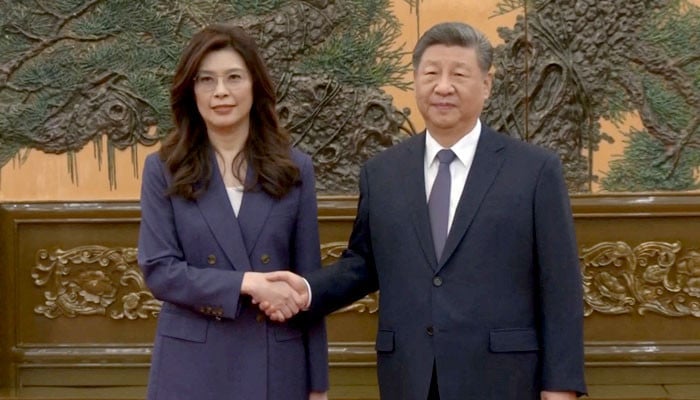
- Taiwan opposition leader in China for ‘peace’ mission.
- Cheng meets China’s Xi at Great Hall of the People.
- Cheng is party’s first leader to visit China in a decade.
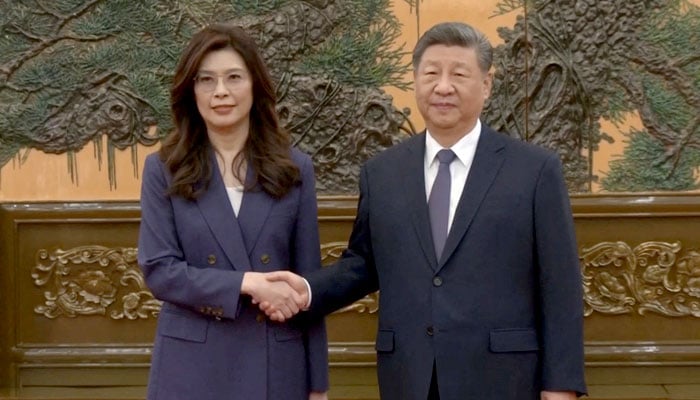
China’s President Xi Jinping met Taiwan’s opposition party leader Cheng Li-wun in Beijing on Friday, telling the visiting delegation he had “full confidence” that Taiwanese and Chinese people would be united.
Kuomintang (KMT) chairwoman Cheng is the party’s first leader to visit China in a decade.
Xi told Cheng, as the two met on Friday, that “the general trend of compatriots on both sides of the Strait getting closer, edging nearer and becoming united will not change”.
“This is an inevitable part of history. We have full confidence in this,” Xi said during the talks carried by Taiwanese media.
He also said China was willing to strengthen dialogue with groups in Taiwan, including the KMT, on the “common political foundation of… opposing Taiwan independence”.
Earlier, she told Xi that the Taiwan Strait would “no longer be a focal point of potential conflict” and “both sides should transcend political confrontation”.
She also said Xi had responded “positively” to her proposal that the sides work toward Taiwan participating in international organisations such as Interpol and regional trade agreements.
Taiwanese lawmakers have been at loggerheads over the government’s plan to spend NT$1.25 trillion ($39 billion) on defence, which has been stalled for months in parliament, controlled by opposition parties including the KMT.
Defence spending
Cheng’s trip comes a month before US President Donald Trump is scheduled to visit Beijing for a summit with Xi.
The United States has been piling pressure on Taiwanese opposition lawmakers to back a proposal for defence purchases, including US weapons.
Cheng has railed against the government´s proposal, insisting “Taiwan isn’t an ATM” and instead backing a KMT plan to allocate NT$380 billion ($12 billion) for US weapons with the option for more acquisitions.
While KMT party members regularly fly to China for exchanges with officials, its last leader to visit was Hung Hsiu-chu in 2016.
Cross-strait relations have worsened in particular since the election of Tsai´s successor, Lai Ching-te, who Beijing considers a separatist.
Cheng landed in Shanghai on Tuesday evening, saying shortly after her arrival that “the two sides of the Taiwan Strait are not doomed to war, as the international community has feared”.
The KMT leader also travelled to the eastern city of Nanjing, where she visited the mausoleum of revolutionary leader Sun Yat-sen, one of the few Chinese historical figures revered in both Beijing and Taipei.


Pacers fans go viral after animated conversation caught on camera during Nets game in Brooklyn

Management of Strait of Hormuz has entered new stage: IRGC

Kiyan Anthony returning to Syracuse for sophomore season

-
 Business1 week ago
Jaguar Land Rover sees sales recover after cyber attack
-
Uncategorized1 week ago
[CinePlex360] Please moderate: “Trump signals p
-

 Entertainment7 days ago
Joe Jonas shares candid glimpse into parenthood with Sophie Turner
-

 Tech7 days ago
Our Favorite iPad Is $50 Off
-

 Sports7 days ago
UConn Final Four run could trigger a $50M furniture giveaway for Massachusetts-based Jordan’s Furniture
-
 Business1 week ago
Video: Why Is the Labor Market Stuck?
-

 Entertainment7 days ago
Blake Lively reacts to harassment claims dismissal against Justin Baldoni
-
 Politics1 week ago
Iran can sustain Strait of Hormuz closure for years, will cut US military logistics: Official