

Politics
Trump withdraws US from dozens of international and UN entities

- US to withdraw from 35 non-UN groups, 31 UN entities.
- Trump cites conflict with US interests for withdrawal.
- Move reflects Trump’s scepticism of multilateral institutions.
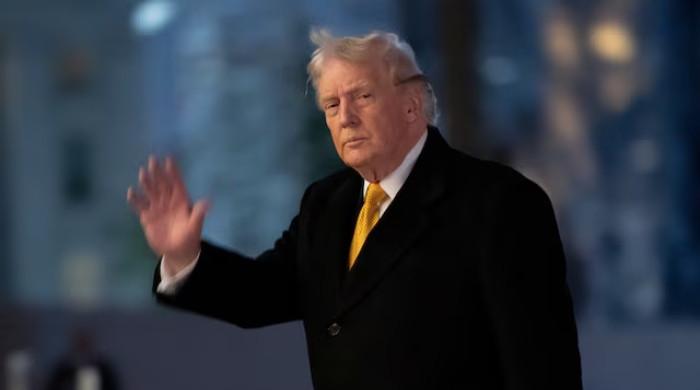
US President Donald Trump said on Wednesday that the United States would withdraw from dozens of international and UN entities, including a key climate treaty and a UN Body that promotes gender equality and women’s empowerment, because they “operate contrary to US national interests.”
Among the 35 non-UN groups and 31 UN entities Trump listed in a memo, opens new tab to senior administration officials is the UN Framework Convention on Climate Change — described by many as the “bedrock” climate treaty which is parent agreement to the 2015 Paris climate deal.
The United States skipped the annual UN international climate summit last year for the first time in three decades.
“The United States would be the first country to walk away from the UNFCCC,” said Manish Bapna, president and CEO of the Natural Resources Defense Council.
“Every other nation is a member, in part because they recognize that even beyond the moral imperative of addressing climate change, having a seat at the table in those negotiations represents an ability to shape massive economic policy and opportunity,” said Bapna.
The US will also quit UN Women, which works for gender equality and the empowerment of women, and the UN Population Fund (UNFPA), the international body’s agency focused on family planning as well as maternal and child health in more than 150 countries. The US cut its funding for the UNFPA last year.
“For United Nations entities, withdrawal means ceasing participation in or funding to those entities to the extent permitted by law,” reads the memo. Trump has already largely slashed voluntary funding to most UN agencies.
A spokesperson for UN Secretary General Antonio Guterres did not immediately respond to a request for comment.
Trump wary of multilateral organisations
Trump’s move reflects his long-standing wariness of multilateral institutions, particularly the United Nations. He has repeatedly questioned the effectiveness, cost and accountability of international bodies, arguing they often fail to serve US interests.
Since beginning his second term a year ago, Trump has sought to slash US funding for the United Nations, stopped US engagement with the UN Human Rights Council, extended a halt to funding for the Palestinian relief agency UNRWA and quit the UN cultural agency UNESCO. He has also announced plans to quit the World Health Organsation and the Paris climate agreement.
Other entities on the US list are the UN Conference on Trade and Development, the International Energy Forum, the UN Register of Conventional Arms and the UN Peacebuilding Commission.
The White House said the dozens of entities that Washington was seeking to depart as soon as possible promote “radical climate policies, global governance, and ideological programs that conflict with US sovereignty and economic strength.”


WASHINGTON: The US Justice Department published additional FBI documents describing interviews with a woman who said President Donald Trump sexually assaulted her after she was introduced to him by Jeffrey Epstein.
The documents had not been made public under previous congressionally-mandated file releases related to the late convicted sex offender because they were mistakenly marked “duplicative,” the department said.
Democrats are investigating the Trump administration’s handling of the Epstein files.
The documents released include descriptions of multiple 2019 interviews the FBI held with the woman, who alleged she was assaulted by both Epstein and Trump while she was between 13 and 15 years old.
In one interview, the woman said Epstein took her to “either New York or New Jersey” and introduced her to Trump.
The woman said she and people close to her received threatening calls over the years demanding she keep quiet that she believed were related to Epstein.
Trump has denied any wrongdoing related to the Epstein allegations, and the Justice Department previously said some of the documents it has released “contain untrue and sensationalist claims against President Trump.”
Democrats have accused the Trump administration of covering up details of the Epstein investigation that could negatively impact Trump.
On Wednesday, a House committee voted to subpoena Attorney General Pam Bondi to answer questions about the Justice Department´s handling of the documents.
- Sukhoi Su-30MKI fighter jet crashes during training.
- Jet went missing after taking off from Jorhat airbase.
- Dead pilots identified as Sq Ldr Anuj, Flight Lieutenant Duragkar.
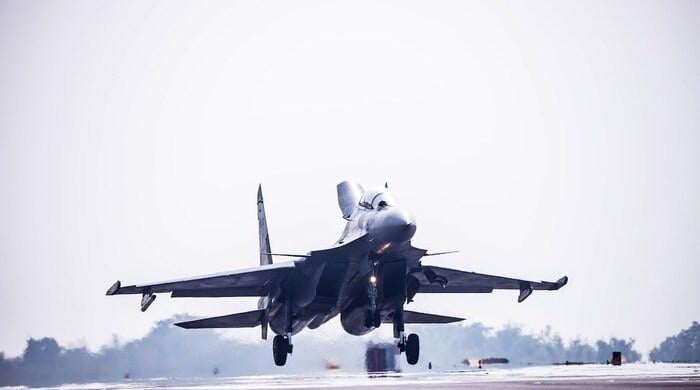
Two pilots from the Indian Air Force (IAF) were killed after a Sukhoi Su-30MKI fighter jet crashed in India’s northeastern state of Assam, NDTV reported, citing officials.
The Indian Air Force said on Friday that a fighter jet, which was on a training mission, crashed in the northeast Indian state of Assam.
“The Su-30MKI, which was on a training mission, crashed in the area of Karbi Anglong, Assam, approx 60 km from Jorhat,” the Indian Air Force said on X.
The aircraft had gone missing shortly after taking off from the Jorhat airbase. Communication with the Russian-origin fighter jet was lost at 7:42pm, according to officials.
The crash occurred in Assam’s Karbi Anglong district, around 60 kilometres from the airbase. The aircraft reportedly went down in a remote hilly area.
The IAF identified the deceased pilots as Squadron Leader Anuj and Flight Lieutenant Purvesh Duragkar.
“All personnel of the IAF express sincere condolences, and stand firmly with the bereaved family in this time of grief,” the Air Force said in a post on X.
Local residents in the area said they heard a loud explosion from a nearby hill and saw a ball of fire shortly afterwards.
India’s Defence Minister Rajnath Singh said he was “deeply saddened” by the loss of the two pilots in the “tragic” crash.
The Sukhoi Su-30MKI is a two-seater, long-range fighter aircraft developed by Russian manufacturer Sukhoi. It is produced under licence in India by state-run Hindustan Aeronautics Limited (HAL) for the IAF.
The aircraft was first inducted into the Indian Air Force in 1997, and the service currently operates a fleet of more than 260 Su-30MKI jets.
Similar incidents have occurred in recent years. A Sukhoi fighter jet crashed in Nashik, Maharashtra, in June 2024, while another Su-30 aircraft crashed in January 2023 shortly after taking off from the Gwalior airbase in Madhya Pradesh.
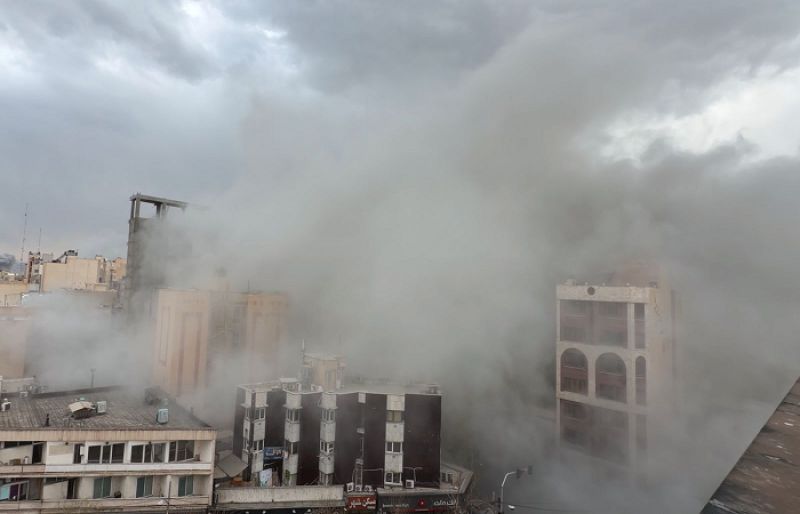

TEHRAN: The head of the Iranian Red Crescent Society, Pir Hossein Kolivand, has said that recent US-Israeli airstrikes on Iran have damaged more than 3,000 civilian properties, according to reports cited by Al Jazeera.
Kolivand stated that the strikes affected 3,643 civilian locations, including 3,090 residential homes, highlighting the significant impact on populated urban areas.
Civilian Infrastructure Hit
According to the Red Crescent chief, the attacks also caused damage to several public and service facilities, including:
528 commercial and service centres
14 healthcare and pharmaceutical facilities
9 Red Crescent sites
Officials said the majority of the destruction occurred in densely populated residential areas, raising humanitarian concerns.
Growing Humanitarian Impact
The latest figures underscore the expanding civilian toll as the conflict involving Iran, the United States, and Israel continues to intensify.
Emergency teams from the Iranian Red Crescent are currently involved in rescue, relief and medical operations in affected areas.
Authorities have not yet released updated casualty figures but say humanitarian agencies are continuing to assess the full extent of the damage.


Australian wool market gains on strong merino demand

Stock Market Updates: Sensex Tanks 1,100 Points, Nifty Tests 24,450; India VIX Jumps Over 11%

OVS brings Italian fashion to Mumbai retail scene

-
 Business1 week ago
Attock Cement’s acquisition approved | The Express Tribune
-

 Fashion1 week ago
Policy easing drives Argentina’s garment import surge in 2025
-

 Politics1 week ago
What are Iran’s ballistic missile capabilities?
-
 Business1 week ago
India Us Trade Deal: Fresh look at India-US trade deal? May be ‘rebalanced’ if circumstances change, says Piyush Goyal – The Times of India
-

 Politics1 week ago
US arrests ex-Air Force pilot for ‘training’ Chinese military
-

 Sports7 days ago
LPGA legend shares her feelings about US women’s Olympic wins: ‘Gets me really emotional’
-
 Business7 days ago
Greggs to reveal trading amid pressure from cost of living and weight loss drugs
-

 Fashion1 week ago
Texwin Spinning showcasing premium cotton yarn range at VIATT 2026