

Business
Two former Carillion finance directors fined by FCA over misleading statements

Two former finance directors of collapsed firm Carillion have been fined by the City watchdog after acting “recklessly” and playing a part in misleading statements issued by the outsourcing giant before its high-profile demise eight years ago.
The Financial Conduct Authority (FCA) said Richard Adam and Zafar Khan were “both aware of serious financial troubles in Carillion’s UK construction business but failed to reflect this in company announcements or alert the board and audit committee”.
The regulator said it had fined Mr Adam and Mr Khan £232,800 and £138,900 respectively, after the pair withdrew their challenges to the FCA’s findings.
It comes six years since the outsourcing giant, which employed 12,000 people, collapsed in January 2018 with massive debts.
Before its failure, Carillion had been one of the UK’s biggest construction and facilities management companies, with several major government contracts.
The FCA said it found the ex-finance directors at Carillion “acted recklessly and were knowingly concerned in breaches by Carillion of the Market Abuse Regulation and the Listing Rules”.
Mr Adam was Carillion’s group finance director from April 2007 to the end of 2016 and was succeeded by Mr Khan, who acted in the role from January 2017 until September of that year.
The FCA said the pair had responsibility for Carillion’s procedures, systems and controls relating to financial reporting.
“These were not sufficient to ensure that contract accounting judgments made in its UK construction business were made, recorded and reported appropriately,” it added.
Steve Smart, joint executive director of enforcement and market oversight at the FCA, said: “Those in positions of responsibility have a duty to keep the market accurately and adequately informed.
“With Carillion, we have seen the serious impact it can have when they don’t.
“The action taken against Mr Adam and Mr Khan demonstrates our commitment to preventing market abuse and upholding the standards we expect.”
The FTSE 100 reached fresh heights on Wednesday, with well-received results from HSBC, and gains in mining stocks, paving the way for another record-breaking day.
“The strong showing from the UK stock market so far in 2026, on top of a major success in 2025, bodes well for changing its reputation from unloved to admired,” said Russ Mould, investment director at AJ Bell.
The FTSE 100 index ended up 125.82 points, 1.2%, at 10,806.41, a record close and its best level for the day.
The FTSE 250 ended up 135.85 points, 0.6%, at 23,636.89, and the AIM All-Share closed up 1.26 points, 0.2%, at 816.79.
London’s brighter mood was reflected elsewhere in Europe.
The CAC 40 in Paris closed up 0.5% on Wednesday, while the DAX 40 in Frankfurt ended 0.8% higher.
Stocks in New York were also higher. The Dow Jones Industrial Average was up 0.4%, the S&P 500 index was 0.6% higher, and the Nasdaq Composite advanced 1.0%.
Across the pond all eyes point towards earnings from Nvidia, due for release after the New York market close.
David Morrison, senior market analyst at Trade Nation, said: “Tonight’s results will focus initially on revenues and earnings. In prior quarters, Nvidia has often surprised investors with bullish forward guidance, and if there’s good news here, then that should underpin the share price.
“But data centre revenue, chip demand and hyperscale cloud spending are all important elements, while competition (another recent issue) and margins will also be poured over by analysts.”
The pound was little changed at 1.3537 dollars on Wednesday afternoon, from 1.3536 dollars at the equities close on Tuesday.
The euro stood higher at 1.1804 dollars, from 1.1787 dollars. Against the yen, the dollar was trading higher at 156.39 yen, compared with 155.71 yen.
The yield on the US 10-year Treasury widened to 4.05% on Wednesday from 4.04% on Tuesday. The yield on the US 30-year Treasury was flat at 4.69%.
In London, shares in HSBC hit an all-time high after better-than-expected fourth-quarter results.
The 7.9% gain took the Asia-focused lender’s market value to £239.29 billion, overtaking AstraZeneca as the most valuable listed UK company.
Cambridge-based drugs firm AstraZeneca has a market value of a touch below £236 billion after falling 0.7% on Wednesday, with oil major Shell, up 1.3%, a distant third at £169.72 billion.
For the fourth quarter of 2025, HSBC said adjusted pre-tax profit rose to 8.59 billion dollars from 7.32 billion dollars a year ago, ahead of 7.85 billion dollars consensus.
JPMorgan said the profit beat was driven by strong banking net interest income, and impairments coming in 12% lower than forecast.
Looking ahead, chief executive Georges Elhedery said HSBC is “raising our ambition and targeting a 17% [return on tangible equity] or better, excluding notable items, in each year from 2026 to 2028”.
“We are also targeting year-on-year revenue growth over the same period on the same basis, rising to 5% in 2028,” he added.
JPM said the new targets are slightly above consensus expectations for annual revenue growth of 4.2% in 2028.
Citi analyst Andrew Coombs said it was “a good print”, with “potential for high-single digit consensus EPS upgrades”.
Mining stocks were also in demand as metals prices rose.
Gold firmed to 5,204.64 dollars an ounce on Wednesday from 5,142.02 dollars on Tuesday. Silver rose 4.1% and copper gained 0.9%.
Miners Fresnillo, Antofagasta and Anglo American rose 7.3%, 5.7% and 4.4% respectively.
Also in the green was St James’s Place, after it said it will increase shareholder returns after reporting better-than-expected 2025 results.
The London-based asset manager rose 6.6%, as it reported a post-tax underlying cash result of £462.3 million in 2025, up 3.4% from £447.2 million the year prior, and ahead of £445.5 million company-compiled consensus. Pre-tax profit increased 28% to £1.34 billion from £1.05 billion.
Post-tax underlying cash basic earnings per share of 87.0 pence, increased 6.1% from 82.0p, ahead of 84.2p consensus.
In addition, the firm intends to increase total annual shareholder distributions to 70% (from 50%) of the underlying cash result through a combination of dividends and share buy-backs.
But Diageo shareholders had a day to forget, as shares plunged 13% after it cut full-year sales guidance and slashed its dividend.
London-based Diageo operates in more than 180 countries with a portfolio of more than 200 brands, including top sellers such as Johnnie Walker whisky, Smirnoff vodka, Tanqueray gin and Guinness stout.
It said net sales fell 4.0% year-on-year to 10.46 billion dollars in the six months to December 31, from 10.90 billion dollars a year ago, below VA consensus of 10.57 billion dollars.
Sales declined 2.8% on an organic basis, compared to VA consensus for a 2.0% drop, with organic volumes down 0.9% and a negative price/mix of 1.9%.
“Trading conditions remained challenging in the first half of the year. We believe this was largely due to further macroeconomic and geopolitical uncertainty, and weak consumer confidence in key markets,” the company said in a statement.
For the financial year, Diageo now expects a full-year organic net sales decline of 2% to 3%, “given further weakness in the US”. It had previously predicted an outcome between “flat to slightly down”.
In addition, the firm halved its first-half payout to 20 cents per share from 40.50 cents a year prior.
New chief executive Dave Lewis said he is “confident that this is the right action” to “drive stronger shareholder value over the coming years”.
Dan Coatsworth, head of markets at AJ Bell, said: “There is no point trying to dress up the six-month figures. These are awful results, and the repair job is massive.”
On the FTSE 250, Trainline shares buckled as chief executive Jody Ford signalled his departure.
Shares in the London-based digital rail and coach ticketing platform fell 7.5%, as it said Mr Ford intends to step down as chief executive after more than six years at the company.
A formal search process to find his successor has begun, the firm added.
Brent oil traded lower at 70.76 dollars a barrel on Wednesday afternoon, from 71.16 dollars late Tuesday.
The biggest risers on the FTSE 100 were HSBC, up 102.60p at 1,394.00p, Metlen Energy & Metals, up 2.70p at 37.65p, Fresnillo, up 294.00p at 4,326.00p, St James’s Place, up 83.50p at 1,343.00p and Relx, up 142.00p at 2,415.00p.
The biggest fallers on the FTSE 100 were Diageo, down 238.00p at 1,636.00p, Haleon, down 27.80p at 377.90p, Croda, down 99.00p at 3,113.00p, Babcock International, down 29.00p at 1,374.00p and Tesco, down 8.30p at 492.20p.
Thursday’s global economic calendar has US initial jobless claims data.
Thursday’s domestic corporate calendar has full-year results from jet engine maker Rolls-Royce, advertising agency WPP, exchange operator and data provider London Stock Exchange and kitchen supplier Howden Joinery.
Contributed by Alliance News

Now available on your favorite food delivery app: restaurant reservations.
The still-simmering reservation wars of the last decade could fully reignite this year, as a shifting tech landscape pits some of the biggest players against each other to capture businesses and users alike. Reservation incumbents, delivery app newcomers and premium credit card partnerships are all ramping up the fight for a shrinking pool of diners.
Delivery giant DoorDash announced in June its $1.2 billion acquisition of SevenRooms, a reservation platform focused on direct bookings through a restaurant’s own website. Several months earlier, UberEats and Booking Holdings’ OpenTable announced a partnership to integrate reservations on Uber’s app. And in 2024, American Express, already the owner of Resy, bought Tock, a reservation platform focused on upscale restaurants, for $400 million.
“It’s three very large, very ambitious, very well-resourced companies all vying for the same exact piece of real estate, which is high-demand restaurants,” Resy and Eater founder Ben Leventhal told CNBC.
Resy was bought by AmEx in 2019, and today Leventhal — a strategic advisor for Resy until 2022 — focuses on Blackbird Labs, a loyalty program for independent restaurants that he founded that same year.
Bringing restaurants online
The reservation wars initially kicked off more than 10 years ago. Leventhal’s Resy burst onto the scene in 2014 and won market share, undercutting OpenTable’s legacy business, by charging eateries a simple monthly fee.
At the time, OpenTable, which was founded in 1998, charged restaurants both a monthly fee and a cover for each diner who booked through the platform. These days, the company still sometimes charges a variable cover fee for seated diners, depending on the establishment.
Thomas Barwick | Digitalvision | Getty Images
Despite Resy’s rise and buzzy partnerships with high-profile restaurants, OpenTable still significantly outstrips its rival by restaurant count.
Starting this summer, Resy will integrate the 5,000 eateries, bars and wineries that have listed on Tock onto its own platform, bringing its total number of venues to about 25,000. That’s still less than half of OpenTable’s roughly 60,000 restaurants.
But where OpenTable has scale, Resy has a “cool factor” and strong positioning in major cities, like New York, where dining out is big business.
And each companies’ relationships with credit card companies has added a new layer to the war, too.
Supercharging the platforms
Platinum American Express cardholders get special access to restaurant reservations at sought-after establishments, plus a $400 dining credit per year to use at Resy restaurants.
“We know that American Express card members spend close to $90 billion a year … on dining, and it’s a passion area for them,” Resy CEO Pablo Rivero told CNBC. “And we know that they also spend more. People with a Resy credit on an American Express card spend over 25% more on dining transactions.”
Likewise, eligible Visa and Chase cardholders get exclusive OpenTable reservations.
Those partnerships have also helped the legacy player woo some big-name restaurants away from Resy through cash incentives made possible by the credit card companies.
Recapturing top-tier restaurants with Michelin stars or James Beard awards has been a priority for OpenTable over the last five years, said OpenTable CEO Debby Soo.
“Credit card companies are looking for a perk to differentiate their cards, especially for their premium cardholders,” Soo said. “Especially after Covid, the experiential has become even more important.”
Delivery’s here
Now, DoorDash is entering the fray with its SevenRooms acquisition.
The company is used to fighting for market share in a competitive industry. Before the pandemic, DoorDash was up against UberEats and Grubhub for market dominance of online third-party food delivery.
As of 2025, DoorDash was the biggest player in the U.S. market, with about 67% share, according to digital restaurant operations firm Deliverect. UberEats trails with a 23% share.
Eric Baradat | AFP | Getty Images
As it enters the bookings game, DoorDash is looking to capture the range of dining possibilities, whether it’s delivery, takeout or table.
In the early months of its reservations integration, the platform was offering users DoorDash cash per booking to use on future delivery orders. And in select cities, it offers exclusive tables at trendy spots for members of DashPass, its subscription service.
Above all, the integration with SevenRooms gives DoorDash and its restaurants access to more data about diners.
“Delivery and dine-in have typically been siloed data sets,” SevenRooms co-founder Joel Montaniel said. “So if a customer has ordered six times, and they’re coming into the restaurant for the first time, are they a first-time customer or a seventh-time customer?”
Following a diner across touchpoints means a better experience, and more tailored marketing, he said.
“We’re seeing the flywheel happening and the excitement about the DoorDash reservation marketplace happening, but it’s still early days,” said Parisa Sadrzadeh, vice president of strategy and operations for DoorDash. “We’ve got a lot of room to continue to grow.”
Correction: This story has been updated to correct that Ben Leventhal was a strategic advisor to Resy until 2022.
Business
Ajit Jain: Warren Buffett’s trusted executive Ajit Jain buys apartment in Gurugram for Rs 85 crore – The Times of India
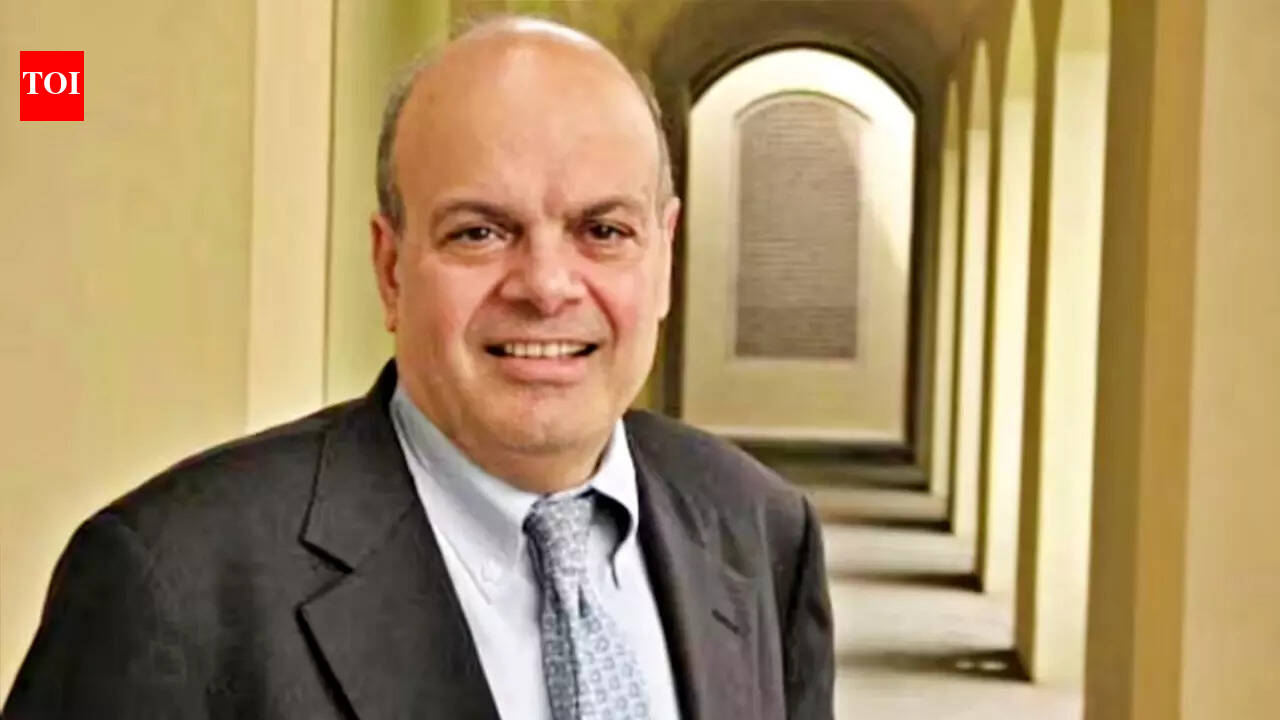
A 7,400 sq ft apartment at DLF The Camellias in Gurugram has been purchased by Berkshire Hathaway’s Ajit Jain. The vice-chairman overseeing insurance operations at Berkshire Hathaway, Ajit Jain, is regarded as one of Warren Buffett’s most trusted associates. The apartment has been bought for around Rs 85 crore, according to sources quoted in an ET report.Jain, who has spent most of his time living abroad, recently visited Delhi to complete the deal, the sources said. One person aware of the development said non-resident Indians account for more than 25% of DLF’s ultra-luxury housing portfolio, and Jain is among the most prominent buyers in this segment. The individual added that premium amenities offered at such developments are a major attraction for those who plan to spend only part of the year in India. Jain is widely considered one of the most influential Indian-origin business leaders in the United States.Property consultants noted that since the Covid period, ultra-high-net-worth individuals have increasingly favoured secure, gated condominium projects over independent bungalows, as such residences provide access to a wide range of on-site facilities.ET recently reported that an industrialist purchased four apartments at DLF’s new ultra-luxury project, The Dahlias, for close to Rs 380 crore, making it one of the country’s most expensive apartment transactions.In 2025, Gurugram saw the costliest property deal in the National Capital Region, overtaking Lutyens’ Delhi for the first time. Prices per square foot in the city have surpassed those in Mumbai and reached levels comparable with London and Dubai. Earlier, British entrepreneur Sukhpal Singh Ahluwalia had acquired an 11,416 sq ft apartment in the same project for Rs 100 crore.Info-x Software Technology, through its director Rishi Parti, had also purchased a 16,000 sq ft penthouse for Rs 190 crore.In October 2023, ET reported the first Rs 100-crore transaction at the same residential complex on Gurugram’s Golf Course Road.


Botched final play between Luka, LeBron dooms Lakers vs. Magic

OpenClaw Users Are Allegedly Bypassing Anti-Bot Systems

Trump still prefers diplomatic solution with Iran: Vance

-

 Entertainment1 week ago
Queen Camilla reveals her sister’s connection to Princess Diana
-

 Tech1 week ago
Rakuten Mobile proposal selected for Jaxa space strategy | Computer Weekly
-

 Politics1 week ago
Ramadan moon sighted in Saudi Arabia, other Gulf countries
-

 Entertainment1 week ago
Robert Duvall, known for his roles in "The Godfather" and "Apocalypse Now," dies at 95
-
 Business1 week ago
Tax Saving FD: This Simple Investment Can Help You Earn And Save More
-

 Politics1 week ago
Tarique Rahman Takes Oath as Bangladesh’s Prime Minister Following Decisive BNP Triumph
-

 Tech1 week ago
Businesses may be caught by government proposals to restrict VPN use | Computer Weekly
-

 Fashion1 week ago
Australia’s GDP projected to grow 2.1% in 2026: IMF