

Business
UAE loan recall strains Pakistan’s fragile external position: report – SUCH TV


Pakistan’s external financing outlook has come under renewed pressure after it failed to reach an agreement with the United Arab Emirates to roll over $3 billion in debt for the first time in seven years.
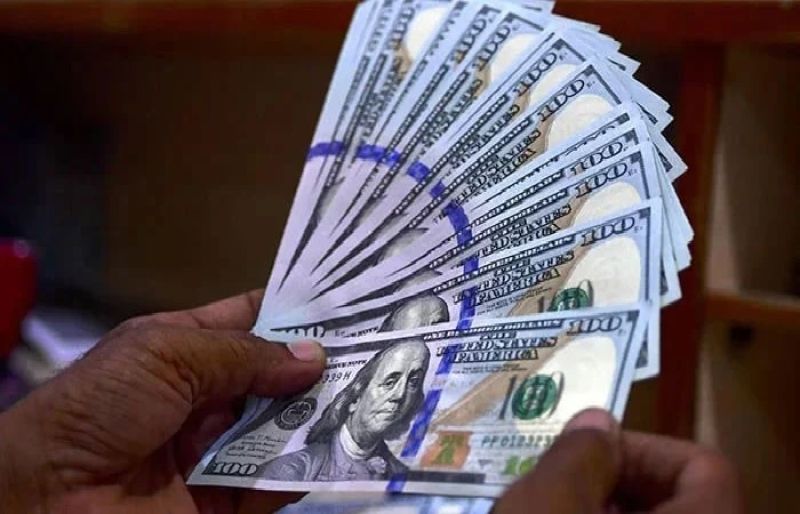
The loan amounts to about 18% of Pakistan’s foreign exchange reserves, putting significant pressure on the country’s external buffers and threatening the currency at a time when high crude prices are draining its coffers.
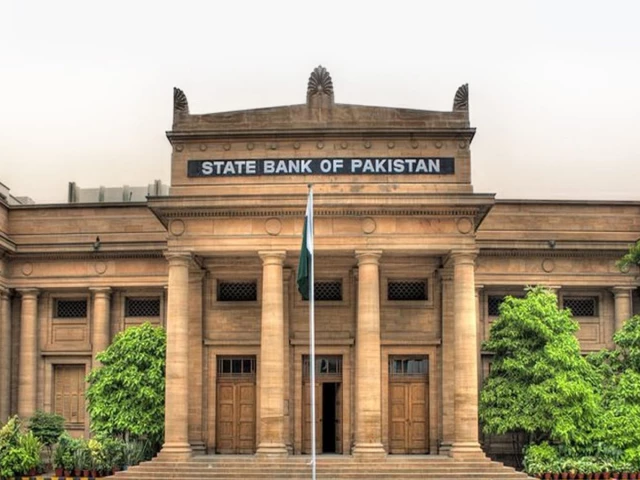
The State Bank of Pakistan’s reserves stood at $16.4 billion as of March 27, enough to cover three months of imports.
It’s unclear what prompted the UAE to call in the loan now. The Foreign Office said on April 4 that the move was a “routine financial transaction”, seeking to downplay speculation of a possible political fallout between the two countries.
Local media reports pointed to a breakdown in negotiations over the terms of a rollover.
Pakistan managed to stabilise its economy in recent years with the help of loans from the International Monetary Fund and friendly donors like the UAE, China and Saudi Arabia.
That helped Pakistan rebuild its reserves and steady the currency, which has traded in a range of 278-282 against the dollar before the Iran conflict began.
The rupee has been little changed since the beginning of March while the nation’s benchmark KSE-100 Index is down 15% after years of global outperformance.
To offset the outflow of funds, the central bank may be forced to take unpopular steps, analysts said, such as restricting imports, raising interest rates or borrowing more from commercial banks.
“The UAE repayment was unexpected and lacked prior arrangement,” said Mohammed Sohail, chief executive officer at Topline Securities Ltd. “We think the central bank will opt for the old method of borrowing through commercial banks dollar swaps.
The IMF doesn’t like this and there are quarterly limits but this is a window that is available.”
IMF instalment
Draining reserves further, the government is due to make a $1.3 billion bond repayment this month to international investors. Pakistan is also still awaiting the latest loan instalment of $1.2 billion from the IMF. The Washington-based lender didn’t immediately respond to a request for comment.
Failure to roll over the UAE debt, a standard practice with Pakistan’s allies over the past decade, signals a shift in stance from Abu Dhabi and comes at a time when Pakistan is forging closer ties with Saudi Arabia. The UAE’s Ministry of Foreign Affairs didn’t immediately respond to a request for a comment.
“We must acknowledge that UAE’s help came at very crucial level when Pakistan was struggling to meet minimum financing arrangements to get the IMF program,” Sajid Amin, deputy executive director at Sustainable Development Policy Institute in Islamabad, said by phone. “I think the government decided to pay it back when it could not secure long-term rollover, despite paying a higher cost of 6.5%. However, one cannot completely rule out changing geopolitical situation.”
Pakistan previously tried to convert some of the UAE debt into equity. Deputy Prime Minister Ishaq Dar, who is also the country’s foreign minister, said in November that the UAE was looking to convert investments into equity stakes in subsidiaries of the military-managed Fauji Foundation.
UAE companies have made investments into Pakistan recently. The Abu Dhabi-based firm International Holding Co acquired a small Pakistani lender First Women Bank Ltd while AD Ports Group signed a 25-year concession pact for bulk and general cargo operations with Karachi Port Trust in 2024.
Pakistan has also offered its airports in government deals to Middle East countries.
While some analysts see enough liquidity in the foreign exchange market to prevent a freefall in the rupee, the drain on reserves could jeopardise the central bank’s ambitious target of reaching $20 billion by the end of 2026.
“Unless we see compensatory inflows from Saudi Arabia to offset the UAE repayment, reserves will go down substantially,” said Mohammad Shoaib, chief executive officer of Lucky Investments. “That doesn’t bode well for market sentiment.”




A pedestrian walk by sign is posted in front of Levi Strauss headquarters on Oct. 9, 2025 in San Francisco, California.
Justin Sullivan | Getty Images
Levi Strauss beat Wall Street’s expectations on the top and bottom lines Tuesday, leading the retailer to raise its guidance.
The denim maker is now expecting full-year adjusted earnings per share to be between $1.42 and $1.48 per share, compared to expectations of $1.47 per share, according to LSEG.
It’s expecting sales to rise between 5.5% and 6.5%, ahead of estimates of 5.6%, according to LSEG.
Here’s how the apparel maker did in its first fiscal quarter compared with what Wall Street was anticipating, based on a survey of analysts by LSEG:
- Earnings per share: 42 cents adjusted vs. 37 cents expected
- Revenue: $1.74 billion vs. $1.65 billion expected
The company’s reported net income for the three-month period that ended March 1 was $175.8 million, or 45 cents per share, compared with $135 million, or 34 cents per share, a year earlier.
Sales rose to $1.74 billion, up about 14% from $1.53 billion a year earlier.
While Levi is seeing strong revenue growth across its business, it’s benefiting from both higher prices and positive foreign exchange rates. In an interview with CNBC, finance chief Harmit Singh said about half of Levi’s growth came from more units sold, while the other half was related to higher prices.
He also noted that Levi’s guidance could rise later in the year because it’s assuming a 20% global tariff, though President Donald Trump has for now set a 10% duty on U.S. imports. If that 10% tariff remains in effect, it could boost full-year earnings by $35 million, or 7 cents per share.
Business
Women In Credit: Share of women in credit rising boosted by digital platforms – The Times of India

MUMBAI: Women borrowers now account for Rs 76 lakh crore of credit, or 26% of total system credit in 2025, marking a near five-fold rise since 2017 and signalling a structural shift in India’s credit landscape.A joint report by TransUnion CIBIL, Niti Aayog’s WEP, and MicroSave Consulting said women are moving from being passive beneficiaries to active drivers of credit demand. The number of women availing formal credit grew at a CAGR of 9% between 2017 and 2025. Outstanding credit for women rose 4.8 times in this period compared with 2.9 times growth in overall credit. “The number of women availing formal credit in India has grown at a compounded annual growth rate (CAGR) of 9% between 2017 and 2025, underscoring their increasing engagement with the financial system. Outstanding credit for women borrowers has grown 4.8 times since 2017, compared with 2.9 times for total credit, indicating a significantly faster expansion. In recent years, the growth of digital infrastructure has facilitated easier onboarding, faster loan processing, and improved access to information,” said Bhavesh Jain, MD and CEO, TransUnion Cibil.Women’s share in retail loan originations rose to 27% in 2025 from 24% in 2022, reflecting broad-based growth across segments. Their share in housing loan originations increased to 69% from 63% over the same period, indicating a rise in asset ownership and participation in financial decisions. In consumption credit, women’s share rose to 19% from 16%, while in gold loans it increased to 37% from 36%. The share of new-to-credit women borrowers in retail credit rose by 10 percentage points to 38% in 2025, showing expansion into previously unserved segments.“At Niti Aayog, we recognize that access to finance is a structural enabler of women’s economic participation. Through platforms such as the Women Entrepreneurship Platform and the Financing Women Collaborative, we are working to strengthen ecosystem coordination,” said Nidhi Chhibber, CEO, Niti Aayog.The report said rising access to credit is translating into greater economic participation. The number of women with active business-purpose loans grew at a CAGR of 31% over the past three years, indicating a shift towards enterprise activity. Digitisation has reduced turnaround time, with same-day approvals in consumption loans rising to 45% in 2025 from 34% in 2022. Around 19% of active microfinance borrowers now hold individual retail or commercial loans, suggesting a move towards more complex financial products.The report outlined measures to expand participation further. It said lenders should use digital transaction data such as UPI histories for underwriting, especially for borrowers without collateral. It called for strengthening last-mile digital capability through collectives and peer networks to build trust. It recommended lifecycle-based financial products that combine savings, credit, and literacy, with a focus on women under 35. It also said expansion should be supported by better risk segmentation and use of alternative data to bring unserved women into the system while maintaining portfolio quality.The report said the ecosystem should track progression metrics such as graduation rates and multi-product holding instead of focusing only on disbursement volumes. It also called for vernacular and voice-enabled digital models and integration of non-financial support such as market linkages to help women-led businesses scale.

European stocks retreated on Tuesday as investors took to the side-lines ahead of the latest deadline in the Iran war.
The FTSE 100 closed down 87.50 points, 0.8%, at 10,348.79.
The FTSE 250 ended down 85.85 points, 0.4%, at 21,556.45, while the Aim All-Share rose 3.82 points, 0.5%, to 738.43.
US President Donald Trump warned “a whole civilisation will die” in Iran if the country does not heed his midnight (UK time) cut-off to open the Strait of Hormuz, as Tehran reported US-Israeli attacks on its infrastructure were already under way.
Iranian officials reported damage to at least two bridges, railway infrastructure and a key highway as part of a wave US-Israeli airstrikes.
The White House was forced to deny that remarks by vice president JD Vance about military operations in Iran had contained any suggestion of a US nuclear strike against Iran.
Speaking in Budapest, Mr Vance said the US has “tools in our toolkit that we so far haven’t decided to use” against Iran, without explaining further.
Dan Coatsworth, head of markets at AJ Bell, said Mr Trump’s threats, if taken at face value, create the conditions for a binary set of outcomes.
“Either there is a climbdown on the part of Washington or Tehran, which could prompt a major rally in equities and easing of energy prices, or a major escalation with all the implications that might have for financial markets,” he said.
“An alternative scenario is that the deadline is extended, and the markets face another uneasy period of trying to gauge the latest mood music in the US and Iran,” he added.
Brent oil traded higher at 110.24 dollars a barrel on Tuesday afternoon, up from 106.75 dollars at the time of the equities close in London on Thursday.
Joshua Mahony at Scope Markets said that for traders “it is a case of weighing up whether we will see more of the same from the president or an escalation that could have catastrophic consequences”.
“For energy markets, there is a feeling that oil prices have thus far failed to reflect the full implications of the war, although that may change as the final tankers arrive at their destinations with none to follow.
“Meanwhile, the buffer provided by strategic stockpiles releases will only last so long, with the chance of a near-term resolution in the Straits of Hormuz looking unconvincing given the wide gap between US and Iranian demands,” he added.
In European equities on Tuesday, the Cac 40 in Paris closed down 0.7%, while the Dax 40 in Frankfurt fell 1.1%.
Stocks in New York were lower.
The Dow Jones Industrial Average was down 0.8%, as was the S&P 500 index, while the Nasdaq Composite was 1.2% lower.
The yield on the US 10-year Treasury stretched to 4.37% on Tuesday from 4.30% on Thursday.
The yield on the US 30-year Treasury widened to 4.95% from 4.89%.
The pound edged up to 1.3248 dollars on Tuesday afternoon from 1.3238 dollars on Thursday.
Against the euro, sterling eased to 1.1447 euros from 1.1463 euros.
The euro stood higher against the greenback at 1.1573 dollars from 1.1548 dollars.
Against the yen, the dollar was trading higher at 159.91 yen compared to 159.31 yen.
On a quiet day for corporate news, Senior rose 0.5% after it accepted a 300 pence per share offer from a consortium led by private equity investors Tinicum and Blackstone.
The Hertfordshire-based engineering and manufacturing company said the offer values the firm at £1.28 billion on a fully diluted basis, and implies an enterprise value of £1.40 billion.
Under the agreement, shareholders will receive 297.85p in cash and a final dividend of 2.15p per share for every share in Senior held.
Senior chairman Ian King said the board believes the offer recognises the “attractiveness of Senior and represents an opportunity for Senior shareholders to realise an immediate cash value at an attractive enterprise valuation”.
But Ninety One slumped 11%, as Bank of America downgraded it to “neutral” from “buy”.
Elsewhere, Volex rose 0.7%.
It launched a £40 million share buyback programme and confirmed it plans to move to the London Main Market from Aim.
The Hampshire-based maker of power and data transmission products said it intends to apply for the move, after it said it was considering it last month.
It is targeting admission before August 4, meaning it would meet the 20-day minimum trading requirement to be eligible for inclusion in the following FTSE Russell index review.
With a market capitalisation of £915.8 million, it would be a contender for FTSE 250 entry.
Gold traded at 4,645.77 dollars an ounce on Tuesday, down from 4,663.40 dollars at the same time on Thursday.
The biggest risers on the FTSE 100 were Imperial Brands, up 62.0p at 3,139.0p, Games Workshop, up 350.0p at 18,000.0p, Metlen Energy & Metals, up 0.6p at 34.0p, Scottish Mortgage Investment Trust, up 17.5p at 1,285.5p and Berkeley Group, up 42.0p at 3,210.0p.
The biggest fallers on the FTSE 100 were Melrose Industries, down 22.8p at 507.2p, Rolls-Royce, down 45.9p at 1,142.6p, Marks & Spencer, down 12.2p at 341.7p, Barratt Redrow, down 8.5p at 251.1p and 3i Group, down 86.0p at 2,601.0p.
Wednesday’s global economic calendar has the UK construction PMI at 9.30am BST, eurozone retail sales and PPI figures, plus the minutes of March’s Federal Open Market Committee meeting.
– Contributed by Alliance News


How to watch men’s NCAA ice hockey championship on ESPN
[CinePlex360] Please moderate: “”
Levi Strauss beats expectations on the top and bottom lines, raises guidance

-
Uncategorized5 days ago
[CinePlex360] Please moderate: “Trump signals p
-
Uncategorized1 week ago
[CinePlex360] Please moderate: “Further tariff
-

 Entertainment4 days ago
Joe Jonas shares candid glimpse into parenthood with Sophie Turner
-

 Tech4 days ago
Our Favorite iPad Is $50 Off
-

 Fashion7 days ago
China’s Anta Sports posts record $11.62 bn revenue in 2025
-

 Politics4 days ago
Iran can sustain Strait of Hormuz closure for years, will cut US military logistics: Official
-

 Sports4 days ago
UConn Final Four run could trigger a $50M furniture giveaway for Massachusetts-based Jordan’s Furniture
-
 Business6 days ago
UPI transactions hit record Rs 29.53 lakh crore in March; volumes cross 22.6 billion – The Times of India