

Fashion
UK fashion sector posts QoQ revenue lift as market recovery builds

Despite improved sales performance, profitability slipped slightly, with gross margin percentage (GMP) falling to 60.4 per cent—down 2.5 percentage points (pp) QoQ and 1.7 points YoY. The decline reflects reduced order volumes and ongoing pricing pressures across the supply chain, even as firms increased sales output.
The operational metrics revealed a decisive pivot towards efficiency. Lead times improved significantly, dropping from 32 days to 22 days QoQ—a reduction of 31 per cent. Meanwhile, purchase orders declined sharply by 56 per cent, while stock on hand fell by 33.5 per cent, suggesting firms are prioritising leaner inventory management to minimise risk and optimise working capital.
UK fashion manufacturers saw average Q3 2025 sales rise 4.3 per cent QoQ to £500,517 (~$670,693), though still 4.4 per cent lower YoY, according to Unleashed.
Gross margin percentage slipped to 60.4 per cent as firms reduced purchase orders and stock.
The shift towards leaner inventory reflects cost pressures and soft demand, with operational efficiency expected to be key heading into 2026.
Joe Llewellyn, GM of ERP Small Business at The Access Group, parent company of Unleashed, said the shift was deliberate and strategic.
“The last quarter was characterised by a determined push towards efficiency,” he noted. “Our data shows firms have moved from cautious ‘just in case’ stock building in Q2 to a leaner just-in-time strategy, cutting stock and purchasing activity to protect margins and cash flow.”
Llewellyn added that with the UK manufacturing PMI remaining in contraction through the period, firms responded pre-emptively to weaker demand signals and sustained cost pressures.
“Operational excellence will be increasingly important going into 2026,” he added. “Manufacturers will need real-time visibility of landed costs, improved forecasting, and the ability to convert excess stock into cash. Doing more with less is now the reality.”
The broader manufacturing landscape reflected similar patterns. Firms recorded a 12.9 per cent QoQ rise in sales and a 1.3 percentage point uplift in Gross Margin Percentage (GMP) to 39.66 per cent. Purchase orders fell by 30 per cent, stock on hand dropped 27.2 per cent, and lead times shortened by eight days, the report added.
With global demand stabilising but cost pressures likely to persist into next year, UK fashion manufacturers are expected to continue prioritising automation, inventory precision, and digital forecasting tools to remain resilient.
The figures signal a cautiously optimistic outlook: the industry appears better positioned than earlier in 2025, but sustained recovery will depend heavily on operational discipline, demand visibility, and navigating a still-volatile cost environment.
The report, based on data from more than 600 small and mid-sized firms, suggests manufacturers are entering 2026 on firmer footing as streamlined operations and improving sales help stabilise margins.
Fibre2Fashion News Desk (SG)









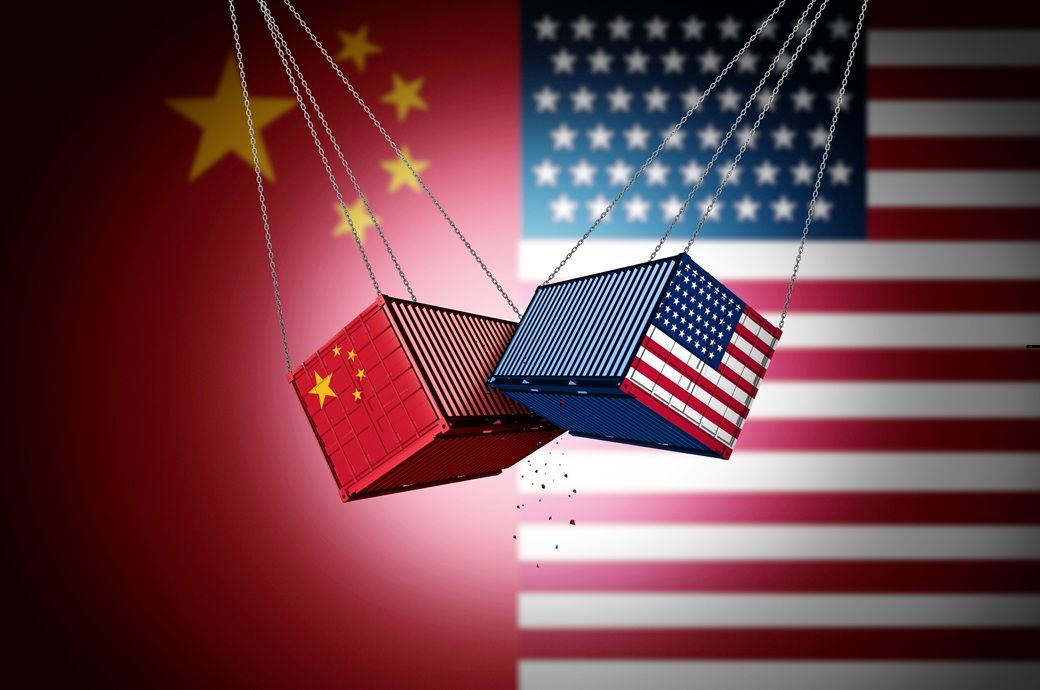
The move follows two separate Section 301 investigations by the Office of the US Trade Representative on March 12 and 13, targeting multiple economies, including China, over concerns such as “overcapacity” and alleged lapses in preventing imports linked to forced labour. Beijing expressed strong dissatisfaction and firm opposition to these actions.
China has launched two trade barrier investigations into the United States (US) measures following recent Section 301 probes by Washington.
The move targets actions affecting global supply chains and green trade.
Beijing opposed the US investigations and said it would take steps based on findings, signalling rising trade tensions between the two economies.
A ministry spokesperson said the probes were initiated in accordance with China’s Foreign Trade Law and related rules, adding that appropriate measures would be taken based on the findings.
Commerce Minister Wang Wentao also raised concerns over the US actions during a meeting with US Trade Representative Jamieson Greer on the sidelines of the 14th WTO Ministerial Conference in Yaoundé, Cameroon.
Fibre2Fashion News Desk (CG)

According to the informal agreement, there will be a new handling fee for each item entering the EU from non-EU countries and sent directly to EU consumers, to cover the extra cost of handling an ever-increasing number of individual parcels.
This will be paid by the same entity responsible for paying other customs charges for the same parcel, to avoid shifting the cost to consumers.
The European Parliament and European Council have reached a deal on a major reform of the EU Customs Code to address problems relating to e-commerce, safety of goods and efficiency.
A new handling fee will be charged for each item entering the EU from non-EU nations and sent directly to EU consumers.
The European Commission will establish the level of the fee and reassess it every two years.
The European Commission will establish the level of the fee and reassess it every two years. Member states will start collecting it as soon as the necessary information technology (IT) system becomes operational, and in any case no later than November 1, this year.
Under the new rules, sellers and platforms that facilitate distance sales of goods from non-EU countries directly to EU customers will be treated as importers. This will oblige them to provide customs authorities with all the necessary data, pay or guarantee any charges, and make sure that the goods comply with EU laws, an official release said.
These companies must be established in the EU or be represented by an EU-based entity having either authorised economic operator (AEO) or trusted trader status. This should prevent the use of shell companies.
To incentivise bulk shipments that are easier for customs authorities to check, non-EU country sellers and platforms are encouraged to operate warehouses in the EU. Their intra-EU client shipments would benefit from a lower handling fee, provided their goods were imported in collective packaging and large enough quantities to make customs checks more efficient.
Companies that repeatedly ignore EU rules could be punished with a fine of at least 1 per cent (and up to 6 per cent) of the total value of goods imported into the EU in the previous 12 months.
Additionally, customs authorities may suspend, revoke, or annul their trusted trader or AEO status and flag them as high-risk operators.
Import-export companies that follow the rules and agree to cooperate transparently with the customs authorities may benefit from a simplified ‘trust and check’ regime. This would initially require them to go through thorough vetting and grant customs authorities access to their electronic systems.
In exchange, their shipments would be checked less frequently and they would have more flexibility regarding the payment of duties and fees.
The current AEO qualification will remain in place to keep customs status accessible to smaller economic operators.
The reform also establishes a new customs data hub to be managed by the new EU Customs Authority (EUCA). It will be available for optional use by 2031 and mandatory by 2034.
The data hub will replace at least 111 software systems currently used by customs.
The provisional agreement needs to be officially approved by Parliament in plenary as well as by the EU Council, before it will become law.
Fibre2Fashion News Desk (DS)
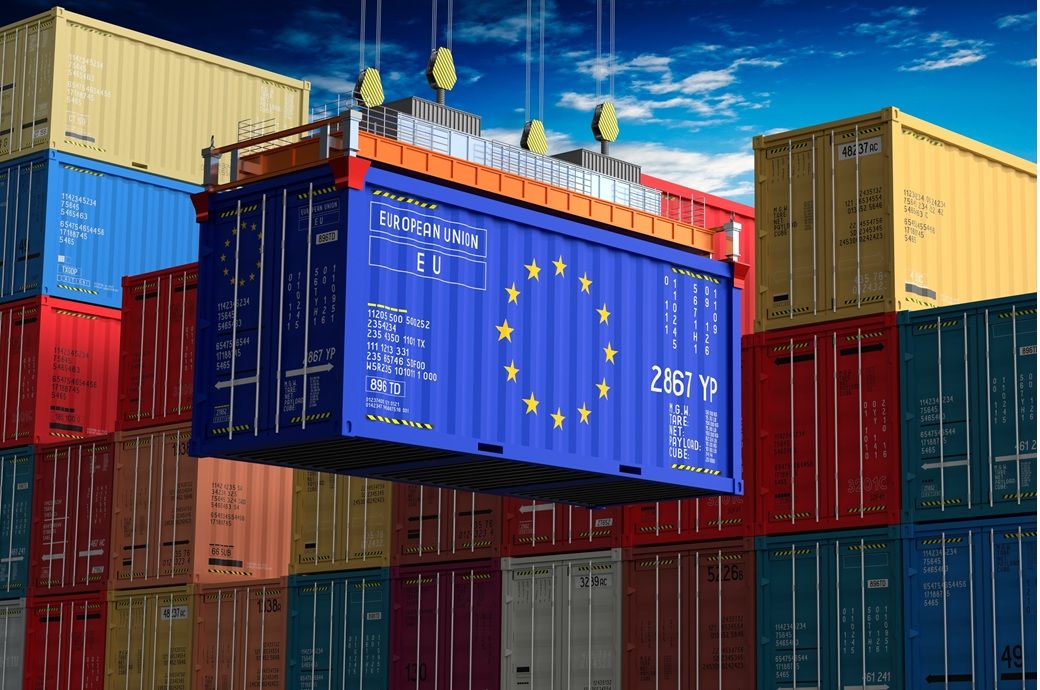
This was driven by an 8.36-per cent YoY decline in import volume and a 7.76-per cent YoY decrease in average unit prices.
The EU’s apparel imports fell by 15.48 per cent YoY in January to €7.03 billion, according to Eurostat.
Bangladesh’s apparel exports to the EU fell to €1.43 billion in January—a 25.25-per cent drop in value.
China remained the top exporter of apparel to the EU (€2.22 billion), but still saw a 6.9-per cent decline YoY in value.
India, Pakistan, Vietnam and Cambodia also remained in negative territory.
Bangladesh’s apparel exports to the bloc fell to €1.43 billion in January—a sharp 25.25-per cent drop in value. It saw a 17.49-per cent YoY decrease in the quantity of goods shipped, coupled with a 9.41 per cent drop in the unit price per kilogram.
China remained the top exporter of apparel to the EU (€2.22 billion), but still saw a 6.9-per cent decline YoY in value. Its unit prices dropped by 8.01 per cent YoY, while its export volume grew a bit by 1.21 per cent YoY.
Turkey faced a severe hit with a 29.12-per cent YoY decrease in apparel export value to the EU in the month, totaling €619.98 million.
Other countries like India, Pakistan, Vietnam and Cambodia remained in negative territory, reflecting a broad-based slowdown in the European fashion retail market.
Fibre2Fashion News Desk (DS)


Venezuela’s Maduro thanks supporters in first online post from US prison

Global ‘No Kings’ protests target Trump and war on Iran

Arizona beats Purdue to make first Final Four since 2001

-
 Business1 week ago
Flipkart group CFO to leave co amid IPO plans – The Times of India
-

 Sports1 week ago
Rating Adidas’ 2026 World Cup away shirts: Argentina, Spain, Mexico and more
-

 Fashion1 week ago
China’s textile & apparel exports surge 17% to $50 bn in Jan-Feb 2026
-

 Sports1 week ago
American Conference Commissioner Tim Pernetti thanks Trump for Army-Navy game executive order
-
Tech1 week ago
The Corsair 4000D RS PC Case Keeps Your System Cool
-

 Tech1 week ago
Gamers Hate Nvidia’s DLSS 5. Developers Aren’t Crazy About It, Either
-
 Business5 days ago
Property Play: Home flippers see smallest profits since the Great Recession, real estate data firm says
-
 Business1 week ago
‘Marriage penalty’ in Washington state’s new millionaire tax stirs debate