

Politics
UK PM announces £10m additional funding to protect British Muslims from hate crime

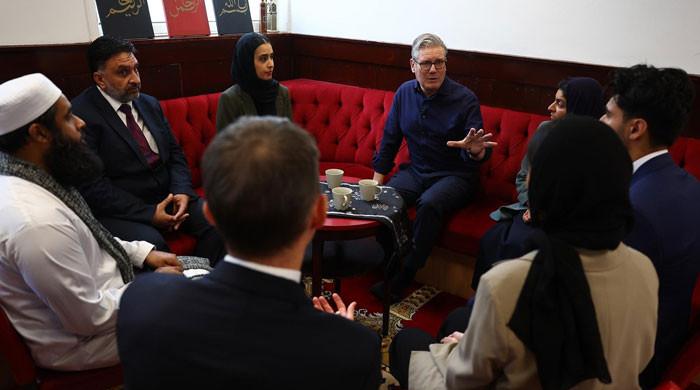
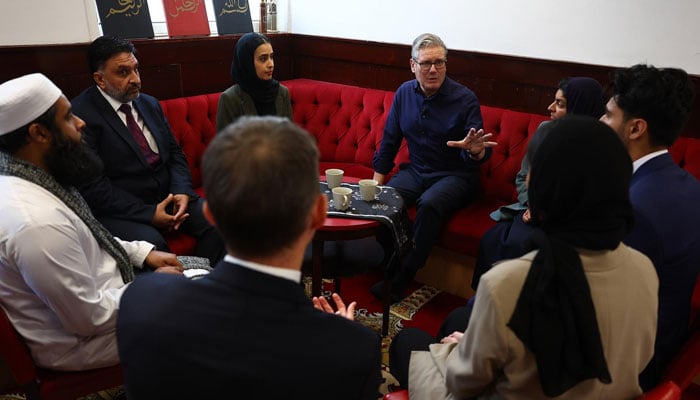
LONDON: Prime Minister Keir Starmer has pledged an additional £10 million in security funding to protect Muslim communities from hate crimes and attacks after increase in attacks on Muslims and mosques across the UK.
The UK PM announced the funding boost following a visit to the Peacehaven Mosque in East Sussex which was targeted in a suspected arson attack earlier this month.
No one was injured in the fire which damaged the front entrance of the mosque and a car, while the police said they are treating the incident as a hate crime. Two people have been arrested but not charged.
The new investment for mosques and Muslim faith centres will provide security measures including CCTV, alarm systems, secure fencing and security staff, the Government said.
Keir said: “Britain is a proud and tolerant country. Attacks on any community are attacks on our entire nation and our values. This funding will provide Muslim communities with the protection they need and deserve, allowing them to live in peace and safety. I want a Britain built for all and my government is committed to delivering safer streets for everyone – and that means protecting places of worship from those who seek to divide us through hate and violence.”
Home Secretary Shabana Mahmood said: “The attack on the Peacehaven Mosque was an appalling crime, that could easily have led to an even more devastating outcome.
“I am proud of this country because of the rights we all have to follow the faith of our choosing, and to live free from hatred and fear. That right must be defended. Violence and intimidation directed at any community or faith are attacks on us all. We must stand together against those who seek to divide us.”
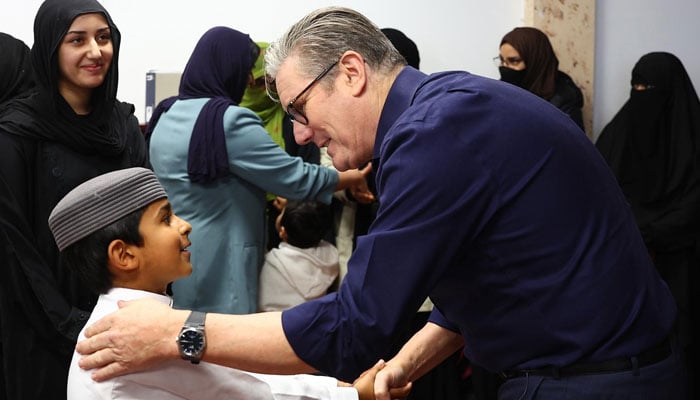
During the visit, relatives of a member of the mosque who fled from inside when the door was torched told the Prime Minister he has become withdrawn after the incident.
“He’s very traumatised,” one family member told Sir Keir.
“This (mosque) was his life.”
“We shouldn’t need to have security in places of worship, and it’s sad that we do,” the Prime Minister told members of the community. “That (funding) just reflects the responsibility on me, or my Home Secretary and your MP, to do everything we can tackle hate crime, but also to express our support and solidarity.”
The additional £10 million will boost the Protective Security for Mosques Scheme which protects Muslim community centres and faith schools that have either experienced or are vulnerable to hate crime and builds on the £29.4 million already available this year, the Government said.
According to the government, the most recent hate crime statistics show that anti-Muslim hate crimes rose by 19% in the year ending March 2025, while 44% of all religious hate crimes targeted Muslims.
The chief executive of the British Muslim Trust, Akeela Ahmed welcomed the announcement, saying that everyone “deserves to live their life peacefully” and “without the threat of fear”.
She added: “Sadly, this is not the case for too many members of our Muslim communities. They have become fearful and apprehensive as their Mosques, places dedicated to faith, love and peace, have been vandalised, set on fire and worshippers abused and assaulted. We welcome the announcement of this funding which will play a key role in helping members of Britain’s Muslim communities feel the safety and reassurance they need and deserve.”
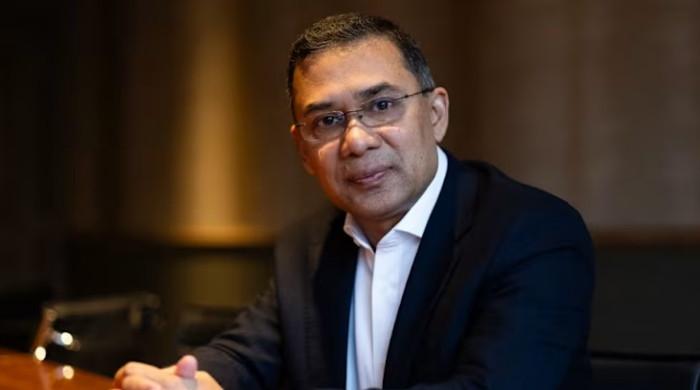
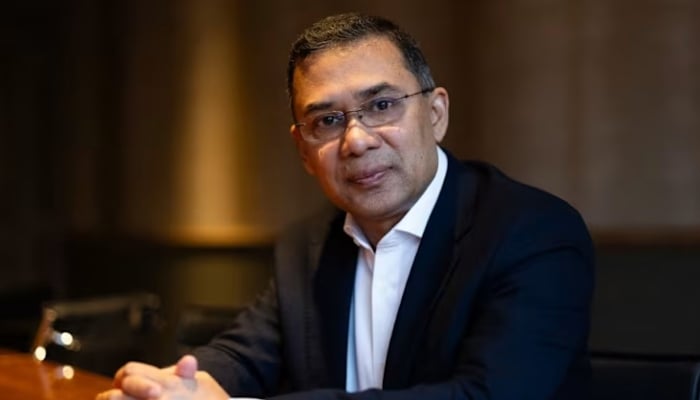
- Rahman serves as acting chairman of BNP.
- Political scion expected to take reins from Khaleda Zia.
- Rahman acquitted of most serious charge.
The heir to Bangladesh’s longtime ruling family and a leader of its most powerful political party, Tarique Rahman is set to return home after 17 years in exile and ahead of key elections.
Rahman, 60, an aspiring prime minister who has lived in London since he fled Bangladesh in 2008 over what he called a politically motivated persecution, is due to arrive in Dhaka on Thursday.
Acting chairman of the Bangladesh Nationalist Party (BNP), he is expected to take the reins from his ailing mother, 80-year-old former prime minister Khaleda Zia.
Despite years of ill health and imprisonment, Zia vowed in November to campaign in the February 12, 2026 elections.
But she was hospitalised soon after that pledge, and she has been in intensive care ever since.
The elections will be the first since a mass uprising last year ended the 15-year hardline rule of Sheikh Hasina, who was at odds with the BNP.
Since Hasina’s fall from power, Rahman has been acquitted of the most serious charge against him: a life sentence handed down in absentia for a 2004 grenade attack on a Hasina rally. He had denied the charges.
BNP secretary general Mirza Fakhrul Islam Alamgir has promised Rahman will “arrive among us on the soil of Dhaka” on December 25, which he said will be a “fantastic day.”
Rahman, often pictured beside his mother on BNP banners, has long been groomed for leadership.
In June, he met in London with Muhammad Yunus, the 85-year-old Nobel Peace Prize winner leading the interim government until the February elections.
Violent politics
Rahman, known in Bangladesh as Tarique Zia, carries a political name that has defined his life.
Born in 1967 when the country was still East Pakistan, he was briefly detained as a child during the 1971 war. The BNP hails him as “one of the youngest prisoners of war”.
His father, Ziaur Rahman, was an army commander.
Ziaur Rahman gained influence months after a 1975 coup in which Sheikh Hasina’s father — founding leader Sheikh Mujibur Rahman was murdered.
That fuelled lifelong tensions between the Zia and Hasina families, dubbed the “Battle of the Begums” — “begum” meaning a powerful woman.
Ziaur Rahman was assassinated when his son was 15.
The younger Rahman grew up in his mother’s political orbit, as Zia went on to become the country’s first female prime minister, alternating her terms in power with Hasina.
Rahman briefly studied international relations at Dhaka University before entering politics at 23, joining the BNP in its fight against military ruler Hussain Muhammad Ershad, according to his party.
‘Unnerves many’
Still, Rahmans’ career has been dogged by allegations of nepotism and mismanagement.
A 2006 US embassy cable described him as the BNP’s “heir apparent” who “inspires few but unnerves many”.
Other cables labelled him a “symbol of kleptocratic government and violent politics” and accused him of being “phenomenally corrupt” — claims he rejected as politically motivated.
Rahman was arrested on corruption charges in 2007 and claimed he was tortured in custody.
Reports suggested his release was conditional on leaving politics. Freed later that year, he flew to London in 2008 for medical treatment and never returned.
After Hasina swept to power in 2008, her government jailed tens of thousands of BNP members.
In 2018, Rahman was again sentenced in absentia to life imprisonment for allegedly orchestrating the 2004 attack on Hasina’s rally — a case the BNP called a bid to eliminate the Zia dynasty from politics.
In Britain, he kept a low profile alongside his wife, a cardiologist, and their daughter.
Since Hasina’s ouster, Rahman emerged as an outspoken figure on social media and a rallying point for BNP supporters.
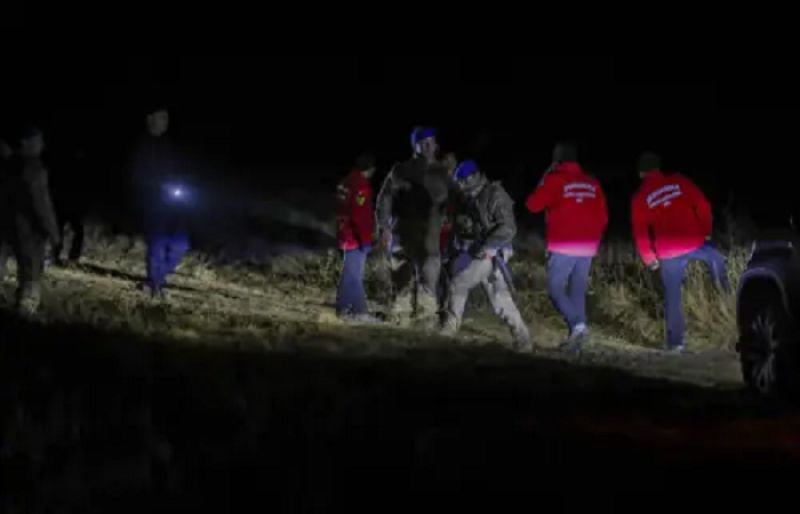

The Libyan army’s chief of staff, Mohammed Ali Ahmed Al-Haddad, died in a plane crash after leaving Turkiye capital Ankara, the prime minister of Libya’s internationally recognised government said, adding that four others were on the jet as well.
“This followed a tragic and painful incident while they were returning from an official trip from the Turkish city of Ankara.
This grave loss is a great loss for the nation, for the military institution, and for all the people,” Libyan Prime Minister Abdulhamid Dbeibah said in a statement.
He said the commander of Libya’s ground forces, the director of its military manufacturing authority, an adviser to the chief of staff, and a photographer from the chief of staff’s office were also on the aircraft.
Platform X that the plane had taken off from Ankara’s Esenboga Airport at 1710 GMT en route to Tripoli, and that radio contact was lost at 1752 GMT.
He said authorities found the plane’s wreckage near the Kesikkavak village in Ankara’s Haymana district.
He added that the Dassault Falcon 50-type jet had made a request for an emergency landing while over Haymana, but that no contact was established.
The cause of the crash was not immediately clear.
Turkiye’s defence ministry had announced Haddad’s visit earlier, saying he had met with Turkish Defence Minister Yasar Guler and Turkish counterpart Selcuk Bayraktaroglu, along with other Turkish military commanders.
The crash occurred a day after Turkiye’s parliament passed a decision to extend the mandate of Turkish soldiers’ deployment in Libya by two more years.
Nato member Turkiye has militarily and politically supported Libya’s Tripoli-based, internationally recognised government.
In 2020, it sent military personnel there to train and support its government and later reached a maritime demarcation accord, which has been disputed by Egypt and Greece.
In 2022, Ankara and Tripoli also signed a preliminary accord on energy exploration, which Egypt and Greece also oppose.
However, Turkiye has recently switched course under its “One Libya” policy, ramping up contacts with Libya’s eastern faction as well.
- US tells UN it will cut Maduro, drug cartel off from resources.
- Russia warns US actions could set precedent for Latin America.
- China urges US to “avoid further escalation of tensions”.
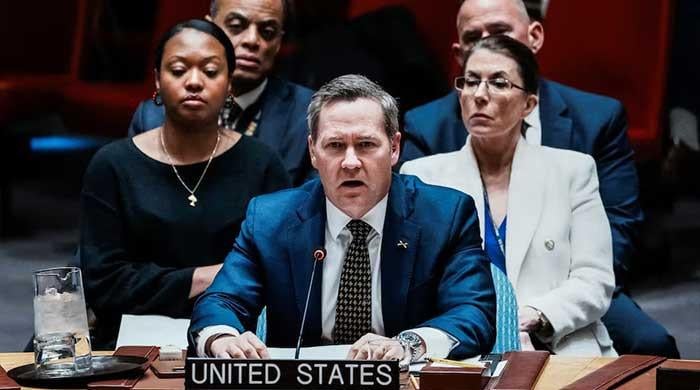
The United States told the United Nations on Tuesday it will impose and enforce sanctions “to the maximum extent” to deprive Venezuelan President Nicolas Maduro of resources as Russia warned other Latin American countries could be next.
US President Donald Trump’s administration has for months waged a campaign of deadly strikes against suspected drug trafficking boats off the Venezuelan coast and the Pacific coast of Latin America. He has threatened strikes on Venezuelan land.
“The single most serious threat to this hemisphere, our very own neighbourhood and the United States, is from transnational terrorist and criminal groups,” US Ambassador to the UN Mike Waltz told the UN Security Council.
The US has ramped up its military presence in the region and Trump announced a blockade of all vessels subject to US sanctions.
So far this month, the US Coast Guard has intercepted two tankers in the Caribbean Sea, both fully loaded with Venezuelan crude. The Coast Guard is also pursuing a third empty vessel that was approaching the OPEC country’s shore.
“The reality of the situation is that sanctioned oil tankers operate as the primary economic lifeline for Maduro and his illegitimate regime. The sanctioned tankers also fund the narco-terrorist group Cartel de Los Soles,” Waltz said.
Washington designated Cartel de los Soles, or Cartel of the Suns, as a foreign terrorist organisation late last month for the group’s alleged role in importing illegal drugs into the US. It accuses Maduro of leading Cartel de los Soles. Venezuela’s government rejected what it called a “ridiculous” move to designate the “non-existent” group.
“This intervention which is unfolding can become a template for future acts of force against Latin American states,” Russia’s UN Ambassador Vassily Nebenzia told the Security Council, citing a recent strategy document from Trump that said the US will reassert its dominance in the Western Hemisphere.
Waltz spoke after Nebenzia and did not directly respond to his remark.
China urged the United States to “immediately halt relevant actions and avoid further escalation of tensions,” China’s Deputy UN Ambassador Sun Lei told the council.
Venezuela, backed by Russia and China, requested Tuesday’s meeting, the second held on the escalating tensions.
The Security Council first met in October, when the United States justified its actions as consistent with Article 51 of the founding UN Charter, which requires the Security Council to be immediately informed of any action states take in self-defence against armed attack.
“Let it be clear once and for all that there is no war in the Caribbean, there is no international armed conflict, nor is there a non-international one, which is why it is absurd for the US government to seek to justify its actions by applying the rules of war,” Venezuela’s UN Ambassador Samuel Moncada told the council.
“The threat is not Venezuela. The threat is the US government,” he said.


Import prices in Germany drop 1.9% YoY in Nov 2025: Destatis

Ex-NASCAR star Greg Biffle’s friend receives holiday card days after tragic plane crash
What are the ‘hidden charges’ on forex transactions: RBI issues draft rules on charges; what could change? – The Times of India

-

 Fashion6 days ago
Indonesia’s thrift surge fuels waste and textile industry woes
-
 Business6 days ago
BP names new boss as current CEO leaves after less than two years
-

 Tech6 days ago
T-Mobile Business Internet and Phone Deals
-

 Sports1 week ago
Jets defensive lineman rips NFL officials after ejection vs Jaguars
-

 Sports6 days ago
PKF summons meeting after Pakistani player represents India in kabaddi tournament
-

 Entertainment1 week ago
Prince Harry, Meghan Markle’s 2025 Christmas card: A shift in strategy
-
 Entertainment6 days ago
India streamlines visa rules in boost for Chinese professionals
-

 Sports6 days ago
UWCL grades for all 18 teams: Leuven get A+; Barça an A-, PSG fail