

Business
UK social media campaigners among five denied US visas

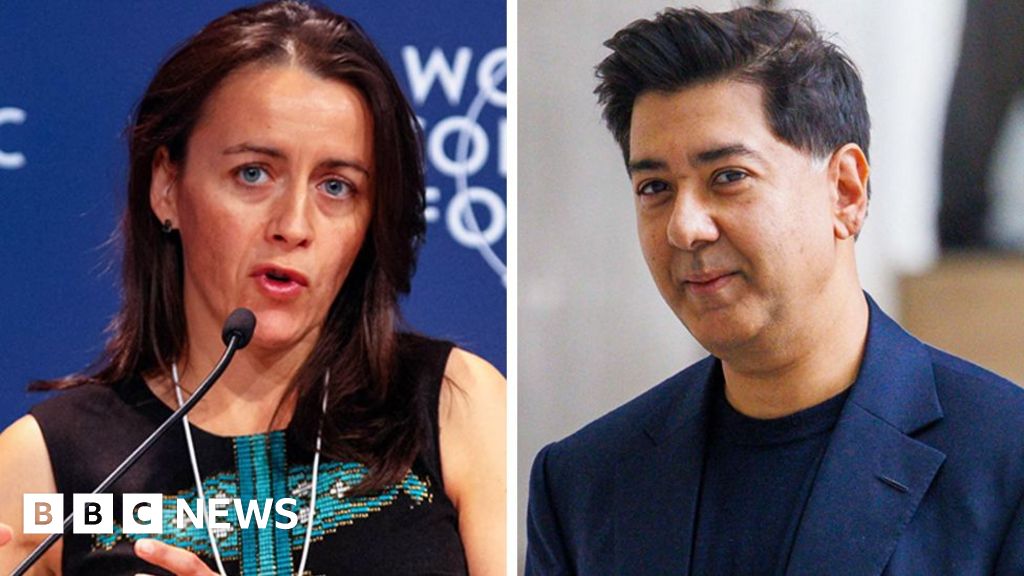
Two British campaigners are among five people denied US visas after the State Department accused them of seeking to “coerce” American tech platforms into suppressing free speech.
Imran Ahmed, an ex-Labour adviser who now heads the Centre for Countering Digital Hate (CCDH), and Clare Melford, CEO of the Global Disinformation Index (GDI), were labelled “radical activists” by the Trump administration and banned from entering the US.
A French ex-EU commissioner and two senior figures at a Germany-based anti-online hate group were also denied visas.
European leaders have condemned the measures, while the UK government said it is “fully committed” to upholding free speech.
“While every country has the right to set its own visa rules, we support the laws and institutions which are working to keep the internet free from the most harmful content,” a UK government spokesperson said.
French President Emmanuel Macron described the travel ban as “intimidation and coercion aimed at undermining European digital sovereignty” while the EU’s foreign policy chief Kaja Kallas said it was “unacceptable and an attempt to challenge our sovereignty”.
The US billed the measures as a response to people and organisations that have campaigned for restrictions on American tech firms, with Secretary of State Marco Rubio saying they belonged to a “global censorship-industrial complex”.
He said: “President Trump has been clear that his America First foreign policy rejects violations of American sovereignty. Extraterritorial overreach by foreign censors targeting American speech is no exception.”
Ahmed from the CCDH, which says it advocates for government action against hate speech and disinformation online, has links to senior Labour figures. He was previously an aide to Labour minister Hilary Benn, and Sir Keir Starmer’s chief of staff Morgan McSweeney has served as a director of the group he founded.
The US government labelled Ahmed a “collaborator” for the CCDH’s purported past work with the Biden administration. BBC News has contacted the CCDH for comment.
Melford founded the GDI, a non-profit that monitors the spread of disinformation, in 2018.
US Undersecretary of State Sarah B Rogers accused the GDI of using US taxpayer money “to exhort censorship and blacklisting of American speech and press”.
A GDI spokesperson told the BBC that “the visa sanctions announced today are an authoritarian attack on free speech and an egregious act of government censorship”.
“The Trump Administration is, once again, using the full weight of the federal government to intimidate, censor, and silence voices they disagree with. Their actions today are immoral, unlawful, and un-American.”
Also targeted was Thierry Breton, the former top tech regulator at the European Commission, who suggested that a “witch hunt” was taking place.
Breton was described by the State Department as the “mastermind” of the EU’s Digital Services Act (DSA), which imposes content moderation on social media firms.
However, it has angered some US conservatives who see it as seeking to censor right-wing opinions. Brussels denies this.
Breton has clashed with Elon Musk, the world’s richest man and owner of X, over obligations to follow EU rules.
The European Commission recently fined X €120m (£105m) over its blue tick badges – the first fine under the DSA. It said the platform’s blue tick system was “deceptive” because the firm was not “meaningfully verifying users”.
In response, Musk’s site blocked the Commission from sharing adverts on its platform.
Reacting to the visa ban, Breton posted on X: “To our American friends: Censorship isn’t where you think it is.”
Also subject to bans were Anna-Lena von Hodenberg and Josephine Ballon of HateAid, a German organisation that the State Department said helped enforce the DSA.
In a statement to the BBC, the two CEOs called it an “act of repression by a government that is increasingly disregarding the rule of law and trying to silence its critics by any means necessary”.
They added: “We will not be intimidated by a government that uses accusations of censorship to silence those who stand up for human rights and freedom of expression.”

The Felix Project is among the organisations feeling the effects of increased costs due to the conflict in Iran.
Source link
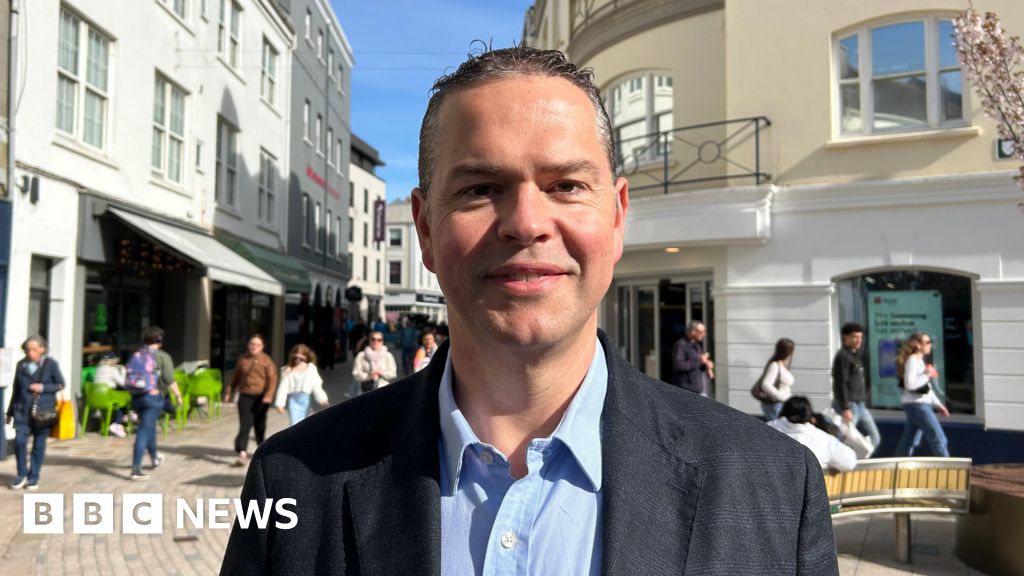
Bosses say a good start to the year has been put at risk, but opportunities have also emerged.
Source link
Business
Crude oil soars as Middle east conflict chokes supply routes, Hormuz concerns stokes panic – SUCH TV
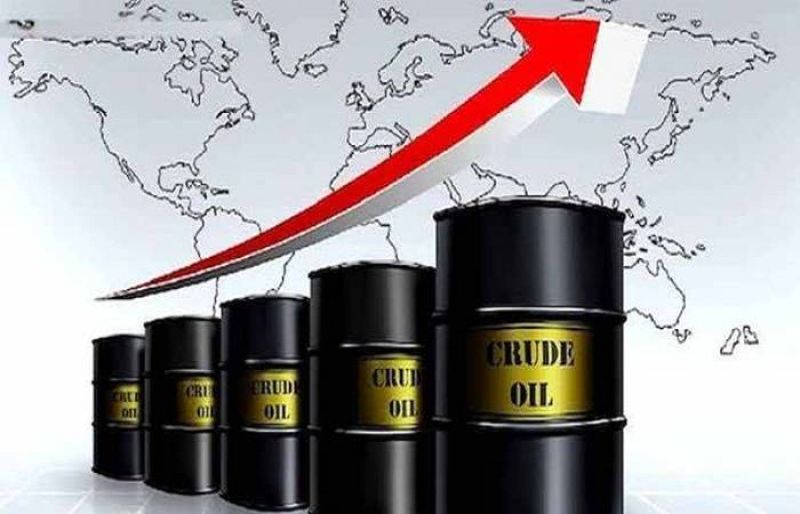
Crude oil prices climbed on Monday on continuing fears of supply losses because of shipping disruptions in the key Middle East producing region from the US-Israeli war with Iran.
Brent crude futures rose $1.71, or 1.6%, to $110.74 a barrel by 0057 GMT. US West Texas Intermediate crude futures gained $0.71, or 0.6%, to trade at $112.25 per barrel.
On Thursday, the last trading day before the Good Friday holiday break, WTI settled up more than 11%, and Brent soared nearly 8% in volatile trading, recording their biggest absolute price increase since 2020, as US President Donald Trump promised to continue attacks on Iran.
The Strait of Hormuz, which carries oil and petroleum products from Iraq, Saudi Arabia, Qatar, Kuwait and the United Arab Emirates, remains largely closed by Iranian attacks on shipping after the war began on February 28.
Because of the Middle East supply disruptions, refiners are seeking alternative sources for crude, particularly for physical cargoes in the US and the UK North Sea.
“Global buyers are bidding aggressively for (US) Gulf Coast barrels, and Brent is rallying even faster,” the Schork Group said in a client note on Monday.
On Sunday, Trump ratcheted up pressure on Tehran, threatening in an expletive-laden Easter Sunday social media post to target Iran’s power plants and bridges on Tuesday if the strategic Strait of Hormuz is not reopened.
Still, some vessels, including an Omani-operated tanker, a French-owned container ship and a Japanese-owned gas carrier, crossed the Strait of Hormuz since Thursday, shipping data showed, reflecting Iran’s policy to allow passage for vessels from countries it deems friendly.
The war threatens to linger on as Iran has officially told mediators it is not prepared to meet with US officials in the Pakistani capital, Islamabad, in the coming days, and efforts to produce a ceasefire have reached a dead end, the Wall Street Journal reported on Friday.
On Sunday, OPEC+, consisting of some members of the Organisation of the Petroleum Exporting Countries and allies such as Russia, agreed to a modest rise of 206,000 barrels per day for May.
However, that decision will largely exist on paper as several of the group’s key producers are unable to raise output due to the war.
Russian supply has been disrupted recently by Ukrainian drone attacks on its Baltic Sea export terminal. Media reports on Sunday said its Ust-Luga terminal resumed loadings on Saturday after days of disruptions.


Japan’s GDP growth to moderate to 0.8% in 2026: IMF

Hailey Bieber leans into motherhood with style

Iran, US ‘receive plan’ to end hostilities, immediate ceasefire

-

 Sports1 week ago
USMNT handed reality check by Doku, Belgium ahead of World Cup
-

 Sports1 week ago
2026 NCAA men’s hockey tournament: Schedule, results
-
Uncategorized4 days ago
[CinePlex360] Please moderate: “Trump signals p
-

 Tech3 days ago
Our Favorite iPad Is $50 Off
-
Uncategorized7 days ago
[CinePlex360] Please moderate: “Further tariff
-

 Entertainment3 days ago
Joe Jonas shares candid glimpse into parenthood with Sophie Turner
-

 Entertainment1 week ago
The Avett Brothers’ bassist explains why he wrote a book about John Quincy Adams
-

 Entertainment1 week ago
Demystifying the PTI