

Fashion
US brand Ralph Lauren partners with TÓPA to honour Indigenous craft

Wife-and-husband Jocy and Trae Little Sky are the founders of TÓPA, award-winning performers, designers and proud members of the Oceti Sakowin. Jocy is Dakota and from the Mandan, Hidatsa and Arikara Nations and Trae is Oglala Lakota and Stoney Nakoda. As a family, the Little Skys embrace traditional arts by meticulously hand-crafting regalia worn during Pow Wows, using time-honored techniques such as quilling, beading and leatherwork, which serve as a living expression of their heritage.
Ralph Lauren has launched the Polo Ralph Lauren x TÓPA collection, created with Indigenous-led brand TÓPA founded by Jocy and Trae Little Sky.
Blending Native craftsmanship with Polo’s heritage style, the collaboration reflects cultural storytelling and traditional artistry.
A share of proceeds will support Thunder Valley CDC’s Lakota Language and Education Initiative.
Ralph Lauren’s Artist in Residence program is an ongoing initiative that invites artisans who sustain heritage craft to collaborate with its design teams in a mutually beneficial creative partnership. This program is part of the Company’s larger efforts, known as Design with Intent, to expand its portrayal of America and to evolve from inspiration to collaboration with communities that have historically inspired Ralph Lauren’s designs. TÓPA is the Company’s fourth Artist in Residence collaboration, following the program’s debut with the Polo Ralph Lauren x Naiomi Glasses collection in 2023, the Double RL x Zefren-M capsule in 2024 and the Fall 2025 Ralph Lauren Home collection featuring designs by Naiomi and Tyler Glasses.
“We’ve long admired Ralph Lauren and how the brand brings worlds to life through its designs and storytelling,” said Jocy Little Sky, co-founder of TÓPA. “This collaboration with Polo Ralph Lauren honors our community, culture and way of life, and we hope it inspires people to be proud of who they are, where they come from and to follow their dreams.”
The vast and rugged landscapes of the American West — and its enduring artistry and spirit of home — have long been a source of inspiration for Ralph Lauren. This season, that landscape serves as the backdrop for the brand’s holiday campaign, a celebration of family, togetherness and community that is also reflected in the timeless pieces created in collaboration with TÓPA.
The Polo Ralph Lauren x TÓPA collection celebrates the beauty of enduring craftsmanship, merging modern silhouettes with Native design motifs in an assortment of men’s, women’s and accessories products. In the languages of the Oceti Sakowin, “TÓPA” means “four,” a significant number that symbolizes the four directions, four seasons, four stages of life and the four meaningful colors of red, black, yellow and white, weaving profound cultural meaning throughout the collection’s designs.
The story of this partnership is brought to life through a short film that shares Jocy and Trae’s artistry, family life and cultural celebrations that influenced the designs of Polo Ralph Lauren x TÓPA, filmed on the ancestral lands of the Mandan, Hidatsa and Arikara Nations that are located on the Fort Berthold Indian Reservation in North Dakota.
A percentage of the purchase price of each item of the Polo Ralph Lauren x TÓPA collection will be donated to Thunder Valley Community Development Corporation (CDC), specifically supporting its Lakota Language and Education Initiative. The Little Skys honor their heritage by learning their ancestral language, and through this collaboration, Ralph Lauren is proud to support Thunder Valley CDC in its dedicated efforts to preserve Lakota culture and traditions by empowering its community through programs such as Lakota language immersion, traditional arts and storytelling.
The Polo Ralph Lauren x TÓPA collection will be available to consumers in North America on November 18, 2025 on RalphLauren.com, in the Ralph Lauren app and at select Ralph Lauren stores; and globally on November 20 on RalphLauren.com and at select Ralph Lauren stores. It will also be sold on 4Topa4.com, at Bloomingdale’s 59th Street in New York and Century City in Los Angeles and on Bloomingdales.com.
Note: The headline, insights, and image of this press release may have been refined by the Fibre2Fashion staff; the rest of the content remains unchanged.
Fibre2Fashion News Desk (RM)










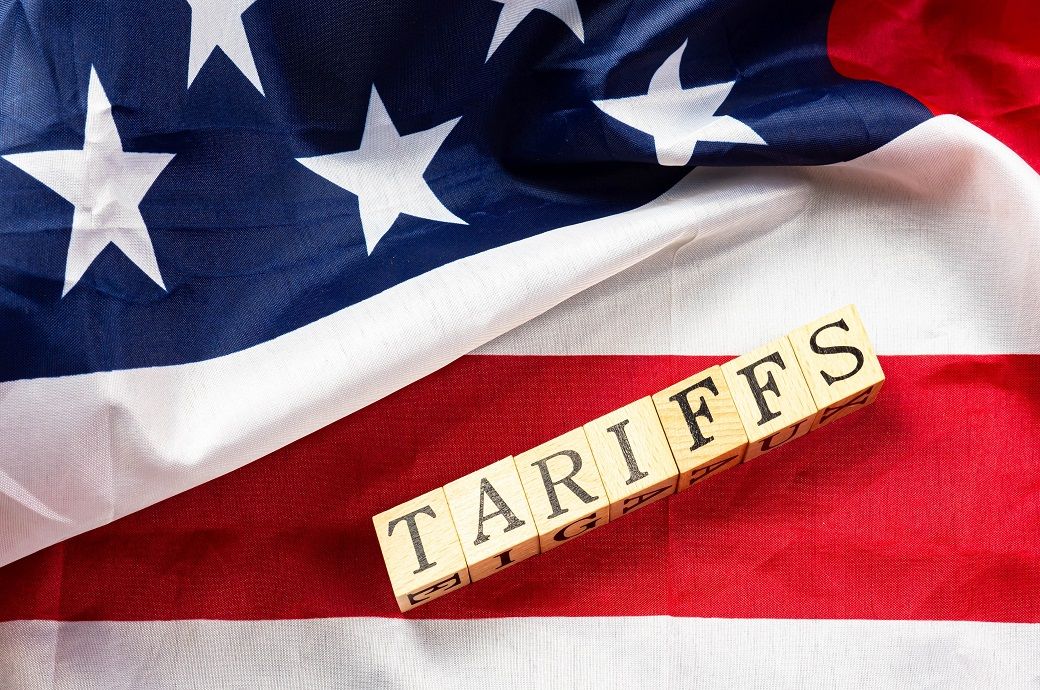
If the US administration imposes a 15-per cent levy, the US ETR would rise to 11.3 per cent.
President Donald Trump reinstated tariffs immediately following the US Supreme Court’s February 20 ruling that invalidated the reciprocal tariffs imposed under the International Emergency Economic Powers Act (IEEPA). The new blanket 10-per cent tariff rate is authorised under Section 122 of the Trade Act of 1974 and expires in 150 days unless extended by Congress.
The 10-per cent blanket reciprocal tariff imposed by the US on most trading partners has reduced the US effective tariff rate (ETR) to 9.4 per cent from 12.7 per cent, Fitch Ratings said.
If a 15-per cent levy is imposed, the ETR would rise to 11.3 per cent.
China has the highest ETR among trading partners, followed by Vietnam, Japan and Brazil.
China’s ETR is around 19 per cent from 29 per cent earlier.
Section 122 permits a maximum rate of 15 per cent but does not allow for tariff adjustments for individual countries.
Prior to the court decision, China was subject to two reciprocal tariffs: a fentanyl tariff of 10 per cent that applied to all imports and a 10-per cent reciprocal tariff on an import base subject to carveouts. The two tariffs have been consolidated into the 10-per cent blanket tariff, reducing China’s ETR to around 19 per cent from 29 per cent, Fitch said in a release.
China still has the highest ETR among major trading partners, followed by Vietnam, Japan and Brazil. Of the United States’ 31 largest trading partners, 26 will see their ETRs decline. Brazil benefits the most, with its ETR decreasing by 18 percentage points (pp) to 11 per cent from 29 per cent.
ETRs for most countries largely remain unchanged following the switch in tariff regimes, and no country will see an increase in its ETR if the Section 122 tariff rate remains at 10 per cent.
Fibre2Fashion News Desk (DS)
Unadjusted, it rose by 2.9 per cent for the 12 months ended January 2026.
Prices for final demand goods declined by 0.3 per cent, the largest decrease since falling 0.7 per cent in March 2025.
The seasonally-adjusted US producer price index (PPI) for final demand rose by 0.5 per cent in January.
Unadjusted, it rose by 2.9 per cent for the 12 months ended January 2026.
Prices for final demand goods declined by 0.3 per cent, the largest decrease since falling 0.7 per cent in March 2025.
Leading the January decline, the index for final demand energy dropped by 2.7 per cent.
Leading the January decline, the index for final demand energy dropped by 2.7 per cent.
The index for final demand less food, energy and trade services moved up by 0.3 per cent in January, the ninth consecutive increase. For the 12 months ended in January, such prices rose by 3.4 per cent, a BLS release said.
The index for final demand goods less food and energy advanced by 0.7 per cent in the month.
Fibre2Fashion News Desk (DS)
Ind-Ra expects sector revenues to grow around 9 per cent year on year (YoY) in FY26 and 10.5 per cent YoY in FY27 following uneven and subdued growth through FY24 and early FY25; the growth in FY25 was 8 per cent YoY.
Ind-Ra expects India’s apparel retail sector revenues to grow around 9 per cent YoY in FY26 and 10.5 per cent YoY in FY27 following uneven and subdued growth through FY24 and early FY25.
Premium, branded and ethnic players are expected to see steadier, high single-digit growth trends.
Ind-Ra feels value retailers will outperform other segments within apparel, with robust revenue growth.
Ind-Ra feels value retailers will outperform other segments within apparel, with robust revenue growth through healthy same store sales growth and rapid store additions, albeit at a lower profitability.
Healthy growth in operating profit coupled with strong inventory turns is expected to result in value retailers demonstrating stronger-than-industry return indicators and credit metrics.
Premium, branded and ethnic players are expected to see steadier, high single-digit growth trends as consumer confidence rebuilds with a better spread out wedding calendar than in FY26 and early signs of normalisation seen in the first nine months of FY26.
Listed apparel retail players from Ind-Ra’s sample set reported revenue growth of around 10 per cent YoY in these nine months as the government’s consumption push through lower taxation and mild inflation resulted in higher disposable income and improved affordability.
The operating profit margins also improved to 15.6 per cent in the nine months compared to 15.2 per cent in FY25 due to various cost optimisation measures adopted by companies.
Organised retailers are pivoting from aggressive expansion to productivity-led growth. After elevated store additions in FY24-FY25, Indian apparel retailers are moderating store roll-outs, sharpening site selection, right-sizing formats and targeting faster ramp-ups of recent openings, with omni-channel execution and scalable franchise models enhancing reach and capital efficiency, Ins-Ra said in a press note.
It expects store additions to ease to nearly 7 per cent YoY in FY26 and 6 per cent YoY in FY27, even as retail area continues to rise by 9 per cent YoY in FY26 and by 9.5 per cent YoY in FY27, reflecting larger average store sizes and assortments designed to lift footfalls, average transaction values and sales per square foot.
Value and luxury segments are set to lead sector performance. Value formats benefit from GST rationalisation at lower price points, improved affordability, and rising private-label penetration, while luxury gains from a widening affluent base and deeper global-brand access.
Fast fashion continues to capture Gen-Z-led, content-driven demand. Casual and athleisure remain ahead of ethnic-casual and formal wear, in line with comfort- and lifestyle-led dressing trends.
Ind-Ra expects profitability to improve gradually as cost optimisation, better sourcing/mix, disciplined advertising and marketing promotions, and operating leverage offset residual pressures from expansion and fixed costs.
The working capital cycle for value retailers is likely to improve YoY in FY27, due to higher inventory turns and improved store level operating metrics.
Overall, as the consumption upturn broadens and retailers prioritise productivity over pace, Ind-Ra expects a stable, sustainable improvement in revenues and operating metrics for organised apparel retailers over FY26–FY27.
The luxury segment is also expected to benefit from an increase in target customer segment through widening affluent base and deeper global-brand access.
Mid-premium and several incumbent retailers witnessed slower growth in FY25, due to entry price mix-shifts and loss of market share to value retailers. This, coupled with investments in store format revamps, has stressed their margin profiles. Profitability pressures and a dip in inventory turns have slightly weakened credit metrics for segment players.
Fibre2Fashion News Desk (DS)


T20 World Cup: Aleem Dar ‘expressed reservations’ over inclusion of Babar, Shadab

Best Buy’s holiday sales disappoint, but retailer shows progress in growing profits

Princess Anne to mark 25 year celebration after ‘outstanding’ honour

-

 Politics5 days ago
What are Iran’s ballistic missile capabilities?
-
 Business7 days ago
Households set for lower energy bills amid price cap shake-up
-

 Sports1 week ago
Top 50 USMNT players of 2026, ranked by club form: USMNT Player Performance Index returns
-

 Politics5 days ago
US arrests ex-Air Force pilot for ‘training’ Chinese military
-

 Sports5 days ago
Sri Lanka’s Shanaka says constant criticism has affected players’ mental health
-
 Business7 days ago
Lucid widely misses earnings expectations, forecasts continued EV growth in 2026
-

 Fashion5 days ago
Policy easing drives Argentina’s garment import surge in 2025
-

 Sports1 week ago
South Africa thrash India by 76 runs in T20 World Cup Super 8 – SUCH TV