

Fashion
US’ Dick’s & Foot Locker report preliminary merger election results


As further described in the election materials and in the parties’ proxy statement/prospectus dated July 11, 2025, each Foot Locker shareholder was entitled to elect to receive, for each share of Foot Locker common stock held prior to the closing of the Merger, either (i) $24.00 in cash (the “cash consideration”) or (ii) 0.1168 shares of DICK’S Sporting Goods common stock (the “stock consideration”). Foot Locker shareholders who failed to make a proper election by the Election Deadline will receive cash consideration for their shares of Foot Locker common stock. Foot Locker shareholders who otherwise would have received a fractional share of DICK’S Sporting Goods common stock upon an election for stock consideration will receive cash in lieu of such fractional share. The election was not subject to a minimum or maximum amount of cash consideration or stock consideration.
Dick’s Sporting Goods and Foot Locker announced preliminary results of shareholder elections for their merger.
Around 92.6 per cent of Foot Locker shareholders opted for stock consideration (0.1168 Dick’s shares per Foot Locker share), while only 1.2 per cent chose cash consideration of $24 per share.
Shareholders who did not elect will receive cash, and fractional shares will be settled in cash.
Based on available information as of the Election Deadline, the preliminary results of the election were:
- Foot Locker shareholders of record of approximately 92.6% of the outstanding shares of Foot Locker common stock elected to receive the stock consideration (which includes 31.6% of the outstanding shares of Foot Locker common stock that made elections pursuant to guaranteed delivery procedures);
- Foot Locker shareholders of record of approximately 1.2% of the outstanding shares of Foot Locker common stock elected to receive the cash consideration (which includes < 0.1% of the outstanding shares of Foot Locker common stock that made elections pursuant to guaranteed delivery procedures); and
- Foot Locker shareholders of record of approximately 6.2% of the outstanding shares of Foot Locker common stock did not make a valid election or did not deliver a valid election form prior to the Election Deadline, which includes approximately 4.5% of the outstanding shares of Foot Locker common stock owned by DICK’S Sporting Goods. Other than the shares of Foot Locker stock owned by DICK’S Sporting Goods, which will be, at the effective time of the Merger, automatically cancelled for no consideration and cease to exist, each non-electing Foot Locker shareholder will be entitled to receive the cash consideration for such shares.
The foregoing results are preliminary only, and final certified results of the election are not expected to be available until shortly before closing of the Merger. As previously disclosed, the Merger is expected to close on September 8, 2025, subject to the satisfaction of remaining customary closing conditions.
Note: The headline, insights, and image of this press release may have been refined by the Fibre2Fashion staff; the rest of the content remains unchanged.
Fibre2Fashion News Desk (RM)










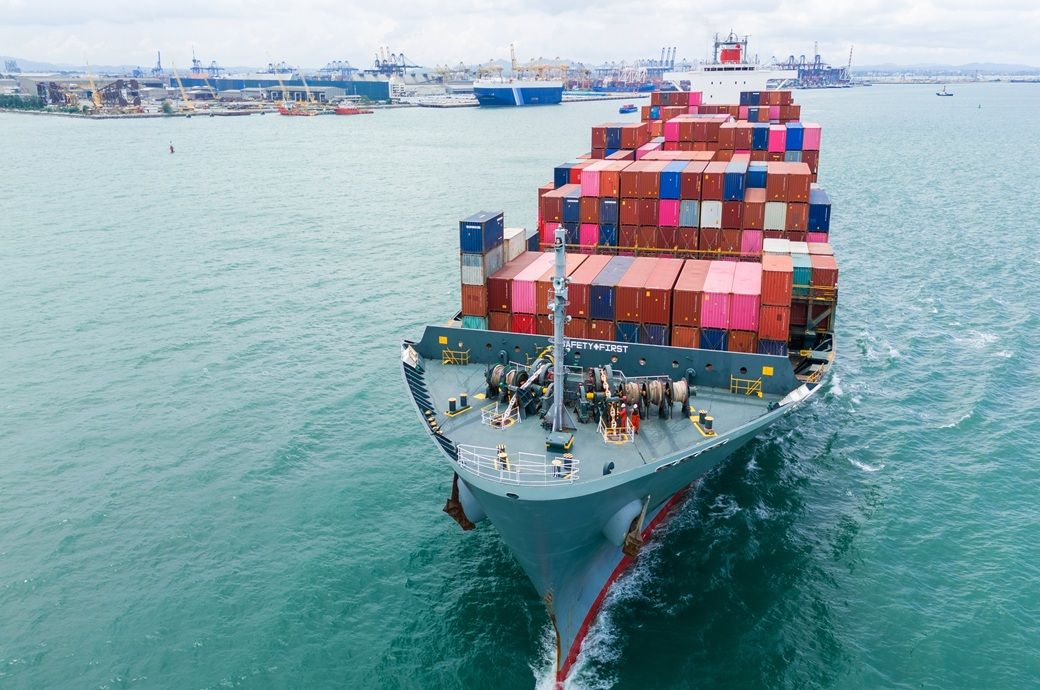
Cold-chain infrastructure remains limited, with around 8,815 storage facilities and a capacity of 40.21 million metric tonnes, the March 2026 report, titled ‘Transforming India’s logistics ecosystem’, noted.
Despite India’s national average logistics cost being down to 7.97 per cent of GDP from 14 per cent earlier, several regions face significantly higher logistics costs due to uneven infrastructure and connectivity, a FICCI-Grant Thornton report said.
Cold-chain infrastructure remains limited.
Non-standard warehousing causes delays, higher costs and inconsistent supply-chain performance, it noted.
As planning was historically fragmented across departments, deep alignment gaps remain.
Non-standard warehousing causes delays, higher costs and inconsistent supply-chain performance, it remarked.
Due to cold chain imbalance and reefer underuse, state-level demand mismatches persist, while refrigerated transport remains significantly underutilised nationwide.
Persistent structural challenges include fragmented infrastructure and limited multimodal integration; continued dependence on road-based freight due to coordination gaps across transport modes; limited adoption of automation; and labour-intensive warehousing and logistics operations, resulting in higher error rates, longer turnaround times and limited scalability, according to the report.
Technology is becoming central to logistics planning and execution, with artificial intelligence-driven demand forecasting and routing, digital twins for warehouse and network design, and IoT-enabled visibility across storage and transport improving decision making, the report added.
Control tower models are enabling real-time coordination and faster response to disruptions, while platforms like ULIP provide the digital backbone for interoperable, multimodal logistics, the report mentioned.
Fibre2Fashion News Desk (DS)

ICE cotton futures recovered due to technical buying and short covering on yesterday. Although, gains were capped by stronger US dollar and persistent inflation worries driven by rising global energy prices which continued to weigh on market sentiment throughout the session. US dollar also made US cotton purchase expensive for overseas buyers.
The most traded May 2026 contract settled at 67.62 cents per pound, up 0.44 cent. The market indicated recovery despite underlying macroeconomic pressure. During the session, the contract touched an intraday low of 66.65 cents, marking its lowest level since March 16, reflecting early weakness before recovery.
The strengthening US dollar index added further pressure, as it makes US cotton more expensive for international buyers, thereby reducing export competitiveness.
The trading session remained highly volatile and mixed, with prices dipping initially and then recovering due to technical buying and short covering.
Technically, the market is showing signs of stabilisation as the May contract has managed to close above its 200-day moving average in 5 out of the last 7 sessions, which is considered a supportive signal for trend recovery.
Trading activity remained subdued with total volume at 52,002 contracts, the lowest in nearly one month, indicating reduced participation and lack of strong conviction among traders. As per ICE data released on March 23, the certified stock of deliverable No.2 cotton remained unchanged at 115,640 bales, indicating a neutral supply-side factor with no fresh pressure from inventories.
Market direction was influenced by uncertain geopolitical developments, particularly conflicting signals around US–Iran diplomacy and fluctuations in crude oil prices, which impacted broader commodity sentiment.
Rising crude oil and energy prices are increasing concerns that inflation will remain elevated, which could spread across commodities and impact cotton pricing dynamics.
According to market analysts, the inflation is unlikely to decline significantly, and sustained higher costs may start affecting cotton demand globally.
Elevated energy prices are expected to increase costs across the entire cotton supply chain, including production, processing, and transportation, which may reduce mill buying interest.
Financial markets have shifted expectations, now indicating no interest rate cuts by the US Federal Reserve in 2026, whereas earlier there were expectations of at least two rate cuts before escalation of Middle East tensions.
Although US President Donald Trump postponed planned strikes on Iranian energy infrastructure, market participants remained sceptical about any quick resolution to Middle East tensions, keeping uncertainty elevated.
The recent upward movement in cotton prices towards 68–69 cents followed by a pullback is being viewed as a normal technical correction, after a sharp rally over the past few weeks.
This morning (Indian Standard Time), ICE cotton for May 2026 was traded at 68.26 cents per pound (up 0.64 cent), cash cotton at 65.62 cents (up 0.44 cents), the July 2026 contract at 70.31 cents (up 0.54 cent), the October 2026 contract at 71.77 cents (up 0.46 cent), the December 2026 at 72.61 cents (up 0.33 cent) and the March 2027 contract at 73.60 cents (up 0.25 cent)). A few contracts remained at their previous closing levels, with no trading recorded so far today.
ICE cotton futures rebounded on technical buying and short covering, with the May 2026 contract settling at 67.62 cents/lb.
However, gains were capped by a stronger US dollar and inflation concerns linked to rising energy prices.
Low trading volumes and geopolitical uncertainty kept sentiment cautious despite signs of technical stabilisation.
Fibre2Fashion News Desk (KUL)
“The WTO needs to change if it intends to have any relevance as the international trading system transitions to focus on reciprocity and balance. The United States, with this report, continues to lead on concrete proposals to promote member-driven reform discussions,” said US Trade Represenative Jamison Greer in a statement.
The US believes WTO members can take a step toward levelling the playing field by strengthening incentives to comply with existing obligations to submit notifications, said a report from the US delegation at the WTO circulated among members.
The report addresses transparency, eligibility for special and differential treatment, plurilateral negotiations, the role of the MFN principle and the Secretariat.
“Our report addresses key issues such as transparency, eligibility for special and differential treatment, plurilateral negotiations, the role of the most favoured nation principle, the role of the Secretariat, and essential security.”
The report builds on an initial paper issued by the United States in December 2025 and is intended to give impetus to reform discussions during and after MC14.
Washington believes that WTO members should seek to restore the purpose of special and differential treatment (SDT) by agreeing to objective criteria for determining eligibility and efforts should focus on finding a more flexible pathway to incorporate plurilateral agreements into the WTO architecture.
Members need to rethink how the most favoured nation (MFN) principle functions in its current form and embark on a frank discussion of the link between MFN and reciprocity, which itself is a bedrock WTO founding principle, the report noted.
Members should ensure the WTO Secretariat serves the interests of the members, and not of the institution or any abstract trading ‘system’, it said.
Fibre2Fashion News Desk (DS)


High logistics costs burden several Indian regions: Report

PSX slips as doubts grow over Middle East peace

Iran says ‘No talks with US’, and wants end to war on its terms

-

 Fashion1 week ago
Sales at US apparel, clothing accessories stores up 4% YoY in Jan 2026
-

 Tech1 week ago
Justice Department Says Anthropic Can’t Be Trusted With Warfighting Systems
-

 Entertainment1 week ago
Val Kilmer revived 1 year after death through AI
-

 Sports1 week ago
March Madness 2026 – How to watch in SA, start time, schedule, TV channel for NCAA championship basketball tournament
-
 Business1 week ago
Stocks and pound rise as US rate call approaches
-

 Politics1 week ago
Iran strikes Tel Aviv with cluster-warhead missiles in retaliation of Larijani’s martyrdom
-
 Business1 week ago
Brits cashing in jewellery as gold price hits record high
-

 Fashion5 days ago
China’s textile & apparel exports surge 17% to $50 bn in Jan-Feb 2026