

Business
‘US has long benefitted from free trade’: Chinese envoy slams 50% tariffs on India; calls them ‘unfair, unreasonable’ – The Times of India

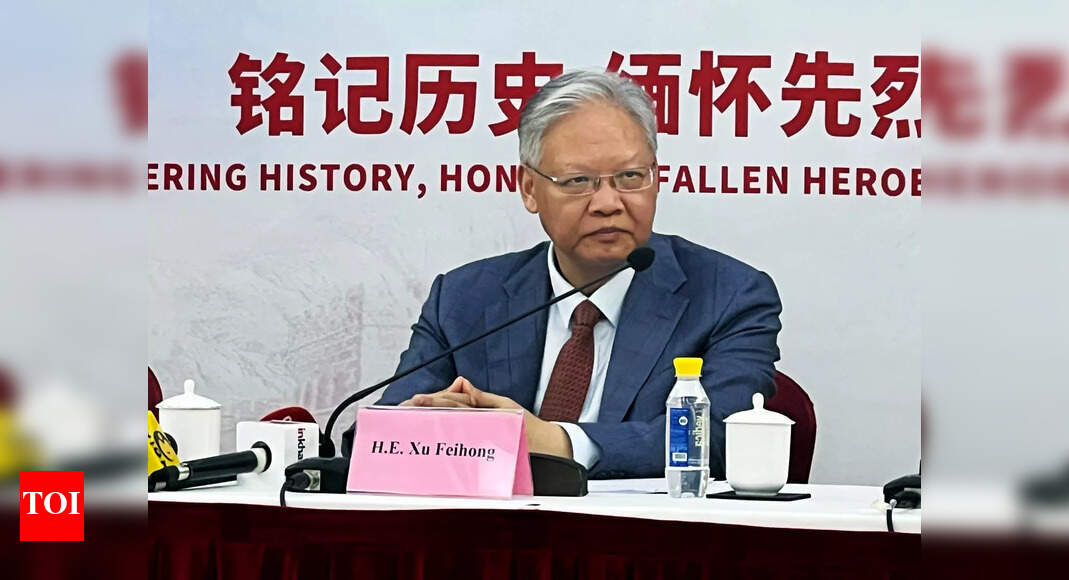
China took aim at the United States on Monday, sharply criticizing its 50% tariffs on Indian imports, calling the move “unfair, unreasonable” and making it clear that Beijing firmly opposes the move.China’s ambassador to India, Xu Feihong said that Washington has long taken advantage of free trade, but is now using it as a weapon.Speaking at a seminar marking the 80th Anniversary of the Victory in the Chinese People’s War of Resistance Against Japanese Aggression and the World Anti-Fascist War, Xu said, “The United States has long benefited from free trade. But now it is using tariffs as a weapon to demand exorbitant prices… The 50% tariff on India is unfair, unreasonable, and China firmly opposes it.”The ambassador also stressed the importance of strong India-China ties for global development. “As the two most significant emerging economies, China and India should prioritise development and foster mutual support and success. This is what President Xi told PM Modi. PM Modi said that India-China cooperation will make the 21st century a genuine Asian century,” ANI reported him as saying.Xu’s remarks, delivered under the theme Learning from History to Safeguard the Light of Peace, Joining Hands to Chart a Blueprint for Development, highlighted the shared history of both nations and their commitment to peace and progress in Asia.His comments come amid growing economic uncertainty after the US imposed a an additional 25% levy on 27 August as a secondary sanction linked to India’s purchases of Russian crude. This came on the top of an already existing 25% tariff on Indian imports to the country, taking the total to 50%.US President Donald Trump defended these measures and warned that “Phase-2” and “Phase-3” tariffs have not yet been implemented against countries maintaining trade ties with Russia. Speaking at a White House press conference with Polish President Andrzej Duda, he said the secondary sanctions on India targeted Russia’s oil exports. “Would you say that putting secondary sanctions on India, the largest purchaser outside China, they are almost equal. Would you say there was no action? That cost hundreds of billions of dollars to Russia, you call that no action? I haven’t done Phase-2 yet or Phase-3,” he said.Trump also reiterated his earlier warning that India could face “big problems” if it continued Russian oil imports. “Two weeks ago, I said if India buys, India has got big problems, and that’s what happens,” he added.In a separate interview on The Scott Jennings Radio Show, the US president further claimed that New Delhi had offered a “no tariff” deal following the US decision to raise duties on Indian goods. “India was the most highly tariffed nation in the world, and you know what, they’ve offered me no tariffs in India anymore. If I didn’t have tariffs, they would never make that offer,” he said.Trump further stressed that tariffs are essential for rebalancing trade. “China kills us with tariffs, India kills us with tariffs, Brazil kills us with tariffs. I’ve understood tariffs better than any human beings in the world,” he claimed. Further, describing the US-India trade relationship as a “one-sided disaster,” he added that India had benefited disproportionately over decades, while American companies struggled to enter the Indian market due to high duties. “They have now offered to cut their tariffs to nothing, but it’s getting late. Until now, it was a totally one-sided relationship for many decades,” he concluded.


A mothballed carbon dioxide plant is to be reopened with a Government grant of up to £100 million amid fears of shortages caused by the Iran war.
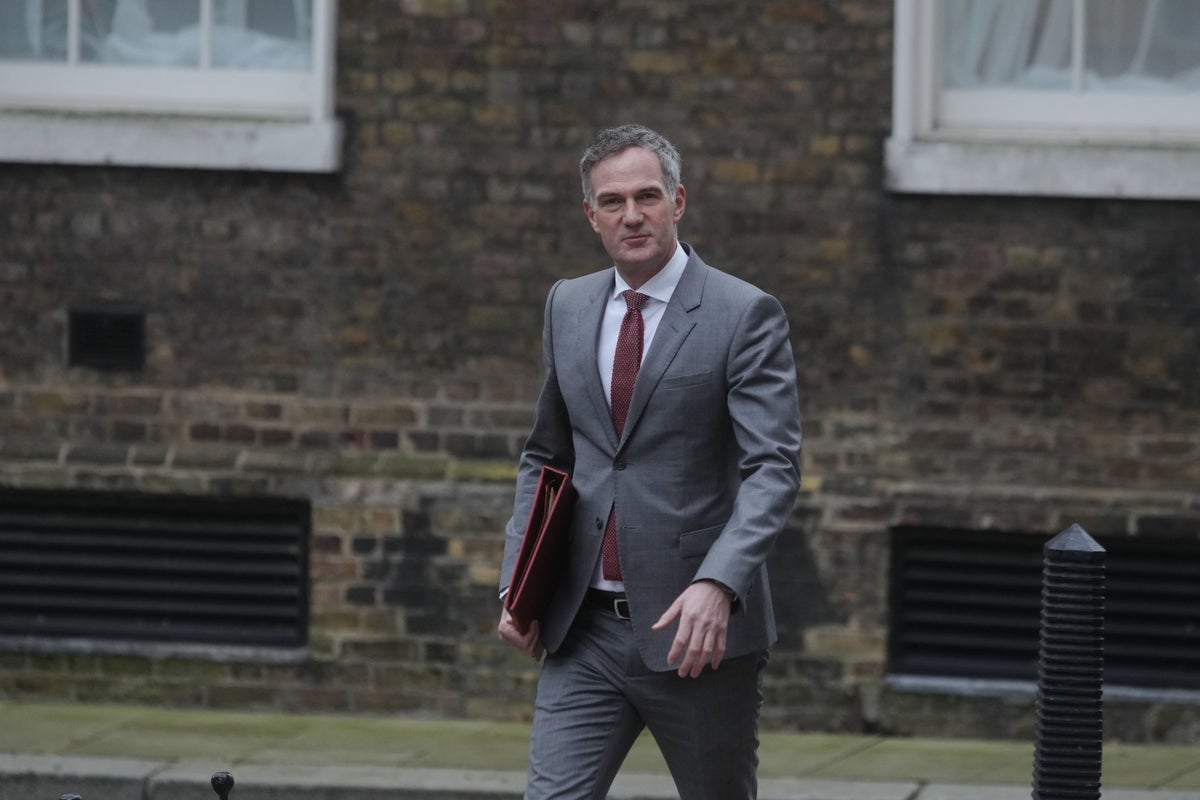
Business Secretary Peter Kyle signed off the grant to reopen the Ensus plant on Teesside, according to the Financial Times.
It is understood the grant will pay to get the plant up and running again for an initial three-month period.
The plant was mothballed last year after a trade deal with the US cut tariffs on bioethanol, its main product.
It will be reopened due to its ability to produce CO2 as a by-product. The gas is vital for several sectors, including drinks and the nuclear industry, but supply has been disrupted thanks to soaring energy costs on other sources such as fertiliser factories.
The grant for the Ensus plant is the first major intervention by the UK Government aimed at tackling possible shortages caused by the Iran conflict.
But fears range much wider than CO2, with former BP executive Nick Butler telling Times Radio the UK could face oil and gas shortages in two to three weeks.
He said: “There will be shortages and I think the Government now should be seriously planning how they’re going to handle that and part of that is maximising supply.”
On Tuesday, Shell chief executive Wael Sawan issued a similar warning at an industry conference.
Ministers continue to insist the supply of petrol remains reliable.
Energy minister Michael Shanks told MPs on Wednesday the Government was “absolutely not” planning for blackouts or petrol rationing, insisting the UK had a “strong and diverse range of supplies”.
The key question remains how long Iran’s effective blockade of the vital Strait of Hormuz will last.
On Thursday, Foreign Secretary Yvette Cooper will urge Iran to reopen the Strait of Hormuz as she travels to the G7 Foreign Ministers’ meeting in France.
She will make clear that the UK will help ensure safe passage for ships through the strait and provide an additional £2m in humanitarian aid to Lebanon.
Ms Cooper is expected to hold talks with counterparts, including US secretary of state Marco Rubio, France’s Jean-Noel Barrot, and Germany’s Johann Wadephul.
The strait remained closed on Wednesday evening, despite Iran’s foreign minister Abbas Araghchi claiming it was open to “non-hostile” shipping.
The conflict continued with Washington saying it would hit Iran “harder” if Tehran refused to accept it had been “defeated militarily”.
White House spokeswoman Karoline Leavitt insisted “productive” talks were continuing between Washington and Tehran.
But Mr Araghchi said in a message on his Telegram channel, translated from Farsi, that there had been “no negotiations or discussions with the American side” and suggested the US had effectively admitted defeat.
He said: “Didn’t they talk about ‘unconditional surrender’ before? What happened now that they are talking about negotiations and calling for them?
“I will explain that there are no negotiations, but the fact that they are mobilising their highest officials to negotiate with the Islamic Republic indicates their acceptance of defeat.”

new video loaded: How Kharg Island May Change the Trajectory of the Iran War
By Peter Eavis, Gilad Thaler, Edward Vega, Lauren Pruitt and Joey Sendaydiego
March 25, 2026
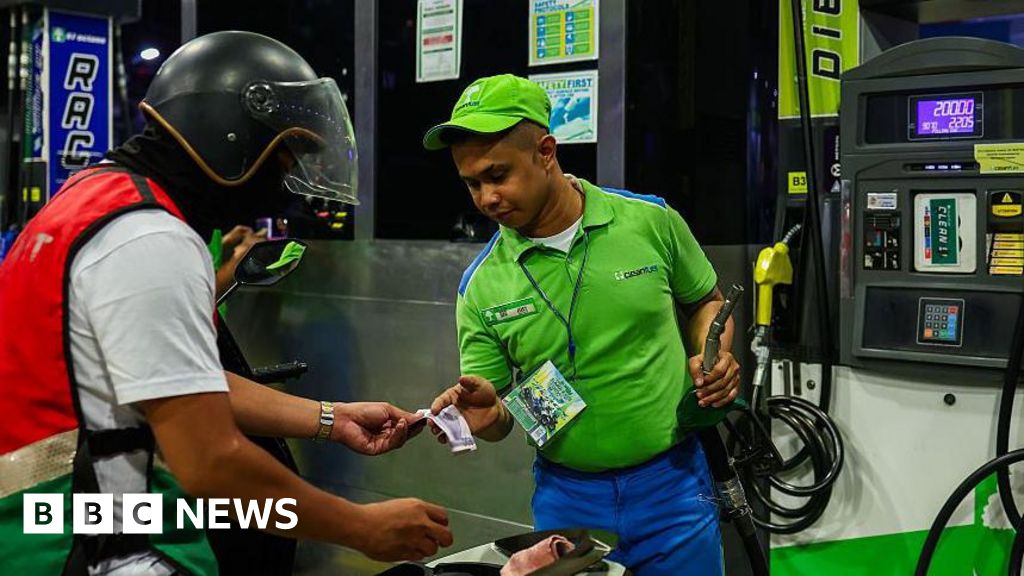
Crude rose back above $100 a barrel as the US and Iran clashed over bringing the conflict to an end.
Source link


Light rainfall sweeps through Karachi, easing heat

Man United’s big night was disappointing, but not their spirit
Government grant to reopen CO2 plant amid fears of Iran-linked shortages

-

 Fashion1 week ago
Sales at US apparel, clothing accessories stores up 4% YoY in Jan 2026
-
 Tech1 week ago
Justice Department Says Anthropic Can’t Be Trusted With Warfighting Systems
-

 Entertainment1 week ago
Val Kilmer revived 1 year after death through AI
-

 Sports1 week ago
March Madness 2026 – How to watch in SA, start time, schedule, TV channel for NCAA championship basketball tournament
-
 Business1 week ago
Stocks and pound rise as US rate call approaches
-

 Politics1 week ago
Iran strikes Tel Aviv with cluster-warhead missiles in retaliation of Larijani’s martyrdom
-
 Business1 week ago
Brits cashing in jewellery as gold price hits record high
-
 Fashion1 week ago
US’ G-III Apparel’s FY26 sales fall 7% to $2.96 bn