

Politics
US-Iran talks end with no deal but potential signs of progress

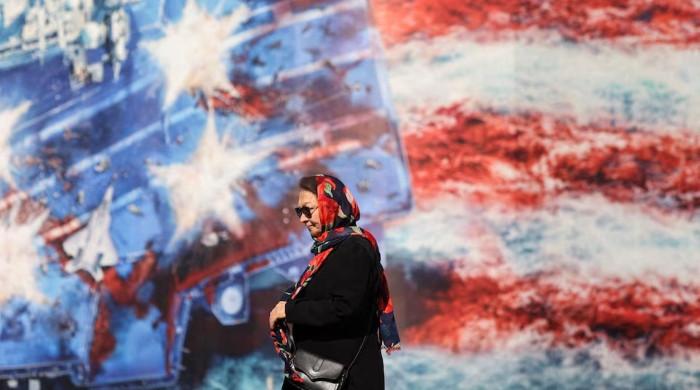
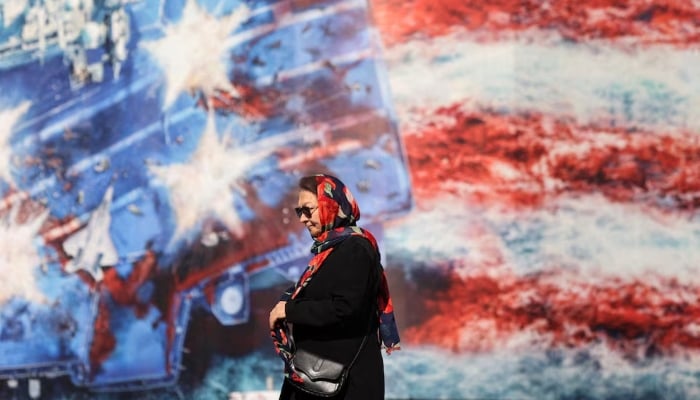
- Latest diplomacy seen as last chance to avoid war.
- Iran has indicated it could make concessions.
- Tehran will show flexibility, says ministry spokesperson.
The United States and Iran made progress in talks over Tehran’s nuclear program on Thursday, mediator Oman said, but hours of negotiation ended with no sign of a breakthrough that could avert potential US strikes amid a massive military buildup.
The two sides plan to resume negotiations soon after consultations in their countries’ capitals, with technical-level discussions scheduled to take place next week in Vienna, Omani Foreign Minister Sayyid Badr Albusaidi said in a post on X after the day’s meetings in Switzerland.
Badr Albusaidi will hold talks with US Vice President JD Vance and other US officials in Washington on Friday, MS NOW reported late on Thursday. Neither the White House nor Oman’s embassy in Washington immediately responded to requests for comment.
Any substantial move toward an elusive agreement between longtime foes Washington and Tehran could reduce the imminent prospects for US President Donald Trump to carry out a threatened attack on Iran that many fear could escalate into a wider war.
But Tuesday’s indirect talks wrapped up without a deal, still leaving the region on edge.
The Omani minister’s upbeat assessment followed indirect talks between Iranian Foreign Minister Abbas Araqchi and US envoys Steve Witkoff and Jared Kushner in Geneva, with one session in the morning and the second in the afternoon.
“We have finished the day after significant progress in the negotiation between the United States and Iran,” Badr Albusaidi said.
But with many analysts seeing the latest diplomacy as the last chance before Trump could decide to go to war, Badr Albusaidi provided no details and stopped short of saying the two sides had overcome their biggest stumbling blocks to a deal.
Describing the talks as some of the most serious that Iran has had with the US, Araqchi told Iranian state television: “We reached agreement on some issues, and there are differences regarding some other issues.”
“It was decided that the next round of negotiations will take place soon, in less than a week,” he said. The Iranians, he added, had clearly expressed their demand for lifting of US sanctions, which Washington has long insisted will only come after deep concessions from Tehran.
There was no immediate comment from the US negotiating team on the outcome of the talks. But Axios quoted a senior US official as saying the Geneva negotiations were “positive.”
The discussions about the decades-long dispute over Iran’s nuclear work come as fears grow of a Middle East conflagration. Trump has repeatedly threatened action if there is no deal, and the US military has amassed its forces in waters near the Islamic Republic.
‘Intense and serious talks’
A senior Iranian official told Reuters earlier on Thursday that the US and Iran could reach a framework for a deal if Washington separated “nuclear and non-nuclear issues.”
The Trump administration has insisted that Iran’s ballistic missile programme and its support for armed groups in the region must be part of the negotiations.
After the morning session, Badr Albusaidi said the two sides had exchanged “creative and positive ideas”.
But a senior Iranian official said at the time that some gaps still had to be narrowed.
Washington, which believes Tehran seeks the ability to build a nuclear bomb, wants Iran to give up all uranium enrichment, a process that makes fuel for atomic power plants but that can also yield material for a warhead.
Iran has long denied wanting a bomb and said earlier on Thursday it would show flexibility at the talks. Reuters reported on Sunday that Tehran was offering undefined new concessions in return for removal of sanctions and recognition of its right to enrich uranium.
US Secretary of State Marco Rubio said on Wednesday that Iran’s refusal to discuss its ballistic missile program was a “big problem” which would have to be addressed eventually.
The missiles were “designed solely to strike America” and pose a threat to regional stability, he said, but offered no proof to back the claim that US territory could be targeted.
Trump threatens ‘really bad things’
Trump said on February 19 that Iran must make a deal in 10 to 15 days, warning that “really bad things” would otherwise happen.
He briefly laid out his case for a possible attack on Iran in his State of the Union speech on Tuesday, underlining that while he preferred a diplomatic solution, he would not allow Tehran to obtain a nuclear weapon.
In June, the US joined Israel in hitting Iranian nuclear sites and has been ramping up the pressure on Tehran again since January, when Trump threatened to intervene over its crushing of nationwide protests with thousands killed.
Since then, Trump has deployed fighter jets and aircraft carrier strike groups in the region.
Iran responded to last summer’s strikes by firing fusillades of missiles at Israel and has threatened to retaliate fiercely if attacked again, raising fears of a wider regional conflict that has alarmed Gulf oil producers.
Within Iran, Supreme Leader Ayatollah Ali Khamenei faces the gravest crisis of his 36-year tenure, with an economy buckling under tightened sanctions and renewed protests following the major unrest and crackdown in January.
President Masoud Pezeshkian said on Thursday that Khamenei has banned weapons of mass destruction, which “clearly means Tehran won’t develop nuclear weapons,” reiterating a religious decree issued in the early 2000s.


DUBAI: The United Arab Emirates (UAE) has introduced new rules aimed at preventing monopolies in the pharmaceutical sector, a move doctors say could help reduce medicine prices and prevent recurring drug shortages.
Under the new system, pharmaceutical companies will be required to appoint more than one authorised agent in the UAE for each medical product. The measure is designed to increase competition in distribution and strengthen supply chains.
Health experts say the change could have a direct impact on prices. When a single distributor controls the supply of a medicine, it can set prices with limited market pressure.
By allowing multiple agents to handle the same product, competition is expected to grow, which may gradually bring down costs for patients.
Doctors also note that reliance on one supplier has previously led to shortages when production delays or global disruptions occurred. In recent years, patients in the UAE faced difficulty obtaining certain diabetes, weight-loss and mental health medications due to high demand and supply chain problems.
With more than one authorised distributor, any logistical failure by one company would be less likely to disrupt patient treatment. Greater competition is also expected to improve service standards in storage and transportation.
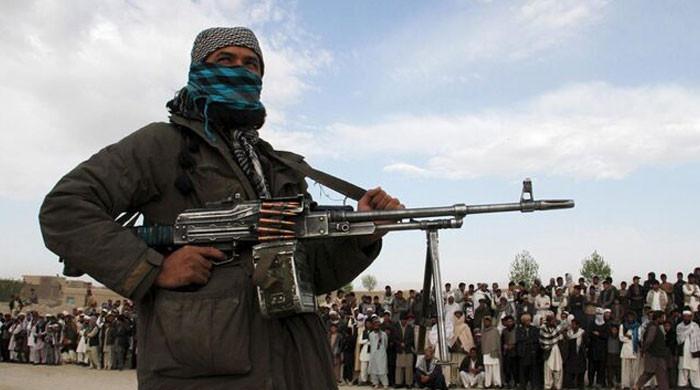
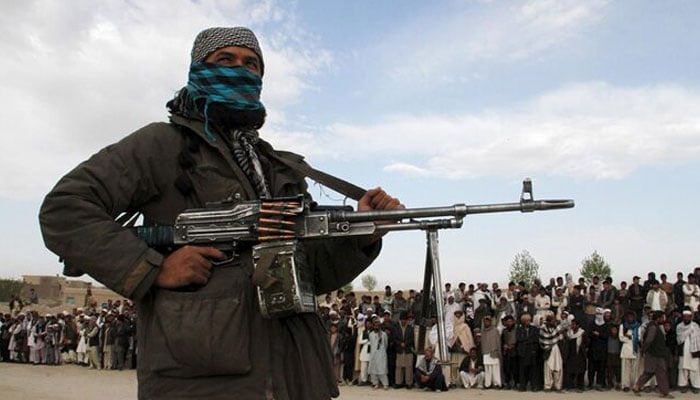
- Taliban decree expands death penalty, bans dissent. UN
- Decree not yet released; UN urges Taliban to rescind it.
- Turk likens Taliban system to gender apartheid.
A new decree from Afghanistan’s Taliban government is set to further crush rights and freedoms in the war-torn nation, especially for women, UN human rights chief Volker Turk said on Thursday.
The Taliban has restricted women’s movements and barred girls from education beyond primary school since coming to power in 2021, via a series of morality laws that also limit expression and employment.
Turk, the United Nations High Commissioner for Human Rights, said a decree signed by Taliban supreme leader Hibatullah Akhundzada last month “defines several crimes and punishments that contravene Afghanistan’s international legal obligations”.
“It provides for the use of corporal punishment for numerous offences, including in the home, legitimising violence against women and children,” he told a Human Rights Council meeting in Geneva.
“The decree, which is expected to come into effect soon, extends the number of offences that carry the death penalty.”
The decree also criminalises criticism of the de facto leadership and its policies, in violation of freedom of expression and assembly, he said.
Detailed provisions of the decree have not been officially published by the Taliban’s Ministry of Justice or Supreme Court, and Reuters has not been able to obtain the text from officials.
The Afghan administration did not respond to an immediate request for comment.
Turk urged the Taliban to rescind the decree, impose a moratorium on executions and end corporal punishment, saying women and girls face persecution under a system he likened to gender apartheid. The Taliban say women’s rights are internal matters and should be addressed locally.
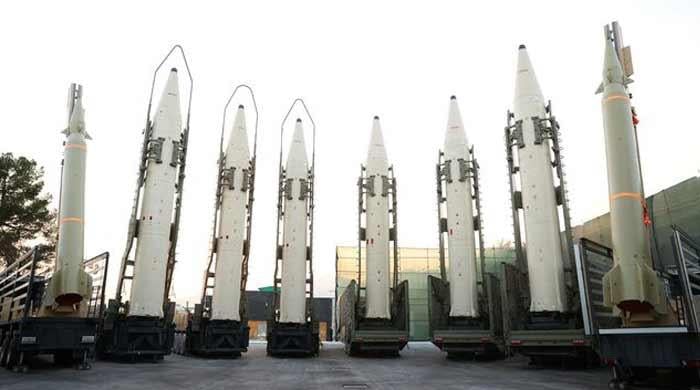
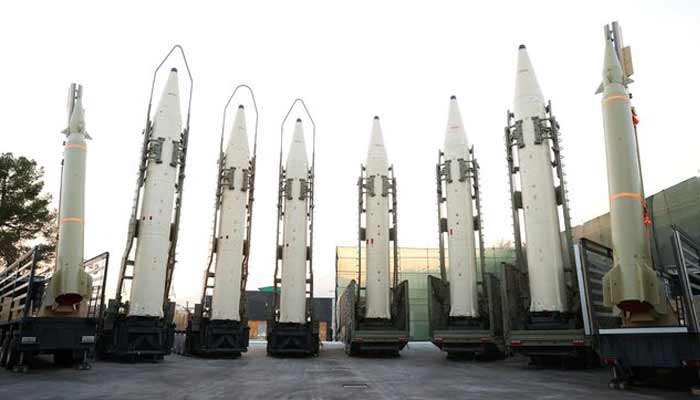
Iran holds a new round of nuclear talks with the United States on Thursday in Geneva. Its arsenal of missiles has been a sticking point in negotiations.
Here are some details about Iran’s missiles:
What are ballistic missiles?
A ballistic missile is a rocket-propelled weapon that is guided during its ascent but follows a free-fall trajectory for most of its flight. It delivers warheads — containing either conventional explosives or potentially biological, chemical or nuclear munitions — over varying distances.
Western powers regard Iran’s ballistic missile arsenal both as a conventional military threat to Middle East stability and a possible delivery mechanism for nuclear weapons, should Tehran develop them. Iran denies any intent to build atomic bombs.
Iranian missile types and ranges
Iran has the largest stockpile of ballistic missiles in the Middle East, according to the US Office of the Director of National Intelligence. They have a self-imposed range of 2,000 km (1,240 miles), which Iranian officials have said was enough to protect the country as they can reach Israel.
Many of Iran’s missile sites are in and around Tehran. There are at least five known underground “missile cities” in various provinces, including Kermanshah and Semnan, as well as near the Gulf region.
The arsenal encompasses multiple long-range missiles that can reach Israel, according to the Center for Strategic and International Studies. It says these include the Sejil, with a 2,000-km range; Emad, 1,700 km; Ghadr, 2,000 km; Shahab-3, 1,300 km; Khorramshahr, 2,000 km; and Hoveyzeh 1,350 km.
The semi-official Iranian news outlet ISNA published a graphic in April 2025 showing nine Iranian missiles it said could reach Israel, including the Sejil, which ISNA said was capable of flying at more than 17,000 km (10,500 miles) per hour and had a range of 2,500 km; the Kheibar, with a range of 2,000 km; and the Haj Qasem, 1,400 km.
Washington-based think tank, the Arms Control Association says Iran’s ballistic arsenal included the Shahab-1, with an estimated range of 300 km; the Zolfaghar, 700 km; Shahab-3, 800-1,000 km; Emad-1, under development, 2,000 km; and a Sejil model under development, 1,500-2,500 km.
When did Iran last use its missiles?
During the 12-day war with Israel in June 2025, Tehran fired ballistic missiles into Israel, killing dozens of people and destroying buildings.
The Institute for the Study of War (ISW) and AEI Critical Threats Project said Israel “likely destroyed around a third of the Iranian missile launchers” during the conflict. Iranian officials have said Tehran has recovered from the damage incurred during the war.
Iran also responded to US participation in Israel’s air war by firing missiles at the US Al Udeid air base in Qatar. Tehran gave advance warning and no one was hurt. Washington announced a ceasefire hours later.
Iran’s Revolutionary Guards used missiles in January 2024 when they said they had attacked Israel’s spy headquarters in Iraq’s semi-autonomous Kurdistan region, and that they had also fired at Daesh in Syria.
In 2020, Iran launched missiles at US-led forces in Iraq in retaliation for a US drone strike that killed Major General Qassem Soleimani of the Revolutionary Guards.
Missile strategy and development
Iran says its ballistic missiles provide a deterrent and retaliatory force against the United States, Israel and other potential regional targets.
According to a 2023 report by Behnam Ben Taleblu, a senior fellow at the US-based Foundation for Defense of Democracies, Iran continues to develop underground missile depots complete with transport and firing systems, as well as production and storage centres. In 2020, Iran fired a ballistic missile from underground for the first time, it said.
“Years of reverse-engineering missiles and producing various missile classes have also taught Iran about stretching airframes and building them with lighter composite materials to increase missile range,” the report said.
In June 2023, Iran presented what officials described as its first domestically made hypersonic ballistic missile, the official IRNA news agency reported. Hypersonic missiles can fly at least five times faster than the speed of sound on a complex trajectory, making them difficult to intercept.
The Arms Control Association says Iran’s missile programme is largely based on North Korean and Russian designs and has benefited from Chinese assistance.
Iran also has cruise missiles such as the Kh-55, an air-launched nuclear-capable weapon with a range up to 3,000 km.


Switzerland’s Rieter orders steady at $907 mn amid cautious market

The 2026 men’s college basketball coaching carousel guide

China’s sock exports at $6.7 bn, volume rises amid price sensitivity

-

 Tech1 week ago
A $10K Bounty Awaits Anyone Who Can Hack Ring Cameras to Stop Sharing Data With Amazon
-

 Fashion7 days ago
ICE cotton ticks higher on crude oil rally
-
 Business7 days ago
US Top Court Blocks Trump’s Tariff Orders: Does It Mean Zero Duties For Indian Goods?
-

 Tech1 week ago
Donald Trump Jr.’s Private DC Club Has Mysterious Ties to an Ex-Cop With a Controversial Past
-
 Business6 days ago
Eye-popping rise in one year: Betting on just gold and silver for long-term wealth creation? Think again! – The Times of India
-

 Fashion7 days ago
India’s $28 bn reset: How 5 trade deals will reprice its T&A exports
-

 Entertainment6 days ago
Viral monkey Punch makes IKEA toy global sensation: Here’s what it costs
-

 Sports7 days ago
Brett Favre blasts NFL for no longer appealing to ‘true’ fans: ‘There’s been a slight shift’