

Politics
US lifts sanctions on Brazil judge targeted by Trump

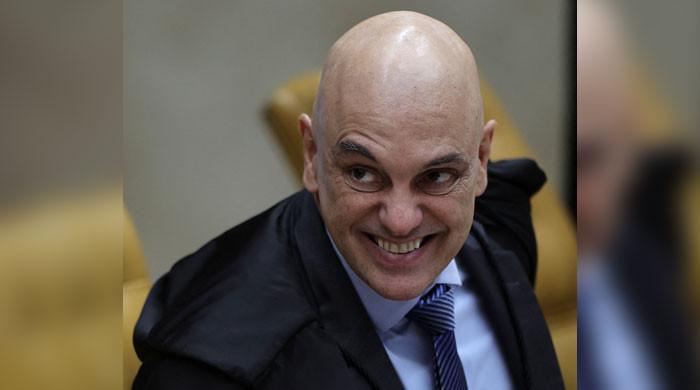
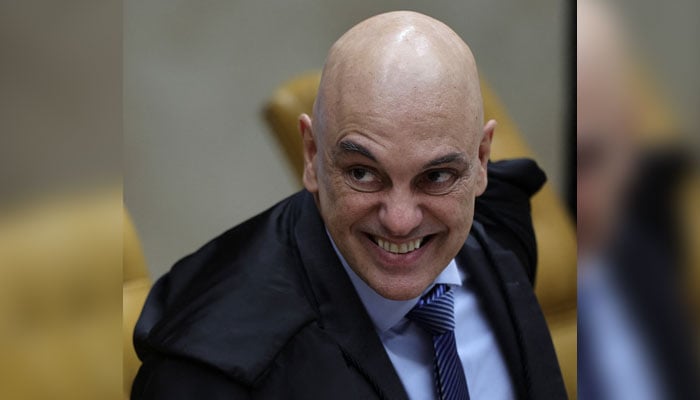
BRASILIA/WASHINGTON: The United States has removed sanctions against the Brazilian Supreme Court judge targeted for overseeing a criminal case against an ally of President Donald Trump, the Treasury Department said on Friday.
The reversal in less than five months, coming after the US started rolling back steep tariffs on Brazilian goods, showed how quickly Trump has warmed to Brazil’s President Luiz Inacio Lula da Silva and moved on from an aggressive defence of his right-wing predecessor.
The US had sanctioned Justice Alexandre de Moraes under the Global Magnitsky Act in July, punishing him for overseeing the trial that led to former President Jair Bolsonaro’s conviction and imprisonment for attempting a coup after losing his 2022 re-election bid.
Trump had called that trial a “witch hunt” and his administration accused Moraes of weaponising courts, authorising arbitrary pre-trial detentions and suppressing free speech.
On Friday, the Treasury Department also removed sanctions imposed in September on Moraes’ wife, Viviane Barci, as well as sanctions placed on the Lex Institute, a financial entity controlled by Barci and other family members.
The sanctions had stoked tensions between Brasilia and Washington this summer, when Trump imposed hefty tariffs on many goods imported from Brazil, some of which he began rolling back last month.
Lula welcomed the move on Friday, saying he pushed for the sanctions to be lifted on a call with Trump last week.
“In my conversation with Trump last week, he asked, ‘Is this good for you?’ I said it is good for Brazil and for Brazilian democracy,” Lula said at an event in Sao Paulo on Friday.
Moraes, at the same event, called the Treasury’s decision a “triple win” for Brazil’s democracy, justice system and sovereignty.
“I couldn’t help but thank President Lula for his efforts on my behalf and on behalf of my wife,” Moraes said.
Trump and Lula discussed sanctions last week during what the US leader called a “great” phone conversation, heralding what he called a “newly formed partnership” with Lula after months of tensions.
A source within Brazil’s presidency told Reuters on condition of anonymity that Brazil did not offer anything in return when Lula proposed lifting sanctions on the call.
“There was no quid pro quo,” the source said.
Washington support for cutting sentences
Friday’s announcement came days after Brazilian lawmakers voted to dramatically shorten the sentences of Bolsonaro and others convicted of anti-democratic acts after the 2022 election.
The Trump administration has expressed support for the legislation, which now goes to Brazil’s Senate and would likely face resistance from Lula and the Supreme Court.
“The United States sees the passage of an important amnesty bill by Brazil’s lower house as a step in the right direction that signals lawfare conditions in Brazil are improving,” a senior Trump administration official said on Friday, calling continued sanctions on Moraes “inconsistent with US foreign policy interests.”
Senator Flavio Bolsonaro, Bolsonaro’s eldest son who last week announced a presidential bid with his father’s blessing, welcomed the Trump administration’s move as a “huge gesture” to the Brazilian right and said it was a sign the Senate should pass the bill that could cut his father’s prison sentence.
“We will vote on the amnesty bill next week in the Senate, and if it passes, I have no doubt that the US will completely remove the surcharges on Brazilian products exported there,” Flavio wrote on X, referencing Trump’s remaining tariffs on Brazilian goods.
US Deputy Secretary of State Christopher Landau welcomed the sentence reduction bill’s passage through the lower house of Congress.
“The US has consistently expressed concern over efforts to use the legal process to weaponize political differences in Brazil,” Landau wrote on X, calling the approval a “first step towards addressing these abuses.”
The pressure campaign on Moraes and resulting tariffs had been championed by Flavio’s US-based younger brother Eduardo, which drew criticism at home even among Brazilian conservatives.
In a statement, Eduardo expressed regret over the Trump administration’s decision to remove the sanctions on Moraes, citing a lack of political unity.
“The lack of internal cohesion and the insufficient support for initiatives pursued abroad contributed to the worsening of the current situation,” Eduardo said.
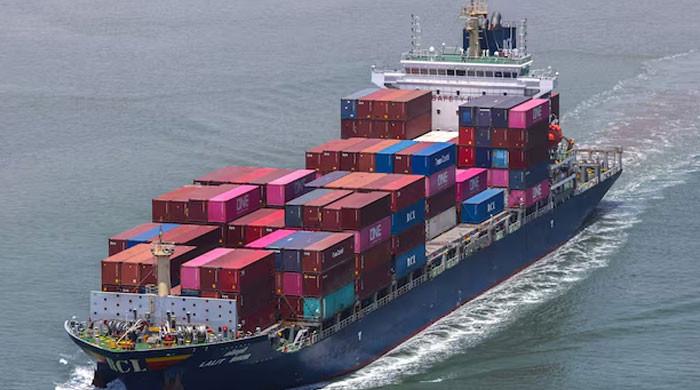
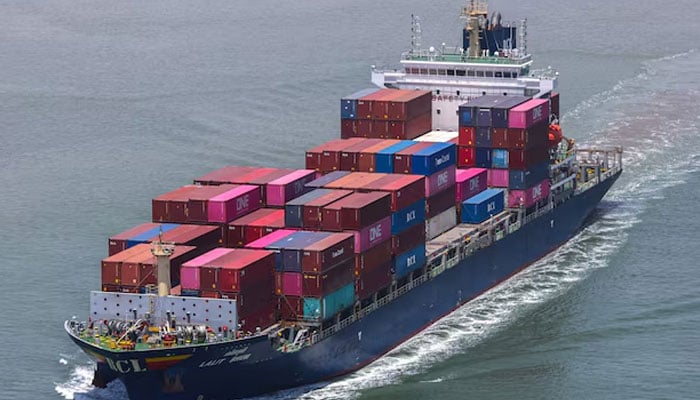
WASHINGTON: A US special operations team in the Indian Ocean raided a ship headed to Iran from China last month and seized military-related articles, the Wall Street Journal reported on Friday, citing US officials.
The cargo consisted of components potentially useful for Iran’s conventional weapons, one official said, adding the shipment had been destroyed.
US forces boarded the ship several hundred miles off the coast of Sri Lanka, according to the newspaper, which added the vessel was later allowed to proceed.
The operation took place in November, weeks before the US forces seized an oil tanker off the coast of Venezuela, citing sanctions violations.
Trump, who has been pressuring Venezuelan President Nicolas Maduro to step down, had announced earlier this week: “We’ve just seized a tanker on the coast of Venezuela, large tanker, very large, largest one ever, actually, and other things are happening.”
The officials said the ship was allowed to proceed following the raid, which involved special operation forces.
Neither Iran nor China immediately responded to the report.
- Trump says leaders commit to halt border fighting effective tonight.
- Malaysia’s PM Anwar praised for assisting renewed ceasefire.
- Thailand vows compliance while urging Cambodia to fix violations.
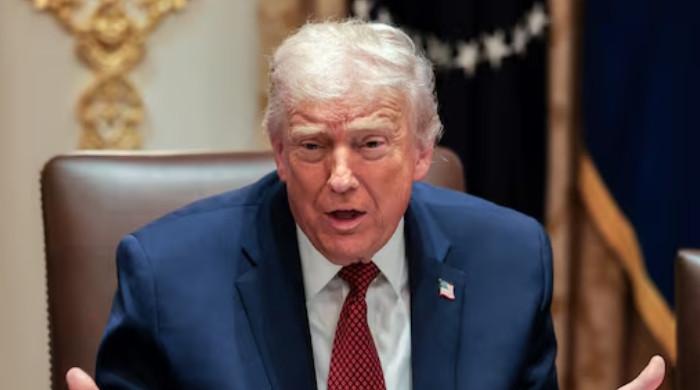
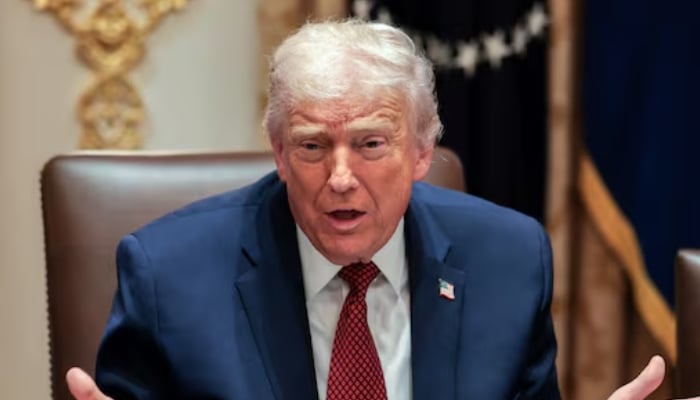
US President Donald Trump said Friday that Thailand and Cambodia had agreed to halt fighting along their disputed border, which has killed at least 20 people this week.
The latest fighting between the Southeast Asian neighbours, which stems from a long-running dispute over the colonial-era demarcation of their 800-kilometre (500-mile) frontier, has also displaced around half a million on both sides.
Each side had blamed the other for reigniting the conflict.
“I had a very good conversation this morning with the Prime Minister of Thailand, Anutin Charnvirakul, and the Prime Minister of Cambodia, Hun Manet, concerning the very unfortunate reawakening of their long-running War,” Trump said on his Truth Social platform.
“They have agreed to CEASE all shooting effective this evening, and go back to the original Peace Accord made with me, and them, with the help of the Great Prime Minister of Malaysia, Anwar Ibrahim,” he said, referring to a deal made in July.
“Both Countries are ready for PEACE and continued Trade with the United States of America,” Trump noted, thanking Anwar for his assistance.
Earlier, Anutin had said, after his call with Trump: “It needs to be announced to the world that Cambodia is going to comply with the ceasefire.”
“The one who violated the agreement needs to fix (the situation) — not the one that got violated,” Anutin said, adding that the call with Trump “went well”.
‘Talk among themselves’
The United States, China and Malaysia, as chair of the regional bloc ASEAN, brokered a ceasefire in July after an initial five-day spate of violence.
In October, Trump backed a follow-on joint declaration between Thailand and Cambodia, touting new trade deals after they agreed to prolong their truce.
But Thailand suspended the agreement the following month after Thai soldiers were wounded by landmines at the border.
In the northeastern province of Buriram, Thai evacuee Jirasan Kongchan said peace should come through direct bilateral talks, not foreign mediation.
“I want Thailand and Cambodia to talk among themselves first, clearly and decisively,” said the 50-year-old farmer.
“If Cambodia breaks the peace (agreement) again, ASEAN countries should step in, maybe impose some kind of sanctions.”
Cambodian evacuee Choeun Samnang, 54, said he was “very happy” to hear Trump had called the Thai prime minister asking for the countries to abide by the joint declaration.
“I don’t want to see countries at war. I want both Cambodia and Thailand to have peace,” he told AFP at a shelter in Banteay Meanchey province.
At the White House on Thursday, Trump again boasted about having resolved multiple conflicts, but said that with “Thailand and Cambodia, I think I’m going to have to make a couple of phone calls…but we’ll get that one back on track”.
Anutin said there were “no signs” Trump would connect further trade talks with the border conflict, but that he had guaranteed Thailand would get “better benefits than other countries”.
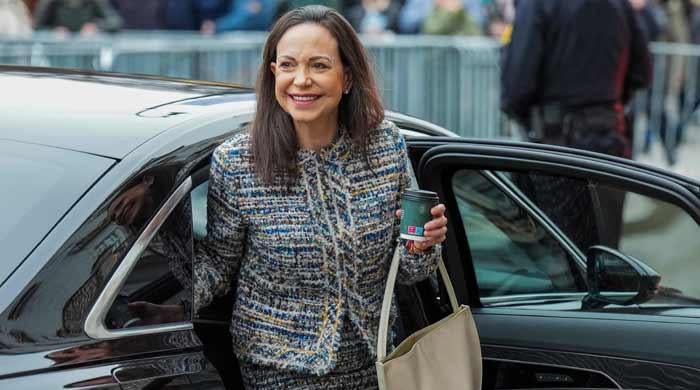
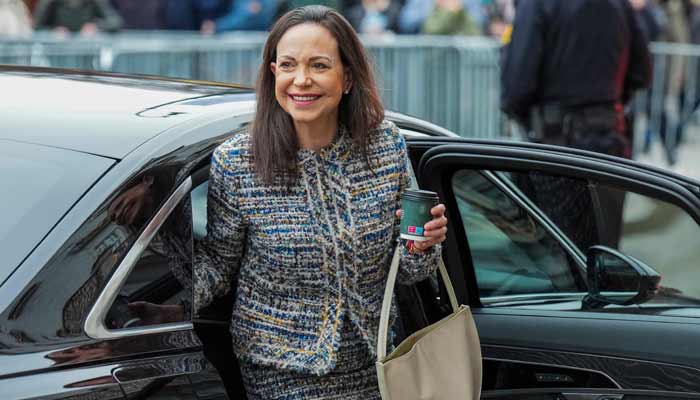
Venezuelan opposition leader Maria Corina Machado, winner of the 2025 Nobel Peace Prize, feared for her life during her secret journey from Venezuela to Norway to receive the award, she said on Friday.
“There were moments when I felt that there was a real risk to my life, and it was also a very spiritual moment because, in the end, I simply felt that I was in God’s hands and that whatever would be, would be,” she told reporters in Oslo.
She declined to give precise details about how she managed to leave Venezuela, where she has lived in hiding since last year, to protect those involved — following dramatic accounts of her journey in US media.
“We did get support from the United States government to get here,” Machado told a press conference on Thursday, when asked by AFP about whether Washington had helped.
The Wall Street Journal reported this week that she wore a wig and a disguise on the high-risk journey, leaving her hide-out in a Caracas suburb on Monday for a coastal fishing village, where she took a fishing skiff across the Caribbean Sea to Curacao.
The newspaper said the US military was informed to avoid the boat being targeted by airstrikes, given Washington’s attempts to pile pressure on Venezuela with a major naval buildup in the region and strikes on alleged drug-trafficking boats.
The Wall Street Journal later reported that Machado and the small crew of the skiff had been left drifting after their GPS fell overboard in rough seas and a backup failed.
As a result, she did not meet the extraction team at the designated pickup point, prompting a search to find her in the Gulf of Venezuela.
In an interview with CBS News, Bryan Stern, who heads a nonprofit rescue organisation, recalled meeting Machado out at sea after she left Venezuela.
She boarded his boat for a 13-14 hours journey to an undisclosed location to catch a plane as part of a mission planned just four days earlier, CBS reported.
Stern described a “scary” and very wet boat trip in the middle of the night.
“The sea conditions were ideal for us, but certainly not water that you would want to be on […] the higher the waves, the harder it is for radar to see,” Stern said.
A representative for Machado confirmed that Stern’s company, Grey Bull Rescue Foundation, was behind the operation that began on Tuesday, CBS said.


EU to levy €3 customs duty on small e-commerce parcels from July 2026

Top 50 USMNT players, ranked by club form: A new No. 1 leads the American pool

Jim Carrey nearly ditched $20 million ‘Grinch’ offer

-
 Politics5 days ago
Thailand launches air strikes against Cambodian military: army
-
 Sports1 week ago
Australia take control of second Ashes Test | The Express Tribune
-

 Entertainment1 week ago
Sabrina Carpenter recalls ‘unbelievable’ experience with pal Taylor Swift
-
 Politics6 days ago
17 found dead in migrant vessel off Crete: coastguard
-
 Fashion5 days ago
Germany’s LuxExperience appoints Francis Belin as new CEO of Mytheresa
-

 Tech1 week ago
WIRED Roundup: DOGE Isn’t Dead, Facebook Dating Is Real, and Amazon’s AI Ambitions
-

 Politics1 week ago
Gen-Z battles to gain political ground after ousting ex-PM Hasina in Bangladesh
-
 Fashion1 week ago
Bangladesh’s economic outlook cautiously optimistic: Govt