

Politics
US planning to pitch Bangladesh defence systems to counter China

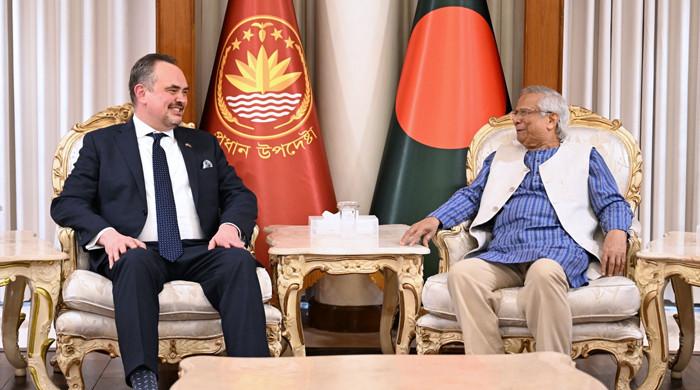
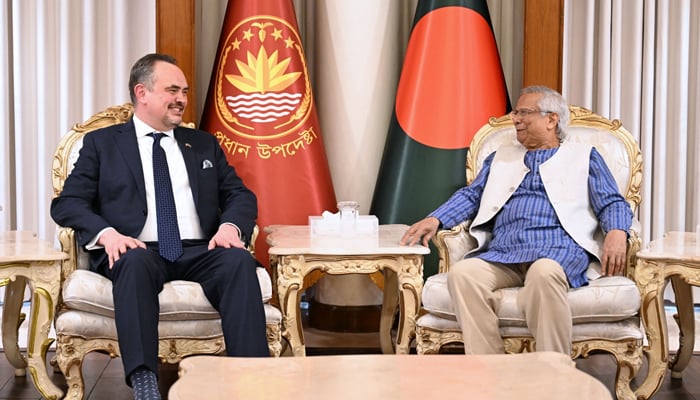
- US offers Bangladesh alternatives to Chinese military systems.
- US wants good Bangladesh–India ties for regional stability.
- Washington urges more global support for Rohingya response.
The United States is concerned about China’s expanding presence in South Asia and is planning to offer Bangladesh’s next government US and allied defence systems as alternatives to Chinese hardware, Washington’s ambassador to Dhaka told Reuters.
Bangladesh votes in a general election on Thursday after a Gen Z-led uprising toppled India-allied prime minister Sheikh Hasina in August 2024. She has since taken refuge in New Delhi, allowing China to deepen its influence in Bangladesh as India’s presence wanes.
China recently signed a defence agreement with Bangladesh to build a drone factory near the India border, worrying foreign diplomats.
“The United States is concerned about growing Chinese influence in South Asia and is committed to working closely with the Bangladeshi government to clearly communicate the risks of certain types of engagement with China,” US Ambassador Brent T Christensen said in an interview on Tuesday.
“The US offers a range of options to help Bangladesh meet its military capability needs, including US systems and those from allied partners, to provide alternatives to Chinese systems,” he said without offering further details.
China’s foreign ministry said that as comprehensive strategic partners, China and Bangladesh have cooperated in political, economic and security fields, benefiting both countries.
“Our mutually beneficial and friendly cooperation is not directed against any third party, nor will we tolerate interference from any third party,” the ministry said in a statement to Reuters.
Christensen also said that President Donald Trump’s administration would “like to see a good relationship between Bangladesh and India to support stability in the region”.
New Delhi-Dhaka relations have nosedived since Hasina fled, badly affecting visa services and cricket ties between the two neighbours.
Commercial diplomacy is priority
Christensen said many US businesses were looking at potentially investing in Bangladesh but would want the next government to show early and clear signs that it is “open for business”.
“Commercial diplomacy is one of our top priorities, and we look forward to working with the new government to build on progress made with the interim government, particularly in strengthening commercial, economic, and security ties,” he said.
Energy producer Chevron has been in Bangladesh for decades but not many other US companies are visible in the densely populated country of 175 million people, as high taxes and difficulties repatriating profits have created some hurdles.
The envoy said Washington would work with “whichever government is elected by the Bangladeshi people”.
The race is between two coalitions led by former allies, the Bangladesh Nationalist Party (BNP) and the Jamaat‑e‑Islami (JI), with opinion polls suggesting the BNP holds an advantage.
Aid for Rohingya refugees
Regarding the 1.2 million Rohingya refugees sheltered in Bangladesh, the ambassador said the United States remained the largest contributor to humanitarian operations.
“The US remains the largest contributor to the Rohingya refugee response and continues robust health programming in Bangladesh,” he said, noting a recent $2 billion worldwide funding framework signed with the United Nations to improve the effectiveness of such assistance, including in Bangladesh.
He urged other international donors to take on a greater share of the burden.
“The US cannot sustain the bulk of the effort alone. International partners need to increase their support for the Rohingya response,” he said.
In recent years, the UN refugee agency has been struggling to raise sufficient funds to support the Rohingya community, leading to cuts in their rations and the closure of some schools for them.
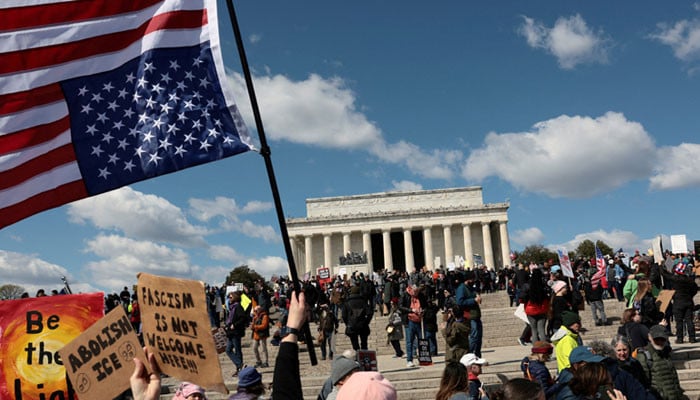
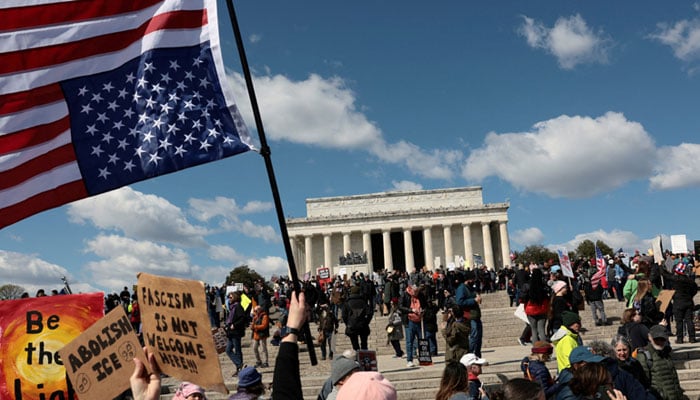
- Over 3,200 events planned across all 50 states of United States.
- Organisers expect more protests in smaller communities this time.
- Protests driven by backlash against Iran conflict, Trump’s policies.
Massive protests against President Donald Trump kicked off Saturday across the United States and beyond, as millions of people vent fury over what they see as his authoritarian bent and other forms of cruel, law-trampling governance.
It is the third time in less than a year that Americans have taken to the streets as part of a grassroots movement called “No Kings,” the most vocal and visual conduit for opposition to Trump since he began his second term in January 2025.
Now they have something new to fume over — the war against Iran that Trump launched alongside Israel, with ever-shifting goals and timelines for completion.
The anti-Trump mood has spilled beyond US borders, with rallies Saturday in European cities including Amsterdam, Madrid and Rome.
US protests began in several cities, including Atlanta, where thousands of people gathered in a park to decry authoritarianism.
One man at the rally held a sign that read “We Are Losing Our Democracy.”
In the Michigan town of West Bloomfield, near Detroit, people braved below-freezing temperatures to protest.
Record numbers expected
The first “No Kings” nationwide protest day came last June on Trump´s 79th birthday and coincided with a military parade he organised in Washington. Several million people turned out, from New York to San Francisco.
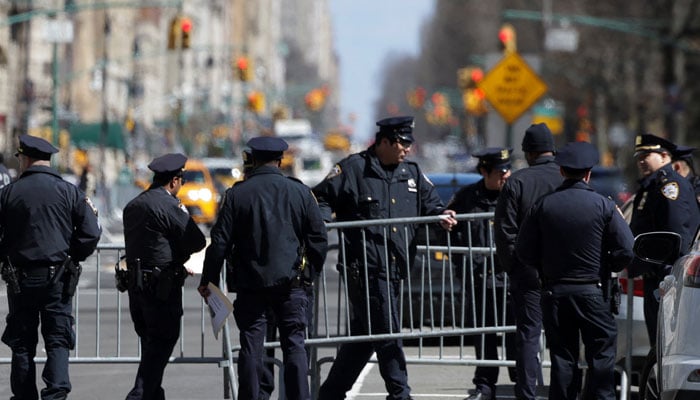
The second such protest, in October, drew an estimated seven million protesters, according to organisers.
The goal now is to bring out even more people Saturday, as Trump´s approval rating sinks below 40% and midterm elections loom in November, when Trump´s Republicans could lose control of both chambers of Congress.
Just as Trump is worshipped by many in his “Make America Great Again” movement, he is disliked with equal passion on the other side of America’s wide political chasm.
Foes bemoan his penchant for ruling by executive decree, his use of the Justice Department to prosecute opponents, his apparent obsession with fossil fuels and climate change denial.
They also dislike his gutting of racial and gender diversity programs, and his taste for flexing US military power after campaigning as a man of peace.
“Since the last time we marched, this administration has dragged us deeper into war,” said Naveed Shah of Common Defence, a veterans association connected to the “No Kings” movement.
“At home, we’ve watched citizens killed in the streets by militarised forces. We´ve seen families torn apart and immigrant communities targeted. All of it done in the name of one man trying to rule like a king.”
Springsteen in Minneapolis
Organisers say more than 3,000 rallies are planned, in major cities and in suburbs and rural areas — even in the Alaskan town of Kotzebue, above the Arctic circle.
Minnesota is a key focal point, months after becoming ground zero for the national debate over Trump´s violent immigration crackdown.
Legendary rocker Bruce Springsteen, a fierce critic of the president, is scheduled to perform his song “Streets of Minneapolis” in the twin city of St. Paul, the capital of the northern state.
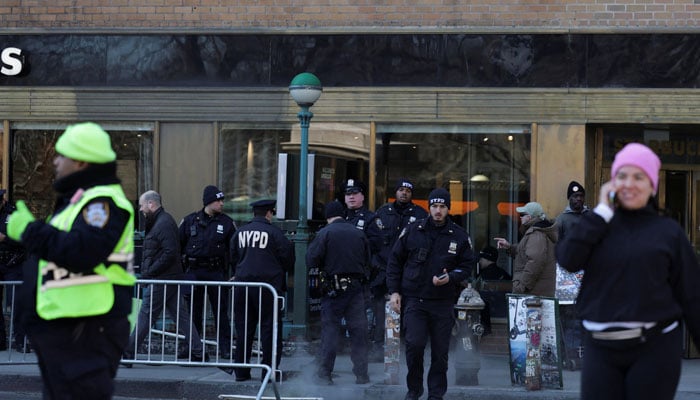
Springsteen wrote and recorded the protest ballad in just 24 hours in memory of Renee Good and Alex Pretti, two US citizens shot dead by federal agents during January protests against Trump´s immigration offensive.
What began in 2025 as a simple day of defiance has mushroomed into a “No Kings” movement of national resistance to Trump.
Organisers say two-thirds of those who plan to rally Saturday do not live in big cities, which in America are often Democratic strongholds — a data point that is up sharply since the last protest.
- Zelenskiy continuing Gulf visit after arriving in Riyadh on Thursday.
- Qatar says Doha, Kyiv have signed defence cooperation agreement.
- UAE, Ukraine earlier agreed to cooperate on security and defence.
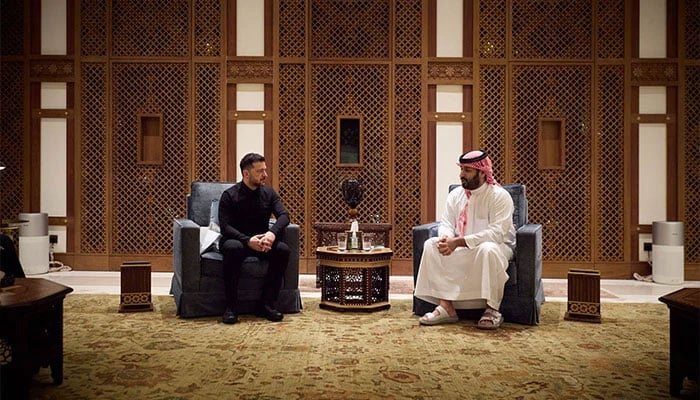
Ukraine on Saturday agreed to cooperate on defence with the United Arab Emirates and Qatar as President Volodymyr Zelenskiy travelled to both countries amid escalating tensions in the region.
Qatar’s defence ministry said in a statement on Saturday that Doha and Kyiv have signed a defence cooperation agreement, which includes the exchange of expertise in countering missiles and unmanned aerial systems.
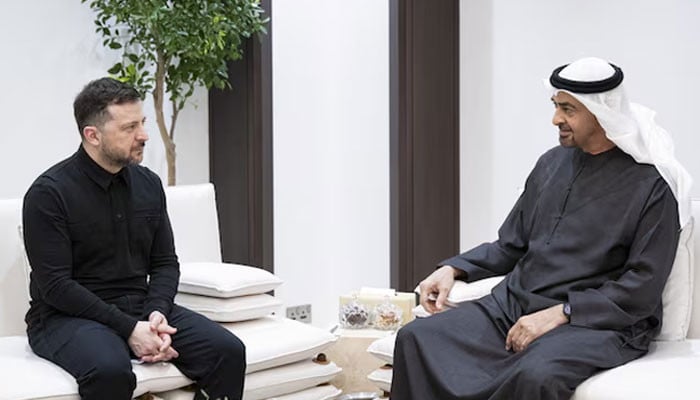
Zelenskiy had earlier been to the UAE and met President Sheikh Mohammed bin Zayed Al Nahyan as the two countries agreed to cooperate in the fields of security and defence.
“Our teams will finalise the details,” Zelenskiy said on the Telegram app with reference to the UAE discussions.
Ukraine, which now has years of experience shooting down Russian drones and missiles, was close to clinching several security agreements to counter Iranian attacks, its foreign minister Andrii Sybiha had told Reuters on Friday.
The US-Israeli war on Iran has killed more than 2,000 people, upended global markets and spurred Iranian retaliatory strikes that have effectively shut the Strait of Hormuz and targeted several countries across the Gulf with missiles and drones.
Zelenskiy had first arrived in Saudi Arabia on Thursday where the two countries also signed an agreement on defence cooperation.
- After Oli’s arrest, supporters staged protest rallies.
- Oli had resigned after fatal protests last September.
- Police say Oli and Lekhak will be brought to court Sunday.
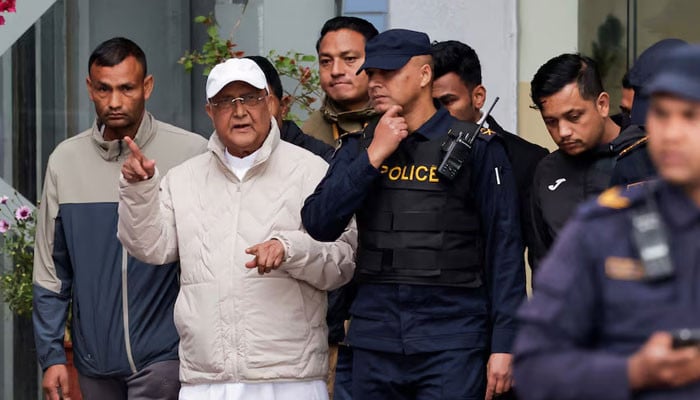
KATHMANDU: Nepal’s former prime minister, KP Sharma Oli, was arrested on Saturday as police investigate whether he was negligent in failing to prevent dozens of deaths in a crackdown on Gen Z-led anti-corruption protests last September, said officials.
Oli’s arrest, which his lawyer said was illegal and sparked protests by supporters who clashed with police, followed rapper-turned-politician Balendra Shah’s swearing in as prime minister on Friday and a recommendation by a panel investigating violence during the protests that he should be prosecuted for negligence.
His former home minister, Ramesh Lekhak, was also arrested.
76 people were killed last September during a police crackdown and arson and violent unrest during the protests, which led to Oli’s resignation.
After his arrest on Saturday, supporters staged protest rallies and clashed with police who tried to stop them burning tyres near the prime minister’s office. Police lobbed a teargas shell and used batons to break up the protests, injuring one person, witnesses said.
Oli’s Communist Party of Nepal (Unified Marxist Leninist) called his arrest illegal and said it was an act of “revenge”. It demanded his immediate release and said more protests were planned for Sunday.
Shankar Pokhrel, a senior party official, told reporters that protest notes against the arrest would be handed to the government in all 77 districts of the country on Sunday.
Home Minister Sudan Gurung dismissed the criticism, saying on Facebook: “It is the beginning of justice. The country will take a new direction now.”
Election defeat
Oli was prime minister four times between 2015 and 2025 but never served a full five-year term. In 2020, he published a new political map including in it a small stretch of disputed land controlled by India, giving him a popularity boost in Nepal.
His popularity did not last, and he was beaten by Shah in his home constituency in an election this month, his second defeat since the restoration of multi-party democracy in 1990. Anger over the deaths in September’s protests helped Shah’s Rastriya Swatantra Party win the election by a landslide.
The panel investigating last September’s violence held Oli and Lekhak responsible for not taking any action to stop hours of firing on the protesters by police.
Police spokesperson Om Adhikari said Oli and Lekhak would be brought to court on Sunday.
Oli, 74, who has had two kidney transplants, has been transferred to a hospital from the police office where he was first taken, witnesses said.
His lawyer, Tikaram Bhattarai, told Reuters that the arrest was unwarranted and would be challenged in the Supreme Court.
“They have said it (the arrest) is for investigation. It is illegal and improper because there is no risk of him fleeing or avoiding questioning,” he said.
Lekhak and his lawyer could not immediately be reached for comment.


What’s next for teams eliminated from Sweet 16: Recruits, transfer portal, more

‘Strictly Come Dancing’ in chaos as Tess Daly and Claudia Winkleman exit

Man City show why they are worthy WSL title winners as tired United wilt

-
 Business1 week ago
Flipkart group CFO to leave co amid IPO plans – The Times of India
-

 Fashion1 week ago
China’s textile & apparel exports surge 17% to $50 bn in Jan-Feb 2026
-

 Sports1 week ago
Rating Adidas’ 2026 World Cup away shirts: Argentina, Spain, Mexico and more
-

 Sports1 week ago
American Conference Commissioner Tim Pernetti thanks Trump for Army-Navy game executive order
-
Tech1 week ago
The Corsair 4000D RS PC Case Keeps Your System Cool
-

 Tech1 week ago
Gamers Hate Nvidia’s DLSS 5. Developers Aren’t Crazy About It, Either
-
 Business4 days ago
Property Play: Home flippers see smallest profits since the Great Recession, real estate data firm says
-
 Business1 week ago
‘Marriage penalty’ in Washington state’s new millionaire tax stirs debate