

Politics
US plans online portal to bypass content bans in Europe and elsewhere


- Launch planned for last week was delayed.
- Portal team includes former DOGE member Coristine.
- Officials discussed including a VPN function.
The US State Department is developing an online portal that will enable people in Europe and elsewhere to see content banned by their governments including alleged hate speech and terrorist propaganda, a move Washington views as a way to counter censorship, three sources familiar with the plan said.
The site will be hosted at “freedom.gov,” the sources said. One source said officials had discussed including a virtual private network function to make a user’s traffic appear to originate in the U.S. and added that user activity on the site will not be tracked.
Headed by Undersecretary for Public Diplomacy Sarah Rogers, the project was expected to be unveiled at last week’s Munich Security Conference but was delayed, the sources said.
Reuters could not determine why the launch did not happen, but some State Department officials, including lawyers, have raised concerns about the plan, two of the sources said, without detailing the concerns.
The project could further strain ties between the Trump administration and traditional US allies in Europe, already heightened by disputes over trade, Russia’s war in Ukraine and President Donald Trump’s push to assert control over Greenland.
The portal could also put Washington in the unfamiliar position of appearing to encourage citizens to flout local laws.
In a statement to Reuters, a State Department spokesperson said the US government does not have a censorship-circumvention program specific to Europe but added: “Digital freedom is a priority for the State Department, however, and that includes the proliferation of privacy and censorship-circumvention technologies like VPNs.”
The spokesperson denied any announcement had been delayed and said it was inaccurate that State Department lawyers had raised concerns.
The Trump administration has made free speech, particularly what it sees as the stifling of conservative voices online, a focus of its foreign policy including in Europe and in Brazil.
Europe’s approach to free speech differs from the US, where the Constitution protects virtually all expression. The European Union’s limits grew from efforts to fight any resurgence of extremist propaganda that fueled Nazism including its vilification of Jews, foreigners and minorities.
US officials have denounced EU policies that they say are suppressing right-wing politicians, including in Romania, Germany and France, and have claimed rules like the EU’s Digital Services Act and Britain’s Online Safety Act limit free speech.
The EU delegation in Washington, which acts like an embassy for the 27-country bloc, did not immediately respond to a request for comment about the U.S. plan.
In rules that fall most heavily on social media sites and large platforms like Meta’s Facebook and X, the EU restricts the availability — and in some cases requires rapid removal — of content classified as illegal hate speech, terrorist propaganda or harmful disinformation under a group of rules, laws and decisions since 2008.
Friction with European regulators
Rogers of the State Department has emerged as an outspoken advocate of the Trump administration’s position on EU content policies. She has visited more than half a dozen European countries since taking office in October and met with representatives of right-wing groups that the administration says are being oppressed. The department did not make Rogers available for an interview.
In a National Security Strategy published in December, the Trump administration warned that Europe faced “civilisational erasure” because of its migration policies. It said the US would prioritise “cultivating resistance to Europe’s current trajectory within European nations.”
EU regulators regularly require US-based sites to remove content and can impose bans as a measure of last resort. X, which is owned by Trump ally Elon Musk, was hit with a 120 million-euro fine in December for noncompliance.
Germany, for example, in 2024 issued 482 removal orders for material it deemed supported or incited terrorism and forced providers to take down 16,771 pieces of content.
Similarly, Meta’s oversight board in 2024 ordered the removal of a Polish political party’s posts that used a racial slur and depicted immigrants as rapists, a content category EU law treats as illegal hate speech.
Calling the US plan “a direct shot” at European rules and laws, former State Department official Kenneth Propp, who worked on European digital regulations and is now at the Atlantic Council’s Europe Centre, said freedom.gov “would be perceived in Europe as a US effort to frustrate national law provisions.”
Also involved in the US portal effort is Edward Coristine, a former member of Musk’s job-slashing Department of Government Efficiency, two sources said. Coristine works with the National Design Studio, created by Trump to beautify government websites. Reuters was unable to reach Coristine for comment.
It was not clear what advantages the US government portal would offer users that are not available from commercial VPNs.
The web address freedom.gov was registered on January 12, according to the federal registry get.gov. On Wednesday, the site had no content but showed the National Design Studio’s logo, the words “fly, eagle, fly” and a log-in form.
Before Trump’s second term, the US government helped fund commercial VPNs and other tools as part of efforts to “promote democracy globally” and help users access free information in China, Iran, Russia, Belarus, Cuba, Myanmar and other countries.
Politics
‘Sprit of resistance will continue’: Iran officials condemn Israeli assassination of IRGC intel. chief
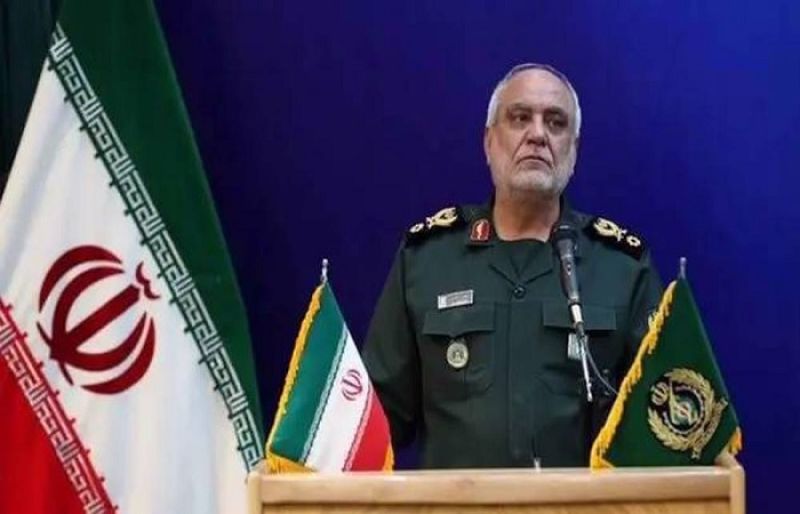
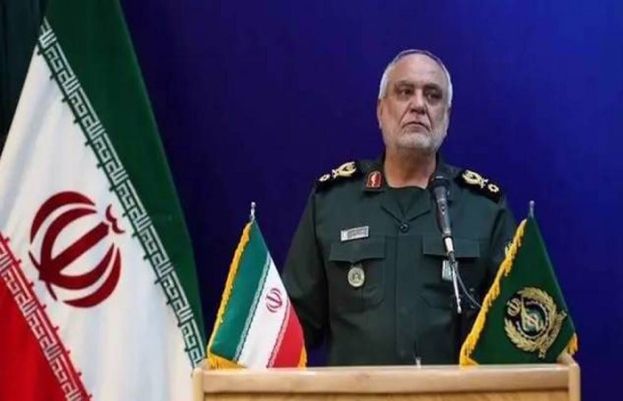
Messages of condolences pour in after the head of the Intelligence Organization of the Islamic Revolution Guards Corps (IRGC), Major General Majid Khademi, was assassinated in a US-Israeli terror strike in Tehran.
In a statement on Monday, the IRGC Public Relations Department said General Khademi, an elite commander, was martyred in the terrorist attack in the early hours of the day.
Major General Ali Abdollahi, commander of Iran’s Khatam al-Anbiya Central Headquarters, praised Khademi for his great endeavors to protect Islamic values and defend national security. He was martyred, Abdollahi said, by the “most vicious American-Israeli terrorists”.
The American and Zionist enemies must know that the martyrdom of such devoted commanders will make the Iranian nation and armed forces even “more resilient and determined” to keep on the path of the martyrs, General Abdollahi said.
‘Assassination will not undermine Iran’s national coherence’
Commander-in-chief of the Iranian Army Major General Amir Hatami said the barbarism put on global display by the American-Israeli enemy will fail to influence the “spirit of resistance of the proud Iranian nation”.
Iran’s adversaries, he said, are under the delusion that they can make any achievement through such wicked and blind moves. But the blood of martyrs only strengthens national will.
“This painful loss will not weaken the morale of the great Iranian people but rather strengthen national resolve and unity toward safeguarding independence and dignity”.
‘Enemies must await harder blows’
Parliament Speaker Mohammad Baqer Qalibaf said the martyrdom of the head of the IRGC Intelligence Organization is proof that the Israeli regime and the US are desperate.
The US-Israeli enemies are going to great lengths to make up for their weakness on the battlefield through cowardly assassinations, he said.
“This blind conspiracy of global arrogance is always doomed to failure, and even harsher blows await them”.
The illegal, imposed war of aggression by the United States and Israel began on February 28 when they assassinated Leader of the Islamic Revolution Ayatollah Seyyed Ali Khamenei, along with several senior military commanders.
In response, Iranian Armed Forces have launched decisive, devastating attacks against US and Israeli interests in the occupied territories and across West Asia.
As the war entered its sixth week, Iran continues to have an upper hand on the battlefield. The enemy is looking for an off-ramp amid heavy human and material loss.
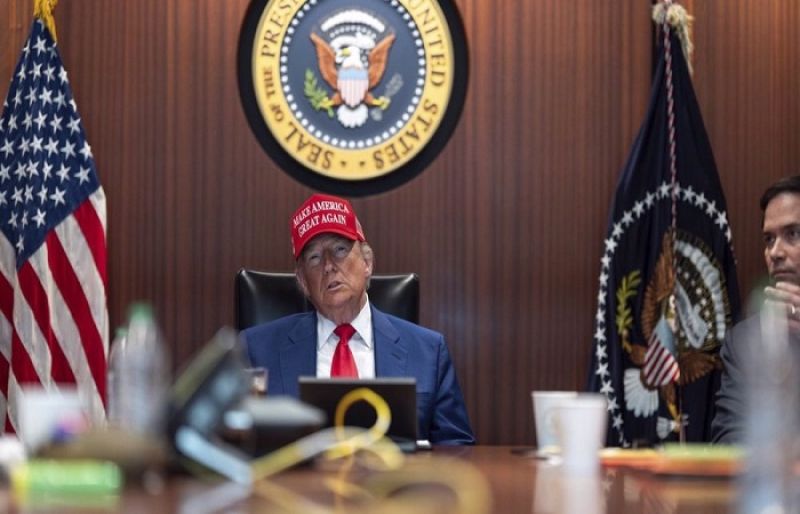
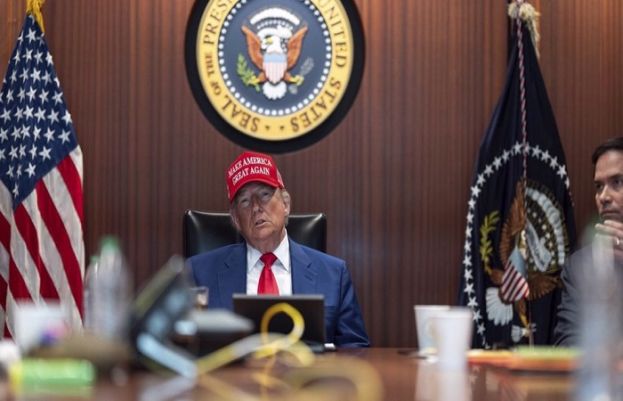
A growing number of lawmakers, experts, and commentators have called for Trump’s immediate removal from office by invoking the 25th Amendment, denouncing him for launching an unprovoked and unnecessary war against the Islamic Republic of Iran.
The 25th Amendment to the US Constitution, ratified in 1967, establishes the process for removing a president who is unable to perform his duties. Section 4, which has never been invoked, allows the vice president and a majority of the cabinet to declare the president “unable to discharge the powers and duties of his office.”
The US president’s Easter message, posted on the completion of one-month of the US-Israeli war on Iran, has drawn sharp rebuke for its content and tone.
US politicians, including some of Trump’s former allies and staunch opponents, described the statement as “psychotic,” “unhinged,” and evidence of a severe mental decline.
Senator Bernie Sanders (I-Vt.) was among the first to sound the alarm, saying the president’s words on the war against the Islamic Republic were more than just troubling.
“One month after starting the war in Iran, this is the statement of the President of the United States on Easter Sunday,” Sanders wrote. “These are the ravings of a dangerous and mentally unbalanced individual. Congress has got to act NOW. End this war.”
Representative Jim McGovern (D-Mass.) echoed Sanders’ concerns with even stronger language, directly questioning the president’s mental state.
“This is psychotic,” McGovern stated bluntly. “The President of the United States needs to get help. Totally unhinged and extremely dangerous.”
The calls for action were not limited to the US Congress. Several commentators and former political figures focused on the 25th Amendment to have Trump removed from office.
Former Republican Congressman Joe Walsh, once a Trump supporter turned fierce critic, pointed to the irony of the timing.
“His Easter morning post. And just 2 days ago, one of his ‘religious advisors’ compared him to Jesus Christ,” Walsh wrote. “He will forever be a stain on this country. And the world. 25th Amendment. Now. And to everyone else who, unlike Trump, understands & celebrates today – Happy Easter.”
The sentiment was shared by author and attorney Seth Abramson, who posed a straight question about the Republican Party’s inaction.
“I’m not saying this rhetorically—I’m speaking literally here,” Abramson said. “At what point do Republicans admit that Trump has lost his mind and replace him with Vance through the 25th Amendment? Never? Do we need to see a nuclear weapon dropped on a city of 10 million innocent civilians first?”
Concerns about the president’s mental fitness also came from medical professionals. Harry Sisson cited the reaction of Dr. Vin Gupta, a respected pulmonologist and health expert.
“Dr. Vin Gupta, a highly respected medical expert, has reacted to Trump’s insane Easter message amid ongoing questions about his health,” Sisson posted.
“‘The President is exhibiting all the signs of dementia.’ Trump has gone crazy and he’s showing it on the world stage.”
Other Democratic lawmakers and political activists questioned why the president’s own cabinet has remained silent so far, pointing to complicity in his actions.
Representative Yassamin Ansari (D-Ariz.) did not mince words, unequivocally calling the US president a threat to American national security.
“The 25th Amendment exists for a reason,” Ansari wrote. “The President of the United States is a deranged lunatic, and a national security threat to our country and the rest of the world.”
Representative Melanie Stansbury (D-N.M.) also weighed in, invoking a classic metaphor to describe the US president’s apparent lack of self-awareness.
“The emperor has no clothes,” Stansbury wrote. “Time for the #25thAmendment. Congress and the Cabinet must act.”
Senator Chris Murphy (D-Conn.) addressed the gravity of the situation as the US losses in the war against Iran pile up, emphasizing the deadly consequences of Trump’s erratic behavior.
“If I were in Trump’s Cabinet, I would spend Easter calling constitutional lawyers about the 25th Amendment,” Murphy wrote. “This is completely, utterly unhinged. He’s already killed thousands. He’s going to kill thousands more.”
Activist Melanie D’Arrigo said the Trump cabinet’s inaction in the face of war against Iran is a deliberate choice, pointing to potential personal gain as a motive for their silence.
“If you’re wondering why Trump’s cabinet isn’t invoking the 25th Amendment after yet another unhinged post announcing war crimes in the war he started that his family and donors are personally profiting from…” D’Arrigo wrote.
“It’s because they’re happily complicit and compromised.”
Journalist and social media influencer Candace Owens called it “a satanic administration.”
“We all realize that satanic Zionists occupy the White House and Congress needs to move to have the Mad King Trump removed,” she wrote.
“All of our lives may depend upon other countries realizing that Trump is deeply unwell and surrounded by religious fanatics who have convinced him that he is a messiah. We are in uncharted territory. Leaders worldwide need to act accordingly.”
Former San Jose Mayor Sam Liccardo said the American public has now seen enough to demand action, placing the burden squarely on the Trump cabinet.
“Our President posted this message to the world on Easter Sunday,” Liccardo said.
“The public now clearly knows that Trump is no longer mentally fit to hold office. Each member of his cabinet has a moral and professional duty to act under the authority of the 25th Amendment; remove him.”
- President Xi Jinping urges safeguards for China’s energy security.
- Says Party Central Committee advances energy security strategy.
- China must stay committed to low-carbon development, he adds.
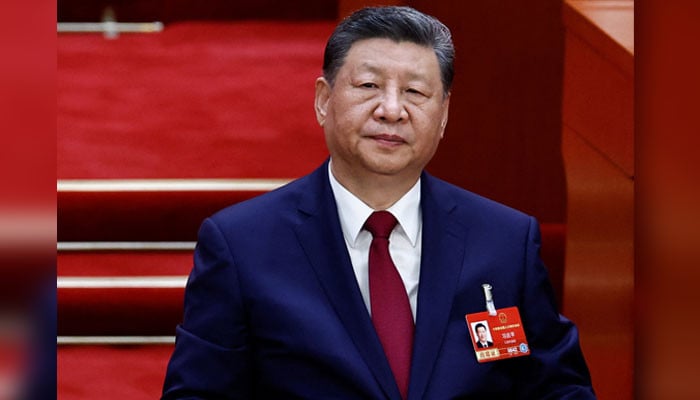
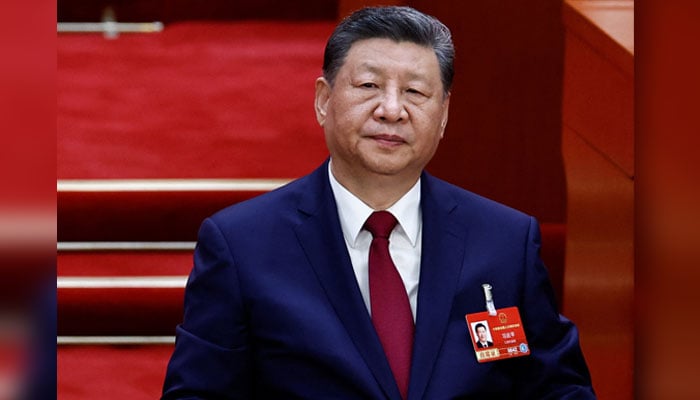
BEIJING: Chinese President Xi Jinping has called for accelerated planning and construction of a new energy system to safeguard the country’s energy security, weeks into the Iran war that has triggered global energy shocks.
The leader of the world’s second-largest economy also emphasised hydropower development and ecological protection, while urging the safe and orderly expansion of nuclear power, according to state broadcaster CCTV on Monday.
“The Party Central Committee has gained a profound grasp of global energy development trends and made major decisions by advancing the new energy security strategy in depth,” he said, referring to the ruling Communist Party’s centre of authority.
Xi did not directly mention the war in his remarks cited by CCTV.
The United States and Iran have been weighing a Pakistani-brokered plan that could end their five‑week-old conflict, even as Tehran pushed back against pressure to swiftly reopen the Strait of Hormuz.
Role of coal and greener energy
Analysts have pointed out that China is relatively better-positioned to absorb the higher oil prices.
Coal accounts for more than half of its energy mix, while it has ample oil stockpiles and imports via the Strait of Hormuz represent only around 5% of total energy consumption.
“The path we took in being the first to develop wind and solar power has now proven to be forward-looking. At the same time, coal-fired power remains the foundation of our energy system and must continue to play its supporting role,” Xi said.
China operates more than half of the world’s coal-fired power capacity, making it the top carbon emitter, which Western-led climate initiatives have long contended with. The country continues to position coal power as a reliability backbone and flexible backup system, even as it accelerates renewables.
Although he underscored the role of coal in China’s energy mix, the president said the country—the world’s largest consumer of coal—must stay committed to clean, low-carbon development.
“A greener, more diversified and resilient new energy system will provide a strong guarantee for China’s energy security and economic development,” CCTV said.
Last July, China began construction of what will be the world’s largest hydropower dam on the eastern rim of the Tibetan Plateau.
Construction on a solar thermal power plant by China General Nuclear Power Group at an altitude of 4,550 metres in Tibet has also begun on Monday, according to state Xinhua News Agency.


‘Sprit of resistance will continue’: Iran officials condemn Israeli assassination of IRGC intel. chief

One of Our Favorite 360 Cams Is 35 Percent Off

Mindy Kaling on her new book publishing venture and amplifying women’s stories

-

 Sports1 week ago
USMNT handed reality check by Doku, Belgium ahead of World Cup
-

 Sports1 week ago
2026 NCAA men’s hockey tournament: Schedule, results
-
Uncategorized4 days ago
[CinePlex360] Please moderate: “Trump signals p
-
Uncategorized1 week ago
[CinePlex360] Please moderate: “Further tariff
-

 Entertainment3 days ago
Joe Jonas shares candid glimpse into parenthood with Sophie Turner
-

 Tech3 days ago
Our Favorite iPad Is $50 Off
-

 Entertainment1 week ago
Demystifying the PTI
-
 Politics7 days ago
Trump considers asking Arab allies to help to pay for Iran war