

Business
US Top Court Blocks Trump’s Tariff Orders: Does It Mean Zero Duties For Indian Goods?

Last Updated:
The verdict does not overturn all of Trump’s tariff actions as duties imposed on steel and aluminium under separate legal provisions remain intact.




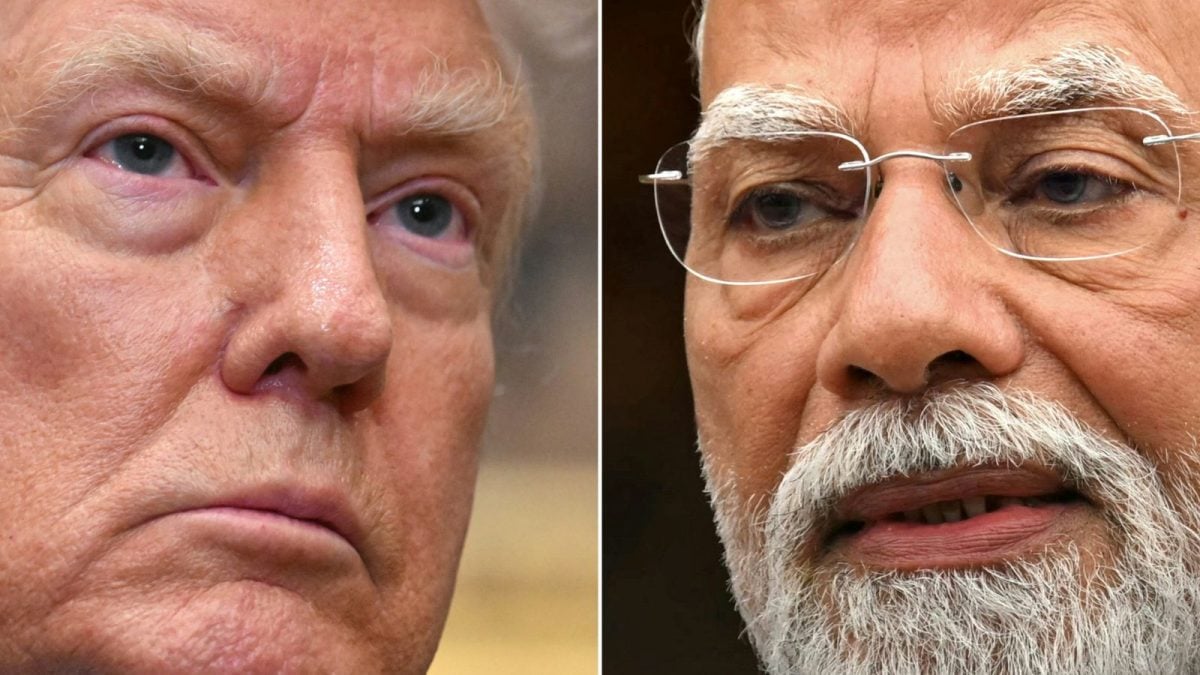
US President Donald Trump and PM Modi | File Image
The US Supreme Court has struck down President Donald Trump’s sweeping global tariff regime, ruling that the measures were imposed without legal backing.
In a 6-3 ruling, the court held that the International Emergency Economic Powers Act (IEEPA) does not authorise the president to unilaterally impose broad, across-the-board tariffs.
The 1977 law allows the executive to regulate certain international economic transactions during a declared national emergency, but does not extend to blanket tariff actions, the court said.
Chief Justice John Roberts, who authored the majority opinion, said Congress has delegated tariff-setting powers only in limited and clearly defined circumstances.
He was joined by the court’s three liberal justices and conservative justices Neil Gorsuch and Amy Coney Barrett. Justices Samuel Alito, Clarence Thomas, and Brett Kavanaugh dissented.
Also Read: US To Refund Billions? What Next After Supreme Court Strikes Down Trump Tariffs
What The Ruling Means For India
The verdict does not overturn all of Trump’s tariff actions. Duties imposed on steel and aluminium under separate legal provisions remain intact. However, it invalidates two major categories of tariffs introduced using IEEPA.
These include the so-called “reciprocal” tariffs, which carried a baseline rate of 10 per cent for most countries, and a separate 25 per cent levy imposed on select imports from Canada, China and Mexico over fentanyl-related concerns.
India had been subject to the reciprocal tariffs, with a 26 per cent rate announced on Trump’s “Liberation Day” in April 2025, later revised to 25 per cent.
With the court ruling, these IEEPA-based tariffs no longer apply, effectively bringing reciprocal tariffs on most Indian exports down to zero for now.
Separately, India had also faced a 25 per cent “penalty” tariff linked to its imports of Russian oil, a measure the US had said was tied to the Ukraine war.
That levy was removed earlier this month after New Delhi and Washington reached a trade understanding. As a result, both the penal tariff and the reciprocal tariff on Indian goods now stand withdrawn.
Under the trade framework discussed earlier, the reciprocal tariff was expected to be reduced to 18 per cent, but the court’s decision renders that rate moot for the time being.
Tariffs That Still Apply
Despite the relief, US tariffs on Indian goods do not disappear entirely.
Duties on steel and aluminium exports, imposed under different statutory authority, continue to apply.
For other products, tariffs revert to pre-IEEPA levels, which are generally lower under the standard US tariff schedule, though sector-specific levies remain.
The ruling does not prevent Trump, or a future administration, from imposing tariffs using other laws.
However, such actions would face stricter procedural limits and could require congressional involvement.
US officials have indicated that alternative legal routes could still be explored to retain elements of the tariff framework.
For India, the decision comes at a critical juncture. Ongoing trade talks with Washington had been overshadowed by tariff uncertainty, particularly for exporters in textiles, pharmaceuticals and engineering goods.
 Click here to add News18 as your preferred news source on Google.
February 20, 2026, 21:55 IST
Read More






Business
Trump administration finalizes better-than-feared Medicare Advantage payment rate in boost to health insurers

Administrator for the Centers for Medicare & Medicaid Services Mehmet Oz speaks during an event sponsored by the Action for Progress Coalition, at the National Press Club in Washington, D.C., U.S., Feb. 2, 2026.
Al Drago | Reuters
The Trump administration on Monday finalized a 2027 payment rate increase to privately run Medicare plans that was far bigger than initially proposed, a boost to health insurer stocks.
The government will increase average Medicare Advantage payments by 2.48%, or more than $13 billion, in 2027, according to a release from the Centers for Medicare & Medicaid Services. The Trump administration in January proposed a payment rate hike of 0.09%, which pummeled shares of insurers that run those plans.
Shares of UnitedHealth and CVS Health rose more than 9% in after-hours trading on Monday. Meanwhile, Humana‘s stock jumped around 12%.
“Medicare Advantage and Part D should work for the people who rely on them,” said CMS Administrator Dr. Mehmet Oz in a release. “These updates keep coverage affordable and ensure patients get real value from their plans.”
The closely watched government payment rate determines how much insurers can charge for monthly premiums and plan benefits they offer and, ultimately, their profits.
Medicare Advantage is a privately run health insurance plan contracted by Medicare. More than half of Medicare beneficiaries are enrolled in such plans, enticed by lower monthly premiums and extra benefits not covered by traditional Medicare, according to health policy research firm KFF.
Business
New norms for NH & bridge works: Longer timelines, realistic deadlines – The Times of India

New Delhi: In a major change in policy, govt has increased the time allowed for construction of 6-10 km-long bridges across rivers such as Ganga and Brahmaputra to six years and for 2.5-6 km-long bridges on Mahanadi and Godavari to five years. The timelines have been revised from the current 24-30 months.Similarly, the construction period has been fixed at two years for national highway projects costing up to Rs 500 crore, 30 months for Rs 500-1,500 crore projects, and three years for works costing over Rs 1,500 crore.The change in the ‘normative construction period’ has been made after a gap of 13 years, learning from past experience of how the average time taken for completion of NH projects has been over four years against the standard timeline of 2.5-3 years. The revised timeline for construction will be applicable for all NH projects to be bid out from May 6.In a circular, the road transport ministry said present guidelines — issued in 2013 — are derived from a legacy linear model that does not explicitly account for voluminous earthwork, leading to unrealistic construction period and resulting in additional cost and risk.“Therefore, a need was felt to revise the existing guidelines based on scientific analysis, understanding of completed projects, and prescribe a realistic construction period for civil works at DPR and bid invitation stage,” the ministry said. It added that the new norm will improve predictability in completion of projects, reduce disputes, enhance value and quality of NHs, for realistic and bankable bids, better quality outcomes and improved investor confidence.An additional six months time has been provisioned in the new norms for critical projects which involve multiple flyovers, tunnels or elevated structures. Similarly, an addition of 12 months has been provisioned for projects that involve cutting and slope stabilisation in hilly states.
Business
GCC demand surges: Foreign firms lease record 9.1 mn sq ft office space in Jan-Mar; India cements global hub status – The Times of India

Foreign firms leased a record 9.1 million square feet of office space across India’s top nine cities during the January-March quarter to set up Global Capability Centres (GCCs), highlighting strong demand for workspaces, PTI reported citing CBRE data.Real estate consultant CBRE said total gross leasing of office space rose 5% to 20.7 million square feet in the quarter, compared with 19.7 million square feet in the year-ago period.The nine cities covered in the report include Mumbai, Delhi-NCR, Bengaluru, Hyderabad, Chennai, Pune, Kolkata, Ahmedabad and Kochi.Leasing for GCCs stood at a record 9.1 million square feet in the March quarter, the highest ever for any quarter.“The record GCC leasing activity is a definitive signal of India’s position as the global destination of choice for high-complexity capability functions,” said Anshuman Magazine, Chairman & CEO, India, South-East Asia, Middle East & Africa, CBRE.He added that demand is broad-based across sectors such as e-commerce, technology and BFSI.“The demand is increasingly being driven by mid-market and nano GCCs alongside established Fortune 500 occupiers,” Magazine said.According to CBRE, American firms accounted for 73% of the total GCC leasing during the quarter.Ram Chandnani, Managing Director, Leasing Services, India, CBRE, said occupiers are increasingly preferring green-certified and amenity-rich office spaces.“As occupiers adopt AI-ready workspace strategies and GCCs evolve into multi-functional innovation hubs, we expect leasing momentum to remain healthy through 2026,” he said.Bengaluru led office leasing activity with a 29% share, followed by Delhi-NCR at 22% and Mumbai at 16%.Together, these three cities accounted for around 67% of the total office leasing across the nine cities during the January-March period, the consultant said.


Golfers react to Tiger Woods’ absence at Augusta National during Masters week: ‘It’s unfortunate’

Lil Nas X provided kind options by Judge assault case
[CinePlex360] Please moderate: “Disgraced ex-Sp

-

 Sports1 week ago
USMNT handed reality check by Doku, Belgium ahead of World Cup
-
Uncategorized4 days ago
[CinePlex360] Please moderate: “Trump signals p
-

 Sports1 week ago
2026 NCAA men’s hockey tournament: Schedule, results
-
Uncategorized1 week ago
[CinePlex360] Please moderate: “Further tariff
-

 Tech3 days ago
Our Favorite iPad Is $50 Off
-

 Entertainment3 days ago
Joe Jonas shares candid glimpse into parenthood with Sophie Turner
-

 Politics7 days ago
Trump considers asking Arab allies to help to pay for Iran war
-

 Sports7 days ago
Fakhar Zaman denies ball-tampering charge in PSL match | The Express Tribune