

Fashion
USTR begins trade probes into 16 economies including India, China, EU

The investigations under Section 301(b) of the Trade Act of 1974 will determine whether their acts, policies and practices are unreasonable or discriminatory and burden or restrict US commerce.
The 15 other economies are China, the European Union (EU), Singapore, Switzerland, Norway, Indonesia, Malaysia, Cambodia, Thailand, Korea, Vietnam, Taiwan, Bangladesh, Mexico and Japan.
USTR Jamieson Greer yesterday announced new trade investigations into 16 economies, including India.
The probes relate to structural excess capacity and production in manufacturing sectors.
The 15 other economies are China, the EU, Singapore, Switzerland, Norway, Indonesia, Malaysia, Cambodia, Thailand, Korea, Vietnam, Taiwan, Bangladesh, Mexico and Japan.
“The United States will no longer sacrifice its industrial base to other countries that may be exporting their problems with excess capacity and production to us. Today’s investigations underscore President Trump’s commitment to reshore critical supply chains and create good-paying jobs for American workers across our manufacturing sectors,” said Greer in a USTR press release.
“The Trump Administration’s reindustrialization efforts continue to face significant challenges due to foreign economies’ structural excess capacity and production in manufacturing sectors. Across numerous sectors, many U.S. trading partners are producing more goods than they can consume domestically,” he noted.
“This overproduction displaces existing US domestic production or prevents investment and expansion in US manufacturing production that otherwise would have been brought online. In many sectors, the United States has lost substantial domestic production capacity or has fallen worryingly behind foreign competitors,” he added.
Meanwhile, the Confederation of Indian Textile Industry (CITI) Chairman Ashwin Chandran said, “While CITI awaits more clarity on this recent US development, it adds further uncertainty to the textiles and apparel sector, which is already under significant stress due to the turbulent developments in West Asia and the lack of a clear picture of how the US tariff situation will unfold. However, CITI remains hopeful that the Indian government will do all it can to safeguard the interests of the textiles and apparel sector, one of the country’s major exporters and the nation’s second-biggest employer.”
Fibre2Fashion News Desk (DS)











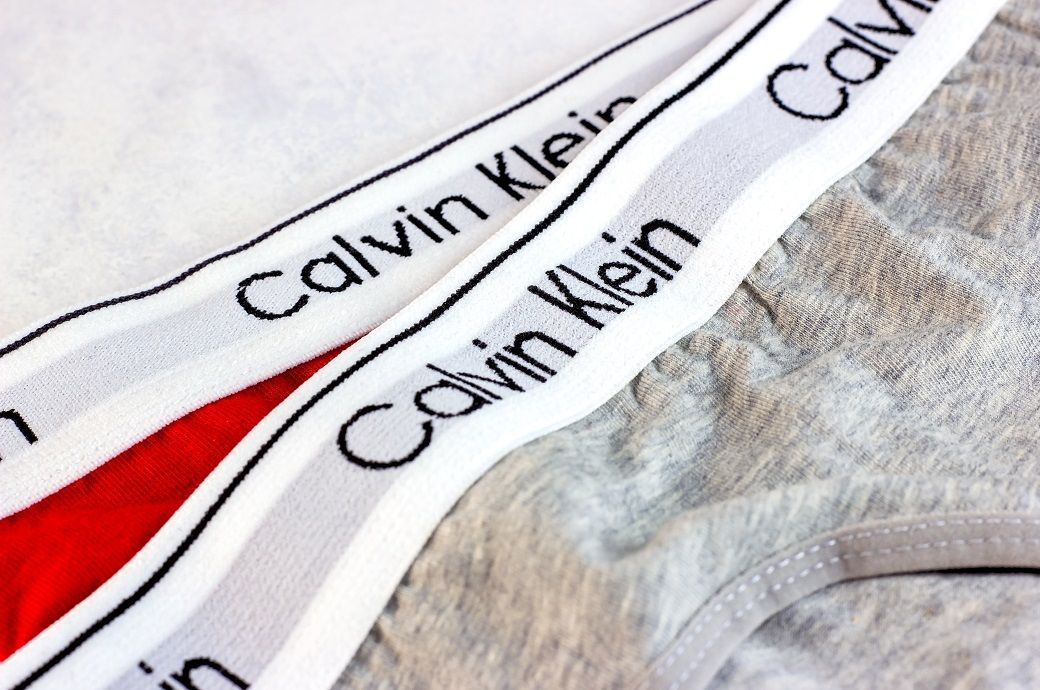
Shot with a focus on movement and strength, the creative brings the footballer’s elite skills to life alongside the newest Calvin Klein underwear styles. Elevated fits and advanced fabrications are made to move with the body, delivering comfort and control. Dynamic visuals explore multiple dimensions of performance, embodying the season’s theme of living in the moment. The accompanying campaign film, set to an up-tempo rhythm, captures Raphinha’s raw athletic energy through the brand’s distinctive visual language.
Calvin Klein, part of PVH Corp., has launched its Spring 2026 campaign starring Brazilian footballer Raphinha.
Shot by Daniel Sannwald, the campaign highlights movement and performance while introducing new underwear styles, including Icon Active Mesh with ventilated panels and Icon Cotton Stretch with an Infinity Bond waistband and moisture-wicking finish.
Designed for a life in motion, underwear innovation drives the season. New ‘Icon Active Mesh’ is engineered with reinforced construction and ventilated mesh panels for enhanced airflow. ‘Icon Cotton Stretch’ elevates the brand’s iconic logo waistband with an innovative stitch-free Infinity Bond waistband and a moisture-wicking finish to deliver performance and premium comfort.
“As an athlete, I’m always focused on how I move and how I feel, and Calvin Klein underwear is designed for performance,” said Raphinha. “This campaign was particularly special as it allowed me to channel my love of music, which had a huge influence on how I grew up, and my love of football.”
Note: The headline, insights, and image of this press release may have been refined by the Fibre2Fashion staff; the rest of the content remains unchanged.
Fibre2Fashion News Desk (JP)

GFG continued to prioritise profitable customer acquisition, engagement and reactivation. The customer base ended 2025 down 4.0 per cent YoY, whilst order frequency increased 2.3 per cent, supported by engagement initiatives in ANZ and LATAM that more than offset the decline in SEA.
Global Fashion Group (GFG) generated ~$1.16 billion NMV in 2025, with Q4 contributing a third.
ANZ and LATAM grew NMV and delivered positive Adjusted EBITDA, while SEA remained challenged.
Gross margin rose to 46.4 per cent, driving ~$10.44 million Adjusted EBITDA and near NFCF breakeven.
In 2026, NMV is expected at ~$1.15–1.24 billion, with Adjusted EBITDA ~$17.4–29 million.
ANZ, GFG’s largest region with 49 per cent of group NMV, returned to growth and delivered stronger profitability with a 5.7 per cent YoY ccy NMV increase and €26 million (~$30.16 million) of Adjusted EBITDA which converted strongly into positive Normalised Free Cash Flow. LATAM (30 per cent of group NMV) delivered an NMV increase of 6.1 per cent ccy and €3 million (~$3.48 million) of Adjusted EBITDA with NFCF near breakeven. SEA (21 per cent of group NMV) remained challenged on the topline with NMV down 15.2 per cent YoY ccy. However, SEA’s rate of decline continued to ease with Q4 NMV down 9.7 per cent YoY ccy. In 2025, SEA remained resilient on profitability and delivered €3 million (~$3.48 million) Adjusted EBITDA, and was also near NFCF breakeven.
Supported by a healthier inventory profile and ongoing business model shift toward marketplace and platform services, GFG increased its gross margin by 1.5ppt to 46.4 per cent in 2025. The expanding margin combined with ongoing cost reductions drove a €27 million (~$31.32) million improvement in Adjusted EBITDA to €9 million (~$10.44 million), representing a 1.4 per cent margin. This marked the delivery of one of GFG’s key financial ambitions: positive group Adjusted EBITDA. Q4 Adjusted EBITDA margin was particularly strong at 7.6 per cent, up 3.5ppt YoY, the company said in a press release.
This improvement to Adjusted EBITDA along with a reduction in capital expenditure following the completion of key technology investments drove GFG’s €10 million (~$11.60 million) improvement in NFCF to an outflow of €32 million (~$37.12 million) in 2025.
In 2026, GFG expects to deliver NMV in a range of (4)-4 per cent YoY ccy, implying €990-1,070 million (~$1,148.50–$1,241.31 million) of NMV. This reflects softer current trading and H1 expectations, as well as different H2 trajectories to account for macroeconomic factors in nine markets. Adjusted EBITDA is expected to be in a range of €15-25 million (~$17.40–$29.00 million).
Fibre2Fashion News Desk (RR)

Retail activity remained the main driver of the expansion. Retail trade sales volume increased 18.8 per cent YoY in January, highlighting continued consumer demand despite broader economic volatility, TurkStat said in a press release.
Retail sales in Turkiye rose strongly in January 2026, driven by demand for textiles, clothing and footwear, according to TurkStat.
The trade sales volume index increased 7.6 per cent year on year, while retail trade sales volume surged 18.8 per cent.
Textiles, clothing and footwear grew 14.9 per cent annually.
On a monthly basis, trade sales rose 0.1 per cent and retail sales increased 2.4 per cent.
Sector-wise, retail trade excluding watches and jewellery recorded an 11.1 per cent annual increase, while the textiles, clothing and footwear segment grew 14.9 per cent YoY, reflecting sustained spending on apparel and related products.
On a month-on-month (MoM) basis, total trade sales volume edged up 0.1 per cent in January compared with December. Within the trade categories, wholesale trade declined 1.6 per cent.
Retail trade continued to expand on a monthly basis as well, with the retail sales volume index increasing 2.4 per cent MoM. Retail trade excluding watches and jewellery grew 0.8 per cent, while textiles, clothing and footwear sales increased 1.3 per cent over the previous month.
Fibre2Fashion News Desk (SG)


Iran’s new Supreme Leader pledges revenge for martyrs, vows Strait closure.

Footballer Raphinha fronts Calvin Klein Spring 2026 underwear campaign

USTR begins trade probes into 16 economies including India, China, EU

-

 Politics5 days ago
India let Iran warship dock the day US sank another off Sri Lanka, say officials
-

 Sports6 days ago
Pakistan set for FIH Pro League debut | The Express Tribune
-
 Business5 days ago
Restaurant group changes name after bid to buys pubs across the UK
-

 Entertainment5 days ago
Harry Styles kicks off new era with ‘One Night Only’ comeback show
-

 Sports6 days ago
Winners and losers of the 2026 NHL trade deadline
-
 Business6 days ago
Home heating oil: ‘Most of my pension has gone on home heating oil’
-

 Tech1 week ago
Google’s Pixel 10a May Not Be Exciting, but It’s Still an Unbeatable Value
-

 Entertainment6 days ago
Kanye ‘Ye’ West trips during trial: ‘Is he asleep?’