

Business
Vehicle production fell 15% last year, report shows

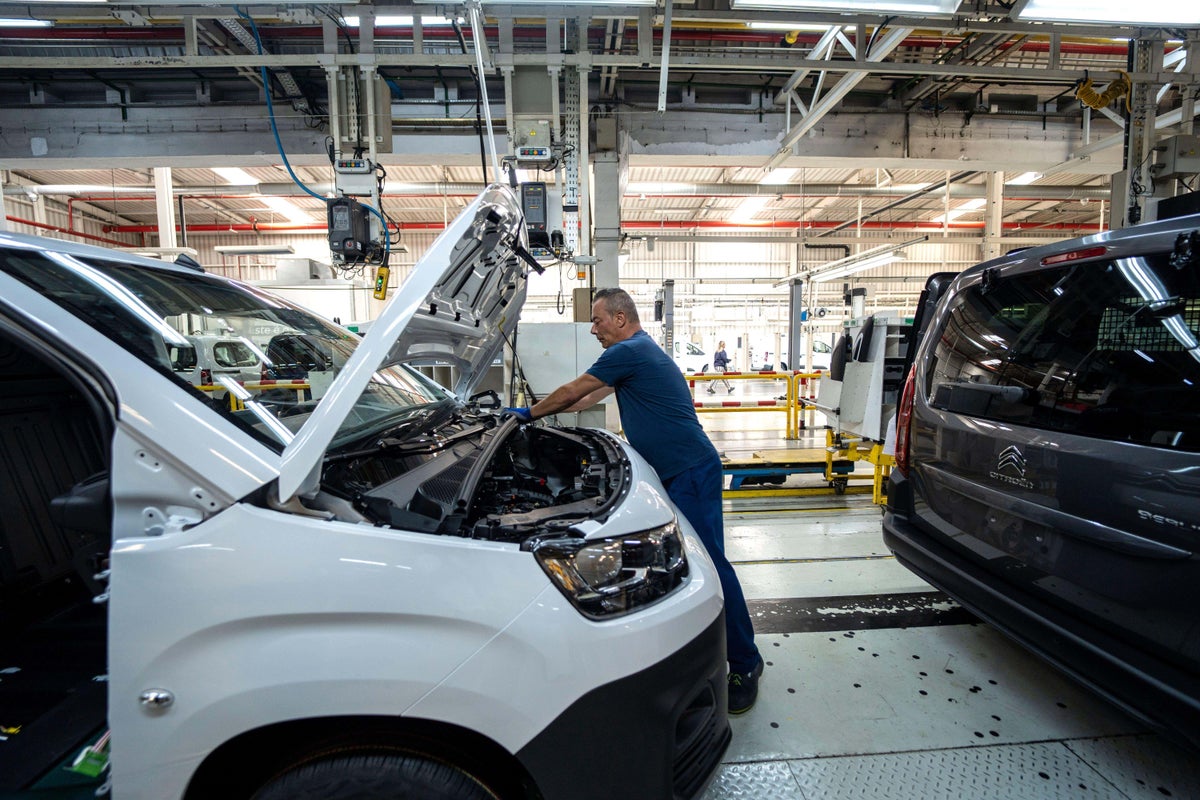
The number of vehicles built in the UK fell by 15% in 2025 as the industry dealt with the toughest year in a generation for manufacturing, according to a report.
The Society of Motor Manufacturers and Traders (SMMT) said 717,371 cars and 47,344 commercial vehicles left factories, down 8% and 62% respectively.
Issues affecting production included a cyber incident which halted production at JLR, new tariffs on trade across the Atlantic, and ongoing restructuring as plants shift to a decarbonised future, said the SMMT.
Over the year, car production for the UK market and exports both fell by around 8%.
Production of battery electric, plug-in hybrid and hybrid cars increased by 8.3% to just under 300,000, a record 41.7% share of output.
The figures are expected to increase this year with the planned launch of seven new EV models, the SMMT said.
Total car production is predicted to return to growth this year, with output set to rise by more than 10%, according to the report.
The SMMT’s data showed Europe received 56% of vehicles exported, followed by the US (15%), and China (6.3%).
Mike Hawes, SMMT chief executive, said: “2025 was the toughest year in a generation for UK vehicle manufacturing.
“Structural changes, new trade barriers, and a cyber attack that stopped production at one of the UK’s most important manufacturers combined to constrain output, but the outlook for 2026 is one of recovery.
“The launch of a raft of new, increasingly electric models and an improving economic outlook in key markets augur well.
“The key to long-term growth, however, is the creation of the right competitive conditions for investment, reduced energy costs, the avoidance of new trade barriers, and a healthy, sustainable domestic market.
“Government has set out how it will back the sector with its industrial and trade strategies, and 2026 must be a year of delivery.”

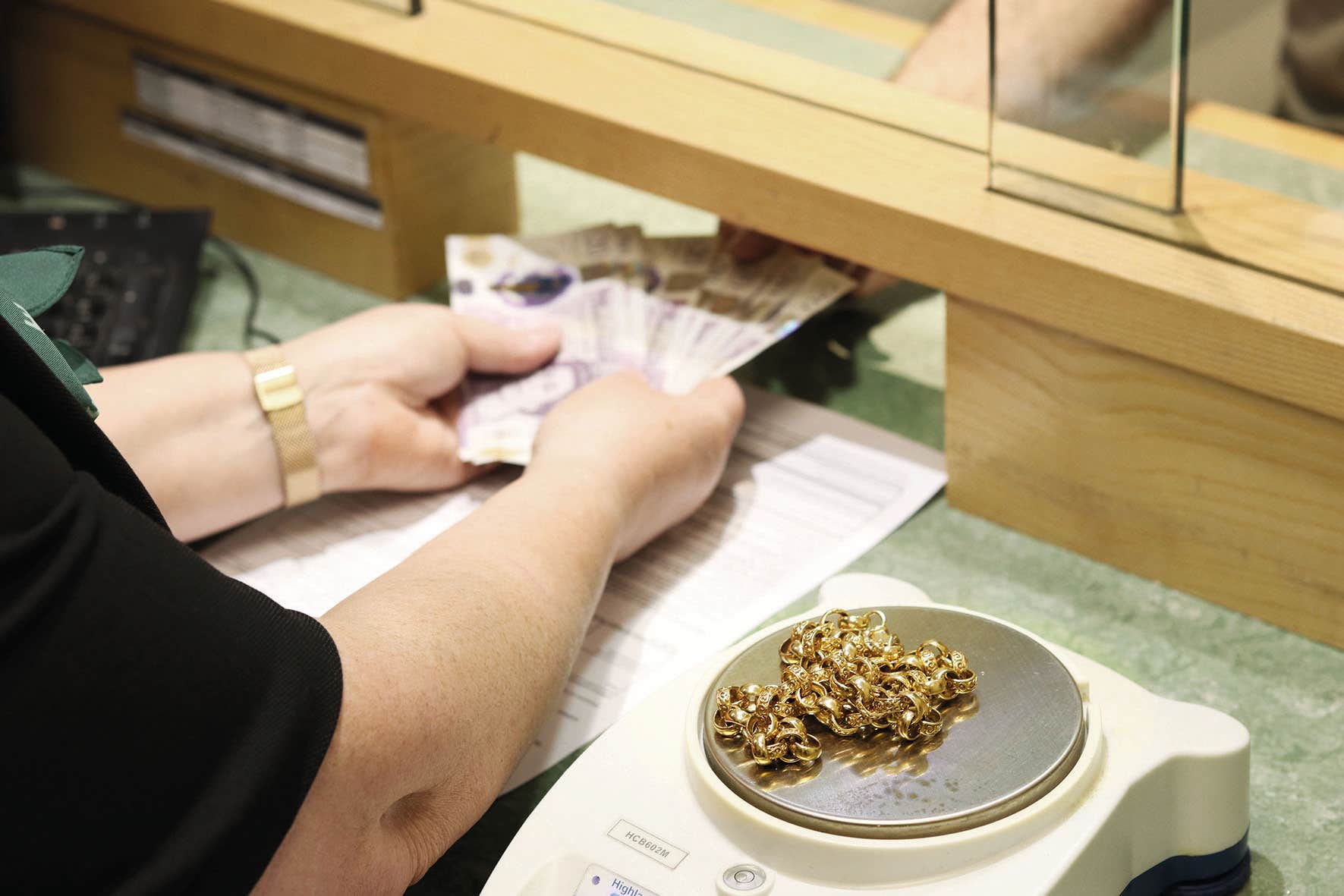
Pawnbroker Ramsdens has significantly upgraded its annual profit forecast, attributing the boost to record levels of lending as consumers increasingly turn to their jewellery for cash amidst soaring gold prices.
The lender and retailer noted the precious metal’s higher price was driving demand and bolstering profits.
Pawnbroking lending hit record levels in February, continuing into March, and boosting its loan book by 18 per cent since the financial year ended in September.
Ramsdens’ service allows individuals to secure loans against jewellery or watches.
The company also purchases unwanted items for resale in stores, online, or to bullion dealers. Furthermore, revenues from its jewellery shops climbed by approximately a quarter year-on-year.
It comes as the price of gold has rallied to reach record highs at points during 2026, as investors sought refuge during global geopolitical uncertainty, conflict and worries about tariffs.
The most recent spike occurred at the beginning of March following the escalation of conflict in the Middle East, with gold hitting around $5,400 (£4,040) an ounce.
The average gold price for the year-to-date is about 50 per cent higher than last year, and the geopolitical and economic climate could mean it remains elevated throughout the months ahead, Ramsdens said.
The London-listed business told investors that owing to stronger trading in the first five months of its financial year and the outlook for gold prices, it was now expecting to make an annual pre-tax profit of at least £24 million, which could rise to as much as £28 million.
Analysts had previously been forecasting a profit of £21.1 million for the year to the end of September.

Get a free fractional share worth up to £100.
Capital at risk.
Terms and conditions apply.
ADVERTISEMENT
Get a free fractional share worth up to £100.
Capital at risk.
Terms and conditions apply.
ADVERTISEMENT
Chief executive Peter Kenyon said: “In addition to underlying progress across the business, we continue to benefit from the high gold price, which is significantly boosting both customer demand and profits within our purchase of precious metals segment.”
Russ Mould, investment director for AJ Bell, said: “This is the second profit forecast increase of 2026, following on from February’s trading update, and means Ramsdens is now on track to post record annual earnings in the 12 months to September 2026.
“The good news is it is not just the soaring gold price that is doing the heavy lifting.
“Ramsdens reports strong sales of jewellery and rapid growth in the pledge book at the pawnbroking operation, while the foreign currency exchange business seems steady, although there remains a chance that the conflict in the Middle East has an impact there at some stage.”
Ramsdens’ shares jumped by about a tenth on Wednesday.
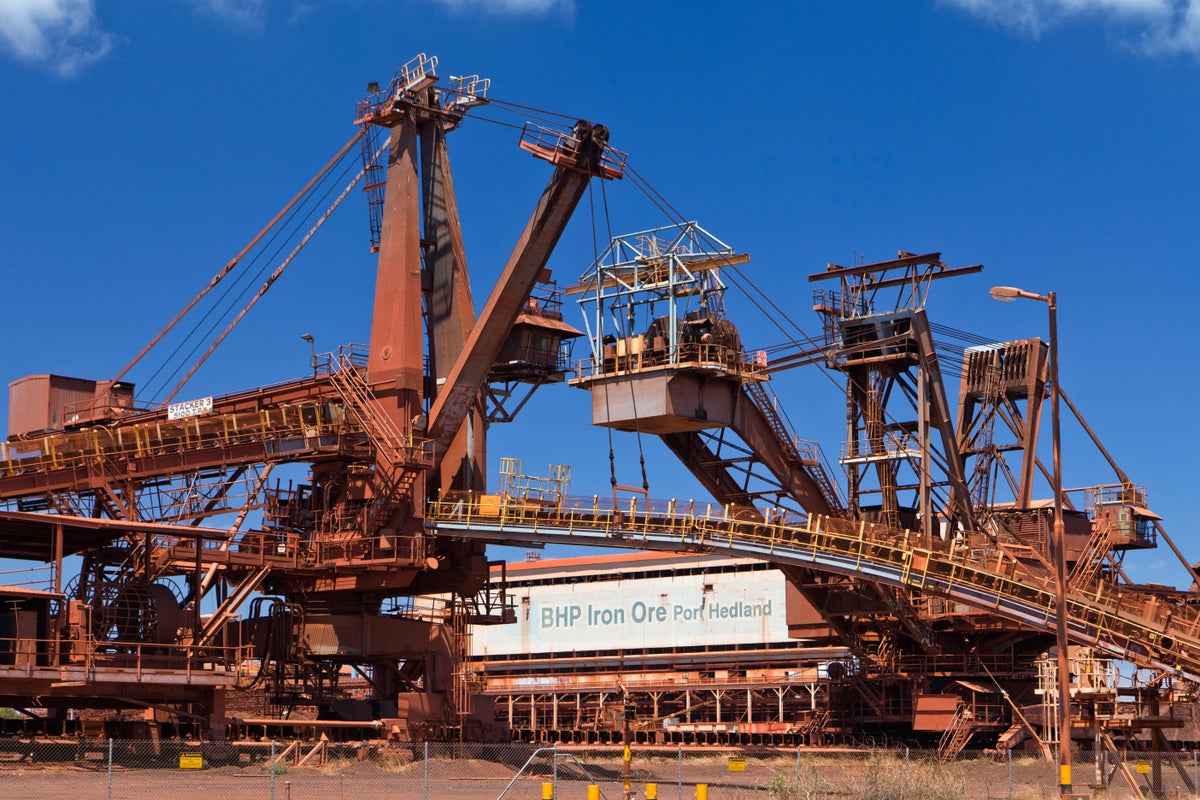
BHP has named Brandon Craig as its new chief executive to replace Mike Henry at the helm of the world’s largest mining company.
Mr Craig, who is currently BHP’s Americas boss, will start on July 1, when Mr Henry steps down after six-and-a-half years in the role.
The Australian mining giant – which switched its main listing from London to Sydney in 2022, but retained a standard listing in the UK – said Mr Henry had helped the firm establish itself as the world’s biggest copper producer.
But he also presided over two failed attempts to buy rival Anglo American to further bolster its copper portfolio, last November walking away from a deal just 18 months after its previous ill-fated approach.
Former FTSE 100 company BHP had looked to muscle in on the agreed mega-merger between Anglo and Canadian rival Teck Resources before pulling out.
Ross McEwan, BHP chairman and former NatWest chief executive, said Mr Craig’s “discipline and focus” would help him drive the group’s strategy forwards.
“We would like to recognise the outstanding contribution of Mike Henry to BHP as chief executive,” he added.
“Under his leadership, BHP has transformed into a safer and more productive company, financially strong and sharply focused on shareholder value and social value.”
Mr Craig has worked at BHP for more than 25 years, having joined in 1999.
Before his current role, he also previously led the group’s Western Australia iron ore business.
He will take on the chief executive role with a 1.9 million US dollar (£1.4 million) annual salary, plus benefits, with the potential for cash and share awards worth up to a maximum of 6.8 million dollars (£5.1 million) each year and possible long-term incentive share awards of up to 3.8 million dollars (£2.8 million) a year.
Mr Craig said: “It is an honour and privilege to succeed Mike Henry as chief of BHP.
“Thanks to his leadership, BHP is well positioned for the future.
“Mike will be remembered for his strategic decision-making, portfolio transformation, operational excellence and focus on safety and high-performance culture.”
Outgoing boss Mr Henry said: “It has been a privilege to serve as chief executive of BHP and to have worked with so many truly talented people. I am proud of what we have achieved together.”

Free childcare support for working parents varies across the UK, depending on the child’s age.
Source link


CAI revises India’s 2025-26 cotton output upward to 320.5 lakh bales

Behind the band The Last Dinner Party's soaring success

US’ G-III Apparel’s FY26 sales fall 7% to $2.96 bn

Stock market crash today (March 12, 2026): Nifty50 opens below 23,600; BSE Sensex down over 900 points on continuing US-Iran war – The Times of India

Intertextile Shanghai 2026: Fringe events spotlight market trends

What time will NASA’s 600 kg satellite crash to Earth today— 14 years after launch?

-
Business6 days ago
Stock market crash today (March 12, 2026): Nifty50 opens below 23,600; BSE Sensex down over 900 points on continuing US-Iran war – The Times of India
-
 Fashion1 week ago
Intertextile Shanghai 2026: Fringe events spotlight market trends
-
 Entertainment1 week ago
What time will NASA’s 600 kg satellite crash to Earth today— 14 years after launch?
-

 Fashion1 week ago
German brand Adidas posts 13% revenue growth in 2025
-

 Fashion1 week ago
UK’s Topshop unveils Tolu Coker capsule collection
-

 Tech1 week ago
Meta Developed 4 New Chips to Power Its AI and Recommendation Systems
-
 Business1 week ago
US ignites Iran war, but Gulf Arab states pay the price | The Express Tribune
-

 Fashion1 week ago
India’s textile recycling market may reach $3.5 bn by 2030: Report