

Politics
Venezuelan opposition leader Machado vows to return home ‘as soon as possible’

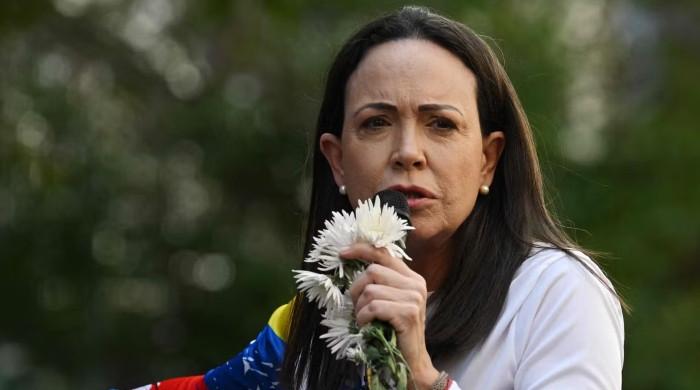
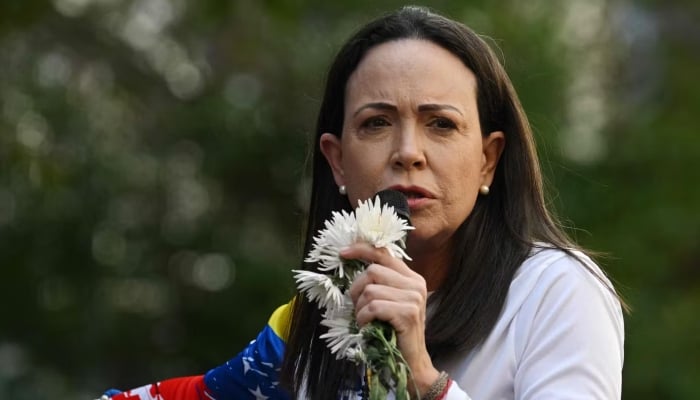
- Machado says Rodriguez is rejected by Venezuelan people.
- Machado predicts opposition wins over 90% of votes.
- Machado pledges to dismantle criminal structures.
WASHINGTON: Venezuelan opposition leader Maria Corina Machado said Monday she plans to return home “as soon as possible,” and slammed the interim president in Caracas.
In her first public comments since a social media post over the weekend, when the US military forcibly removed president Nicolas Maduro from power, the Nobel Peace Prize winner vowed to return to her country.
“I’m planning to go back to Venezuela as soon as possible,” Machado told broadcaster Sean Hannity on Fox News, speaking from an undisclosed location.
Machado openly rejected the country’s interim president Delcy Rodriguez, saying she “is one of the main architects of torture, persecution, corruption, narcotrafficking.”
Rodriguez, who has signalled her willingness to cooperate with Washington, was Venezuela’s vice president under Maduro.
Machado said Rodriguez is “rejected” by the Venezuelan people, and voters were on the opposition’s side.
“In free and fair elections, we will win by over 90% of the votes, I have no doubt about it,” Machado said.
Machado also vowed to “turn Venezuela into the energy hub of the Americas” and “dismantle all these criminal structures” that have harmed her countrymen, promising to “bring millions of Venezuelans that have been forced to flee our country back home.”
To the disappointment of Venezuela’s opposition, Trump has given short shrift to the idea of 58-year-old opposition leader and Nobel Peace Prize winner Machado taking over, saying she lacked support.
Machado was banned from standing in the 2024 election but has said her ally Edmundo Gonzalez, 76, who the opposition and some international observers say overwhelmingly won that vote, has a democratic mandate to take the presidency.
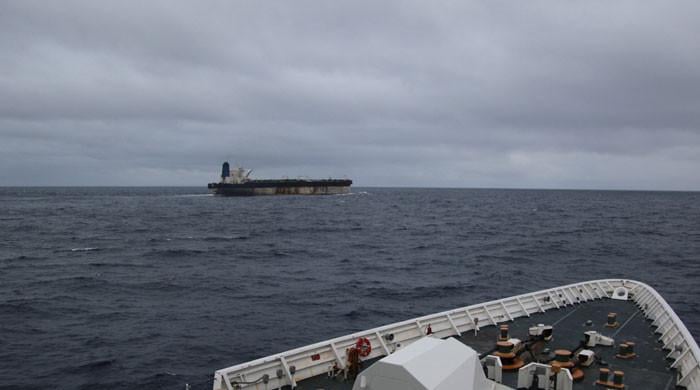
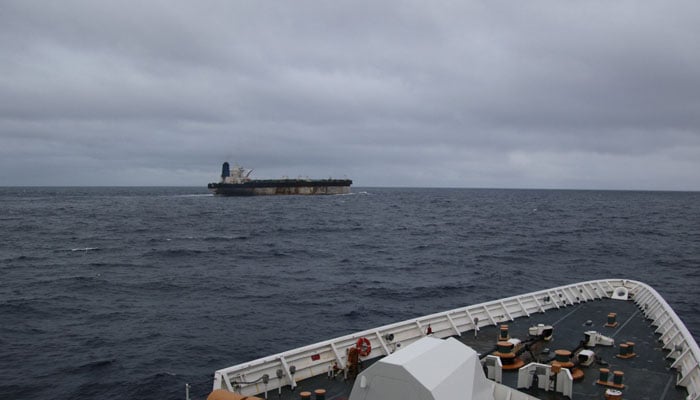
- US says it seizes vessel despite ship being escorted by Russian navy.
- Vessel thwarted earlier attempt to board it near Venezuela.
- Russia’s Transport Ministry slams seizure of oil tanker.
WASHINGTON: The United States on Wednesday seized a Russian-flagged oil tanker in the North Atlantic after pursuing it from off the coast of Venezuela, in an operation condemned by Moscow.
Washington says the tanker is part of a so-called shadow fleet that carries oil for countries such as Venezuela, Russia and Iran in violation of US sanctions, and seized it despite the ship being escorted by the Russian navy.
The vessel had thwarted an earlier attempt to board it last month near Venezuela, where a US raid on Saturday toppled the country’s authoritarian president, Nicolas Maduro.
“The vessel was seized in the North Atlantic pursuant to a warrant issued by a US federal court,” US European Command, which oversees American forces in the region, said in a statement on X.
After the operation, Pentagon chief Pete Hegseth posted that the US blockade on Venezuelan oil was in full effect “anywhere in the world.”
Russia’s Transport Ministry slammed the seizure, saying “freedom of navigation applies in waters on the high seas, and no state has the right to use force against vessels duly registered under the jurisdiction of other states.”
The US military also announced a second sanctioned tanker ship had been seized in the Caribbean Sea.
Homeland Security chief Kristi Noem posted on X that both vessels “were either last docked in Venezuela or en route to it,” and included a video of US forces roping down from a helicopter onto an unidentified ship and proceeding toward the bridge with weapons ready.
US to control oil sales ‘indefinitely’
Last weekend, US special forces snatched Maduro and his wife from Caracas and flew them to New York to face trial on drug charges.
Since then, President Donald Trump has said that the United States will “run” Venezuela and US companies will control its critical oil industry.
In Caracas, after several days of shuttered shops and intermittent public transport, the capital’s streets were again busy Wednesday with pedestrians, street vendors, cars and motorbikes.
The North Atlantic operation came despite Russia reportedly sending a submarine and other naval assets to escort the empty tanker and saying the vessel was sailing under the Russian flag.
The vessel, formerly known as the Bella-1, in recent weeks switched its registration to Russia, changed its name to the Marinera and the tanker’s crew reportedly painted a Russian flag on the tanker.
It had been en route to Venezuela before it evaded the US blockade, and has been under US sanctions since 2024 over alleged ties to Iran and Hezbollah.
Trump said Tuesday that Venezuela said 30-50 million barrels of “high?quality, sanctioned” Venezuelan crude will be shipped to US ports, with the revenue — perhaps more than $2 billion at current market prices — placed under his personal control.
US Energy Secretary Chris Wright added Wednesday that Washington will control sales of Venezuelan oil “indefinitely.”
It was not clear whether Venezuela’s new ruler — interim president Delcy Rodriguez — had agreed to hand over the oil, how the plan would work, or what its legal basis would be.
Rodriguez – a long-time member of Maduro’s inner circle as vice president and energy minister – has vowed cooperation with the United States amid fears that Trump could pursue wider regime change.


DUBAI: The United Arab Emirates (UAE) has introduced a new civil law setting 18 as the legal age of adulthood, a move experts say will significantly expand the rights and responsibilities of young people and bring the country in line with international practice.
Previously, adulthood in the UAE was defined as 21 lunar years, which is roughly equivalent to 20 under the Gregorian calendar. The reform, introduced through amendments to the Civil Transactions Law, grants full legal and financial independence from the age of 18.
Under the new rules, young adults can manage their personal finances without the approval of a legal guardian. They can enter contracts, obtain bank loans, buy and sell property, and register and run businesses independently. Minors aged 15 will also be able to apply for judicial permission to manage their assets, a step aimed at supporting early business activity.
The government said the change will standardise the age of majority across UAE legislation, including labour and juvenile laws, improving legal clarity and consistency.
For many Pakistanis living and working in the UAE, including students, young professionals, and entrepreneurs, the reform is expected to make it easier to access banking services, employment and business opportunities. The UAE already allows people to work, drive, marry and be tried in criminal courts as adults from the age of 18, and the new law formally aligns civil responsibilities with those rights.
The move reflects the UAE’s wider efforts to encourage youth participation in economic growth and entrepreneurship.
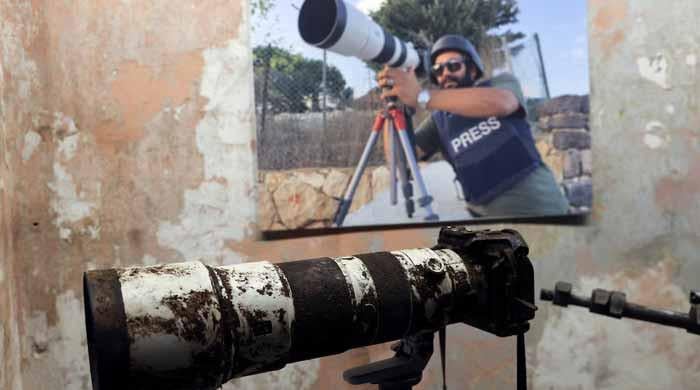
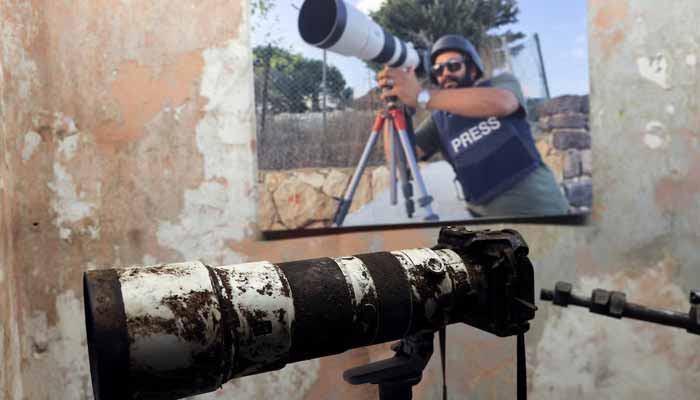
The IPI global network has criticised the Israeli government for maintaining its ban on unrestricted media access to Gaza, saying it was disappointed.
“IPI is deeply disappointed in the Israeli government’s decision to extend and expand a temporary order giving authorities unilateral power to close foreign media outlets deemed to be threats to national security,” it said in a statement.
The government had told the Supreme Court in a submission late Sunday that the ban should remain in place, citing security risks in the Gaza Strip.
Since the outbreak of the Gaza war in October 2023, the government has barred foreign journalists from independently entering the devastated territory.
Instead, Israel has allowed only a limited number of reporters to enter Gaza on a case-by-case basis, embedded with its military inside the blockaded Palestinian territory.
Last month, the court set January 4 as a final deadline for the government to present a plan for allowing media access to Gaza.
In its submission, the government maintained that the ban should remain in place.
“This is for security reasons, based on the position of the defence establishment, which maintains that a security risk associated with such entry still exists,” the government submission said.
The government also said that the search for the remains of the last hostage held in Gaza was ongoing, suggesting that allowing journalists in at this stage could hinder the operation.
Meanwhile, the Foreign Press Association (FPA) also condemned the decision.
“The Foreign Press Association expresses its profound disappointment with the Israeli government´s latest response to our appeal for full and free access to the Gaza Strip,” the association said on Tuesday.
“Instead of presenting a plan for allowing journalists into Gaza independently and letting us work alongside our brave Palestinian colleagues, the government has decided once again to lock us out” despite the ceasefire in the territory, it added.


What’s Going on With Smart Rings?

Darren Fletcher can make Premier League history with sons in Man United squad

Prince Harry embarks on secret mission in feud with William

-

 Entertainment1 week ago
George Clooney, his wife Amal and their twins granted French citizenship
-

 Sports1 week ago
Morocco reach AFCON last 16 | The Express Tribune
-
 Business1 week ago
A major drop in the prices of petroleum products is likely with the arrival of the New Year. – SUCH TV
-

 Entertainment1 week ago
Beyoncé is now a billionaire, according to Forbes
-

 Fashion1 week ago
UK year-end review 2025: Seeking new avenues
-
 Business7 days ago
Energy price cap rises slightly as temperatures fall
-

 Entertainment7 days ago
France president ‘wants to ban under-15s from social media’
-

 Fashion1 week ago
Saat & Saat acquires Turkish apparel leader Aydinli Group