

Fashion
Vietnam’s manufacturing growth hits 15-month high as PMI climbs to 54

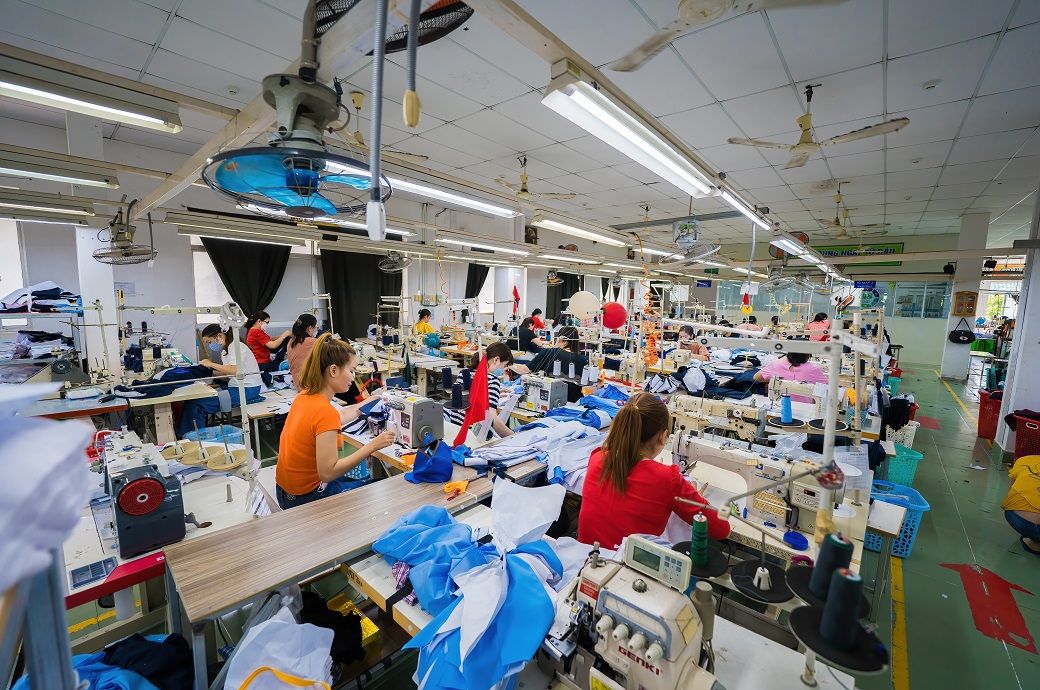
The sector reported notable gains in output and new orders, while employment expanded for the first time in over a year. Purchasing activity increased, signalling renewed growth in inventories, and business confidence climbed to a 16-month high. At the same time, inflationary pressures intensified, with both input and output prices rising more steeply than in September, S&P said in a press release.
Vietnam’s manufacturing sector gained strong momentum in October 2025 as the S&P Global PMI rose to 54.5 from 50.4, the sharpest improvement since July 2024.
Output, new orders, and employment expanded, while confidence reached a 16-month high.
Input and output prices rose at faster rates amid supply challenges, though overall optimism remained solid despite inflationary and weather-related pressures.
New orders surged for the second month running, driven by improving domestic demand and a slight rebound in new export business—the first in a year. This led manufacturers to boost production at the fastest pace since July 2024, marking six consecutive months of output growth.
Business confidence strengthened to its highest level in 16 months as firms anticipated continued growth in new orders and planned production capacity expansions. In response to rising workloads, manufacturers expanded their workforce for the first time in over a year. Backlogs of work rose at the quickest pace in more than three and a half years, partly due to adverse weather and flooding disrupting operations.
Flood-related disruptions also led to longer supplier delivery times—the most pronounced since July. Despite supply challenges, firms increased purchasing activity for the fourth consecutive month, leading to the first rise in pre-production inventories in over two years. Stocks of finished goods, however, declined slightly as companies fulfilled strong order volumes.
Input cost inflation accelerated sharply in October, with about 27 per cent of surveyed firms citing higher raw material prices and supply shortages. Output prices also rose more steeply, hitting a 40-month high, as producers passed on increased costs to customers.
Overall, the October survey results suggest that Vietnam’s manufacturing sector entered the fourth quarter (Q4) 2025 with robust growth momentum and rising optimism, though escalating cost pressures and weather-related disruptions remain key risks to watch.
“The Vietnamese manufacturing sector moved up a gear in October, seeing much stronger increases in output and new orders during the month. Positively, the strength of the expansions were sufficient to enable firms to take on extra staff and build inventories of inputs,” said Andrew Harker, economics director at S&P Global Market Intelligence. “Whether these growth rates can be sustained in the months ahead remains to be seen, but there is clearly some positive momentum in the sector at present.”
“Inflationary pressures built again, however, and are now relatively elevated. For now, customers are happy to look through price increases and commit to new orders, but this may start to wane should rates of inflation pick up further,” added Harker.
Fibre2Fashion News Desk (SG)












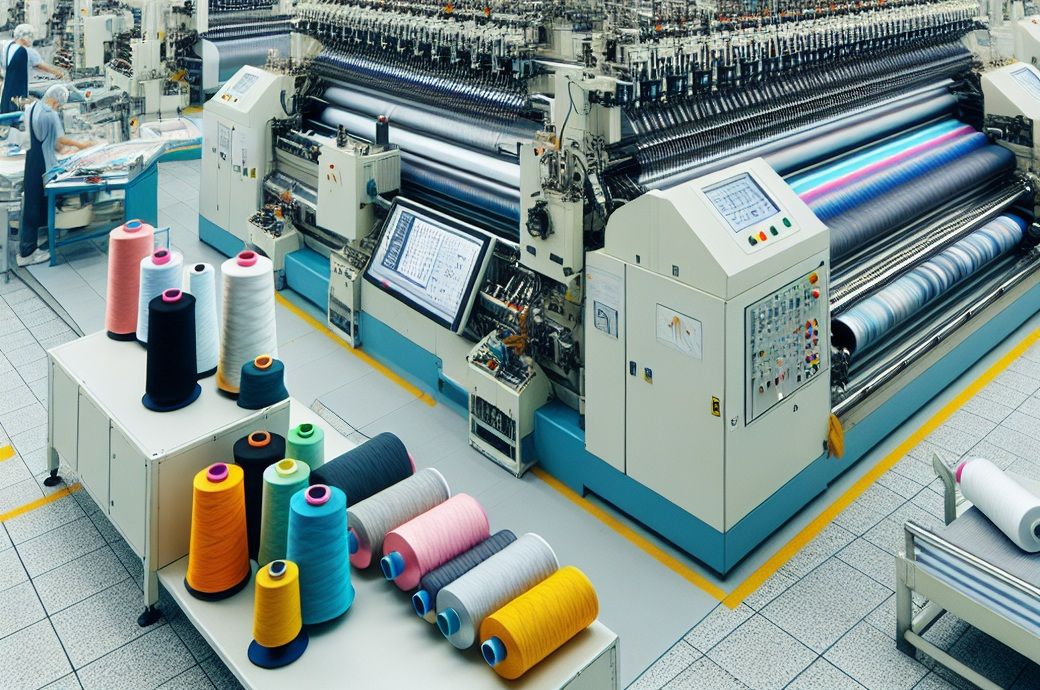
Geopolitical tensions are raising textile costs by 10-15 per cent, disrupting supply chains and slowing apparel trade.
Synthetic segments are facing pressure, while cotton remains stable.
Technical textiles are surging, driven by defence and industrial demand.
The industry is shifting from volume apparel to high-value, performance-driven textiles.
Source link

Hawley received the award from former Vogue editor Anna Wintour and actor Anne Hathaway, thanking the Academy and her creative team while describing costume designers as “artisans, alchemists and dream weavers.”
The film, directed by Guillermo del Toro and inspired by Mary Shelley’s classic novel Frankenstein; or, The Modern Prometheus (published in 1818), features richly layered costumes that blend Victorian aesthetics with gothic fantasy. Hawley’s designs employ colour symbolism and intricate textures to reinforce the narrative’s themes of life, death and obsession.
New Zealand costume designer Kate Hawley won the Best Costume Design award at the Academy Awards (Oscars) for the film Frankenstein.
Her elaborate, colour-driven costumes blend gothic aesthetics with Victorian influences, using symbolism and layered textures to enhance the film’s narrative and character development inspired by Mary Shelley’s classic novel.
Throughout the film, colour motifs, particularly shades of red, play a central storytelling role, symbolising the memory of Victor Frankenstein’s mother and recurring emotional themes. Victor’s wardrobe combines Romantic-era silhouettes with flamboyant touches inspired by figures such as David Bowie and Mick Jagger, reflecting the character’s rebellious personality.
Hawley also created intricate costumes for Elizabeth, portrayed by Mia Goth, incorporating botanical and insect-inspired patterns and jewellery elements that highlight the character’s connection to nature. The garments were built with multiple layers and textures to create a painterly, atmospheric visual style aligned with the film’s gothic tone.
The Oscar marks Hawley’s first Academy Award and follows earlier recognition for Frankenstein at the Costume Designers Guild Awards, where the film also won in the period film category.
With its dramatic silhouettes, symbolic colour palette and meticulous craftsmanship, the film’s costume design has been widely praised for helping shape the visual identity of del Toro’s ambitious adaptation of the classic tale.
Fibre2Fashion News Desk (CG)

The most traded May 2026 contract settled at 67.18 cents per pound, down 0.13 cent. May contract has recorded cumulative loss of 159 points in the last four sessions.
ICE cotton futures declined as softer crude oil prices and profit booking weighed on the market.
The May 2026 contract settled at 67.18 cents/lb, extending recent losses.
Easing geopolitical tensions reduced polyester costs, while weak sentiment and lower trading volumes added pressure, though stable stocks and outlook limited the downside.
Total trading volume reported at 68,955 contracts, significantly lower than previous week’s average of 106,740 contracts.
The decline in crude oil prices, triggered by easing geopolitical tensions, weighed on cotton through its linkage with polyester prices. Comments by Donald Trump on ongoing US–Iran negotiations—despite Iran’s denial—along with reports of a five-day delay in planned US strikes on Iran’s energy facilities, eased fears of supply disruptions and pressured crude prices.
This development led to a sharp plunge in oil prices, which had been supported earlier due to Middle East tensions. Iran’s denial of talks helped limit further fall in crude oil, thereby capping downside in cotton and grains.
Market sentiment turned weak as prices slipped below recent highs, reflecting profit booking and external pressure.
Market analysts said that Trump’s statements supported equity markets and indirectly stabilised cotton sentiment.
According to BMI Research outlook, US cotton prices expected to average 68–70 cents per pound, supported by competitiveness against synthetic fibres and weaker 2026-27 crop outlook.
According to CFTC data, speculators added 37,050 contracts, shifting from net short to net long position of 3,561 contracts.
ICE deliverable stock (No.2 cotton) remained unchanged at 115,640 bales as of March 20, indicating stable supply availability
This morning (Indian Standard Time), ICE cotton for May 2026 was traded at 66.74 cents per pound (down 0.44 cent), cash cotton at 65.18 cents (down 0.13 cents), the July 2026 contract at 68.91 cents (down 0.40 cent), the October 2026 contract at 71.31 cents (down 0.13 cent), the December 2026 at 71.44 cents (down 0.40 cent) and the March 2027 contract at 72.51 cents (down 0.43 cent)). A few contracts remained at their previous closing levels, with no trading recorded so far today.
Fibre2Fashion News Desk (KUL)


Pentagon’s ‘Attempt to Cripple’ Anthropic Is Troubling, Judge Says

Mohamed Salah to leave Liverpool at end of the season

Keith Urban gets new gig to ‘pay the bills’ after divorce

-

 Tech7 days ago
Justice Department Says Anthropic Can’t Be Trusted With Warfighting Systems
-

 Fashion1 week ago
Trump signs order to combat fraudulent ‘Made in America’ labels
-

 Sports1 week ago
Men’s March Madness 2026 bracket: Get to know all 68 teams
-
 Business1 week ago
Stocks and pound rise as US rate call approaches
-
 Business1 week ago
Stocks To Watch: Tata Motors, IndiGo, Jindal Stainless, GMR Airports, Hindalco, And Others
-
 Business1 week ago
Peloton is launching bikes and treadmills for gyms, accelerating commercial strategy
-
 Business1 week ago
Gas supply crunch a worry for AC makers ahead of peak season – The Times of India
-

 Fashion6 days ago
Sales at US apparel, clothing accessories stores up 4% YoY in Jan 2026