Fashion
Vietnam’s textile sector anchors most of its supply chain employment
Vietnam accounted for more than 25 per cent of the over 75 million GSC-linked jobs in South-East Asia in 2023. More than 35 per cent of Vietnam’s total employment is now tied to supply chains, underscoring both the depth of integration into global production networks and the moderate reliance on external markets.
The report highlighted that sectors with high GSC intensity tend to employ more women and young workers and offer higher levels of formal wage employment, though the share of high-skilled roles remains limited. Vietnam’s export orientation also exposes its workforce to external risks: over 76 per cent of GSC-related jobs in 2023 depended directly or indirectly on demand from ASEAN, China, the European Union (EU), Japan, the Republic of Korea, and the United States.
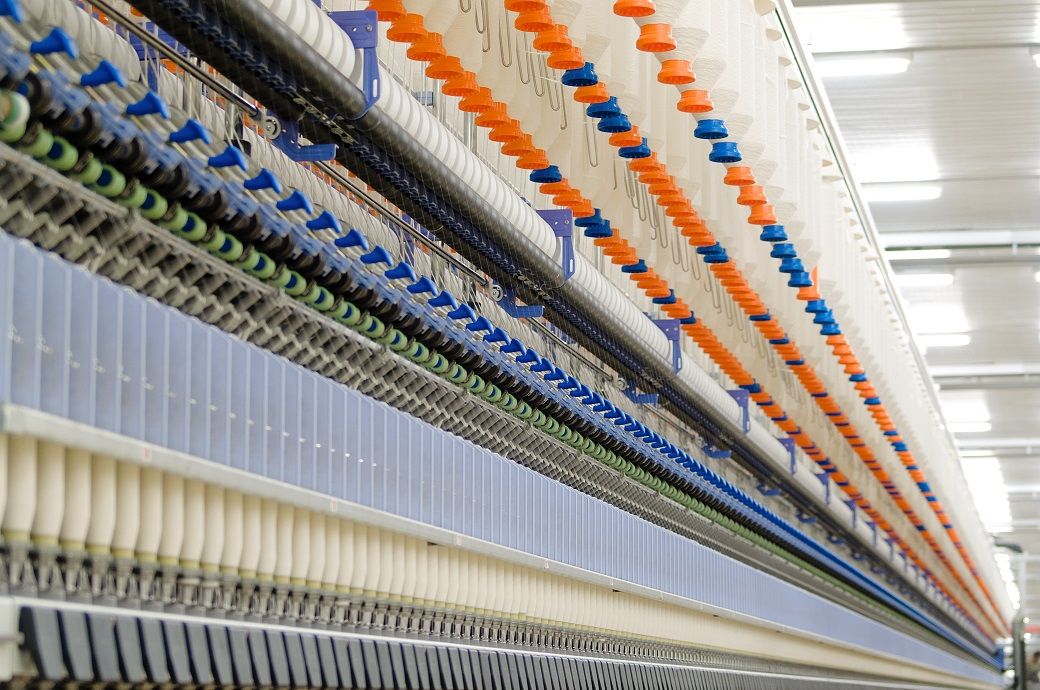
Manufacturing drives Vietnam’s supply chain strength, accounting for 49 per cent of GSC-related jobs, with textiles contributing nearly a third.
Vietnam hosted over 25 per cent of South-East Asia’s 75 million GSC jobs in 2023, though most depend on foreign demand.
The ILO urges diversification, skills development, stronger labour standards, and just transition measures to boost resilience.
Amid rising global trade uncertainties, the ILO urges Vietnam to strengthen the resilience and inclusiveness of its GSC participation. Key policy priorities include diversifying trade partnerships, building stronger domestic industrial linkages, expanding demand-driven skills development, enhancing gender-responsive labour measures, and implementing shock-responsive social protection to support just transitions. Improved job quality, strengthened labour standards, and inclusive social dialogue are also essential.
Reinforcing supply chain resilience and capitalising on new growth opportunities will enable Vietnam to advance its structural transformation, shifting towards higher value-added activities and more skilled employment—an essential step towards achieving its broader socio-economic aspirations, added the report.
Fibre2Fashion News Desk (SG)

Fashion
India, France seal treaty revamp giving Paris dividend relief, Delhi tax rights
By
Reuters
Published
December 12, 2025
India and France have struck a deal to revise their 1992 treaty which will halve the tax on dividends paid by Indian units to French parents, potentially saving millions for companies with major operations in the South Asian nation, documents show.
In return, India will get to widen its powers to tax share sales by French investors, and revoke the “most favoured nation” status of France that gave it certain tax advantages, according to confidential Indian government documents reviewed by Reuters.
Bilateral trade between India and France stood at $15 billion last year, and Indian Prime Minister Narendra Modi and French President Emmanuel Macron have been forging warmer ties. The two sides have been working to recast their tax treaty since 2024 to modernise it by adapting global standards on tax transparency.
“The proposed amending protocol will boost flow of investment, technology and personnel between India and France, and will provide tax certainty,” said one of the Indian government documents from August. The new treaty could have implications for large French portfolio investors as well as companies like Capgemini , Accor, Sanofi, Pernod Ricard, Danone, and L’Oreal– all of which have expanded their presence in India in recent years.
A key change is that French companies which hold a stake of more than 10% in any Indian entity will have to pay a 5% tax on the dividends they receive, instead of 10% earlier. For minority French shareholdings of under 10% in Indian companies, however, dividend tax will rise from 10% to 15%.
Many French firms’ Indian units like Capgemini Technology Services India, BNP Paribas Securities India and TotalEnergies Marketing India have declared dividends in the past, their Indian regulatory disclosures show. The Capgemini unit’s dividend stood at $500 million in 2023-24.
France’s tax office said it could not comment for this story given the negotiations are ongoing, while the finance ministry did not respond to Reuters’ queries. India’s foreign and finance ministries also did not respond. Capgemini and Danone declined to comment while the other French companies did not respond to Reuters’ queries.
Currently, India can impose taxes on any French entity’s share sale, but only when it holds more than 10% of an Indian company. The new proposed treaty will remove that threshold.
The new treaty “will provide for full source-based taxation rights in respect of capital gains on equity shares (in India),” said the Indian documents.
France-based foreign portfolio investors (FPIs) own $21 billion worth of shares in Indian companies as of November 2025, a third higher than levels in 2024, Indian share depository data shows.
And more than 40 French companies hold stakes of under 10% in Indian entities, according to an analysis by Indian market intelligence platform Tracxn.
“This will impact French FPIs in India and also French companies holding minority interest in Indian companies. These investments were not subject to tax under the current treaty,” said Riaz Thingna, a partner at Grant Thornton Bharat LLP.
One official familiar with the deliberations told Reuters on condition of anonymity that Indian and French officials have agreed the terms of the new treaty, which will likely be signed in the coming weeks. In New Delhi, the deal is subject to final approval by Prime Minister Narendra Modi’s cabinet, according to the documents. Reuters is the first to report the planned changes to India-France treaty.
India has also agreed to France’s demand to limit tax on fees for technical services to cases where a French provider transfers technical know-how, removing most routine consultancy and support services from the scope of India’s tax. “This can help French companies that render services like design consultancy, cybersecurity and market research,” Thingna said.
Differences over how to interpret the so-called most-favoured nation, or MFN, clause were among the main reasons for the renegotiation, the official said. If a country has an MFN clause with India under a signed treaty, it typically starts claiming lower tax rates if New Delhi strikes more favourable tax terms later with another OECD nation. But a landmark Indian Supreme Court decision in late 2023 said countries can’t automatically start doing so, triggering concerns in France.
“This decision led to a sharp deterioration in the legal and economic security of French companies in India. The potential additional tax cost was estimated at 10 billion euros for existing contracts alone,” said the official.
India and France have reached a decision to delete the MFN clause from their treaty which had historically benefitted only France, according to Indian government documents. That was to put an end to disagreements related to its interpretation that have led to “tax uncertainty and protracted litigation,” said one document. Switzerland in January also suspended its application of the MFN clause in its India treaty citing the Supreme Court ruling.
© Thomson Reuters 2025 All rights reserved.
Fashion
Egypt’s RMG exports up 22% YoY to $2.8 bn in Jan-Oct 2025
The United States topped the list of leading export destinations, followed by the European Union (EU), Turkiye and many Arab nations.
Exports to the United States grew by 10 per cent YoY, reaching $1.08 billion during the period. Exports to Turkiye soared by 71 per cent YoY to $321 million, and shipments to Saudi Arabia more than doubled, reaching $304 million during the ten-month period.
Egypt’s exports of readymade garments were worth $2.8 billion in the first ten months in 2025—a 22-per cent rise YoY, according to the Apparel Export Council of Egypt.
The United States topped the list of leading export destinations, followed by the EU, Turkiye and many Arab nations.
The council attributed the success to investments in modernisation, capacity expansion and sustainability initiatives.
Exports to Europe totalled $717 million—a 34-per cent YoY increase. This has prompted the Council to ramp up efforts in the European market, aiming to sustain the growth momentum and further tap into new opportunities, council chairman Fadel Marzouk said.
He attributed the sector’s success to ongoing investments in modernisation, capacity expansion and sustainability initiatives over the past two years.
The country’s garment units have significantly upgraded production lines and invested in technologies to boost output and quality, he was cited as saying by domestic media outlets.
Exports have shown consistent and balanced growth throughout the year. February saw the sector’s largest spike, with exports increasing by over 30 per cent, while October continued the positive trend, with a 10-per cent YoY increase.
Marzouk expressed confidence that the sector can achieve $4 billion in exports by 2026, aiming for at least 30-per cent growth.
Fibre2Fashion News Desk (DS)
Fashion
The ‘Ralph Lauren Christmas’ trend is marketing gold
By
Bloomberg
Published
December 12, 2025
If you’ve been scrolling through social media lately, you won’t have escaped the plaid trimmings, pine garlands, and rich red ribbons, all warmed by the glow of a roaring fire.
Welcome to “Ralph Lauren Christmas.” The aesthetic, which demonstrates how to create Ralph Lauren Corp.’s signature style for the holidays, has been trending recently, sending the brand’s visibility soaring.
This viral moment has been years in the making. Ralph Lauren has been polishing its image and honing its product range for the best part of a decade. And luck has been on its side, with the company squarely in the intersection of several fortunate trends.
Preppy style is having a major fashion moment and Ralph Lauren is the look, thanks to its traditional staples such as cable-knit sweaters, blazers, and rugby shirts. Even the quarter zip craze, which heralds a return to more sophisticated casual dressing, is contributing to the brand’s popularity, Laurent Vasilescu, analyst at BNP Paribas SA, wrote in a recent note.
Social media narratives take inspiration not just from how we dress but also how we feel. In uncertain times- particularly over the holidays- we often take comfort from the traditions of the past. Add in the old money vibe of quiet luxury, which might be in its final throes of popularity but refuses to disappear, and searches for “Ralph Lauren inspired Christmas” on Pinterest are up 3,000% in the four weeks to November 15 compared with the year earlier.
So, how did the company position itself for this moment in the viral sun? Under chief executive officer Patrice Louvet, who took the reins in 2017- and of course its eponymous founder, who remains actively involved- Ralph Lauren has moved closer to the European luxury houses such as LVMH Moet Hennessy Louis Vuitton SE. It’s done so by taking its image upmarket and cutting back on selling through less chichi retailers. Even its outlet stores, which play an important but undisclosed role in the business, have undergone a glow up.
As part of this strategy, Ralph Lauren has invested in its core stores- where its particular holiday look is very much in evidence- and concentrated on the products it is best known for. The timing has been fortuitous: the brand is looking both luxe and accessible even as European rivals have aggressively increased prices.
The turnaround has been augmented by effective marketing, such as taking its Polo Bear from merchandise to the big screen, with the mascot’s first animated film. And through its cafes and restaurants, the brand has been at the forefront of luxury’s push into hospitality.
While Ralph Lauren Christmas grew organically, the company has encouraged an association with the season. This includes holiday pop-ups in Seoul, Tokyo, Los Angeles, and London, where in Sloane Square visitors can sip hot chocolate, buy a holiday gift, make a seasonal floral display, or visit Santa’s grotto.
The queues for selfies by the vintage red pick-up truck- with some sporting the signature Polo Bear sweater- underline Ralph Lauren’s marketing genius. The founder himself is Jewish, born Ralph Lifshitz in the Bronx. Yet his ability to draw people from all walks of life into his particular vision of the American dream has made his company as much a Christmas staple as eggnog and It’s a Wonderful Life. And it’s worth noting that he’s done so by embracing rather than ignoring the country’s diversity. For an example, look to the retailer’s 2022 collaboration with two historically Black colleges, which continued this year with a collection celebrating Oak Bluffs, a town on Martha’s Vineyard that is a summer haven for Black Americans.
Ralph Lauren isn’t the only one to benefit from the Christmas trend, according to retail intelligence company Edited. Styles featuring a palette of red, burgundy, and green, punctuated by hints of gold, as well as tartans and teddy bear motifs are appearing in chains on both sides of the Atlantic. Vans, for example, has gone big on plaid. Some social media posts show how to get the look for less at the likes of Amazon.com Inc. At the other end of the price spectrum, Hugo Boss AG has collaborated with teddy bear maker Steiff, while Burberry Group Plc has created a Gund bear as part of its tie-up with Macy’s Inc.’s Bloomingdale’s.
But given that the style is so intrinsically linked with Ralph Lauren, the company is likely to be the biggest winner. The holiday pop ups have so far generated about $6 million in value from social media posts, engagement and articles, according to Launchmetrics.
Revenue in the all important golden quarter looks to be benefiting as well. Based on Bloomberg Second Measure data for the third quarter to date, Ralph Lauren’s sales through its own US stores and website are tracking well ahead of consensus expectations for North American sales growth, according to Mary Ross Gilbert, an analyst at Bloomberg Intelligence.
The shares, which slipped after some investors were underwhelmed by the next stage of the turnaround outlined in September, hit a fresh high in late November.
Social media fads can quickly fade: Google and Pinterest data indicate that the Ralph Lauren holiday aesthetic may have already peaked. But the halo around the brand over the past couple of months should have helped it deepen its connection with shoppers.
The narrative has also highlighted Ralph Lauren’s home décor and hospitality offerings, reinforcing its broader lifestyle credentials, something the company is keen to develop.
And when the preppy look wanes, as it naturally will, Ralph Lauren should be able to adapt. It is one of the few luxury companies to retain distinct sub-brands, from its high-end Purple Label to the heritage workwear of Double RL, so it has a good chance of tapping into whatever fancy comes next. Its strategy of growing in womenswear, particularly handbags, is another way to make up any shortfall.
There is scope for Ralph Lauren to continue flexing its marketing muscles, too. It recently revealed the uniforms that the US Olympic and Paralympic teams will wear for the winter games opening and closing ceremonies in Milan in February, and will outfit athletes again for the Los Angeles summer games in 2028. Ralph Lauren should consider an LVMH-style takeover of the event on its home turf to keep its name at the forefront of consumers’ minds.
Ralph Lauren looks well positioned to adjust to changing seasons- and changing fashions. If so, the buzz around the brand should linger long after the pine needles have dropped and the tree trims have been packed away.
-
Sports1 week agoAustralia take control of second Ashes Test | The Express Tribune
-
Politics6 days ago17 found dead in migrant vessel off Crete: coastguard
-
Entertainment1 week agoSabrina Carpenter recalls ‘unbelievable’ experience with pal Taylor Swift
-
Fashion1 week agoBangladesh’s economic outlook cautiously optimistic: Govt
-
Fashion4 days agoGermany’s LuxExperience appoints Francis Belin as new CEO of Mytheresa
-
Politics4 days agoThailand launches air strikes against Cambodian military: army
-
Tech1 week agoThe Trump Administration Wants Immigrants to Self-Deport. It’s a Shit Show
-
Tech7 days agoWIRED Roundup: DOGE Isn’t Dead, Facebook Dating Is Real, and Amazon’s AI Ambitions