

Business
Vijay Mallya tells Bombay HC he cannot say when he will return to India

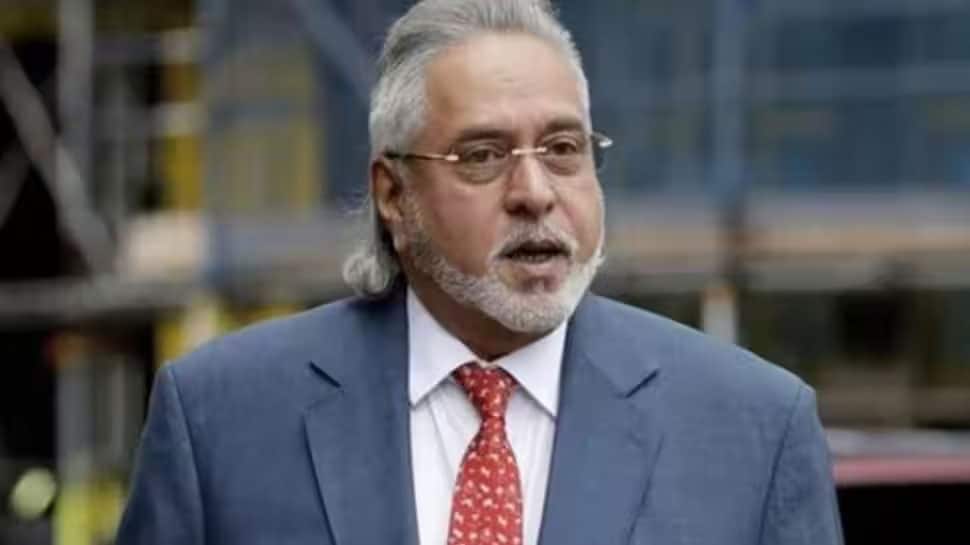
Mumbai: UK-based businessman Vijay Mallya on Wednesday informed the Bombay High Court that he is not in a position to specify when he would return to India. He cited restrictions imposed by courts in England that he said prevented him from leaving the country.
The matter was heard by a Bench comprising Chief Justice Shree Chandrashekhar and Justice Gautam Ankhad, in connection with two petitions filed by Mallya. One petition challenges his designation as a “Fugitive Economic Offender” under the Fugitive Economic Offenders Act (FEOA), while the other contests a court order formally declaring him a fugitive.
Senior advocate Amit Desai, appearing for Mallya, referred to Supreme Court judgments where writ petitions were heard even in the absence of petitioners.
He submitted that extradition proceedings against Mallya are ongoing in the UK and that his client is aware of them but is unable to leave English jurisdiction due to binding court orders.
The Chief Justice, however, questioned Mallya’s intent to appear before the court, observing that he appeared to be relying on UK court orders without clarifying whether those orders had been challenged. The Bench indicated that such reliance could not be treated as a blanket justification.
The court directed Solicitor General Tushar Mehta to file a response to Mallya’s affidavit. It also asked Desai to submit a detailed affidavit placing on record all statements made during the hearing so that the Union of India could respond accordingly.
Granting three weeks’ time for further proceedings, the Bench noted that the petitions have been pending since 2019 and remarked that no sincere efforts appeared to have been made for their early disposal. The matter is now scheduled for a hearing on March 11.
According to the Finance Ministry, Mallya — former promoter of Kingfisher Airlines — is among 15 individuals declared Fugitive Economic Offenders as of October 31, 2025, allegedly causing losses of thousands of crores of rupees to Indian banks.
Earlier, the Enforcement Directorate (ED) submitted before the court that Mallya had filed affidavits disputing banks’ claims and was attempting to turn money laundering proceedings into recovery litigation. The agency further argued that he challenged the FEO declaration only after being declared a fugitive and when extradition proceedings in London had reached an advanced stage.
Business
Crude oil soars as Middle east conflict chokes supply routes, Hormuz concerns stokes panic – SUCH TV
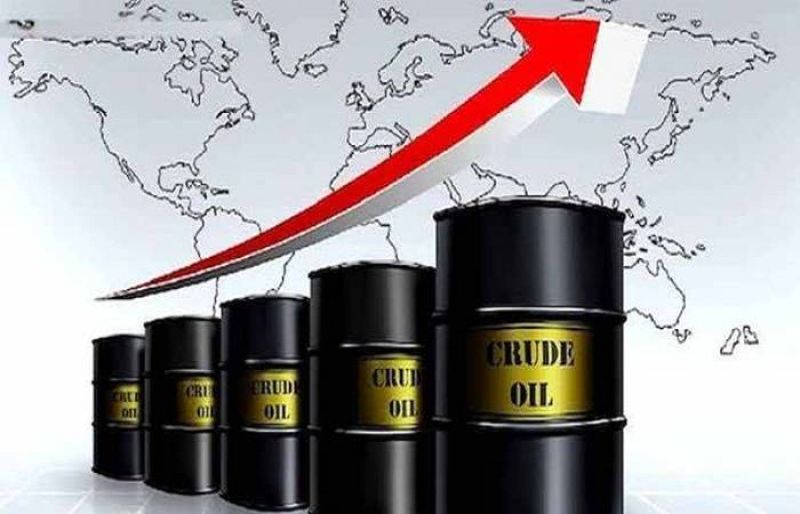
Crude oil prices climbed on Monday on continuing fears of supply losses because of shipping disruptions in the key Middle East producing region from the US-Israeli war with Iran.
Brent crude futures rose $1.71, or 1.6%, to $110.74 a barrel by 0057 GMT. US West Texas Intermediate crude futures gained $0.71, or 0.6%, to trade at $112.25 per barrel.
On Thursday, the last trading day before the Good Friday holiday break, WTI settled up more than 11%, and Brent soared nearly 8% in volatile trading, recording their biggest absolute price increase since 2020, as US President Donald Trump promised to continue attacks on Iran.
The Strait of Hormuz, which carries oil and petroleum products from Iraq, Saudi Arabia, Qatar, Kuwait and the United Arab Emirates, remains largely closed by Iranian attacks on shipping after the war began on February 28.
Because of the Middle East supply disruptions, refiners are seeking alternative sources for crude, particularly for physical cargoes in the US and the UK North Sea.
“Global buyers are bidding aggressively for (US) Gulf Coast barrels, and Brent is rallying even faster,” the Schork Group said in a client note on Monday.
On Sunday, Trump ratcheted up pressure on Tehran, threatening in an expletive-laden Easter Sunday social media post to target Iran’s power plants and bridges on Tuesday if the strategic Strait of Hormuz is not reopened.
Still, some vessels, including an Omani-operated tanker, a French-owned container ship and a Japanese-owned gas carrier, crossed the Strait of Hormuz since Thursday, shipping data showed, reflecting Iran’s policy to allow passage for vessels from countries it deems friendly.
The war threatens to linger on as Iran has officially told mediators it is not prepared to meet with US officials in the Pakistani capital, Islamabad, in the coming days, and efforts to produce a ceasefire have reached a dead end, the Wall Street Journal reported on Friday.
On Sunday, OPEC+, consisting of some members of the Organisation of the Petroleum Exporting Countries and allies such as Russia, agreed to a modest rise of 206,000 barrels per day for May.
However, that decision will largely exist on paper as several of the group’s key producers are unable to raise output due to the war.
Russian supply has been disrupted recently by Ukrainian drone attacks on its Baltic Sea export terminal. Media reports on Sunday said its Ust-Luga terminal resumed loadings on Saturday after days of disruptions.
Trump wrote: “Tuesday will be Power Plant Day, and Bridge Day, all wrapped up in one, in Iran. There will be nothing like it!!! Open the Fuckin’ Strait, you crazy bastards, or you’ll be living in Hell – JUST WATCH! Praise be to Allah. President DONALD J. TRUMP”.
Brazil, Japan, Mexico, South Africa and the US have stopped importing Spanish pork. Other countries, such as EU members, China and the UK, have taken a more localised approach, only banning pork that originates in the affected area of north-eastern Spain.


US’ Nike’s Q3 earnings dip as DTC weakness offsets wholesale strength
Crude oil soars as Middle east conflict chokes supply routes, Hormuz concerns stokes panic – SUCH TV

Turkiye’s manufacturing sector weakens in March amid Middle East war

-

 Sports1 week ago
USMNT handed reality check by Doku, Belgium ahead of World Cup
-

 Sports1 week ago
2026 NCAA men’s hockey tournament: Schedule, results
-
Uncategorized3 days ago
[CinePlex360] Please moderate: “Trump signals p
-
Uncategorized7 days ago
[CinePlex360] Please moderate: “Further tariff
-

 Tech2 days ago
Our Favorite iPad Is $50 Off
-

 Entertainment1 week ago
The Avett Brothers’ bassist explains why he wrote a book about John Quincy Adams
-

 Politics1 week ago
Millions angry with Trump expected to fill American streets
-

 Sports1 week ago
Man City show why they are worthy WSL title winners as tired United wilt