

Entertainment
Welcome to Derry’ star gets candid about show’s big reveal

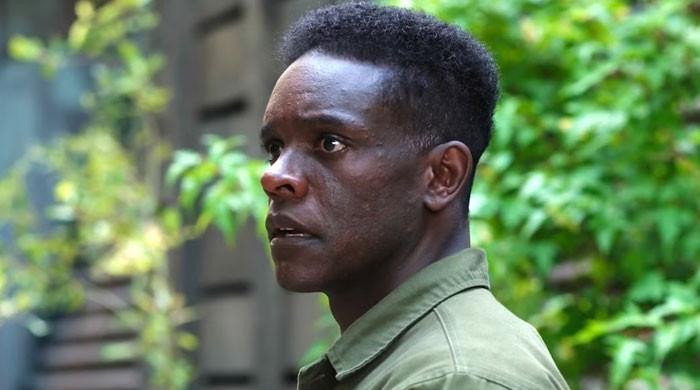
In episode two of IT: Welcome to Derry, Chris Chalk first appeared as Dick Halloran, which led some fans to believe the character has a deeper meaning.
Now, with episode three having been released, which confirms what some had previously speculated – it is the younger version of Dick – from the 1980 psychological horror movie The Shining.
In a chat with Variety, the actor says, referring to his character, “Everything I do is going to have some dignity.”
It is worth noting that both The Shining and It are based on Stephen King’s novels.
Meanwhile, Chalk also explains how his portrayal of Dick Hallorann in It: Welcome to Derry differs from Scatman Crothers’ portrayal in the Stanley Kubrick-directed movie, which was criticized for featuring a token Black character.
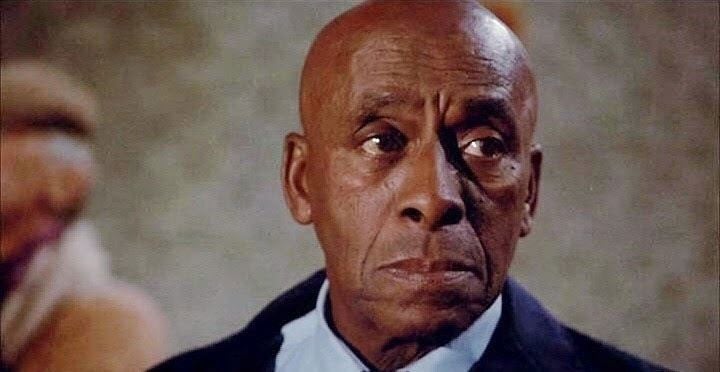
“He’s literally a Magical Negro,” the star notes. “But the trouble with a Magical Negro is that they’re the only ************ Black person in the movie.”
However, for makers in Welcome to Derry, Chalk adds, they made sure to remove the previous outdated trope.
Now, Dick is not a background role in the story, and he is part of a group of Black characters in the HBO show.
As he continues, “To already have this huge selection of Black humans in the narrative, not just as props, but as essential to the narrative.”
“I know we’re going to avoid these tropes, because the trope doesn’t exist if everybody there serves a purpose.”
“I do happen to be a magical Black man, but in a world full of Black people, it doesn’t come off as gross.”
IT: Welcome to Derry is streaming on HBO Max.
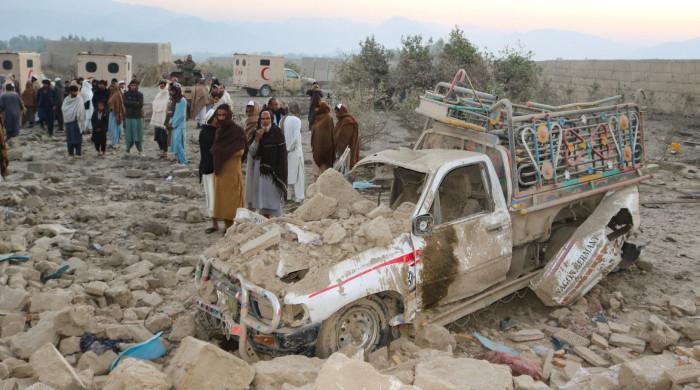
The latest round of cross-border strikes between Pakistan and Afghanistan has been quickly absorbed into a familiar vocabulary of sovereignty violations and regional instability.
Such descriptions are incomplete and inaccurate. For Pakistan, militancy emanating from Afghanistan is not a distant geopolitical abstraction. It is an immediate security exposure shaped by geography, history, and a border that remains porous despite decades of militarisation.
Over the past several years, Islamabad has repeatedly stated that anti-Pakistan groups, most prominently the TTP, have found space to regroup across the border. Afghan authorities have rejected the characterisation.
No state can indefinitely absorb violence that originates beyond its formal jurisdiction while relying solely on diplomatic assurances. Pakistan’s security establishment operates under domestic pressure. Civilian casualties from militant attacks do not register as abstract policy debates but as institutional demands for response. In such an environment, cross-border strikes become a tool of signaling as much as of disruption, showing that tolerance thresholds have been reached.
This does not imply that air power alone can neutralise sanctuary dynamics. Militant networks that straddle borders are sustained by terrain, local alliances and ideological overlap. The Afghan authorities, for their part, face internal constraints. Dismantling groups with shared histories or intertwined loyalties risks fragmentation within a political order that is still consolidating itself after decades of war.
Yet Pakistan’s calculus is shaped less by Kabul’s internal difficulties than by the immediacy of its own exposure. The Durand Line has long been more than a demarcation; it is a corridor through which commerce, kinship and militancy have flowed in equal measure. Expecting strategic patience in the face of repeated attacks misunderstands how states prioritise internal order.
International commentary often frames such strikes as escalatory by default, as though restraint were a neutral baseline. That assumption overlooks the asymmetry of cost. Afghanistan does not experience the same volume of attacks originating from Pakistani soil. The burden of spillover has, in recent years, fallen disproportionately on Pakistan. In that context, Islamabad’s calibrated use of force is an assertion that territorial lines cannot serve as shields for non-state actors.
Critics frequently invoke international law in isolation, detached from the persistent failure to neutralise armed groups operating in ungoverned or under-governed spaces. Legal principles cannot substitute for effective territorial control.
There are risks embedded in this approach. Repetition without resolution can normalise cross-border action as a routine policy instrument. Each episode narrows diplomatic space and deepens mistrust. It also reinforces a cycle in which militant actors benefit from the absence of sustained coordination between the two governments.
A durable solution would require intelligence sharing, verifiable commitments and a political understanding that militant groups targeting one state cannot be compartmentalised as peripheral concerns by the other.
Such coordination remains elusive, in part because the broader diplomatic relationship is unsettled. Questions of recognition, sanctions and international legitimacy continue to shape Kabul’s external posture. Pakistan’s engagement has oscillated between cautious accommodation and visible frustration.
The resulting ambiguity has limited the development of institutional mechanisms to manage cross-border threats more effectively.
Pakistan cannot relocate itself away from Afghanistan, nor can it insulate its western provinces from developments across the frontier. In security terms, adjacency compresses reaction time and magnifies perceived threat. When militant attacks accumulate, strategic restraint is weighed against domestic expectations of response, and the balance shifts accordingly.
Whether the current cycle stabilises or intensifies will depend less on rhetorical condemnation and more on demonstrable action against groups operating in border regions. Without credible steps to address sanctuary concerns, episodic military measures are likely to recur. They are imperfect instruments, but they reflect a state confronting a security environment in which passivity carries its own risks.
For Pakistan, the issue is practical containment. The sustainability of any alternative approach will rest on evidence that cross-border militancy is being curtailed in measurable ways. Until such evidence materialises, Islamabad’s actions will continue to be shaped by the logic of proximity and the imperative of internal security rather than by external preference for restraint.
The writer is a non-resident fellow at the Consortium for Asia Pacific & Eurasian Studies. He tweets/posts @umarwrites
Disclaimer: The viewpoints expressed in this piece are the writer’s own and don’t necessarily reflect Geo.tv’s editorial policy.
Originally published in The News
Entertainment
Netflix drops $83 billion bid for Warner Bros. Discovery, paving way for Paramount Skydance deal

Netflix said on Thursday that it will not match Paramount Skydance’s latest bid for Warner Bros. Discovery, clearing the way for a massive merger that could shake up the entertainment and media industry.
Netflix agreed in December to buy part of Warner Bros. Discovery for $27.75 a share, or $82.7 billion. But Paramount Skydance had made a $30 a share all-cash offer to buy all of the company, and on Tuesday raised its offer for Warner Bros. Discovery to $31 a share (Paramount Skydance owns CBS News.)
Earlier on Thursday, Warner Bros. Discovery’s board of directors notified Netflix that Paramount’s $31 per share offer constituted a “superior proposal” for the company.
“The transaction we negotiated would have created shareholder value with a clear path to regulatory approval,” Netflix co-CEOs Ted Sarandos and Greg Peters said in a statement Thursday. “However, we’ve always been disciplined, and at the price required to match Paramount Skydance’s latest offer, the deal is no longer financially attractive, so we are declining to match the Paramount Skydance bid.”
Paramount Skydance didn’t immediately respond to a request for comment.
Warner Bros. Discovery owns streaming and film studios, along with cable channels including CNN, Food Network, HBO, HGTV, TBS, TNT and Turner Classic Movies.
The merger of Paramount Skydance and Warner Bros. Discovery will require approval from federal antitrust enforcers. Paramount Skydance executives have said that combining the companies would benefit consumers and help boost the entertainment industry, which has struggled to recover from the pandemic.
Some entertainment industry groups and lawmakers have raised concerns that uniting two major Hollywood studios could undermine competition.
For its part, Paramount Skydance executives had argued that a union of Netflix and Warner Bros. Discovery, which owns streaming platform HBO Max, was likely to arouse antitrust objections.
In enhancing its offer this week, Paramount Skydance said it would pay a $7 billion termination fee if its acquisition of Warner Bros. Discovery collapsed over regulatory concerns.
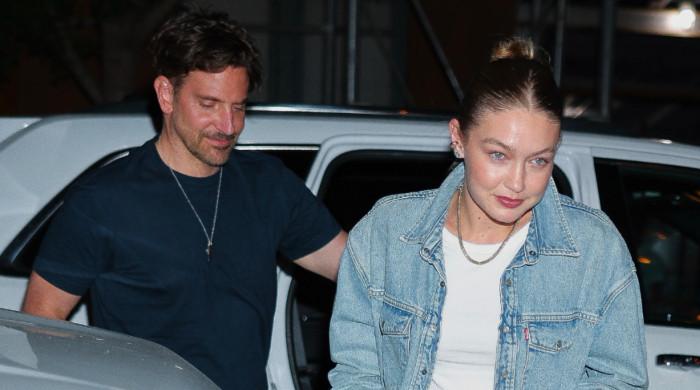
Gigi Hadid and Bradley Cooper are sticking together while the actor faces backlash on social media, following scandalous allegations about him.
The supermodel, 30, and the American Hustle star, 51, stepped out in coordinating fall-themed outfits on Wednesday, February 25, in New York City.
Hadid sported a pair of grey trousers and a chocolate-brown coat, with her hair in a messy bun, and Cooper paired black trousers with a beige shacket and black puffer jacket.
The couple were seen leaving the screening of Frankenstein, with a Q&A Event featuring Jacob Elordi at the DGA Theater.
Hadid and Cooper have been together since 2023, and have already hard-launched their relationship on Instagram.
Last December, they attended a Broadway performance of Samuel Becket’s Waiting for Godot, and posed for a picture together behind-the-scenes.
While the duo has kept their relationship lowkey, it has been in the spotlight in recent times as fans were speculating about the next step for the couple.
Social media sleuths also called out Cooper for his name being in the Epstein files. Neither Hadid or Cooper have addressed the allegation.


China’s sock exports at $6.7 bn, volume rises amid price sensitivity

US-Iran talks end with no deal but potential signs of progress

Texwin Spinning showcasing premium cotton yarn range at VIATT 2026

-

 Tech1 week ago
A $10K Bounty Awaits Anyone Who Can Hack Ring Cameras to Stop Sharing Data With Amazon
-

 Fashion7 days ago
ICE cotton ticks higher on crude oil rally
-
 Business7 days ago
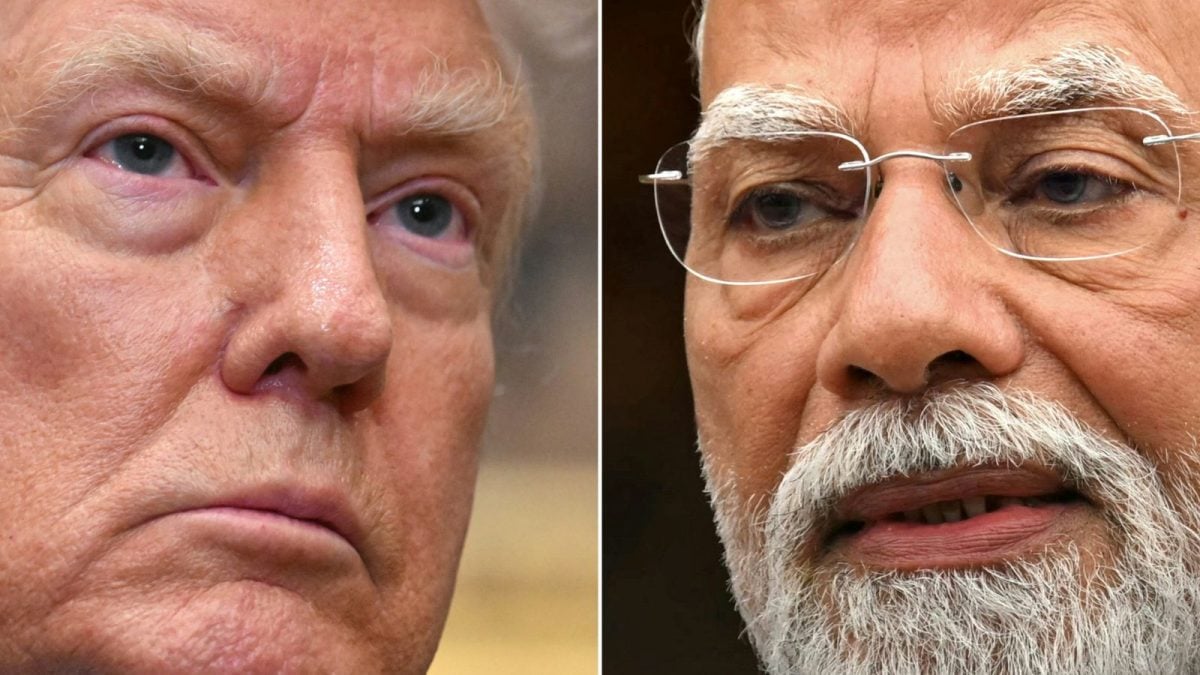
US Top Court Blocks Trump’s Tariff Orders: Does It Mean Zero Duties For Indian Goods?
-

 Tech1 week ago
Donald Trump Jr.’s Private DC Club Has Mysterious Ties to an Ex-Cop With a Controversial Past
-
 Business6 days ago
Eye-popping rise in one year: Betting on just gold and silver for long-term wealth creation? Think again! – The Times of India
-

 Entertainment5 days ago
Viral monkey Punch makes IKEA toy global sensation: Here’s what it costs
-

 Sports7 days ago
Brett Favre blasts NFL for no longer appealing to ‘true’ fans: ‘There’s been a slight shift’
-

 Entertainment7 days ago
The White Lotus” creator Mike White reflects on his time on “Survivor