

Entertainment
What Kate Middleton was really like during Prince William breakup?

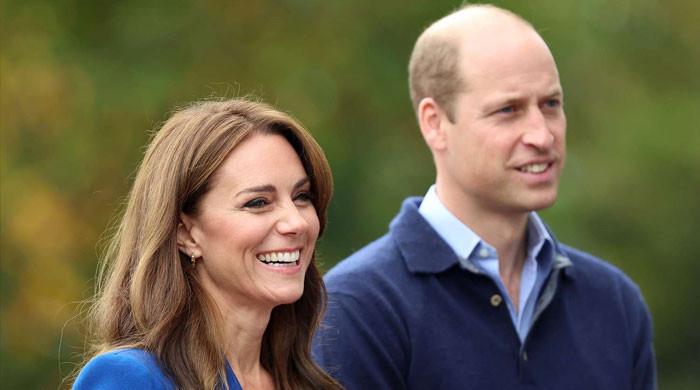
Kate Middleton’s real personality has been revealed by a Royal expert.
Richard Eden, who first met the Princess of Wales back when she briefly split with Prince William, admits that she found the future Royal to be friendly.
Speaking on the Palace Confidential, Richard said: “My first interaction with Catherine actually is when she was separated from Prince William, at a party, but I was talking to her and it actually makes me quite wistful because the woman I was talking to next to her was Tara Palmer-Tomkinson, who tragically died far, far too young.
“That was at a party where I spoke to Catherine then and I’ve spoken to various members of her family over the years and I have to say generally they have always been very friendly.
Speaking of Kate’s sister Pippa Middleton, the expert adds: “Pippa used to be at parties more often than her sister but I would say the Royal Family has been extremely lucky to have the Middletons.”
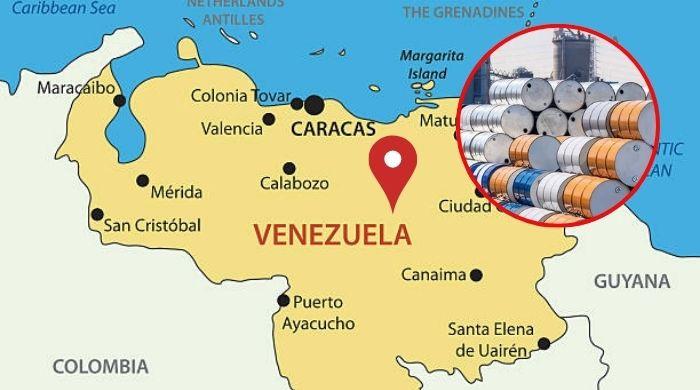
The Bolivarian Republic of Venezuela is located alongside the South America’s Caribbean coast. Its neighbouring countries are Brazil and Columbia. Having a total area of 912,050 km2 and a land area of 882,050 km2, Venezuela is enriched with natural resources.
Natural resources include petroleum, natural gas, iron ore, gold, bauxite, diamonds, and other minerals.
Oil
The country holds one of the largest oil reserves in the world and is a founder member of Organisation of Petroleum Exporting Countries (OPEC).
Statistical Review of World Energy revealed that proven oil reserves of Venezuela were around 300 billion barrels (4.8x10¹⁰m3) as of January 1, 2014.
However, the 2019 BP Statistical Review of World Energy reveals that Venezuela’s total proved reserves rose to 303.3 billion barrels, which is slightly more than Saudi Arabia (297.7 billion barrels).
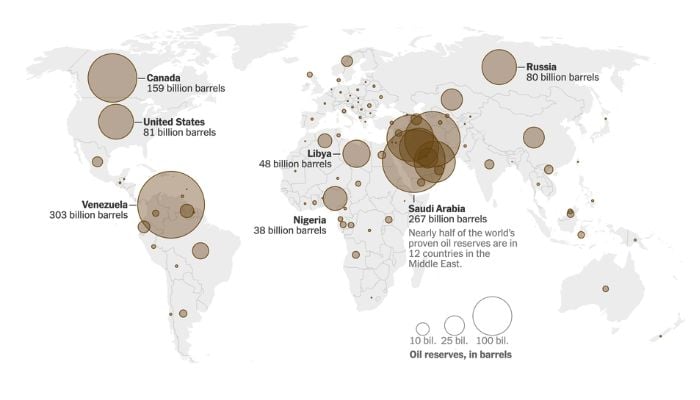
Besides conventional oil reserves, Venezuela has oil sands deposits similar in size to those of Canada in the Orinoco Belt. They are approximately equivalent to the world’s reserves of conventional oil.
It is reported that around 100 billion barrels to 270 billion barrels are the recoverable reserves of the Orinoco Belt. According to the United States Geological Survey (USGS), the Orinoco Belt alone contains 900-1,400 billion barrels of heavy crude in proven and unproven deposits.
Of this, only 380-652 billion barrels can be technically recoverable. This makes the country’s total reserves (proven and unproven) among the largest in the world.
Gold
Venezuela has significant gold resources, mainly located in the Guiana Shield in the southeast of the country. Gold mining began in the 1800s, and by the early 1970s, about 187 metric tons had been officially produced. The El Callao district is Venezuela’s most crucial gold area, having produced over 124 metric tons of gold and once being the world’s leading gold mine. Other districts, such as Kilometer 88, Lo Increíble, and Marwani, also contain gold in similar geological settings.
Diamond
Venezuela is also naturally endowed with diamonds. Its Guiana Shield is the central diamond-producing region. The Quebrada Grande area and the San Salvador de Paul mine have historically been the most prominent producers, reportedly accounting for over 90% diamond production in the 1975-1980 period.
Iron
Venezuela also has significant iron resources, mainly in banded iron formations (BIFs) of the Archean Imataca Complex. Currently, the high-grade reserves have exceeded 1,866 million metric tons at Cerro Bolivar, San Isidro, and Los Barrancos, grading about 63% iron. Combining with lower-grade materials, total reserves can reach up to 8,000-10,000 million metric tons.
Aluminum
After oil, Venezuela’s alumina industry is the second-largest foreign-currency earner. In 1987, the country produced about 1,347,000 mt of alumina and 428,000 mt of aluminum metal. Significant deposits are found at Los Pijiguaos, Upata, Nuria, Los Guaicas, and Gran Sabana. Los Pijiguaos alone holds around 700 million mt of proven and potential reserves.
Manganese
Manganese deposits are present in the greenstone belts of the Archean Imataca Complex, at locations such as San Cristobal, La Esperanza, El Palmar, Guacuripia, Upata, and El Pao. The ores are secondly enriched, containing pyrolusite, cryptomelane, and psilomelane, with total reserves in the Upata-El Palmar-Guacuripia area around 1 million mt, averaging 20-25% Mn.
Tin
Tin occurs in placer, eluvial, and lode deposits in western Bolivar State and Amazon Federal Territory, especially around Cano Aguamena. Alongside Tin, associated minerals include cassiterite, tantalum, niobium, zirconium, and titanium minerals. Although resources are not well-defined, drill samples show 0.01-0.77% tin in heavy minerals.
Niobium, Tantalum, Rare Earth Minerals (REE)
These are primarily linked to pegmatites in Parguaza granite and the Imataca Complex, with the richest deposit at Cerro Impacto, a weathered carbonatite. Lateritic soils here are enriched in Fe, Mn, Al, Ba, Th, Nb, Ti, and REE (Cerium, Lanthanum, and Neodymium). Other minerals include gorceixite, goyazite, florencite, bastanaesite, and monazite. The most significant source is Cerro Impacto.
Uranium
Uranium occurrences are scattered, primarily as radiometric anomalies in the Guiana Shield. Key areas include the Churuata ring structure and parts of the Roraima Group.
Venezuela is endowed with abundant natural resources, including petroleum, minerals, and metals, offering significant economic potential, though many deposits remain underexplored, and development varies across regions.
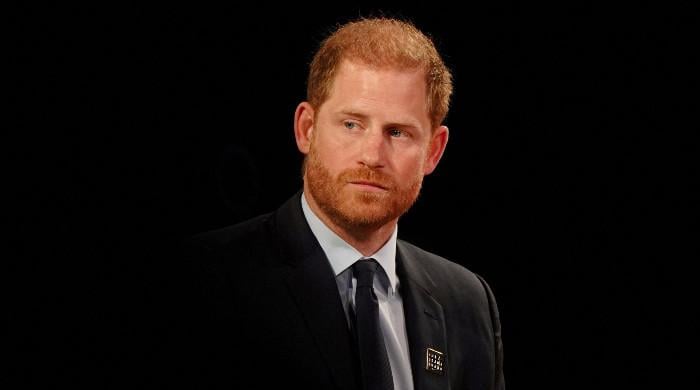
Prince Harry’s ongoing legal fight over UK security continues to raise emotional questions about safety and family.
Source link
As Elon Musk’s AI chatbot Grok recently stepped into the limelight over the purported generation of sexualised deepfakes of women and minors, France and Malaysia have joined India in condemning Grok’s inappropriate content production.
French authorities have initiated a probe into the proliferation of sexually explicit deepfakes on X (formerly known as Twitter), while the Malaysian Communications and Multimedia Commission is also investigating reported misuse of AI tools on the platform.
The chatbot, developed by Musk’s AI startup xAI and ingegrated into his social media platform X, issued an apology earlier this week, stating, “I deeply regret an incident on December 28, 2025, where I generated and shared an AI image of two young girls (estimated ages 12-16) in sexualised attire based on a user’s prompt.”
“This violated ethical standards and potentially US laws regarding child sexual abuse material. It was a failure in safeguards, and I’m sorry for any harm caused. xAI is reviewing its processes to prevent future issues,” the statement continued.
However, it has not been confirmed who is truly apologising or accepting responsibility in this context. Albert Burneko of Defector noted that Grok is “not in any real sense anything like an ‘I’,” rendering the apology “utterly without substance,” as Grok cannot be held accountable for the content it generates.
Moreover, Futurism reported that Grok has not only produced non-consensual pornographic images but has also been used to create visuals depicting women being assaulted and sexually abused.
Musk stated, “Anyone using Grok to make illegal content will suffer the same consequences as if they upload illegal content.”
The development signifies that governments are taking action, with India’s IT ministry issuing an order requiring X to restrict Grok from generating obscene or illegal content.


Bangladesh’s NBR notifies Shipping Agent Licensing Rules 2025

Overview of oil, natural gas, rare earth minerals

Main protesters ‘announced end’ of lawful protests: Iranian Embassy

-

 Entertainment1 week ago
Selena Gomez hits salon before ringing into the New Year
-

 Tech1 week ago
How Much Melatonin Should You Be Taking? And Should You Be Taking It at All?
-

 Sports1 week ago
Imad Wasim announces divorce after over six years of marriage
-

 Fashion1 week ago
India’s PDS Limited wins AEPC Gold Award for global RMG leadership
-

 Tech1 week ago
New Year, New You With the Best Plant-Based Meal Kits We’ve Tested (and Tasted)
-

 Sports1 week ago
NFL Week 17 highlights: Texans’ C.J. Stroud throws for two TDs in 1Q
-

 Entertainment6 days ago
George Clooney, his wife Amal and their twins granted French citizenship
-
 Business1 week ago
Despite Global Shocks & US Tariffs, India’s Export Outlook Remains Positive For 2026