

Entertainment
What would wider recognition of Palestine mean for Palestinians and Israel?

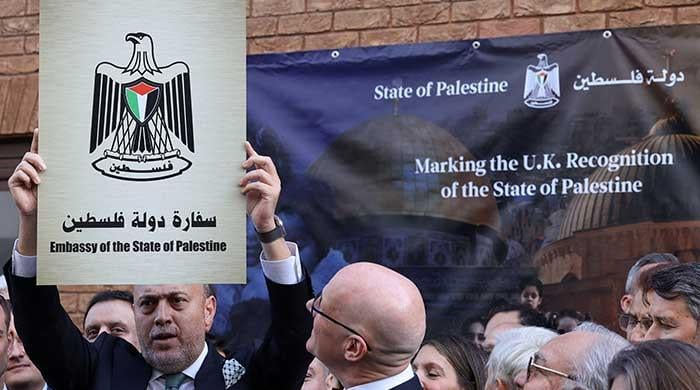
Several more countries have formally recognised Palestinian statehood at a world summit by France and Saudi Arabia, a day after Australia, Britain, Canada and Portugal took the step, angering Israel.
Status of Palestinian statehood
The Palestine Liberation Organisation declared an independent Palestinian state in 1988, and most of the global South quickly recognised it. Today, about 150 of the 193 UN member states have done so.
Israel’s main ally, the United States, has long said it supports the goal of a Palestinian state, but only after the Palestinians and Israel agree on terms for a two-state solution at negotiations. Until recent weeks, the major European powers shared this position.
However, no such Israeli-Palestinian negotiations have been held since 2014, and Israeli Prime Minister Benjamin Netanyahu has now said there will never be a Palestinian state.
A delegation representing the State of Palestine has observer status at the UN — but no voting rights. No matter how many countries recognise Palestinian independence, full UN membership would require approval by the Security Council, where Washington has a veto.
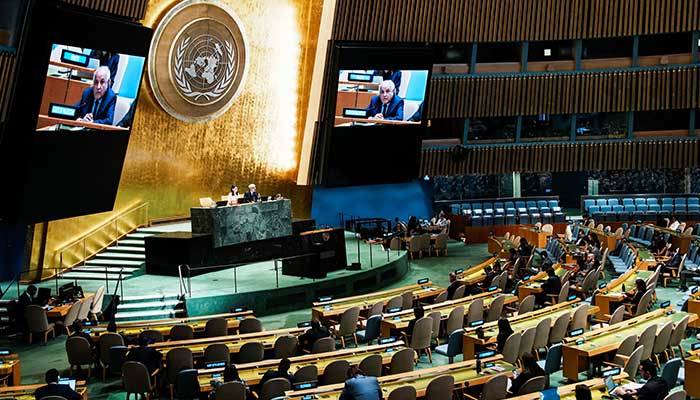
Palestinian diplomatic missions worldwide are controlled by the Palestinian Authority, which is recognised internationally as representing the Palestinian people.
The PA, led by President Mahmoud Abbas, exercises limited self-rule in parts of the Israeli-occupied West Bank under agreements with Israel. It issues Palestinian passports and runs the Palestinian health and education systems.
The Gaza Strip has been administered by the Hamas since 2007, when it drove out Abbas’s Fatah movement after a brief civil war.
Embassies?
Palestinian diplomatic missions in countries recognising a Palestinian state are expected to be upgraded to the full status of embassies. But countries are not expected to be able to open new, fully-fledged embassies in the Palestinian territories, where Israel controls access.
Around 40 countries have consulates or representative offices either in the PA’s West Bank base Ramallah or in parts of Jerusalem captured by Israel in 1967, where the Palestinians hope to have their capital.
Israel considers all of Jerusalem its own undivided capital. Fully-fledged embassies in Israel are mostly located in Tel Aviv, although the US moved its embassy to Jerusalem during President Donald Trump’s first term.
Aim of recognition
Countries moving to recognise a Palestinian state say the move is intended to put pressure on Israel to end its devastating assault on Gaza, curtail the building of new Jewish settlements in the occupied West Bank and recommit to a peace process with the Palestinians.
French President Emmanuel Macron, the first leader of a major Western power to endorse recognition, said the move would be accompanied by a commitment by the PA to enact reforms, which would improve Palestinian governance and make it a more credible partner for the post-war administration of Gaza.
What does recognition means in practice?
Those who see recognition as a mere gesture point to the limited influence in the conflict of countries such as China, India, Russia and many Arab states that recognised Palestinian independence decades ago.
Without a full seat at the UN or control of its own borders, the PA has only limited ability to conduct bilateral relations.
Israel restricts access for goods, investment and educational or cultural exchanges. There are no Palestinian airports. The landlocked West Bank can be reached only through Israel or through the Israeli-controlled border with Jordan, and Israel now controls all access to the Gaza Strip since capturing Gaza’s border with Egypt during the ongoing war.
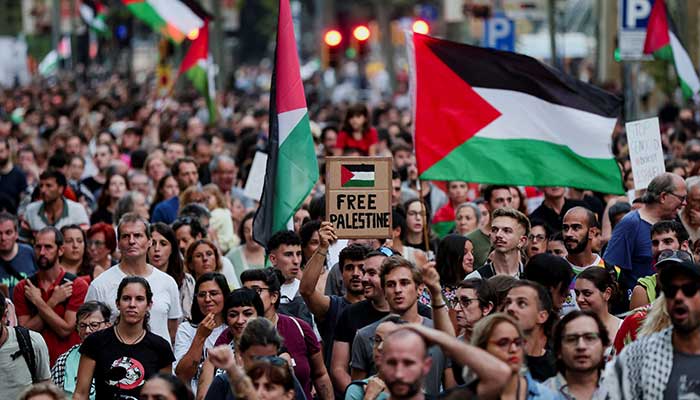
Still, countries planning recognition and the PA itself say it would be more than an empty gesture.
Husam Zomlot, head of the Palestinian mission to the UK, said it could lead to partnerships between entities on an equal footing.
It might also force countries to review aspects of their relationships with Israel, said Vincent Fean, a former British diplomat in Jerusalem.
In Britain’s case, this might result in banning products that come from Israeli settlements in the occupied Palestinian territories, he said, even though the practical impact on the Israeli economy would be minimal.
US, Israel’s reaction
Israel, facing a global outcry over its conduct in the Gaza war, says recognition rewards Hamas for the attacks on Israel that precipitated the war in October 2023.
“A Palestinian state will not be established west of the Jordan River,” PM Netanyahu said.
The US opposes the recognition moves by its European allies. It has imposed sanctions on Palestinian officials, including blocking Abbas and other PA figures from attending the UN General Assembly by denying and revoking visas.
Entertainment
Actress Tori Spelling hospitalized after Southern California crash; authorities investigating cause
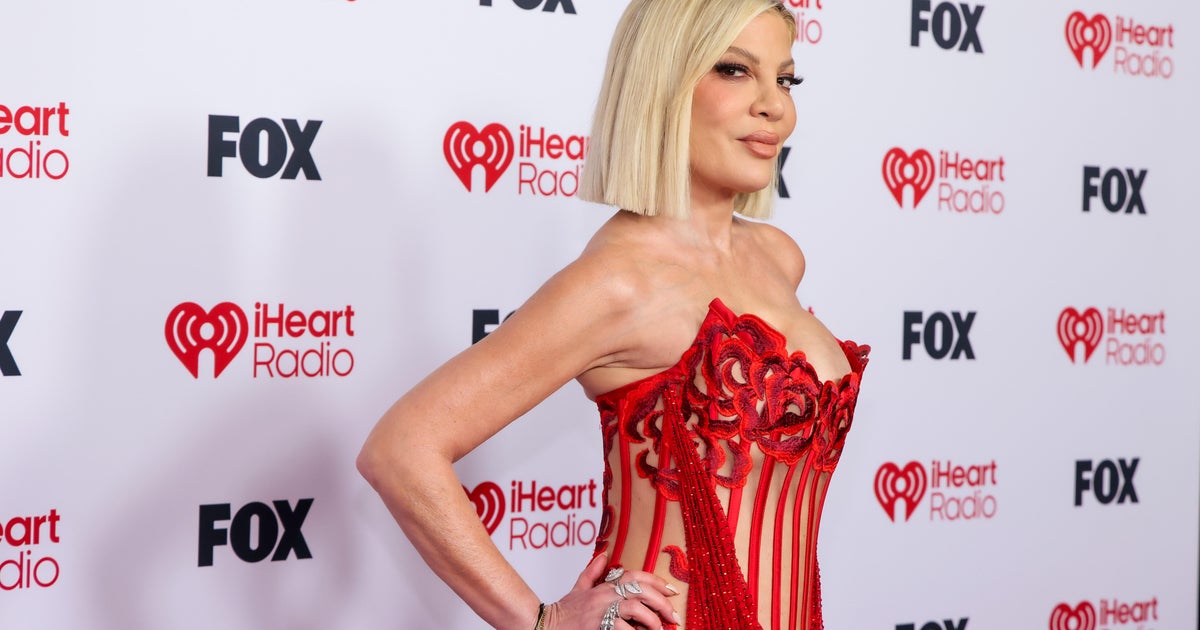
Actress Tori Spelling was involved in a two-car crash in southern Riverside County, about 80 miles from Los Angeles, on Thursday evening, her manager has confirmed with CBS LA.
It happened at around 5:45 p.m. local itme near the 28000 block of Rancho California Road in Temecula, according to the Riverside County Sheriff’s Office, who confirmed the incident based on reports from other news outlets. They said that deputies arrived and found both cars with collision damage.
Deputies said that all of the occupants of both vehicles were medically evaluated at the scene, but did not report any hospitalizations from the collision.
Spelling’s manager, however, said that she and four of her children were taken to the hospital in three separate ambulances for various injuries sustained in the crash.
“No arrests were made, and the cause of the collision remains under investigation,” Riverside County deputies said.
Spelling is most known for her roles in “Beverly Hills, 90210” and “Scary Movie 2,” as well as “Tori & Dean: Home Sweet Hollywood,” her reality television show with former husband Dean McDermott. Along with her extensive acting history, Spelling is also known for her six memoirs, one of which was a New York Times bestseller.
A Los Angeles native, Spelling is the daughter of former Hollywood producer Aaron Spelling and author Candy Spelling.
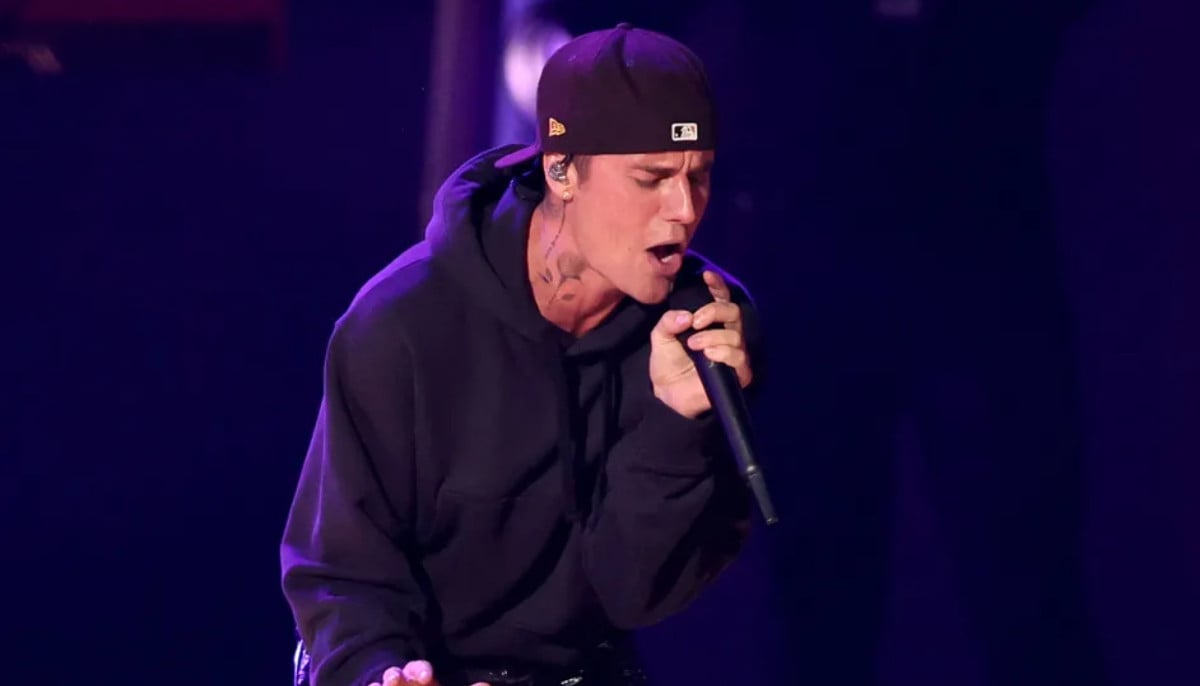
Justin Bieber has raised fans’ expectations for his headlining set at Coachella 2026, but it seems the singer has planned more surprises down the line.
The 32-year-old pop star has sparked rumours of a companion documentary to be released after his performance at the music festival.
The Daisies hitmaker will be performing on both the Saturdays – April 11 and April 18 during the festival, and an anonymous tipster claimed that the “well known former teen heartthrob/ a list popstar has teamed up with Netflix to follow and film their journey” ahead of Coachella, as per DeuxMoi.
The documentary is said to be similar to Beyonce, and fans unanimously agreed that the unnamed personality is none other than Bieber.
The Grammy winner will be delivering his first major performance at the Coachella stage ever since he cancelled his 2022 tour.
Bieber recently gave a taste of his comeback era to fans at the Grammys 2026 as he performed his new song Yukon.
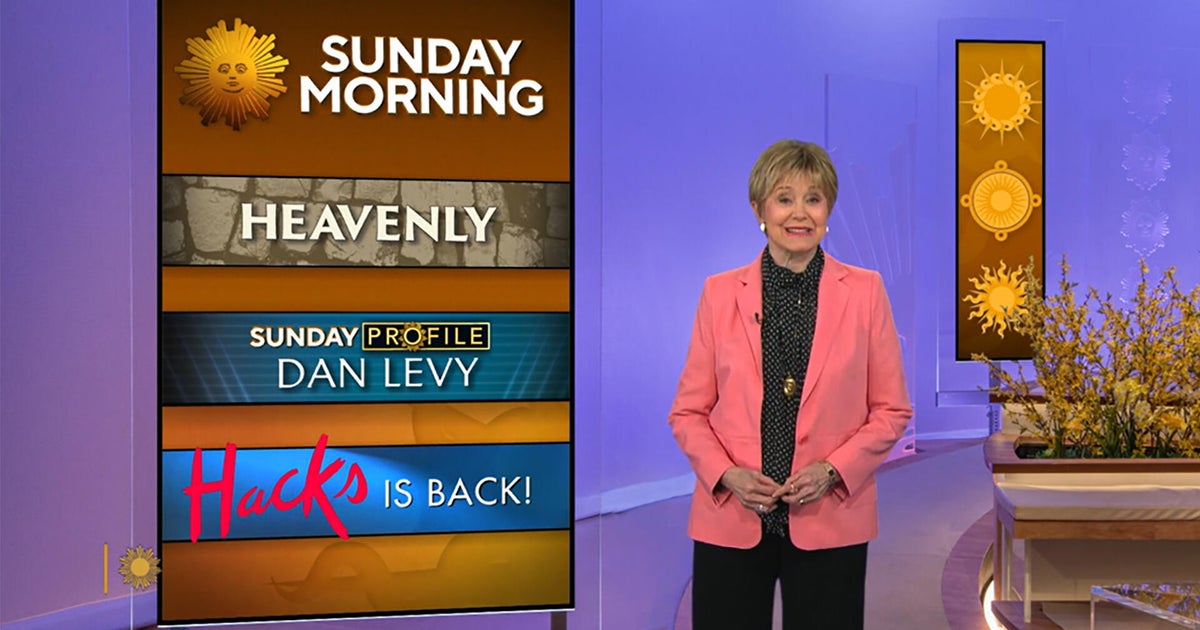
Hosted by Jane Pauley. Featured: The Vatican’s Mosaic Studio; a fight over history at West Bank archaeological sites; Dan Levy on his new series “Big Mistakes”; the creative talents behind “Hacks”; the latest on the Artemis II lunar mission; the works of Renaissance artist Raphael; and the beauty of moss.
Source link


Islanders fire head coach Patrick Roy with four games left in the season amid playoff race

Actress Tori Spelling hospitalized after Southern California crash; authorities investigating cause

With Messi goal, Inter Miami open new stadium with dream moment

-

 Sports1 week ago
USMNT handed reality check by Doku, Belgium ahead of World Cup
-

 Sports1 week ago
2026 NCAA men’s hockey tournament: Schedule, results
-

 Fashion1 week ago
EU apparel imports slump 15.48% YoY in Jan; Bangladesh hardest hit
-
Uncategorized3 days ago
[CinePlex360] Please moderate: “Trump signals p
-
Uncategorized6 days ago
[CinePlex360] Please moderate: “Further tariff
-

 Tech2 days ago
Our Favorite iPad Is $50 Off
-
Uncategorized1 week ago
[CinePlex360] Please moderate: “Apple scrapping
-
 Entertainment1 week ago
The Avett Brothers’ bassist explains why he wrote a book about John Quincy Adams