Politics
Who could replace Keir Starmer as Britain’s prime minister?

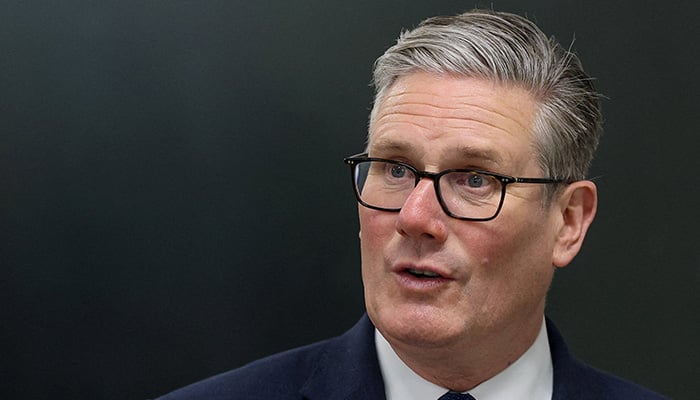
British Prime Minister Keir Starmer is under pressure to resign after more than 80 lawmakers in his Labour Party said he was not the right person to lead the country and win the next national election. He has vowed to stay on as no formal leadership challenge has yet been triggered.
If Labour were to choose a new leader, here is a list of those in the frame to replace Starmer:
Wes Streeting, 43
Streeting has served as health and social care minister since Labour came to power in July 2024 — a role that puts him in charge of the state-funded National Health Service with its budget of more than 200 billion pounds.
Streeting is seen as a centrist within the Labour Party, and has advocated fiscal restraint in line with the approach taken by Starmer. He has also supported the government’s policy to increase defence funding.
Streeting was seen as a protege of Peter Mandelson, the former UK ambassador to the US who was appointed by Starmer and then fired over his links to late sex offender Jeffrey Epstein. Streeting has said he’s embarrassed to have known Mandelson but denied that they were close friends.
In his first year as health minister, he approved a 22% pay rise for resident doctors over two years in a bid to end a standoff over pay. Doctors have since resumed striking.
Streeting has represented a constituency in east London since 2015. The seat is tightly contested and in 2024 he won by just 528 votes, making it vulnerable for the next election.
He describes his upbringing as working class, and he would be Britain’s first openly gay prime minister. Born to teenage parents, he has described how his grandfather and grandmother both spent time in jail, with his mum born while his grandmother was in prison.
He attended Cambridge University — an education he says he funded himself with retail jobs — and is a former president of the National Union of Students.
Andy Burnham, 56
Burnham is the mayor of Manchester in northern England, and one of Labour’s most high-profile politicians.
He is currently unable to stand in any leadership challenge because he is not a member of parliament, but he has made recent efforts to return.
In January, he was blocked from running for a seat in the House of Commons by Labour’s National Executive Committee. His supporters, who tend to come from the left of the party, accused Starmer and allies of keeping out a potential leadership rival.
Burnham was briefly Britain’s deputy finance minister in former Prime Minister Gordon Brown’s government in the 2000s, and has run twice to be the party’s leader, including losing heavily to left-wing veteran Jeremy Corbyn in 2015.
He became Manchester mayor in 2017 but has remained an influential figure for some centre-left groups within Labour, particularly those critical of Starmer’s more centrist stance.
He has tried to reassure investors that they would be safe under his economic vision after he was quoted as saying Britain needed to stop being “in hock to the bond market”. He said his comments were misinterpreted.
Angela Rayner, 46
One of the party’s most recognisable figures, Rayner stepped down from her role as deputy prime minister, deputy Labour Party leader and housing secretary in 2025 after admitting she had unintentionally underpaid taxes on a property purchase and was found to have breached the ministerial code of conduct.
The matter is yet to be fully resolved with authorities, hindering any potential leadership bid. Recently she has called for Burnham’s return to parliament, which may signal she will not run herself.
She is seen as closer to the party’s left-wing, trade union roots than the centrist Starmer. When in office she championed legislation that expanded workers’ rights, backed minimum wage increases and called for higher public investment.
While publicly falling in line with Labour’s calls for fiscal restraint, media reports in May 2025, when she was still a minister, said she had argued for higher taxes, and since leaving government has called for “bold action” to shield Britons from the effects of the Iran war.
Rayner grew up in relative poverty on a social housing estate in the town of Stockport, near Manchester. A teenage mother, she worked as a care worker and trade union official before entering parliament in 2015.
She credits this background for giving her authentic insight into the struggles faced by the poorest Britons, and is regarded by many in Labour as a strong communicator whose background means she can reach parts of the party that Starmer – a Londoner and former human rights lawyer – cannot.
Ed Miliband, 56
Energy Minister Miliband is one of Starmer’s most senior cabinet ministers who has been linked to a return to lead the party after an earlier 2010-2015 stint in opposition. He has said that experience “inoculated” him against wanting to do it again.
He has been the main proponent in government of pursuing net zero energy policies.
He previously served in government from 2006 to 2010 under Tony Blair and Gordon Brown, and defeated both his brother David and Burnham in the 2010 leadership election, offering a more centre-left vision for the party than his centrist brother.
Shabana Mahmood, 45
A lawmaker since 2010, Mahmood has risen rapidly through the ministerial ranks and was promoted to home secretary in September after serving as justice minister. She is the first Muslim woman to hold either role.
Seen as on the right of the party, she has driven a tougher stance on immigration which she says is key to facing down the right-wing Reform UK party and addressing voters’ concerns on immigration.
However, critics have said her tough stance means Labour is losing the support of progressives who traditionally backed it to left-wing alternatives such as the Greens. She is also unpopular with the left wing of the party.
Al Carns, 46
Newly elected in 2024, junior defence minister Al Carns has been rumoured as an outside candidate who could prove popular among other first-time lawmakers who want a fresh voice.
He served in the Royal Marines and is an Afghanistan veteran who advised several Conservative defence ministers on military matters before coming into politics.
Last year he was part of a team that climbed Mount Everest in less than seven days trialling the use of xenon gas to help speed up acclimatisation.