

Tech
Why AI Is shifting power left | Computer Weekly

For decades, large organisations have run on professional gatekeepers. IT decided which tools were approved, procurement decided what was compliant, legal decided what was safe. Specialist departments decided what “good” looked like.
That structure concentrated authority. If you wanted something done, you went through the function that controlled the expertise. They set the standards, defined the metrics and controlled the flow of execution. AI is quietly destabilising that system.
In software engineering there is a concept known as “shifting left,” moving responsibility earlier in the process and closer to the people doing the work, rather than keeping it concentrated in specialist teams.
Power is shifting left
AI is beginning to create the same shift inside organisations. Not by eliminating those functions outright, but by weakening their monopoly over execution. When intelligence is embedded directly into everyday tools, the person closest to the task no longer needs to route work through a central department. They can generate analysis, draft contracts, translate content, test products or build workflows themselves. And when that happens, power shifts.
This is not primarily a productivity story. It is a redistribution of authority inside organisations. Professional functions derive influence from scarcity – scarcity of knowledge, access and approved pathways. Over time they formalise that influence through frameworks, standards and performance metrics. These structures are often necessary, but they also create control. If only one team can execute safely or correctly, that team holds leverage. AI reduces that scarcity.
When a product manager can produce legal-grade drafts with embedded guardrails, or a marketing team can localise content instantly using AI systems with expert review layered in, the argument that “only we can execute this properly” becomes harder to sustain. The question changes from “Is this perfectly compliant with our professional framework?” to “Is this good enough to ship?”
That shift sounds minor. It is not. Perfection, as defined by specialists, is a source of institutional power. “Good enough”, as defined by operators, redistributes it. Software development illustrates this clearly. For years, testing was controlled by centralised quality assurance teams. Modern development practices introduced the idea of shifting testing left, encouraging developers to test code earlier in the development process rather than waiting for a separate quality assurance stage.
AI will change business functions
Quality assurance did not disappear. But its authority changed. It moved from day-to-day gatekeeping to defining standards, building automated frameworks and overseeing risk.
Enterprise IT followed a similar trajectory. For years, business units waited for central approval and provisioning. SaaS platforms chipped away at that control. Teams began selecting tools directly. Shadow IT emerged not because governance disappeared, but because operational needs moved faster than central processes.
IT still exists. But its role evolved. It sets policy and manages security rather than controlling every purchase. AI is accelerating that same pattern across far more functions at once.
Legal departments will not vanish, but routine drafting will increasingly begin outside their walls. Localisation teams will still matter, but translation will often start at the point of need. Finance teams will continue to manage risk, but analysis will be generated long before it reaches them. In each case, the centre of gravity moves outward.
This shift has consequences beyond workflow efficiency. When execution becomes self-service, buying power moves as well. The people closest to the work begin to define what matters. They optimise for speed, usability and outcomes rather than internal process metrics.
Governance is not the same as control
Professional KPIs rarely disappear overnight. They erode when users can achieve acceptable results without going through the traditional channel. The destabilising force is not that AI makes experts obsolete. It is that AI makes expertise ambient.
When capability is embedded directly in the tool, the tool competes with the department – and tools scale faster than organisational hierarchies. This does not eliminate risk. Governance may become even more important. But governance is not the same as control. Setting guardrails from the perimeter is different from sitting at the centre of every decision.
For leaders, the strategic question is not whether AI will replace functions. It is whether their authority depends on being a mandatory intermediary.
AI makes influence fragile
If influence depends on owning the only path to execution, that influence is fragile. AI will route around bottlenecks wherever possible. If influence instead comes from defining standards that scale across decentralised execution, it can endure.
Inside organisations, power rarely disappears. It migrates. AI lowers friction at the edge. The most visible impact of artificial intelligence may be faster drafting, cheaper translation and quicker analysis. The deeper impact will be less visible: a shift in who gets to decide what “good” looks like.
And inside any institution, that is never a neutral change. AI is not just automating work. It is shifting power left.
Yoav Ziv is the CEO of Tasq AI, a platform that helps enterprises scale AI and GenAI models by integrating human judgment into high-stakes data workflows.

I never thought I’d happily eat a steak out of an air fryer. But the Dreo Chefmaker is also not just an air fryer.
It is instead a meat machine. It’s one of the most compelling cooking devices I tested last year, able to cook a ribeye steak to whatever temperature you set, then brown (though not really sear) its outside at around 500 degrees Fahrenheit while keeping the moisture locked within. The same goes for a roast chicken. Or for a pork chop.
It’s not just an air fryer, you see, though it will totally crisp you up some wings or tots or french fries. It’s also a combi cooker, which aerates the oven with steam to lock in moisture on large cuts of meat. And it’s also an app-controlled probe cooker, which you can set to slowly bring meat up to temp before finishing with a blast of heat.
Anyway, it’s nearly half off right now—or at least, 44 percent off—on Dreo’s website during the brand’s spring sale. This is the lowest price I’ve ever seen on this device.
To get access to a $200 Chefmaker, you’ll have to enter the code SPCHEFMAKER on Dreo’s website after placing the device in your shopping cart.
Likely this low price isn’t just spring fever. Dreo has long signaled that it soon plans to release a somewhat simplified, AI-guided successor called the Chefmaker 2. This steep price cut is a good sign that the second-generation device will likely be released soon. But if you like steak and chops that are easy to cook deliciously to temp, and you’re not worried about AI recipes, just take the good price on this one.
Just note that while the probe-assisted cook is very well regulated on the temperature front, the thermostat on the “classic” non-probe air fry or toaster oven cooks can swing off target by 20 degrees or so. This is true of lots of ovens, and it’s true here.
More Dreo Spring Deals
There are a couple other deals of note on Dreo’s spring sale. Dreo also makes a number of WIRED’s favorite space heaters and fans. Notably, my favorite smart bathroom heater, the Dreo Wall-Mounted Heater 517S, is on sale, which you can turn on from the safety of your bed before braving a cold bathroom in the morning. Editor Kat Merck recommends the 519 tower fan, which sports a brushless motor for longevity. For this deal, it comes in a bundle with the 511S table fan.
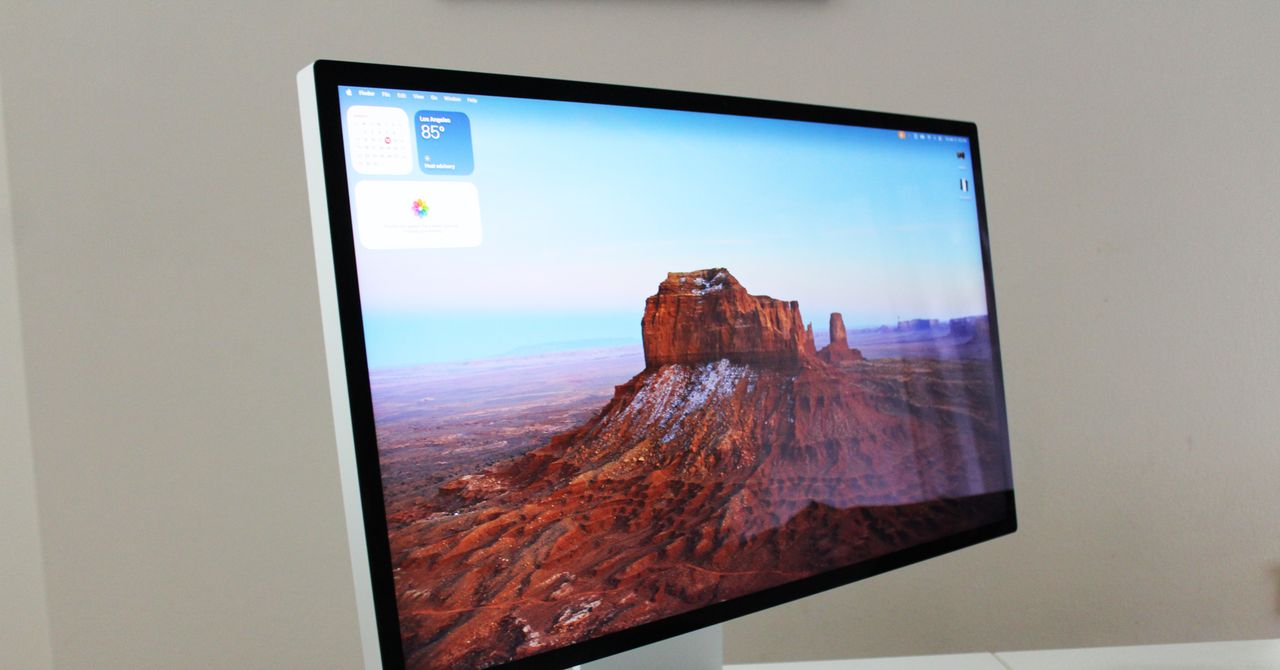
Squeezing in more dimming zones is only half the equation for great HDR. You also need as much brightness and contrast as you can crank out, and the Studio Display XDR delivers on an unprecedented level.
Apple says this can go up to 2000 nits of peak brightness, and when I measured it myself with my colorimeter, it maxed out at 1905 nits in a 25 percent window. That’s really impressive. Meanwhile, it can even do 1701 nits at 49 percent and 948 nits at full screen. This is easily the brightest computer monitor I’ve ever tested. While the contrast and color performance can’t quite compare with OLED, creators working in HDR will get a lot more from the Studio Display XDR. For example, I’ve tested the Dell 32 Plus QD-OLED, which can do HDR quite well, but only maxes out at 946 nits. And that’s only in a 1 percent window.
Most of your use of the Studio Display XDR will be in SDR, not HDR. Here, there are a few tradeoffs. First, I measured the max brightness at 463 nits, though the display can range up to 1000 nits in bright rooms using the ambient light sensor. You can’t just force it to 1000 nits though. According to my SpyderPro colorimeter, I measured an average Delta-E color error of 0.76, which is quite accurate. I will say, performance in the AdobeRGB color space only came up at 88 percent, which is behind what you get in OLED monitors.
Some Warnings
There are some limits with compatibility for the Studio Display XDR. No Intel Macs are supported at all, which shouldn’t be a problem for most people, so long as you didn’t buy a Mac Pro recently. The desktop computer was the very last Intel-powered Mac in the lineup and was only discontinued in 2023. Beyond that, there are some Macs that can’t support the 120-Hz refresh rate. For example, the M1 Pro, Max and Ultra chips only support 60 Hz on the Studio Display XDR. That means even if you bought an M1 Ultra Mac Studio, you’re locked at 60 Hz. That’s a bummer.
This is a smaller thing, but one of the USB-C ports in the back is for power delivery to charge your laptop over a single cable. This is common these days in monitors, but the one included can only deliver 96 watts of power. The 16-inch MacBook Pro comes with a 140-watt power supply. If you’re doing intense tasks on something like the M5 Max, you need all that power, but this means slower charging. There have been some reports that on the 14-inch MacBook Pro with the M5 Max, it couldn’t hold a charge with its own 96-watt power supply during heavy loads like gaming.
Then there’s the price. Like with the Vision Pro, Apple feels confident charging a lot for this very niche use case monitor. However, monitors with true HDR aren’t as much a novelty as they were in 2019. Back then, lots of monitors marketed HDR without the proper backlighting to back it up. But a lot has changed in seven years and the market is now flooded with affordable OLED and Mini-LED monitors that can actually do HDR, largely thanks to the popularity of OLED in PC gaming.
The unique thing about the Studio Display XDR, then, is how strong the HDR effect is. Don’t get me wrong: the complete package is very strong and the HDR performance really is top tier for those that want it. But like the Vision Pro, it won’t be the disruptive force it’s claiming to be, and the majority of us will go back to wishing Apple would make a 32-inch monitor, or maybe something more affordable to pair with the Mac mini or MacBook Air. As of now, neither the Studio Display or Studio Display XDR fit the bill.
Do you have a shirt or a pair of pants that are not quite clean but also not quite stinky enough to put in the hamper yet? You’ve probably just thrown them on that one chair, right? You know, the chair in your bedroom or living room that seems to have spent more of its life holding a pile of clothes than being a usable seat.
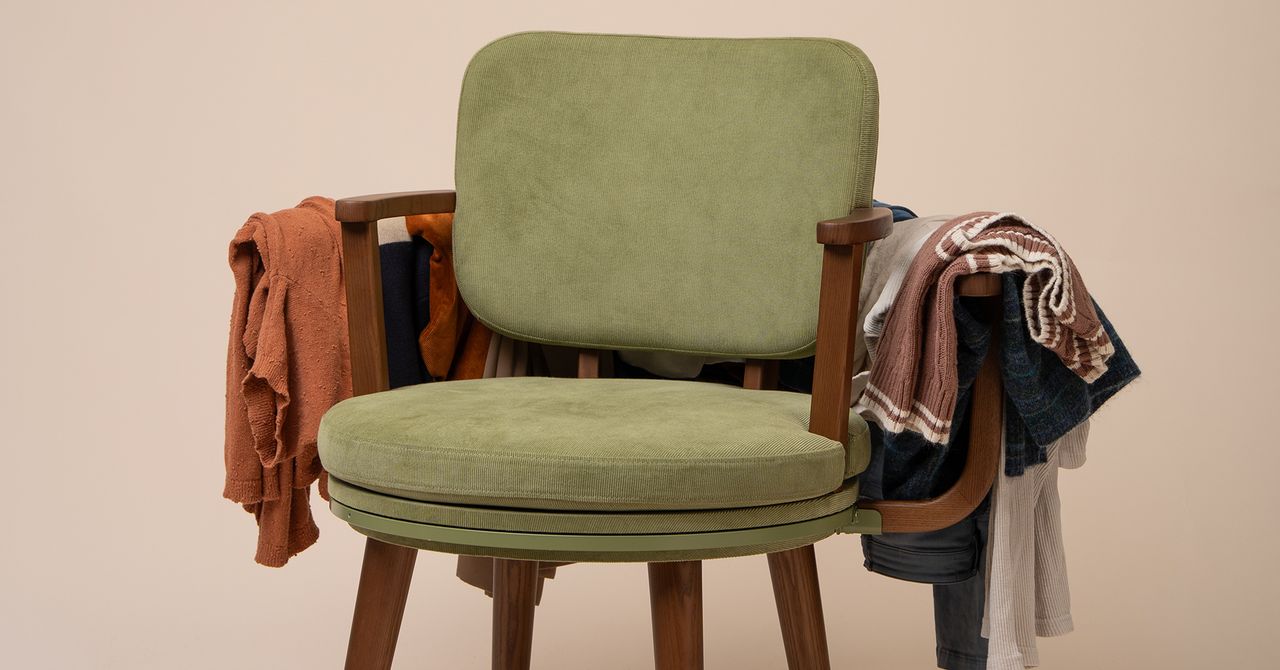
This is the seemingly universal shared experience that inventor and YouTube star Simone Giertz wanted to solve. To do that, she built a Laundry Chair, meant to hold laundry and function as a chair at the same time. No more compromises.
“You can pin it to my reluctance for behavioral change,” Giertz says. “This was one of those projects where I was like, I can’t believe this isn’t already a thing.”
Courtesy of Yetch Studio
After making a video of building the chair more than a year ago, Giertz is turning it into a real product you can buy. It started as a Kickstarter campaign—launched today, and is already funded—though Giertz says the plan was to make the product regardless of whether or not the campaign succeeded. The starting price is $1,100, though there are discounts for backers (the first 50 got free shipping).
“It’s a little bit of a chore thorn in everybody’s side, an eyesore and something you have to deal with,” Giertz says. “I had it on my list of ideas for a long time—something that honored the chair’s job of holding clothes, acknowledged that, and actually tried to do the job properly.”
The Laundry Chair indeed looks like and works as a chair, the key difference being that the arm rests are constructed as a rotatable semicircle. A ball-bearing mechanism lets you smoothly spin the rail around, like a lazy Susan. Turn it around to the front, and you can hang clothes over the bar like you would on a clothesline or drying rack. Spin the rail back around, and the clothes slide neatly behind the chair, out of sight, leaving the seat free. Whether laden with laundry or not, the chair looks quite nice, with a solid hardwood frame and corduroy cotton upholstery.
Giertz has built a following on inventive, wild creations, like a robot that flings soup, or that time she turned a Tesla EV into a pickup truck. Over the years, she shifted her focus from building “shitty robots” to creating genuinely useful projects, like a screwdriver ring or the playfully maddening all-white puzzle with one missing piece.


Mortgage rates surge to highest since September, hitting spring housing market

Gwyneth Paltrow makes ‘Love-Hate’ statement about Met Gala

Louisiana Tech on C-USA, Sun Belt schedules amid standoff

-

 Politics7 days ago
India let Iran warship dock the day US sank another off Sri Lanka, say officials
-

 Sports7 days ago
Pakistan set for FIH Pro League debut | The Express Tribune
-
 Business7 days ago
Restaurant group changes name after bid to buys pubs across the UK
-

 Entertainment7 days ago
Harry Styles kicks off new era with ‘One Night Only’ comeback show
-

 Sports7 days ago
Winners and losers of the 2026 NHL trade deadline
-
 Business2 days ago
Stock market crash today (March 12, 2026): Nifty50 opens below 23,600; BSE Sensex down over 900 points on continuing US-Iran war – The Times of India
-
 Business1 week ago
Home heating oil: ‘Most of my pension has gone on home heating oil’
-

 Entertainment7 days ago
Kanye ‘Ye’ West trips during trial: ‘Is he asleep?’