

Tech
Why AI job loss headlines miss the bigger story | Computer Weekly


Layoff headlines are everywhere, and it’s easy to feel uneasy. Are these stories a sign of what many fear is becoming the new normal – AI has finally come for our jobs?
It may seem that every company is preparing for workforce reductions driven by automation. But that’s not the full picture. What we’re really witnessing is the dawn of something far more profound. We’re entering the AI economy. The real question isn’t whether AI agents can take over certain workflows once done by people, but whether companies will stop at efficiency or move boldly toward ingenuity and reinvention.
Efficiency Gains Are Just the Beginning
Here’s what the headlines miss: agentic efficiency gains are a quick win for some corporate executives focused on short-term results. Automate routine tasks, reduce headcount, and capture the cost savings. These are tangible improvements. But what happens after you’ve optimized existing processes? You hit a ceiling. You’ve made workflows faster with fewer people without reimagining what’s possible when people and AI agents work in entirely new ways.
AI agents can optimize some processes better than one or more people can. AI can handle high-volume, end-to-end activities with speed and consistency that humans simply can’t match. It can analyze massive datasets, automate workflows, surface insights in real-time, and execute repeatable tasks without fatigue and without being constantly prompted. If you’re not using AI agents to optimize processes in 2025, you will fall behind.
That’s not a threat – it’s just reality. But here’s where the layoff headlines end and business wisdom begins. Growing a company requires passion, creativity, good ideas, talent, taking risks, collaboration, communication, teamwork, and customer empathy – things that people will always be able to do better than AI. That’s why the future of business growth is reimagining what people and AI agents can and should be doing.
People and AI Do Different Jobs and Work Together
While there’s plenty of room in a growing business for people and agents to do different jobs, there are also plenty of opportunities to define how people and AI work together. One excellent example is the emergence of specialized AI agents in industry verticals.
In the AI economy, the most valuable AI agents aren’t only trained on vast amounts of general knowledge. They’re trained on the unique institutional knowledge a business has accumulated. Think about financial services versus manufacturing versus public sector; the domain knowledge is fundamentally different. And the work that people and AI do is different too.
Human workers and AI agents need to be trained specifically on an industry and a company’s unique ways of working, governing, selling, marketing, servicing, and so on. Otherwise, people with industry domain expertise and experience can’t use AI agents effectively and they just become expensive tools for doing commodity work better than people can.
These aren’t only efficiency plays. They’re new types of workflows where people and AI agents operate with their own unique domain expertise. There are efficiency gains, yes, and also gains from exponential growth and new ways of doing business.
The AI Economy Is Moving at Unprecedented Speed
According to a study by Morgan Stanley, for example, it took 12 years for 50% of households to adopt the Internet, and AI is on track to hit that adoption rate four times faster. Based on a recent study with 564 global executives, 86% of business leaders believe AI agents will play a critical role in their transformation over the next two years and a lot of them are already heavily investing into agentic capabilities.
Here’s how I think about the speed at which executives need to move to adopt autonomous agents: the window for AI adoption and your company’s investment in the AI economy isn’t closing, and that’s because it was never a window to begin with. It’s more like a fire escape. If you don’t escape your current business model and reimagine your work as soon as possible, you’ll be stuck in a business that’s burning through growth opportunities. Your headcounts go down while your competitors’ earnings go up because they saw the potential for industry-specific AI agents to work with them and for them.
The AI economy isn’t just about deploying a technology, it’s about fundamentally rethinking how work gets done, who does it, and where value gets created. The headlines about job losses are real, but they’re marking the beginning of a major transformation, not the end of a story. And the companies that get this right will define what competitive advantage looks like for the next decade.
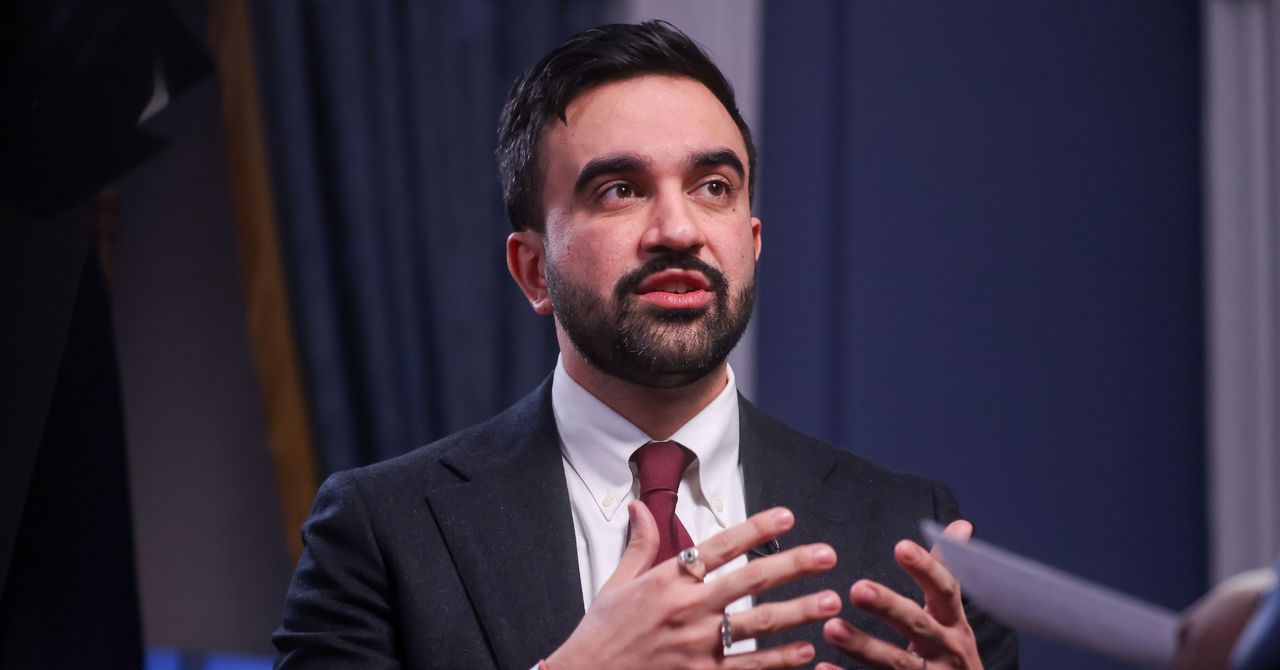
New York City mayor Zohran Mamdani, who rode a social media-fueled campaign to Gracie Mansion, is reversing an Eric Adams–era directive barring TikTok from government-owned devices. Local agencies will now be able to post about their projects on the app, though with new guardrails to protect city networks.
“The Mamdani administration is committed to using every tool in our toolbox to communicate with New Yorkers,” says the email to agencies, obtained by WIRED. “At a moment when people are turning to city government for information about free services, emergency situations, upcoming events, and more, we want to open up new avenues of communication with the public and help deliver the information New Yorkers need.”
In August 2023, then-mayor Adams barred the use of TikTok on government devices, joining the ranks of other state and federal agencies that at the time deemed the app a major security risk. Adams spokesperson Jonah Allon said then that the city’s Cyber Command office had decided that TikTok, which was owned by the Chinese-based company ByteDance, “posed a security threat to the city’s technical networks and directed its removal from city-owned devices.”
The directive resulted in a number of popular city-run accounts shutting down, including accounts for the NYC Departments of Sanitation and Parks and Recreation. As of Tuesday morning, the accounts’ bios read, “This account was operated by NYC until August 2023. It’s no longer monitored.”
Now, these TikTok accounts will be allowed to reopen with a few new rules aimed at protecting the security of NYC’s networks and devices while allowing agencies to communicate with citizens on the popular app. In order to use TikTok, agencies will be required to use separate, government-issued devices for the app that “cannot contain sensitive or restricted data, and they cannot be used for email, internal systems, or privileged access,” according to the email to agencies. Agencies will designate specific staff from media and press offices to run the TikTok accounts with city government emails, not personal ones.
“In a fragmented media landscape, more and more people—especially younger people—are looking beyond the four corners of their television screen to stay informed,” Mamdani said in a statement to WIRED. “Our responsibility is simple: Meet people where they are. That means stepping outside our comfort zones and communicating in ways that reflect how New Yorkers actually live, work, and connect.”
Mamdani’s rule reversal comes after his November election that relied heavily on social media to conduct voter outreach. Mamdani leveraged TikTok to recruit volunteers and amplify his policy platform. Over his first few months in office, Mamdani has continued to leverage social media platforms, publishing a variety of public-service announcements related to city-run programs.
Ahead of dangerous winter weather in January, Mamdani published a video to the official @nycmayor account on Instagram asking New Yorkers to sign up for the city’s free emergency communications program, NotifyNYC. The program netted more than 32,000 new subscribers in the four days after the video was released, according to stats provided by Mamdani’s office. Last year, New York City Emergency Management ran a $240,000 advertising round for NotifyNYC, acquiring around 48,000 new subscribers. Mamdani also created a handful of videos asking New Yorkers to join a Department of Sanitation snow-shoveling program. Around 5,000 people signed up, tripling the number previously enrolled in the program.
The situation has also changed for the app. In January 2026, TikTok finalized a deal with the Trump administration to form a new US-based version of the company run by American investors, including Oracle. The consortium of American investors staved off a nationwide ban of the app.

Yes, it’s a supercar, but it’s also sold very much as a track and road car, one that accommodates a passenger, all of which means road trips and weekend-away stays are very much possible. Well, they would be if there were anywhere at all to store luggage. Lamborghini managed to find some luggage space in its Revuelto design, so there’s no excuse here, really.
The design department otherwise has had a field day. Top-mounted exhausts, dihedral doors, and even an F1-style roof snorkel to accompany that air-braking rear wing deliver an exterior that is nothing short of arresting. Somehow, none of this looks garish or out of place on the Valhalla in person. Everything has a purpose, and nothing seems to scream as flexing or showing off. There’s a cohesion to the Valhalla aesthetic that others might not manage.
Inside, it is much more comfortable than you would imagine. The one-piece carbon-fiber seats look like they are going to be tricky, but on my two-hour road drive, they were supportive and, yes, comfortable. Visibility is surprisingly good, but a camera system is required for the rear view mirror because there’s no rear window. The rest of the interior is minimal, but the steering wheel is excellent (which, as Jony Ive will tell you, is no mean feat) and neatly signals some motorsport cool.
Photograph: Jeremy White
The one gripe for the interior is the dash and center screens, which are clear and responsive, and offer up the usual smartphone mirroring options, but they aren’t luxurious. We’re seeing a lot more effort these days with screen design from Ferrari’s new Luce as well as BMW in the iX3 and i3, but here, Aston has decidedly functional, off-the-shelf-looking displays. If I were parting with a million dollars, I might want more consideration here.
Odin’s Beard
On the road and track is where the Valhalla excels. Impressive doesn’t come close, and, despite the delays, the patience shown by Aston has clearly paid dividends. The ride is superb, as well as being ridiculously quick. The chassis is exceptionally agile, making the car feel alert and light. There are enormous reserves of grip to match the formidable braking and acceleration, and as a result, this is a car that flatters you; it effortlessly seduces you into driving much harder and better than you think you can, all while giving you levels of confidence you wouldn’t think possible.
I’ve driven the Lamborghini Revuelto, and yes, it’s exciting, but also there’s a part of you that is wary—the part that knows that if you don’t keep your wits about you 100 percent of the time, things will go bad very quickly. The Valhalla offers up all of that fun and excitement, but almost none of the trepidation. It is gratifying and intuitive to drive. Anyone can fully enjoy this car, not merely those used to track days. Some will say the engine note is not as full-throated as might be expected in such a car, but others will be having so much fun they won’t care. Nor should they.
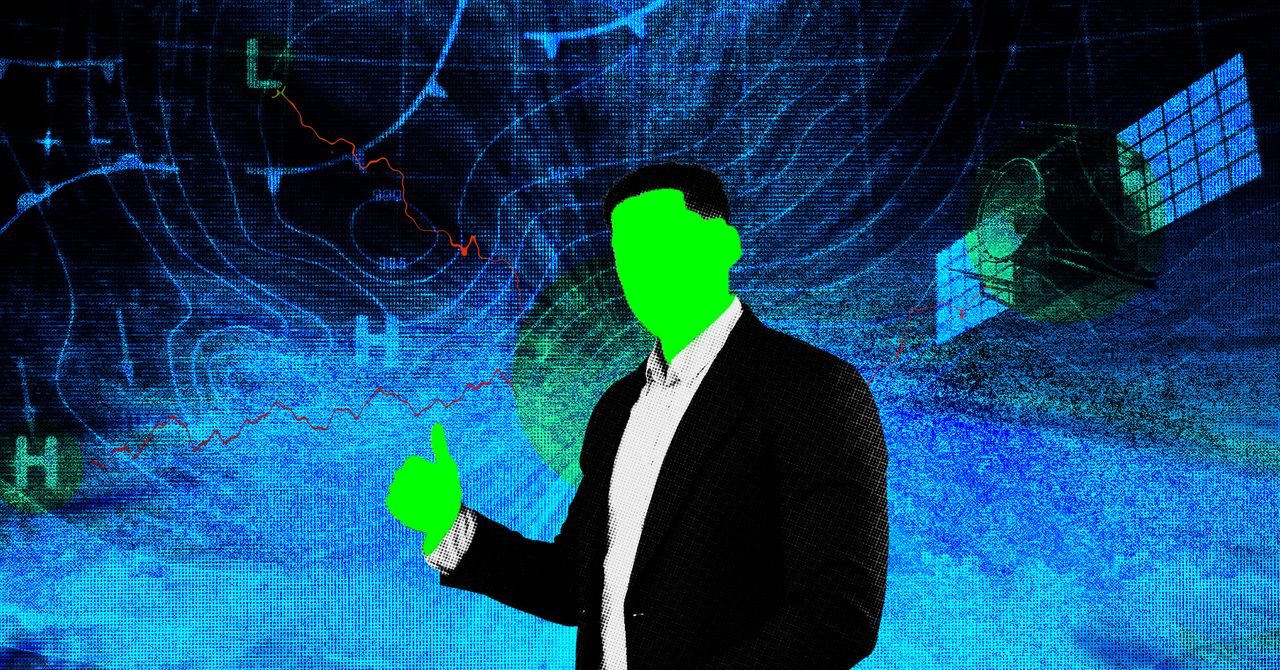
You may have noticed a drop of AI in your weather app lately. As companies race to infuse artificial intelligence into every product, the wave has come for the humble weather app.
The Weather Company, operator of the Weather Channel, today released a revamped version of its Storm Radar app, featuring an AI-powered Weather Assistant that lets users customize how they view forecasts and weather maps, toggling between layers like radar, temperature, and weather conditions like wind and lightning.
It can also sync with other apps, like your calendar, to send text notifications and weather summaries that tie info about the upcoming weather into your daily plans. You can stick a voice on it to talk like an old-timey radio weatherman, if you’re into that. Like most weather apps, it gets the data comes from the National Oceanic and Atmospheric Administration (NOAA) and the National Weather Service (NWS).
The app costs $4 per month. It is available on iOS only for now, but the company says an Android version is coming eventually.
“We wanted to build an experience that would be a weather level-up for anybody, really, from a casual observer to a seasoned storm chaser,” says Joe Koval, a senior meteorologist at the Weather Company. “If you’re looking for advice on when the weather will be good to walk your dog tomorrow, you no longer have to look at a bunch of different disparate weather data elements and try to figure out the answer to that question yourself.”
You can find the weather on your phone already, of course. Android and iOS devices typically place the weather prominently beside the time. Google and Apple have both fused their weather apps into their smartphones directly. AI features have since been infused, offering insights and summaries about the day to come.
But there are third-party weather apps galore, like Storm Radar, Carrot Weather, Rain Viewer, and Acme Weather—an app from the former Dark Sky app creators. New weather apps like Rainbow Weather aim to be AI-first. Weather services are also being integrated directly into AI chatbots, like Accuweather, which recently launched an app directly in OpenAI’s ChatGPT.
“Everyone has their idea of what they want in a weather app, what data they’re interested in, how they’re interested in it being presented,” says Adam Grossman, a founder of the DarkSky app. “How do you build a single weather app that works for everybody?”
DarkSky, one of the most popular iOS weather apps, was bought by Apple in 2020 and merged into its Apple Weather service. Grossman eventually left Apple to start Acme Weather, with the goal of making a weather prediction service that better telegraphs the uncertainty of forecasting.
“No matter how good your forecast is, you’re going to be wrong,” Grossman says. “That’s something that weather apps traditionally haven’t done a great job of doing. Our approach is trying to figure out how to add those pieces of context back in.”
Repositories of weather information usually come from government sources, like NOAA or other global weather services that collect data from weather satellites, radar, weather balloons, and on-the-ground instruments. All that data is fed into weather prediction models that simulate the physics of the atmosphere. Those predictions are often generated by resource-intensive supercomputers, but machine learning models have trimmed that processing down, making predictions quicker. (Though sometimes less accurate, which can be accounted for by comparing multiple models.)
Weather apps like Storm Radar and Acme Weather translate that bounty of information by corroborating and compiling the models, then helping to create high-resolution maps and a visual representation of the data, an area where AI can also be particularly useful.


College softball rankings: 2026 NCAA Week 8 Top 25 poll

Italy veterans aware 2026 World Cup is their ‘last chance’

Iran air defenses shoot down MQ-9 drone in Isfahan, LUCAS drone over Qeshm Island

-

 Politics1 week ago
Afghanistan announces release of detained US citizen
-

 Sports1 week ago
Broadcast industry CEO says consolidation is ‘essential’ to compete for NFL soaring media rights prices
-

 Entertainment1 week ago
UN warns migratory freshwater fish numbers are spiralling
-

 Tech1 week ago
Can a Home Appliance Fix the Problem of Soft-Plastic Waste?
-
 Business1 week ago
Property Play: Home flippers see smallest profits since the Great Recession, real estate data firm says
-
 Business1 week ago
Gold prices soar in Pakistan – SUCH TV
-

 Fashion1 week ago
ICE cotton slips on weaker crude, profit booking
-
 Business1 week ago
More women are entering wealth management, but few are in advisory roles, study finds