

Business
Why Croatia’s capital wants to hold the best Christmas market

Guy Delauney Balkans correspondent
 AFP via Getty Images
Christmas markets are not just tradition across Europe, they are big businesses that give cities a huge economic boost every December. For Zagreb, the capital of Croatia, it is an effective way of attracting tourists outside of the country’s main summer season.
The words “tourism” and “Croatia” are likely to conjure visons of sparkling Adriatic vistas during the hottest months of the year.
Tourism accounts for more than a fifth of the economy of this Balkan country, and it is keen to encourage more visitors to arrive outside of the height of summer. Yuletide frolics are a key part of that strategy.
“We’re making a transformation,” says Croatia’s Tourism Minister, Tonci Glavina.
“We are developing as a year-round tourism destination – we are not a summer destination anymore. Croatia has really made a significant development. At some point way back it was just sun and sea, but now Croatia offers many tourism products all across the country.”
Zagreb Advent, as the capital’s Christmas markets and events are collectively known, is the poster child for this approach, with billboards in neighbouring countries urging people to attend. In fact, this year the campaign has spread as far as London’s tube stations and Milan’s buses.
There are even special trains to bring visitors from Slovenia and Hungary. All of it is part of Zagreb’s push, in a very crowded field, to become one of Europe’s most popular Christmas markets.
While some cities might limit their offering to a single location, Zagreb Advent is a multi-venue spectacular that takes over large chunks of the centre.
“The entire city has become a festive ground for celebrating Christmas throughout the whole of December,” says Slavica Olujic Klapcic, who manages one of the Christmas market areas.
“What’s really special around here is that each of the locations has its own theme, and it’s a little bit different in decoration, and in the content that it offers. So for a visitor, I think it’s a good deal, because by taking a walk through Zagreb, you can see many different spots.”
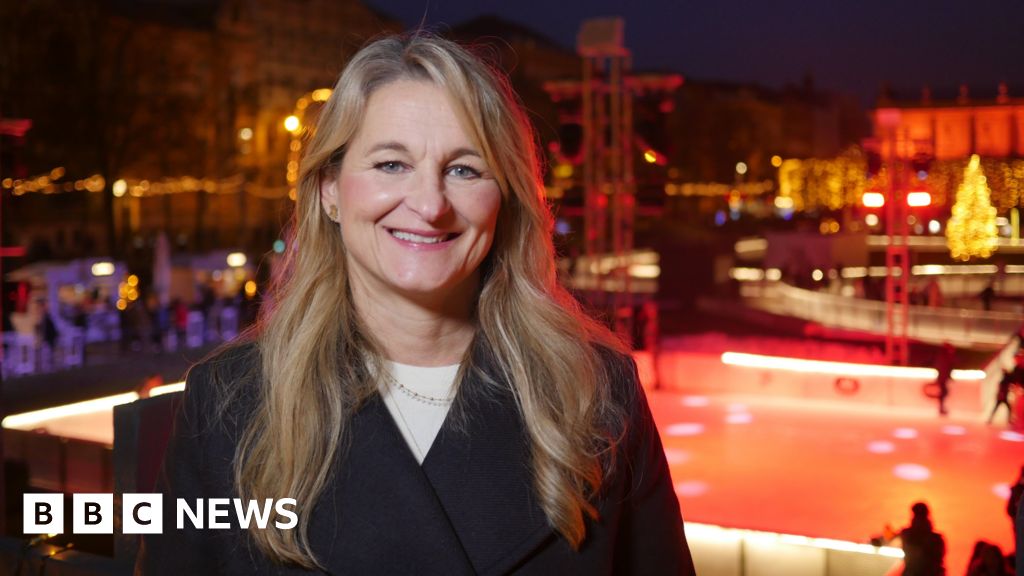
Like other Christmas markets across Europe there are no shortages of the usual seasonal staples, such as sausages and mulled wine. But there are also multiple music stages, craft stalls, vendors offering traditional Croatian food, art installations, and an enormous ice rink.


“It brings life to Zagreb,” reckons Zrinka Farina, who is involved with putting on Christmas market events outside the city’s historic Hotel Esplanade, as well as a food and music market at nearby Strossmayer Square called Fuliranje – which roughly translates as “fooling around”.
But she says that Croatians are deadly serious about trying to offer Europe’s best Christmas market. “We are such a sporty nation, we love to compete – and when we do something, we really want to be the best in the world in it.”
Such has been the effort that the city has put into Zagreb Advent since it was first held in 2014 that it was voted the best Christmas market in Europe for three years in a row, from 2015 to 2017.
The competition is organised by travel website European Best Destinations, and Zagreb’s success has helped to drive visitor numbers to the city every December.
Back in 2014, the city saw 100,198 people stay for at least one night during the last month of the year. By 2024 this had more than doubled to 245,352, which the tourist board says gave the city a €100m ($117m; £88m) economic boost.

However, Zagreb has a long way to go if it wishes to catch up with Europe’s Christmas market heavyweights.
The one held in the German city of Cologne is widely reported to be the most popular. It is expected to attract four million visitors this year, with an economic impact of €229m.
Meanwhile, Austria’s capital Vienna attracts around 2.8 million visitors to its Christmas market, and France’s Strasbourg gets two million people.
Zagreb’s event also has a limited history – it is only in its 11th year. By contrast, Dresden’s Christmas market, widely considered to be the world’s oldest, was first held in 1434. Strasbourg’s began in 1570, Vienna in 1764 and Cologne in 1820.
Despite its infancy, Zagreb Advent is said to be attracting visitors from across Europe. “They come here from Italy, Spain, Bosnia, Slovenia and even the UK,” says Lucija Vrkljan, who is working as a steward at the ice rink.
“It’s a great place to be,” says Dario Kozul, the founder of BioMania, a bistro with a stall offering vegan and gluten-free food at the Hotel Esplanade Christmas market. “We have a cross-marketing situation all the time,” he adds.
“People walk into this event and test our food – they’re really very pleased with it. Then we talk about our restaurant, and within the next couple of days, we see them there.”
 AFP via Getty Images
Marko Peric, dean of the Faculty of Tourism at Croatia’s University of Rijeka, agrees that Zagreb Advent brings “unusually high” numbers of arrivals and overnight stays in December.
But he cautions that the rest of Croatia’s heavy reliance on the summer season is a weakness that still needs to be addressed. “We need to work and develop our tourist offer in other parts of the year, including the winter,” he says.
“We don’t have snow, but we can offer a lot. We should rely on our gastronomy, which is well known, with many tourists arriving just because of that. And we could use other types of events like carnival in February, or sporting events.”
Tourism Minister Tonci Glavina insists that Croatia is making moves in the right direction. He points out that visitor numbers over July and August were actually slightly down on the same period in 2024.
But the country is still on course for a record-breaking year, thanks to significant growth either side of the summer peak, with around 5% more arrivals in June and September. This, says the minister, is “just perfect”, as is the 10% year-on-year rise over the first week of December.
“We are transforming Croatia to be a sustainable tourism destination, meaning about the same number of guests in peak season, developing the shoulder seasons, and of course developing other parts of the country to be main tourism destinations.”
Zagreb Advent has already shown the benefits. Although that may not be the first thing that springs to a visitor’s mind with all the traditional Croatian treats on offer.
After all, what could be better than a post-skate fritule doughnut, except perhaps a fritule with chocolate sauce.

Anthony Albanese says nation’s supply remains “secure” amid reports of panic buying and shortages.
Source link

A woman has been awarded $6m in a verdict that could have implications for hundreds of other cases in the US.
Source link

A major teachers’ union is calling for its members to skip Target when buying back-to-school supplies, the latest twist in a series of boycotts that have targeted the big-box retailer as its turnaround shows signs of life, CNBC has learned.
The AFT, or American Federation of Teachers, passed a resolution Thursday that calls on its 1.8 million members and others to shop at local stores and not at Target, saying the company did not respond adequately to the surge of federal immigration enforcement in the retailer’s hometown of Minneapolis this winter. Federal agents shot and killed two U.S. citizens, Renee Good and Alex Pretti, during the operation.
The labor union, which is affiliated with the AFL-CIO, plans to urge a similar resolution at AFL-CIO’s convention in Minneapolis this summer and at conventions held by other organizations, including the NAACP and LULAC, AFT President Randi Weingarten said.
Target declined to comment specifically on the AFT’s resolution but said in a statement that it has “a longstanding commitment to strengthening the communities we serve,” including donating 5% of profits since the company’s founding and offering a discount to educators as part of a teacher appreciation program.
Target’s annual sales have declined for the past three years in a row, but the company’s new CEO Michael Fiddelke laid out an ambitious plan earlier this month to refresh its stores, add more enticing merchandise and return to sales growth. The retailer said it expects net sales to rise about 2% this fiscal year compared with the prior year and anticipates sales will grow every quarter.
It is unclear if and how much the AFT’s call for a back-to-school boycott could hurt Target, which is trying to win back customers. Earlier this month, Atlanta area pastor Jamal Harrison Bryant announced the end of a yearlong boycott of the company, called Target Fast, which had started because of the company’s rollback of major diversity, equity and inclusion initiatives.
At a press conference, Bryant said Target has demonstrated its commitment to the Black community with investments in Black businesses and donations to Historically Black Colleges and Universities. Yet other activists leading a separate boycott, including former Ohio state Sen. Nina Turner, have said they continue to call for shoppers to steer clear of Target.
The AFT previously supported and participated in the Target boycott over its DEI rollback.
The retailer has attributed some of its sales losses to backlash to its DEI decision, along with other factors including company missteps with merchandise, a weaker store experience and softer discretionary spending.
At an investor meeting in Minneapolis in early March, Fiddelke stressed that it’s “a new chapter for Target.” He said the company is “doing the work to build connection with new guests, deepen relationships with existing guests and earn back trust with guests we’ve disappointed.”
In a separate email to Target employees earlier this month, Fiddelke highlighted how the retailer is putting its strategy into action, including through its move to cut prices on more than 3,000 items and the opening of its 2,000th store. He said Target has made progress with winning back trust, too, noting the end of the Target Fast boycott.
He said Target has had “ongoing conversations with the organizers” of the boycott, who have “acknowledged the meaningful contributions Target has made, and will continue to make, to the Black community.”
In an interview with CNBC, Weingarten said the AFT’s boycott is focused on what she called Target’s lack of response to the surge of aggressive and violent immigration enforcement in its own backyard. Weingarten said the AFT sent a letter to Target and met with Target staff to encourage them to speak up before the union moved to pass the resolution.
“Target was negotiating with our colleagues in the civil rights community for weeks and weeks and weeks,” she said. “They could have very easily dealt with both [concerns about DEI and immigration enforcement] and they chose not to.”
She said Target is “more worried about standing with the Trump administration than the communities that made them a profitable company.”
Fiddelke joined dozens of executives from Minnesota-based corporations in co-signing a letter in late January calling for an “immediate de-escalation” in the state after the fatal shooting of Pretti. However, the letter did not name the shooting victims Pretti or Good or call out the president, his immigration policies or federal agents.
Fiddelke also shared a video message with employees that more directly acknowledged current events, but stopped short of calling for ICE agents to leave the city or for accountability in the two shooting deaths.
Weingarten described the CEOs’ letter as “insulting” and said it “basically blamed both sides.”
She said the union, which includes many teachers, can have the greatest financial impact during the back-to-school shopping season this summer and fall. By passing the resolution now, she said, the AFT can get the word out to members and “give Target enough time to come back to its senses.”


John Mellencamp wins Icon Award at 2026 iHeartRadio Music Awards

World Cup European playoffs recap: Italy win, Czechia and Bosnia advance on PKs

Export demand lifts North India cotton yarn; local demand slow

-

 Fashion1 week ago
Sales at US apparel, clothing accessories stores up 4% YoY in Jan 2026
-

 Entertainment1 week ago
Val Kilmer revived 1 year after death through AI
-
 Fashion1 week ago
US’ G-III Apparel’s FY26 sales fall 7% to $2.96 bn
-

 Sports1 week ago
March Madness 2026 – How to watch in SA, start time, schedule, TV channel for NCAA championship basketball tournament
-
 Business1 week ago
Brits cashing in jewellery as gold price hits record high
-

 Fashion6 days ago
China’s textile & apparel exports surge 17% to $50 bn in Jan-Feb 2026
-
 Business1 week ago
World’s largest mining group names new chief executive
-

 Fashion1 week ago
Suez and Hormuz shut together, triggering global supply shock