

Politics
Why Hamas gambled on giving up Gaza hostages

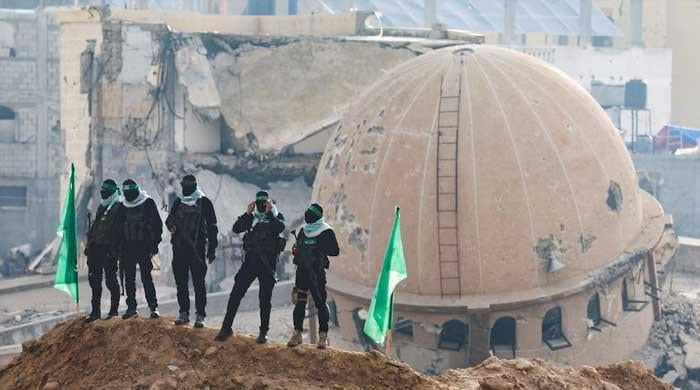
Hamas has called Donald Trump a racist, a “recipe for chaos” and a man with an absurd vision for Gaza.
But one extraordinary phone call last month helped persuade Hamas that the US president might be able to hold Israel to a peace deal even if the group surrendered all the hostages that give it leverage in the war in Gaza, two Palestinian officials said.
In the call, widely publicised at the time, Trump put Israeli Prime Minister Benjamin Netanyahu on the phone after a meeting at the White House in September, to apologise to Qatar’s prime minister for an Israeli strike on a residential complex that housed Hamas’ political leaders in the emirate’s capital Doha.
Trump’s handling of the Qatar bombing, which failed to kill the Hamas officials it targeted, including lead negotiator Khalil al-Hayya, gave the group more faith that he was able to stand up to Netanyahu and that he was serious about ending the war in Gaza, the two officials said.
Now, after signing up to a Trump-brokered ceasefire on Wednesday, the resistance group has put further faith in the word of a man who only this year proposed expelling Palestinians from Gaza and rebuilding it as a US-controlled beach resort.
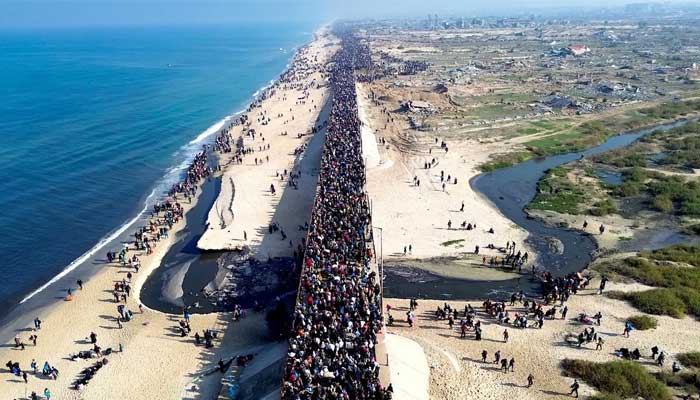
Under the deal, which took effect on Friday, Hamas agreed to give up its hostages without an agreement on full Israeli withdrawal. Two other Palestinian officials, from Hamas, acknowledged that was a risky gamble which relies on the US president being so invested in the deal he will not let it fail.
Hamas leaders are well aware their gamble could backfire, one of the Hamas officials said. They fear that once the hostages are released, Israel could resume its military campaign, as happened after a January ceasefire that Trump’s team had also been closely involved in.
However, gathered for indirect talks with Israel in a conference centre in the Sharm el-Sheikh Red Sea resort, Hamas was reassured enough by the presence of Trump’s closest confidants and regional heavy-weights to sign up to the ceasefire even though it leaves many of the group’s core demands unresolved, including moves towards a Palestinian state
Trump’s eagerness was felt “heavily” in the conference centre, one of the Hamas officials told Reuters. Trump personally called three times during the marathon session, a senior US official said, with his son-in-law Jared Kushner and envoy Steve Witkoff shuttling between Israeli and Qatari negotiators
No certainty for later phases
While it may pave the way to ending the war, which began with Hamas’ October 7, 2023, attack on Israel, there is no certainty that later phases envisaged in Trump’s 20-point Gaza plan will materialize.
But Trump’s handling of both the Qatar strikes and the ceasefire that ended Israel’s 12-day war with Iran in June gave the Hamas negotiators confidence that the US president would not just let Israel resume fighting as soon as the hostages are released, the two Palestinian officials and another source briefed on talks said.
They were among five Palestinian officials including three from Hamas, as well as two senior US officials and five other sources briefed on the talks who spoke to Reuters for this story.
Trump’s aides saw an opportunity to turn his anger at Netanyahu over the Qatar strike into pressure on the Israeli leader to accept a framework for ending the Gaza war, according to a source in Washington familiar with the matter.
Trump, who has cultivated ties with Gulf states important to a range of his wider diplomatic and economic policies, considers the Qatari emir a friend and did not like to see images of the strikes on television, a senior White House official said, calling the strike a significant turning point that coalesced the Arab world.
Trump’s public promise that no such Israeli attacks against Qatar would happen again lent him credibility in the eyes of Hamas and other regional actors, said a Palestinian official in Gaza briefed on the talks and mediation efforts.
“The fact that he gave Qatar a security guarantee that Israel would not attack them again, has increased Hamas’s confidence that a ceasefire will remain in place,” said Jonathan Reinhold of the Political Studies Department at Bar-Ilan University in Israel.
Hamas also took note of Trump’s public order for Iran and Israel to halt hostilities, said the Palestinian official in Gaza, singling-out Trump’s demand on his Truth Social platform that Israeli planes “turn around and head home” from a planned bombing raid on Iran hours after he had announced a ceasefire in their 12-day war in June.
“Though theatrical, he does what he says,” the official said, saying it showed Trump was willing to make Israel abide by a ceasefire.
Talks were stuck on Tuesday
Trump announced his overall plan on September 29, during Netanyahu’s White House visit, and Hamas gave its conditional agreement four days later, which the US president took as a green light.
As recently as Tuesday, talks on how to implement the plan looked stuck around issues including how quickly and how far Israeli troops would withdraw in Gaza to allow Hamas to gather and release the hostages, an official familiar with the talks told Reuters. Mediators from Qatar, Egypt and Turkey were unable to get things moving, the source said.
To break the deadlock, Qatar’s Prime Minister Sheikh Mohammed bin Abdulrahman Al Thani on Tuesday decided he had to travel to Sharm el-Sheikh, the source said, while Witkoff and Kushner flew in on Wednesday morning, and the talks kicked off around noon.
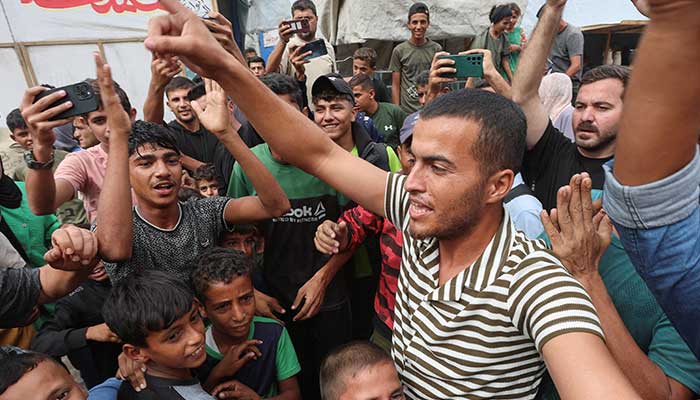
The presence of Nato power Turkey’s intelligence chief Ibrahim Kalin was also important because of Ankara’s strong ties to Hamas and President Tayyip Erdogan’s recent meeting with Trump, after which he said Trump had requested he help convince Hamas to accept the plan.
For two years Hamas has insisted it will only release the hostages in return for a full Israeli withdrawal and final end of the conflict. Israel has said it will only stop fighting when all hostages are returned and Hamas is destroyed.
Neither has totally got its way. Israel will remain in around half of Gaza for the foreseeable future, while Hamas survives as an organisation and a demand in Trump’s plan that it give up its weapons has been left for a later date. That dynamic in itself, with both sides needing further results, may help drive forward future talks, one of the sources briefed on the talks said.
An important development during the talks was the mediators’ success in convincing Hamas that its continued holding of hostages had become a liability for it rather than leverage, the senior US official and the Palestinian official in Gaza said.
Hamas came to a view that continuing to hold hostages undermined global support for Palestinians, and that without them, Israel would have no credibility to restart fighting, the Palestinian official said.
However, the group received no formal written guarantees backed by specific enforcement mechanisms that the first phase involving the hostage release, a partial Israeli pull-back and a halt to fighting, will progress to an envisaged wider deal that ends the war, two of the Hamas officials told Reuters.
Instead, it has accepted verbal assurances from the United States and mediators — Egypt, Qatar and Turkey — that Trump will see the deal through and not allow Israel to resume its military campaign once the hostages are freed, the Hamas sources and two other officials briefed on talks said.
“As far as we are concerned this agreement ends the war,” one of the Hamas official said.
The gamble could backfire
Hamas leaders are well aware their gamble could backfire, the Hamas official said.
Despite an agreement then for a phased hostage release to accompany Israeli withdrawals after the January ceasefire, Trump announced part way through the process that Hamas should free all its captives in one go or he would cancel the deal and “let hell break out”.
The deal broke down weeks later and the continued war resulted in more than 16,000 more Palestinian deaths according to Gaza health authorities, and an Israeli embargo on aid that led to the global hunger watchdog determining there was famine in the enclave.
Israel might be tempted to keep opportunistically striking Hamas, one regional diplomat said, especially if the group or its allies launch attacks such as rocket fire into Israeli territory.
However, things felt different this time compared to the earlier ceasefire, one of the Hamas officials said. The group felt the Israelis were coming with seriousness to reach a deal and that pressure by Egypt, Qatar, Turkey and the Americans on both sides was paying off, the official said.
Trump’s expected visit to the Middle East from Sunday for a victory lap will further help ensure it sticks, even with tough details still to be agreed, a source briefed on the talks said, describing the invitation from Egyptian President Abdel Fattah al-Sisi as “a very smart move”.
- Private carrier admits misjudgement, planning gaps.
- Regulator orders IndiGo to relieve senior office bearers.
- Operational meltdown linked to new policy of pilot rest.
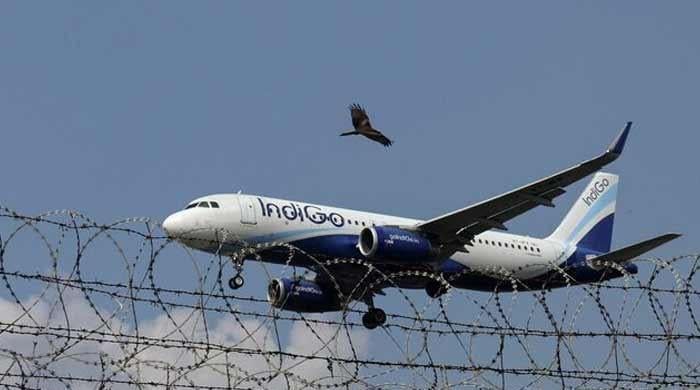
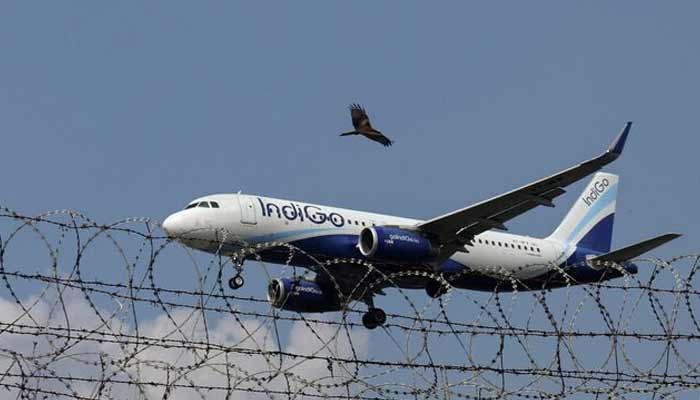
India’s civil aviation regulator on Saturday imposed a fine of $2.45 million on IndiGo, the country’s biggest airline, for poor roster planning that led to large-scale flight cancellations in December.
Airports across India were thrown into disarray late last year, with the private carrier admitting “misjudgement and planning gaps” in adapting to a new policy of pilot rest.
Over 4,000 mostly domestic flights were either cancelled or delayed for over a week across the country, stranding hundreds of thousands of passengers.
The operational meltdown came even though IndiGo had two years to prepare for the new rules aimed at giving pilots more rest periods in between flights to enhance passenger safety.
The Directorate General of Civil Aviation (DGCA) said it was levying the penalty for several lapses, including “failure to strike (a) balance between commercial imperatives and crew members’ ability to work effectively”.
The regulator ordered IndiGo to relieve its senior vice president of its operations control centre of his responsibilities, according to a statement released on Saturday.
It also issued warnings to senior officials at the company, including CEO Pieter Elbers “for inadequate overall oversight of flight operations and crisis management”.
There was no immediate response from IndiGo to the fine.
IndiGo, which commands 60% of India’s domestic market, operates more than 2,000 flights a day.
The crisis was one of the biggest challenges faced by the no-frills airline that has built its reputation on punctuality.
India is one of the world’s fastest growing aviation markets. In November 2024, IndiGo reached a daily level of 500,000 passengers for the first time.
- Khamenei terms wave of protests “American conspiracy”.
- Iran’s supreme leader says will not spare domestic criminals.
- DPM Dar expresses hope for peace and stability in region.
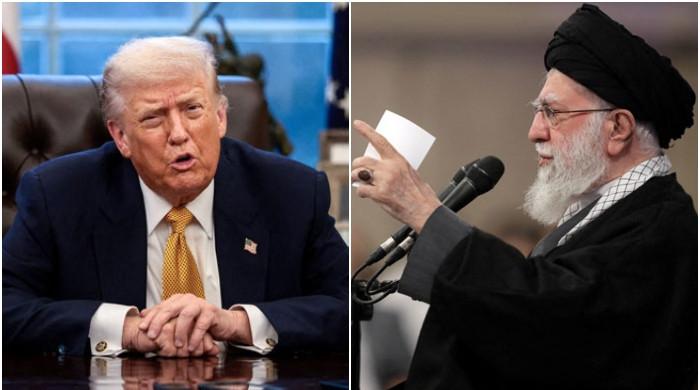
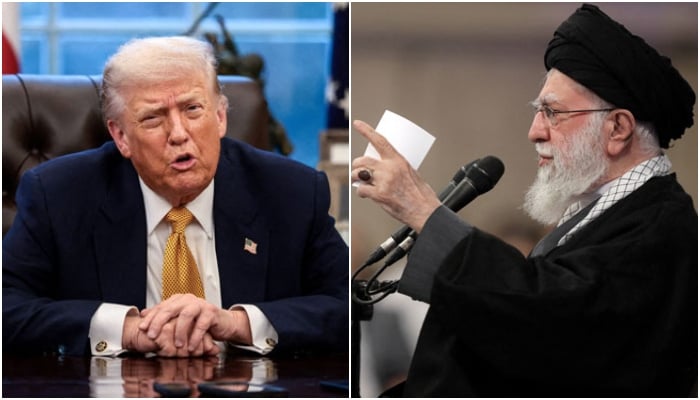
Iran’s supreme leader Ayatollah Ali Khamenei on Saturday accused US President Donald Trump of being responsible for “casualties” during a protest wave in the country.
“We hold the American president guilty for the casualties, damages and accusations he has levelled against the Iranian nation,” he told a crowd of supporters during an address marking a religious holiday.
“This was an American conspiracy,” he said, adding that “America’s goal is to swallow Iran… the goal is to put Iran back under military, political and economic domination”.
He further said authorities “must break the back of the seditionists” after a crackdown on the protest wave.
“We do not intend to lead the country to war, but we will not spare domestic criminals… worse than domestic criminals, international criminals, we will not spare them either,” he added.
“By God’s grace, the Iranian nation must break the back of the seditionists just as it broke the back of the sedition.”
It is pertinent to mention here that more than 3,000 people have died in Iran’s nationwide protests, rights activists said on Saturday, while a “very slight rise” in internet activity was reported in the country after an eight-day blackout.
The protests erupted on December 28 over economic hardship and swelled into widespread demonstrations calling for the end of clerical rule in the country, culminating in mass violence late last week.
Tensions in Iran, however, subsided after three weeks of protests under an internet blackout. The capital Tehran, however, has been comparatively quiet for four days, said several residents reached by Reuters.
Drones were flying over the city, but there were no signs of major protests on Thursday or Friday, said the residents, who asked not to be identified for their safety.
Separately, Deputy Prime Minister Ishaq Dar held telephonic conversation with Iran’s Foreign Minister Abbas Araghchi today.
They discussed the current situation in Iran and the wider region.
DPM Dar expressed hope for peace and stability, and both sides agreed to continue bilateral consultations on matters of mutual interest.
Earlier, US President Donald Trump thanked Iran’s leaders for cancelling what he said were hundreds of planned executions of protesters after a crackdown.
Taking to his social media platform, he said the mass hangings had been called off and praised Tehran for the move.
US President Donald Trump, whose repeated threats to act had included a vow to “take very strong action” if Iran executed protesters, said Tehran’s leaders had called off mass hangings.
“I greatly respect the fact that all scheduled hangings, which were to take place yesterday (Over 800 of them), have been cancelled by the leadership of Iran. Thank you!” he posted on social media.
- Venezuela’s Machado gave her Nobel medal to Trump.
- Donald Trump says he intends to keep the medal.
- Original laureate recorded in history as prize recipient.
OSLO: The Nobel Peace Prize remains inseparably linked to the person or organisation that won it, though the medal can be given away, the Norwegian Nobel Committee said on Friday, a day after last year’s winner gave her medalto US President Donald Trump.
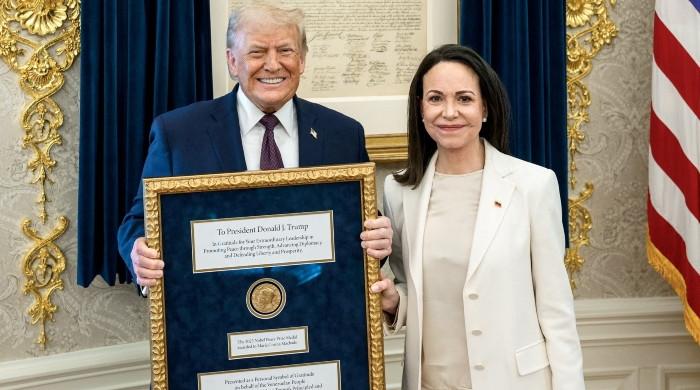
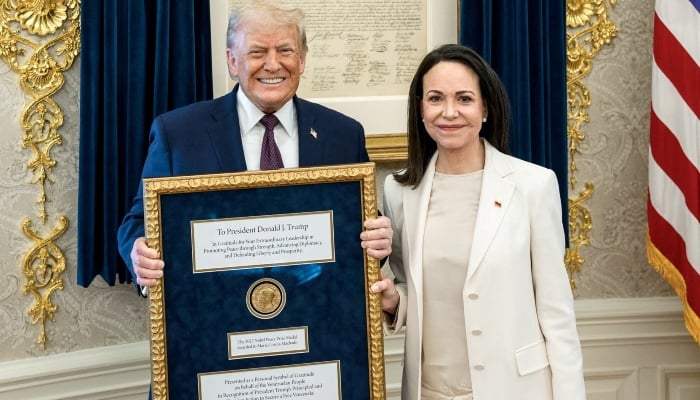
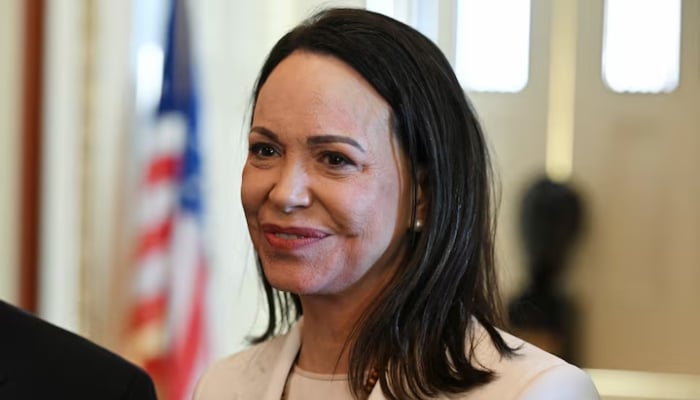
Venezuelan opposition leader Maria Corina Machado gave her medalon on Thursday to Trump, who thanked her for it. The White House released a photo of Trump and Machado, with Trump holding up a gold-coloured frame displaying it, and a White House official said Trump intends to keep it.
Machado’s award also consists of a diploma and 11 million Swedish crowns ($1.19 million).
“Regardless of what may happen to the medal, the diploma, or the prize money, it is and remains the original laureate who is recorded in history as the recipient of the prize,” the award body said in a statement.
“There are no restrictions in the statutes of the Nobel Foundation on what a laureate may do with the medal, the diploma, or the prize money. This means that a laureate is free to keep, give away, sell, or donate these items,” it added.
‘Inseparably linked’
The medal and the diploma are physical symbols confirming that an individual or organisation has been awarded the prize, said the five-strong award committee.
“The prize itself – the honour and recognition – remains inseparably linked to the person or organisation designated as the laureate by the Norwegian Nobel Committee,” it said.
The committee, which did not refer to Trump and Machado by name in its statement, said it does not comment on a laureate’s statements, decisions or actions after the prize is announced.
It was not the first time a Nobel laureate has given away the medal. In 1943, Nobel literature laureate Knut Hamsun gave his to Nazi propaganda minister Joseph Goebbels.
In 2022, Nobel Peace laureate Dmitry Muratov sold his medal for $100 million to raise money for the UN children’s fund Unicef to help Ukrainian refugee children.
In 2024, the widow of former UN Secretary-General Kofi Annan donated his 2001 Nobel Peace Prize medal and diploma to the UN office in Geneva.


Sources: Inter Miami eyeing $15M move for Monterrey’s Berterame

Saturday Sessions: Whitney performs “Won’t You Speak Your Mind”

India slaps $2.45m fine on IndiGo for mass flight cancellations

-

 Tech5 days ago
New Proposed Legislation Would Let Self-Driving Cars Operate in New York State
-
 Sports7 days ago
Clock is ticking for Frank at Spurs, with dwindling evidence he deserves extra time
-
Sports1 week ago
Commanders go young, promote David Blough to be offensive coordinator
-

 Entertainment4 days ago
X (formerly Twitter) recovers after brief global outage affects thousands
-

 Fashion7 days ago
South India cotton yarn gains but market unease over US tariff fears
-

 Fashion7 days ago
China’s central bank conducts $157-bn outright reverse repo operation
-
 Business1 week ago
SoftBank reduces Ola Electric stake to 13.5% from 15.6% – The Times of India
-

 Sports7 days ago
US figure skating power couple makes history with record breaking seventh national championship