

Business
Why has inflation fallen and what does it mean for me?

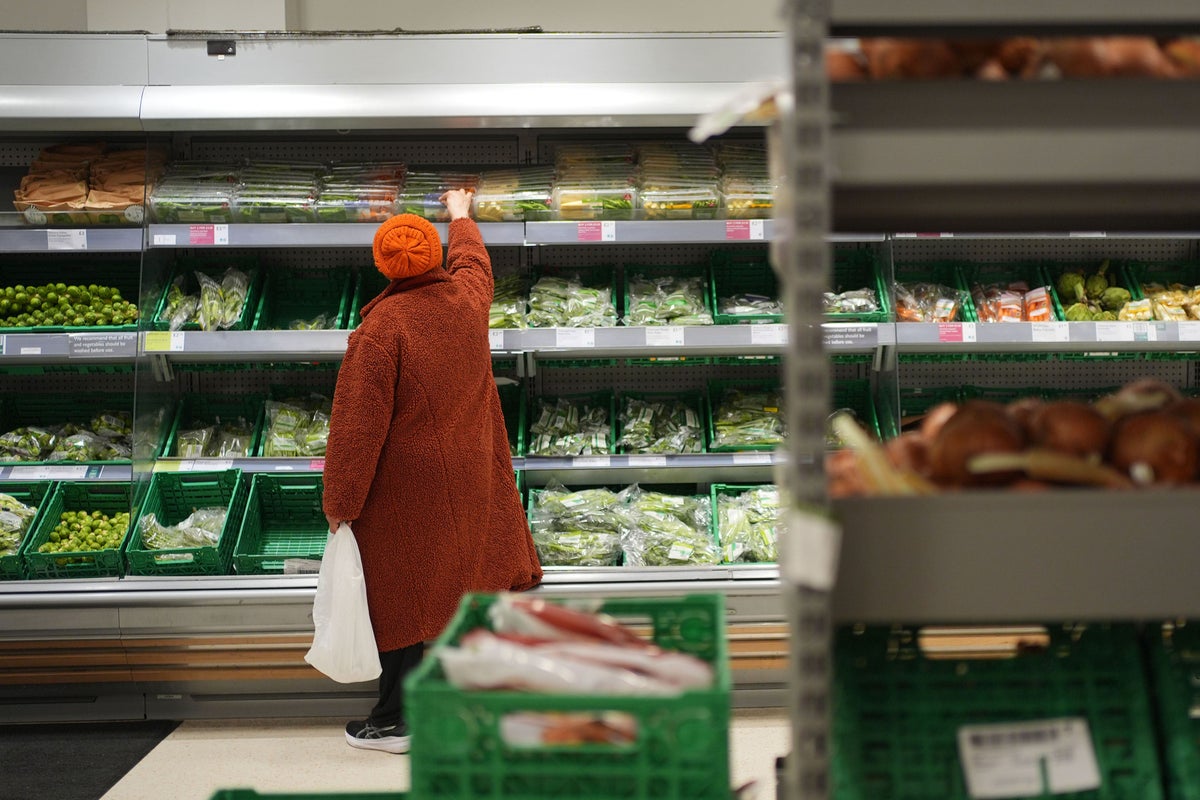
UK inflation fell to an eight-month low in November as Black Friday sales and a dip in food prices helped ease the cost of living.
The rate of Consumer Prices Index (CPI) inflation fell to 3.2% in November, from 3.6% in October, the Office for National Statistics (ONS) said.
Here, the Press Association looks at what is behind the drop and what it means for households and the economy.
– What is inflation?
Inflation is the term used to describe the rising price of goods and services.
The inflation rate refers to how quickly prices are going up.
November’s inflation rate of 3.2% means if an item cost £100 a year ago, it would now cost £103.20.
It is below the 3.6% rate recorded in October, meaning that prices are rising at a slower rate than they were before.
– What made inflation go down?
The ONS said the biggest factor driving inflation down last month was lower food prices.
Items such as bread, cereals and cakes, butter, cheese and pasta got cheaper between October and November, while alcoholic drinks including beer and wine also decreased.
However, food prices are still higher than they were last year, with the annual inflation rate coming in at 4.2% in November – albeit lower than the 4.9% October rate.
The price of some food and drinks has spiked over the past year, with annual rises including beef up 27.7%, chocolate rising by 17.3% and coffee up 14.5%.
Sarah Coles, head of personal finance for Hargreaves Lansdown, said this means that people’s “experiences at the supermarket will still depend enormously on what you buy”.
– Did Black Friday make a difference?
The ONS said its data pointed to there being bigger Black Friday sales this year than in 2024, which helped lower the price of clothes and shoes.
Black Friday has become a key time for retailers to attract shoppers with discounts that last well beyond the specific November shopping date.
The ONS said women’s clothing fell the most, with falls for items such as trousers and skirts.
Ms Coles said that sluggish sales through the year may have “persuaded retailers that they have to work harder to get people through the doors – so discounts were heavier”.
– Will inflation keep falling?
While November’s inflation rate fell sharply, some economists have cautioned that it is likely to be a one-off, with factors such as Black Friday sales potentially skewing the data.
Rob Wood, chief UK economist for Pantheon Macroeconomics, said that prices fell by more than expected for items including clothes, furniture and games, toys and hobbies, warning that this will “likely reverse” in the coming months.
James Smith, an economist for ING, said he was expecting inflation to edge higher in December, particularly due to a seasonal spike in air fares.
However, he said the “latest drop in inflation fits into a broader body of evidence suggesting that price pressures are cooling”, adding: “We expect headline inflation to fall pretty close to 2% by May.”
– What does it mean for interest rates?
Most economists think that the latest set of inflation data will be enough to convince policymakers to cut interest rates when they next meet on Thursday.
The Bank of England is widely expected to reduce rates to 3.75% from 4%.
Charlotte Kennedy, chartered financial planner for Rathbones, said the inflation reading “paves the way for a possible pre-Christmas rate cut, particularly given the need to stimulate the economy and address the ongoing malaise in employment and job opportunities”.
“Measures announced at the Budget – such as freezing rail fares until 2027, cutting fuel duty, and reducing energy bill costs – are expected to shave around 0.5 percentage points off headline inflation by the middle of next year,” she said.
She added that this raises the prospect of the Bank of England reaching its 2% target rate for CPI inflation “in the not-too-distant future”.
Motorists are facing higher fuel prices ahead of Easter break due to the conflict in the Middle East, the RAC says.
Source link
Business
E-cheques coming soon? RBI unveils Payments Vision 2028, plans wider oversight of digital players – The Times of India
The Reserve Bank of India (RBI) on Friday unveiled its ‘Payments Vision 2028’ document, outlining a roadmap that includes exploring electronic cheques, expanding regulatory oversight to digital platforms, and strengthening safeguards in the fast-growing payments ecosystem, PTI reported.The central bank said it will examine the introduction of e-cheques to combine the advantages of paper instruments with the speed and reliability of digital payments. “To leverage the unique benefits of paper-based instruments and the speed and reliability of electronic payments, and cater to new business use cases, the introduction of electronic cheques in India shall be explored,” the RBI said.Alongside, the RBI is considering widening the regulatory ambit to include entities such as e-commerce marketplaces and centralised platforms that play a growing role in facilitating digital transactions.“In addition, e-commerce marketplaces and centralized platforms have been assuming significant responsibilities that could have implications on the orderly functioning of the payments ecosystem. These aspects shall be examined in detail and, if required, the scope of direct regulations shall be extended to cover such entities,” the document said.The vision document also proposes allowing users to enable or disable transactions across digital payment modes, similar to controls available for card transactions.To address fraud risks, the RBI is exploring a “shared responsibility framework” under which both the issuing bank and the beneficiary bank would share liability in cases of unauthorised digital transactions.The central bank also plans to review cheque design and security features, introduce a Domestic Legal Entity Identifier (DLEI) framework for better transaction traceability, and bring in a Cyber Key Risk Indicators (KRI) framework for non-bank payment system operators.Other initiatives include exploring white-label solutions in the Aadhaar Enabled Payment System (AePS), developing interoperability in the Trade Receivables e-Discounting System (TReDS), and introducing a ‘Payments Switching Service’ to ease customer migration across platforms.The RBI said it will also review the cross-border payments ecosystem to improve efficiency and streamline authorisation processes, alongside publishing periodic reports on global and domestic payment trends.Additionally, the central bank aims to enhance access to payment data and reimagine the card payments ecosystem by promoting secure tokenisation, improved transparency in pricing, and greater choice for users and merchants.

Hyderabad: Pharma player Hetero on Friday said it has rolled out exports of its generic semaglutide injection portfolio as part of a multi-year plan to widen access to treatments for type 2 diabetes and obesity in more than 75 countries.The Hyderabad-based pharmaceutical company said initial rollouts are under way in Africa, Asia and the Middle East, with additional launches planned in other markets subject to regulatory approvals.The injectable therapies will be sold under the brand names Truglyx, Rolmodl and Moto G. Semaglutide belongs to the GLP-1 class of medicines, which are used in diabetes care and weight management.Hetero said the export launch is part of its broader strategy to improve access to advanced cardio-metabolic therapies, particularly in emerging markets.The company said the products will be offered in multi-dose disposable pen devices designed in line with innovator formats and will be available in several strengths, including 0.25 mg, 0.5 mg, 1 mg, 2 mg, 1.7 mg and 2.4 mg, allowing dosing flexibility for both diabetes and obesity treatment.Hetero said it is also awaiting approval from India’s Central Drugs Standard Control Organisation (CDSCO) after completing clinical trials in type 2 diabetes and obesity and plans an India launch after regulatory clearance.Hetero managing director Dr Vamsi Krishna Bandi said the company aims to provide high-quality, affordable generic semaglutide through a single global product platform backed by its manufacturing and development capabilities.He said Hetero would use its commercial networks across Asia, the Middle East, Africa and Latin America to support supply and access. The Hyderabad-headquartered Hetero operates in more than 145 countries and employs over 30,000 people.


FIFA clears Fulham’s Diop, Ajax’s Bounida to play for Morocco

Iranian Hackers Breached Kash Patel’s Email—but Not the FBI’s

Tiger Woods involved in rollover crash in Florida less than 2 weeks before Masters: reports

-
 Business7 days ago
Flipkart group CFO to leave co amid IPO plans – The Times of India
-

 Fashion7 days ago
China’s textile & apparel exports surge 17% to $50 bn in Jan-Feb 2026
-
 Business1 week ago
Video: The Effects of High Oil Prices
-

 Sports1 week ago
Rating Adidas’ 2026 World Cup away shirts: Argentina, Spain, Mexico and more
-

 Fashion1 week ago
The hidden $1.62 war tax now embedded in every garment you source
-

 Sports7 days ago
American Conference Commissioner Tim Pernetti thanks Trump for Army-Navy game executive order
-
Tech1 week ago
The Corsair 4000D RS PC Case Keeps Your System Cool
-

 Tech1 week ago
‘Uncanny Valley’: Nvidia’s ‘Super Bowl of AI,’ Tesla Disappoints, and Meta’s VR Metaverse ‘Shutdown’