

Business
Why Poundland is struggling during a cost-of-living-crisis


Emma SimpsonBusiness correspondent

 BBC
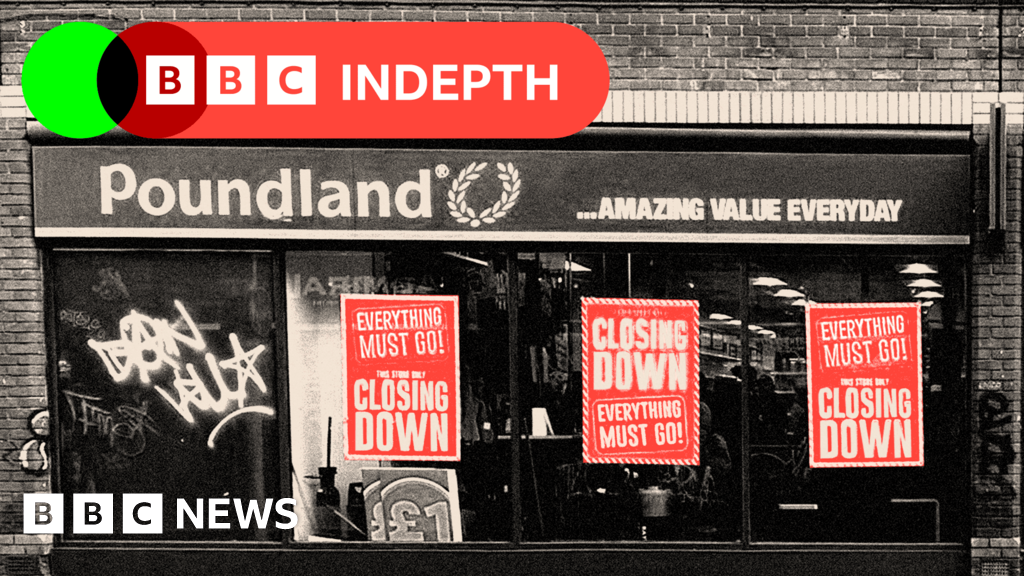
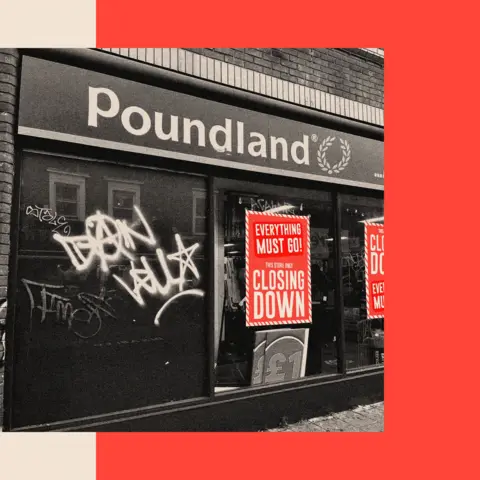
BBCThe residents of Peckham in south London have just lost their Poundland store, which closed this week after 11 years of trading.
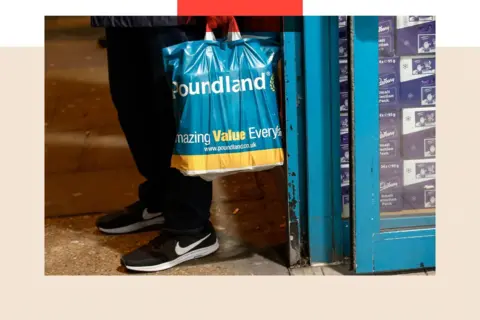
“Everyone comes in here, it’s very cheap. I buy stuff for my kids, snacks, toiletries,” says passing shopper Becky Cullen, staring at the empty shop. “It was always busy… Where are we going to shop now?”
The store was on Rye Lane, a lively high street where Caribbean grocers stack yams next to beauty and phone repair shops. There are bars, cafes and the odd hip vintage shop. But Peckham still has high levels of deprivation and as such it is just the sort of place where a bargain shop should be booming in a cost-of-living crisis.
Instead Poundland has found itself running a store closure programme as it tries to secure its future on the high street.

More than 100 of its shops have either shut or been earmarked for closure since the summer. That’s after the business was sold in June for a nominal £1 amid “challenging trading conditions”.
It does have a turnaround plan but by the end of the process, Poundland expects to end up with between 650 and 700 shops, compared with the 800-odd it had at the start of this year.
Elsewhere on UK high streets, the Original Factory shop is struggling and has shut at least 22 shops. Maxideal, a small discount chain, has closed altogether. And B&M Bargains, one of the UK’s biggest discount chains, has launched a turnaround plan due to weak sales.
These places should in theory be the destinations of choice for people who are trying to spend less on everyday goods, or trading down from more expensive shops.
So why – in an age where so many of us are feeling the financial pinch – are some of these budget shops that are household names having such a tough time?
Are shoppers ‘outsmarting’ budget stores?
One thing is clear – we’re not falling out of love with budget shopping, far from it. But the way we are budget shopping does appear to have changed.
“[Shoppers] are outsmarting the budget shops,” says retail expert Catherine Shuttleworth, whose company, Savvy, gathers insight on shopper behaviour. “[They’re doing this] by saying, ‘These are things I’m going to buy from you.’
“They know their prices inside out.”
Sometimes shoppers will take a photo of a deal on their phone and send it to their friends and family, Shuttleworth says, so that everyone is up-to-date with the latest prices.
But that’s not the only challenge. Budget chains are also experiencing a formidable combination of rising costs and competition.
 Bloomberg via Getty Images
All big retailers have faced a substantial increase in employer costs because of last year’s Budget, but it’s more difficult when you’re selling the cheapest products because there’s less wiggle room to absorb the extra costs, or to pass them on to customers.
For pound shops in particular, it’s even harder to make the business model work today, as a pound isn’t what it used to be.
After inflation, selling a product for £1 in 1990, when Poundland began, is the equivalent of selling it for 40p today.
The entrepreneur who cracked the model
Chris Edwards, a businessman from Yorkshire, has spent more than 50 years working in retail’s bargain basement. He and his son were the team behind Poundworld, which they sold for £150m 10 years ago.
In 2019, they started a new chain, OneBelow, selling everything for £1 or less – but three years later they had to change tactics. It’s now called OneBeyond, with almost everything at £1 or above.
“We realised the pound game wasn’t going to work any more,” he says. “What tipped us over the edge was the [post-pandemic] shipping crisis, when we couldn’t get containers through and the cost of freight was ridiculous.”
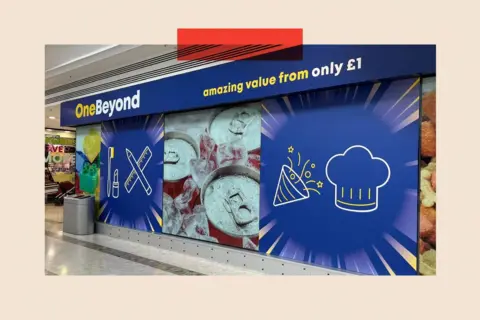
But Mr Edwards says his business model still works: in his view, it comes down to experience, negotiating skill and getting the mix of products just right.
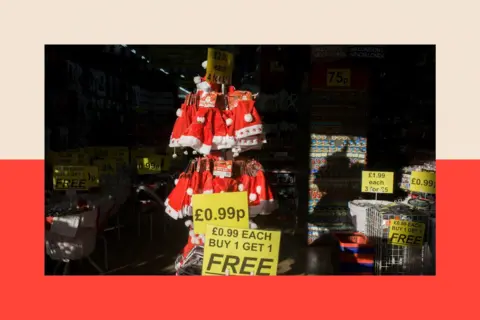
His Croydon store, with a colourful Christmas aisle, is bustling on a weekend visit with queues for the tills as shoppers stock up on mouthwash, washing up liquid, sweets and batteries.
“We know what the customer is going to buy before the customer knows they’re going to buy it,” he declares.
As for making economics stack up, he says sometimes he is able to secure cheap prices on UK stock from big-name brands but when he can’t he sacrifices profits in order to attract shoppers.
 Corbis via Getty Images
“We’ve got a constant flow of containers from China and we can negotiate very keen prices,” he says.
So, if customers enter a store to buy a Coca-Cola, they may also pick up a product imported directly from China, where he can make a bit of “extra margin”.
When the numbers unravel
If you don’t get budget retail right though, the numbers can quickly unravel.
The father and son duo grew Poundworld into a chain of more than 300 shops, before selling it in 2015 to an American investor. But it soon collapsed, disappearing from the high street three years later.
“They just didn’t understand the discount business,” he argues. “They tried to sell other things but not in a controlled way like we do it.”
Wilko also lost its way, tipping into administration in 2023 with the loss of thousands of jobs.
Poundland avoided collapsing into administration this year, after a dreadful period of trading, much of it of its own making. The business had drifted further and further from its core offer – lots of products for £1 – and was selling them instead at a wide range of different prices. Its owners, the Warsaw-listed Pepco Group, also put Pepco clothing into Poundland stores, which wasn’t popular with shoppers.
“Poundland forgot what they were. They key to budget shops is keeping them simple,” says Catherine Shuttleworth.
But she believes Poundland can find its way back, providing they return to basics. The company has already simplified its pricing and says it is making good progress with a turnaround plan.
This has meant closing 57 unprofitable stores and negotiating steep rent cuts with landlords, where it can. Another 48 shops are being shut as these landlords have decided to take back the leases and find new occupiers instead.
The main budget chains now have 3,400 shops across the UK, according to data analytics firm, Geolytix. The number of them more than doubled between 2009 and 2015 – but numbers have risen only slightly since then.
Back in 2009 the UK was in the teeth of a recession, following the global financial crisis. Woolworths had just disappeared, giving rivals, such as Poundland, the chance to fill the gaps, taking advantage of cheap rents. And shoppers, everywhere, were after bargains.
 Getty
GettyDiscount supermarkets Aldi and Lidl also grew rapidly during this period, luring millions of customers away from the established grocers with cheaper prices. Savvy shopping became cool, even for those on higher incomes.
By 2019, much of the budget store growth was happening in out-of-town locations and retail parks, a trend accelerated by the pandemic. For instance, B&M, Home Bargain and The Range shops have large garden centres and sell bulkier items which are easier to collect by car.
But budget shops are having a much tougher time during this cost-of-living crisis.
Not only have the supermarkets upped their game with sharper prices and loyalty cards to keep shoppers on board, but the sector also now has the rise of “extreme discounting” online to contend with.
From China to TikTok: growing competition
Today, Chinese players Shein and Temu are nibbling away on the budget shops’ patch by selling ultra-cheap products direct to consumers. There’s also AliExpress, another Chinese-based retailer, which operates as a global online market connecting shoppers with sellers.
“AliExpress had a huge boost in usership last year, from sponsoring the Euros, and it’s growing,” says Nick Carroll, director of retail insight from Mintel.
Sales figures are hard to come by, but Mintel data suggests 30% of online shoppers in the UK shopped with Temu in the year to September 2025, while 14% shopped with AliExpress and 3% with DHGate, another Chinese marketplace, in the same period.
 AFP via Getty Images
Amazon has also got in on the act by launching its own ultra-low-cost shopping section, Amazon Haul.
“If you look at those products, they look very similar to what you’d find on Temu etc, so if Amazon’s doing a reaction to something in the market, you know it’s notable,” says Carroll.
“There’s a lot more coming into that space. So this sort of wave of low-cost influence from outside of the UK isn’t slowing down, and I think there’s much more to come.”
There are also new selling platforms like TikTok Shop, Catherine Shuttleworth points out, where you can find people advertising anything from sweets and toilet paper to pillows. A seller on TikTok can sell toilet paper cheaper than a high street shop, she adds, because there are no overheads, no staff, and probably very little stock.
“So long as they [shoppers] can get it at the right price, the right place and at the right time, they will go anywhere to do that,” she says.
“It’s not just the standard retailer they used to go to – it could be anybody.”
 Getty Images
The danger for traditional budget shops is that they will no longer be seen as being the cheapest in the market.
All this coupled with a “cost-of-business crisis” – caused by recent rises in the minimum wage and in employers’ national insurance contributions, among other things – could shake out the weaker players, thinks Ms Shuttleworth.
“You’ve got to be the best of the best in whichever segment, whether you’re at the top, the middle or the bottom, and it’s super-super-competitive and one of the problems here, is there’s so many people in that market.
“But I think what will happen in this sector is that there has to be some consolidation, and the stronger players will win out.”
Lessons from the outliers
It’s not all bad news, of course. Some chains have been doing very well recently.
The Range has continued to expand, opening 60 standalone stores this year, after acquiring the DIY chain Homebase out of administration. Home Bargains is still thriving and opening new stores, too.
Savers, which sells mostly toiletries and cosmetics, but some other goods too, has also expanded in recent years. The BBC has been told it is moving into Poundland’s Peckham store space.
OneBeyond has grown to 132 stores, but expansion has slowed. Chris Edwards blames the government, arguing it has made things harder by piling on extra costs.
“Every period has its own challenges… and we just have to do our own thing.”
As for current trading, he says, he is getting by. “We’re not saying we’re earning fortunes of money. We’re not – but we’re paying our way, and we’re just waiting for better times.”
 Getty Images
His focus now, along with almost every other retailer, is Christmas trading.
“It means everything… we can break even all year if we have a good Halloween and a good Christmas,” he says.
Catherine Shuttleworth reckons that’s where good budget retailers come into their own, as shoppers often turn to these aisles for big events. “They’re a great place to go and deck your house out.”
But also, they may be the only place many households can afford to shop. Not everyone likes to shop online, or wants to make the trip to a retail park.
“For some people, budget shopping is a hobby,” Shuttleworth says, “but for others it’s an absolute necessity.”

BBC InDepth is the home on the website and app for the best analysis, with fresh perspectives that challenge assumptions and deep reporting on the biggest issues of the day. You can now sign up for notifications that will alert you whenever an InDepth story is published – click here to find out how.
Business
Gold Could Hit 7500 Per Ounce: Gold in ‘structural repricing phase’, could hit $6,000 in 12 months: Report – The Times of India

Gold’s long-term outlook remains bullish as global de-dollarisation, rising fiscal stress and escalating geopolitical tensions reshape the global financial order, according to a report by Motilal Oswal Financial Services Ltd (MOFSL).In its latest Precious Metals Quarterly Report, the brokerage said gold prices crossed the $5,000 per ounce mark in early 2026, marking one of the strongest long-term bull phases in modern history.The firm said gold has entered a “structural repricing phase,” signalling the beginning of a new supercycle rather than a short-term cyclical rally.
Target of $6,000 in 12 months, $7,500 medium term
MOFSL expects Comex gold to settle towards $6,000 per ounce — equivalent to around Rs 1.85 lakh per 10 grams domestically — over the next 12 months. It also sees the potential for prices to move towards $7,500 per ounce in the medium term if geopolitical and fiscal pressures intensify.“The long-term outlook for gold remains positive. As global reserves gradually diversify away from dollar-centric assets and physical supply remains constrained, gold prices are likely to stay supported around and above $5,000 per ounce,” Navneet Damani, head of research, Commodities, Motilal Oswal Financial Services Ltd, said, as quoted by news agency PTI.Damani added that the current cycle is being driven not just by inflation, but by confidence — or the lack of it — in fiscal and monetary systems.
Gold rises despite positive real rates
The report highlighted that gold continued to climb even when real interest rates were positive between 2023 and 2025 — a period when prices would typically decline.This trend indicates that investors are increasingly worried about mounting global debt levels and the long-term stability of fiscal and monetary frameworks.“Gold’s strength despite positive real interest rates shows a clear shift in investor thinking. Real returns are increasingly seen as temporary and policy-driven, which reduces the cost of holding gold and strengthens its role as a safeguard against broader financial risks,” Manav Modi, analyst – commodities, MOFSL, said.
Geopolitical tensions, supply constraints add support
According to the report, rising geopolitical tensions in Eastern Europe, the Middle East and Asia, along with renewed trade tensions and tariff-related disruptions, have heightened inflation and currency volatility, making gold more attractive as a neutral and reliable asset.Damani noted that as fiscal stress increases and questions emerge over monetary independence, gold’s role as non-sovereign money has gained prominence, leading to a structural shift in demand.The brokerage also pointed to tight global physical supply conditions supporting prices. Limited mine output, shrinking inventories across major exchanges and rising production costs have kept precious metal prices elevated.
Domestic demand and central bank buying
On the domestic front, rupee depreciation and strong retail demand have further supported gold prices. Exchange-traded funds (ETFs) have seen renewed inflows after years of decline, the report said.Central banks have remained consistent buyers, adding around 1,000 tonnes of gold annually for four consecutive years as part of efforts to diversify reserves and reduce reliance on dollar-based assets.Overall, MOFSL expects gold to remain well supported over the long term, driven by reserve diversification, constrained supply growth and ongoing global economic and geopolitical uncertainty.
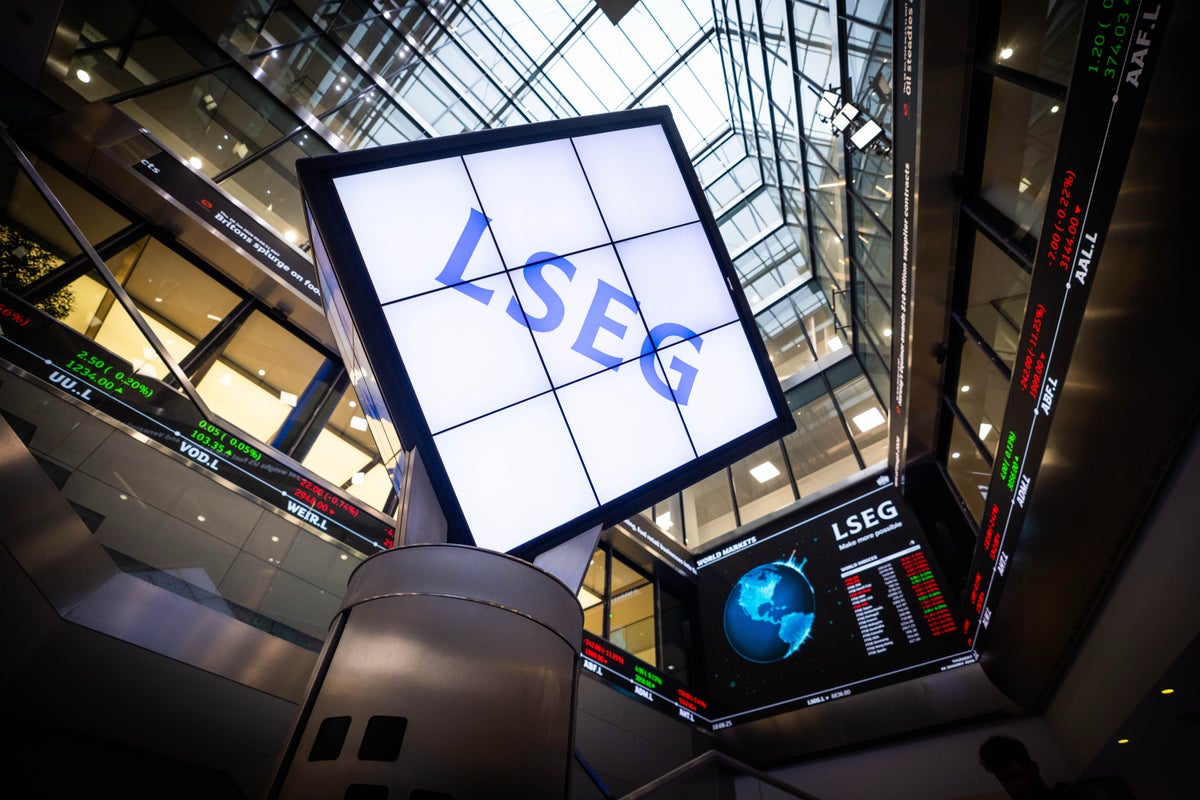
The London Stock Exchange Group has unveiled plans for a £3 billion share buyback amid pressure from an activist investor and as artificial intelligence fears have hammered the stock.
LSEG said it would follow £2.1 billion in buybacks made last year with another £3 billion by February next year, on top of a hike in dividend payouts.
Details of the pledge to step up returns for investors came as it reported underlying operating profits of £3.51 billion for 2025, up 10.8% or 14.7% higher on a constant currency basis.
On a bottom line basis, pre-tax profits jumped 56.5% to £1.97 billion for 2025.
Shares in the group rose as much as 5% in Thursday morning trading, in a welcome increase after the stock has been battered in recent weeks by global investor concerns over the impact of AI on its firm and data companies more widely.
Shares in the firm, which makes a significant chunk of its earnings from selling access to markets data, have slumped by nearly a third in the past year.
Activist investor Elliott Management has also built up a stake in the firm earlier this month and has reportedly been pushing for more share buybacks as it has held talks with LSEG bosses.
In the face of the recent shares slump, chief executive David Schwimmer said recent results showed “another year of very strong financial performance”.
He said: “In the fourth quarter alone, major financial institutions signed long-term contracts worth £1.9 billion to access our leading data and workflow.”
“With our LSEG Everywhere data strategy, we are positioning ourselves as the partner of choice for licensed, trusted data as the use of AI in decision-making scales – and we are seeing very positive signs of adoption,” he added.
It outlined new performance guidance for 2027 to 2029, with aims to deliver “mid to high single digit” growth in total income and further increase profitability.
Despite taking a significant stake in LSEG, the Financial Times newspaper reported earlier this week that Elliott has made assurances to the UK government over its intentions for LSEG as speculation mounted it would look to push for a break-up of the firm or for it to switch its listing to New York.

Rolls-Royce has revealed its annual profit surged by £1 billion and upgraded its outlook for the years ahead, following major military aircraft orders and soaring demand for powering data centres.
The engineering giant said its business divisions were in a good place to benefit from “key global trends” over the coming years.
It reported an underlying operating profit of £3.5 billion for 2025, a jump of 40% from the £2.5 billion made the prior year.
Underlying revenues surpassed £20 billion over the year, up about a 10th on 2024.
This was driven by profit and sales growth across its civil aerospace, defence, and power businesses.
Rolls-Royce said demand for its defence products was strong and it secured major orders during 2025.
This included contracts worth more than £1.5 billion with the UK’s Ministry of Defence and the US’s Department of War for EJ200 and AE 2100 engines to power military aircraft.
New orders for the Eurofighter aircraft engines from Italy, Germany and Spain, as well as export agreements from Turkey, will drive production into the 2030s, it said.
Furthermore, Rolls-Royce said it was benefiting from growing demand for power generation, driven by data centres with revenues up by more than a third.
Rolls-Royce said it was now expecting underlying operating profits to increase to between £4.9 billion and £5.2 billion by 2028 following the strengthened financial performance in 2025.
This is significantly higher than the £3.6 billion to £3.9 billion range that it had previously been targeting.
Chief executive Tufan Erginbilgic said growth would not have been possible “before our transformation”, with the business making £600 million worth of cost savings since 2022.
“With our new capabilities and mindset, we have navigated challenges from supply chain to tariffs, and delivered a strong performance in 2025, all while we built the foundations for significant growth for years to come,” he said.
“Based on our 2026 guidance, we expect to deliver underlying operating profit within the prior mid-term guidance range two years earlier than planned.
“Beyond the mid-term we continue to see significant growth from existing businesses as well as from new business opportunities.”


Brooklyn Beckham debuts ‘Star of David’ tattoo

Australia’s $2 bn home textile imports in 2025 reflect steady demand
Gold Could Hit 7500 Per Ounce: Gold in ‘structural repricing phase’, could hit $6,000 in 12 months: Report – The Times of India

-

 Entertainment1 week ago
Queen Camilla reveals her sister’s connection to Princess Diana
-

 Politics1 week ago
Ramadan moon sighted in Saudi Arabia, other Gulf countries
-

 Fashion1 week ago
Philippines expands logistics network to address supply chain issues
-
 Business1 week ago
Air India and Lufthansa Group sign MoU to expand India-Europe flight network
-

 Fashion1 week ago
France’s Kering’s FY25 sales fall; eyes growth & margin recovery
-

 Sports1 week ago
Nepal wrap up T20 World Cup campaign with Scotland triumph
-

 Politics1 week ago
Ramadan Moon Sighted in Saudi Arabia, First Fast to Be Observed on February 18
-

 Entertainment1 week ago
Iran foreign minister says progress made in nuclear talks with US