

Tech
WIRED Found the Most Manly Pants. And the Manliest Knife

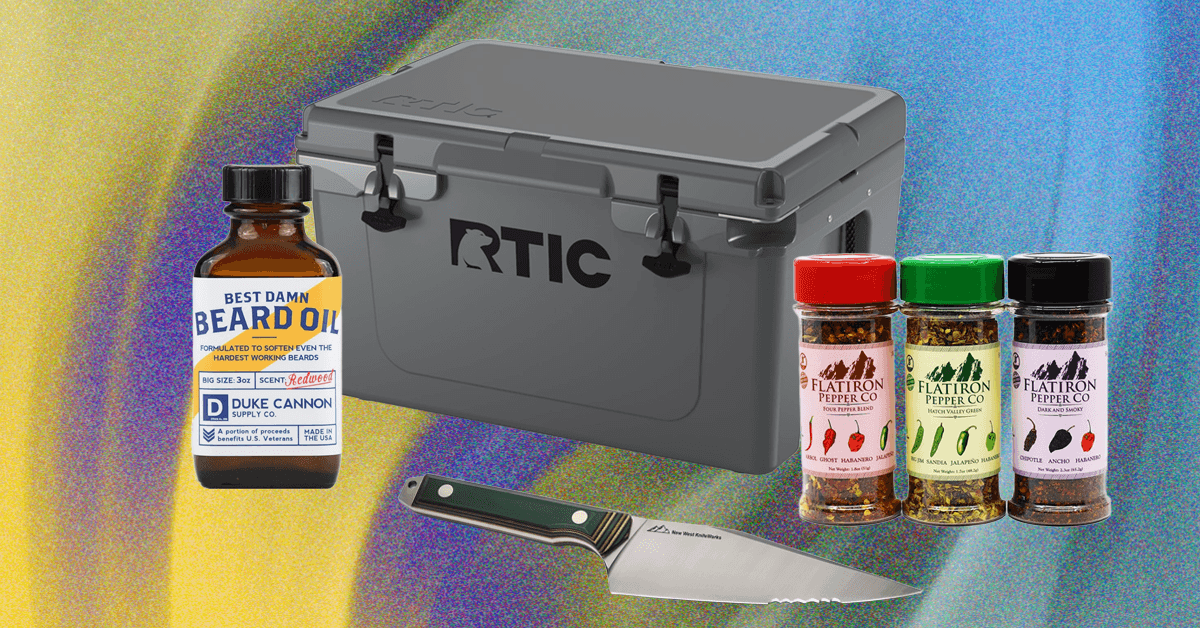
When you need something that’s as mannishly masculinized as you can get for the Man™ in your life, we have you covered.
Source link













Since the middle of last year, there have been at least three major AI “acqui-hires” in Silicon Valley. Meta invested more than $14 billion in Scale AI and brought on its CEO, Alexandr Wang; Google spent a cool $2.4 billion to license Windsurf’s technology and fold its cofounders and research teams into DeepMind; and Nvidia wagered $20 billion on Groq’s inference technology and hired its CEO and other staffers.
The frontier AI labs, meanwhile, have been playing a high stakes and seemingly never-ending game of talent musical chairs. The latest reshuffle began three weeks ago, when OpenAI announced it was rehiring several researchers who had departed less than two years earlier to join Mira Murati’s startup, Thinking Machines. At the same time, Anthropic, which was itself founded by former OpenAI staffers, has been poaching talent from the ChatGPT maker. OpenAI, in turn, just hired a former Anthropic safety researcher to be its “head of preparedness.”
The hiring churn happening in Silicon Valley represents the “great unbundling” of the tech startup, as Dave Munichiello, an investor at GV, put it. In earlier eras, tech founders and their first employees often stayed onboard until either the lights went out or there was a major liquidity event. But in today’s market, where generative AI startups are growing rapidly, equipped with plenty of capital, and prized especially for the strength of their research talent, “you invest in a startup knowing it could be broken up,” Munichiello told me.
Early founders and researchers at the buzziest AI startups are bouncing around to different companies for a range of reasons. A big incentive for many, of course, is money. Last year Meta was reportedly offering top AI researchers compensation packages in the tens or hundreds of millions of dollars, offering them not just access to cutting-edge computing resources but also … generational wealth.
But it’s not all about getting rich. Broader cultural shifts that rocked the tech industry in recent years have made some workers worried about committing to one company or institution for too long, says Sayash Kapoor, a computer science researcher at Princeton University and a senior fellow at Mozilla. Employers used to safely assume that workers would stay at least until the four-year mark when their stock options were typically scheduled to vest. In the high-minded era of the 2000s and 2010s, plenty of early cofounders and employees also sincerely believed in the stated missions of their companies and wanted to be there to help achieve them.
Now, Kapoor says, “people understand the limitations of the institutions they’re working in, and founders are more pragmatic.” The founders of Windsurf, for example, may have calculated their impact could be larger at a place like Google that has lots of resources, Kapoor says. He adds that a similar shift is happening within academia. Over the past five years, Kapoor says, he’s seen more PhD researchers leave their computer-science doctoral programs to take jobs in industry. There are higher opportunity costs associated with staying in one place at a time when AI innovation is rapidly accelerating, he says.
Investors, wary of becoming collateral damage in the AI talent wars, are taking steps to protect themselves. Max Gazor, the founder of Striker Venture Partners, says his team is vetting founding teams “for chemistry and cohesion more than ever.” Gazor says it’s also increasingly common for deals to include “protective provisions that require board consent for material IP licensing or similar scenarios.”
Gazor notes that some of the biggest acqui-hire deals that have happened recently involved startups founded long before the current generative AI boom. Scale AI, for example, was founded in 2016, a time when the kind of deal Wang negotiated with Meta would have been unfathomable to many. Now, however, these potential outcomes might be considered in early term sheets and “constructively managed,” Gazor explains.

The face-recognition app Mobile Fortify, now used by United States immigration agents in towns and cities across the US, is not designed to reliably identify people in the streets and was deployed without the scrutiny that has historically governed the rollout of technologies that impact people’s privacy, according to records reviewed by WIRED.
The Department of Homeland Security launched Mobile Fortify in the spring of 2025 to “determine or verify” the identities of individuals stopped or detained by DHS officers during federal operations, records show. DHS explicitly linked the rollout to an executive order, signed by President Donald Trump on his first day in office, which called for a “total and efficient” crackdown on undocumented immigrants through the use of expedited removals, expanded detention, and funding pressure on states, among other tactics.
Despite DHS repeatedly framing Mobile Fortify as a tool for identifying people through facial recognition, however, the app does not actually “verify” the identities of people stopped by federal immigration agents—a well-known limitation of the technology and a function of how Mobile Fortify is designed and used.
“Every manufacturer of this technology, every police department with a policy makes very clear that face recognition technology is not capable of providing a positive identification, that it makes mistakes, and that it’s only for generating leads,” says Nathan Wessler, deputy director of the American Civil Liberties Union’s Speech, Privacy, and Technology Project.
Records reviewed by WIRED also show that DHS’s hasty approval of Fortify last May was enabled by dismantling centralized privacy reviews and quietly removing department-wide limits on facial recognition—changes overseen by a former Heritage Foundation lawyer and Project 2025 contributor, who now serves in a senior DHS privacy role.
DHS—which has declined to detail the methods and tools that agents are using, despite repeated calls from oversight officials and nonprofit privacy watchdogs—has used Mobile Fortify to scan the faces not only of “targeted individuals,” but also people later confirmed to be US citizens and others who were observing or protesting enforcement activity.
Reporting has documented federal agents telling citizens they were being recorded with facial recognition and that their faces would be added to a database without consent. Other accounts describe agents treating accent, perceived ethnicity, or skin color as a basis to escalate encounters—then using face scanning as the next step once a stop is underway. Together, the cases illustrate a broader shift in DHS enforcement toward low-level street encounters followed by biometric capture like face scans, with limited transparency around the tool’s operation and use.
Fortify’s technology mobilizes facial capture hundreds of miles from the US border, allowing DHS to generate nonconsensual face prints of people who, “it is conceivable,” DHS’s Privacy Office says, are “US citizens or lawful permanent residents.” As with the circumstances surrounding its deployment to agents with Customs and Border Protection and Immigration and Customs Enforcement, Fortify’s functionality is visible mainly today through court filings and sworn agent testimony.
In a federal lawsuit this month, attorneys for the State of Illinois and the City of Chicago said the app had been used “in the field over 100,000 times” since launch.
In Oregon testimony last year, an agent said two photos of a woman in custody taken with his face-recognition app produced different identities. The woman was handcuffed and looking downward, the agent said, prompting him to physically reposition her to obtain the first image. The movement, he testified, caused her to yelp in pain. The app returned a name and photo of a woman named Maria; a match that the agent rated “a maybe.”
Agents called out the name, “Maria, Maria,” to gauge her reaction. When she failed to respond, they took another photo. The agent testified the second result was “possible,” but added, “I don’t know.” Asked what supported probable cause, the agent cited the woman speaking Spanish, her presence with others who appeared to be noncitizens, and a “possible match” via facial recognition. The agent testified that the app did not indicate how confident the system was in a match. “It’s just an image, your honor. You have to look at the eyes and the nose and the mouth and the lips.”

Love is in the air, and the WIRED Reviews team has been hard at work finding all sorts of Valentine’s Day deals. From sexy gifts for lovers to date night boxes to sex toys, we’ve got plenty of hand-tested recommendations, and many of them are on sale right now. If you’re still shopping for a gift, you can get yourself or your lover(s) something we recommend at a discount. Just keep in mind that you’ll want to shop sooner than later if you need the items to arrive before February 14.
Be sure to check out our related buying guides, including the Best Valentine’s Day Gifts and the Best Chocolate Delivery Boxes.
The Adventure Challenge Couples Edition for $38 ($7 off)
This is one of our favorite date night boxes, and it also makes an excellent Valentine’s Day gift. Clip the coupon on the Amazon page to get it for $30. It has 50 different scratch-off date ideas. There are symbols indicating the budget needed, whether you’ll need a babysitter, how much time it takes, and other date parameters, but the specific date itself is hidden until you reveal it like a scratch-off lottery ticket. If you’re running low on date ideas or just want some fun (and sometimes cheesy) spontaneity, this book is worth checking out—especially on sale.
We-Vibe Sync 2 for $135 ($34 off)

This is an excellent sex toy for long-distance couples, but you don’t have to be far apart geographically in order to enjoy it with your partner. The Sync 2 can be worn by someone with a vulva, either solo or during penetrative sex, and someone else controls the device using the remote control. It’s quiet and powerful, and its dual stimulation makes it approachable and fun for experienced couples as well as those who are new to using sex toys together.


The White House is launching direct-to-consumer drug site Trump Rx. Here’s what to know

SEC distributing more than $1B to its schools for 2024-25

Bad Bunny says 2026 Super Bowl halftime show will “be a huge party”

-
 Business1 week ago
PSX witnesses 6,000-point on Middle East tensions | The Express Tribune
-

 Tech1 week ago
The Surface Laptop Is $400 Off
-

 Tech1 week ago
Here’s the Company That Sold DHS ICE’s Notorious Face Recognition App
-
 Business1 week ago
Budget 2026: Defence, critical minerals and infra may get major boost
-

 Tech4 days ago
How to Watch the 2026 Winter Olympics
-

 Tech6 days ago
Right-Wing Gun Enthusiasts and Extremists Are Working Overtime to Justify Alex Pretti’s Killing
-

 Fashion6 days ago
Italy’s Brunello Cucinelli debuts Callimacus AI e-commerce experience
-
 Business6 days ago
Video: Who Is Trump’s New Fed Chair Pick?