

Sports
Zaman, Abrar power Pakistan into T20 tri-series final | The Express Tribune

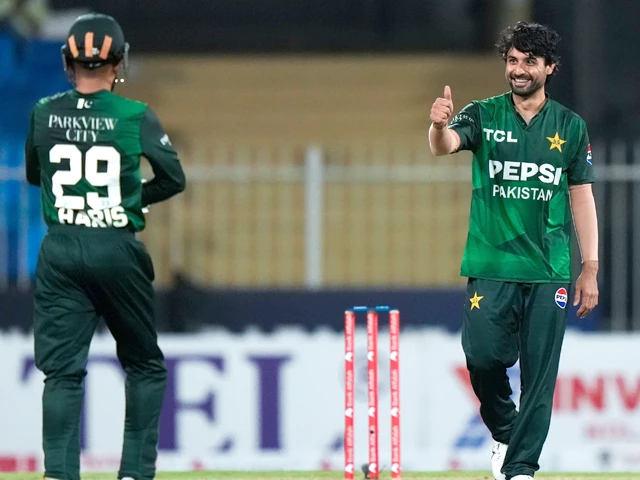
Fakhar Zaman cracked a robust 77 and spinner Abrar Ahmed registered career-best figures as Pakistan reached the T20I tri-series final with a 31-run win over United Arab Emirates on Thursday.
Zaman hit an aggressive 44-ball 77 not out for his 12th T20I half century while Mohammad Nawaz smashed an undefeated 27-ball 37 to revive Pakistan from 80-5 Pakistan to 171-5 in their 20 overs.
Abrar then grabbed 4-9 in four economical overs to restrict UAE to 140-7 with opener Alishan Sharafu fighting a lone hand, scoring a steady 51-ball 68. Sharafu hit four sixes and as many fours.
The win, Pakistan’s third in four games, not only took Pakistan to Sunday’s final but also ensured Afghanistan who face the hosts in the last group on Friday, would advance.
UAE’s power-hitters Muhammad Waseem fell for 19 and Asif Khan for seven as UAE suffered their third defeat in as many games.
Abrar’s previous best of 3-19 came against Bangladesh in Lahore earlier this year.
Earlier, Pakistan lost five wickets for just 80 runs in 11.3 overs after they won the toss and batted.
Openers Saim Ayub scored 11 and Sahibzada Farhan made 16. Skipper Salman Agha hit seven, Mohammad Haris 14 and Hasan Nawaz four.
Zaman and Nawaz added 91 off 51 balls for the sixth wicket to put the innings back on track.
It was Zaman’s first half century in 14 innings since a match against Ireland at Dublin in May last year.
Zaman’s knock contained two sixes and ten fours. Nawaz hit two sixes and three fours.
The pair launched vicious late attack, with 74 coming off the last five overs and 42 off the last two.
Nawaz smashed three fours and a six in Junaid Siddique’s penultimate over while Zaman cracked five consecutive boundaries off Muhammad Jawadullah’s last over.
Spinner Haider Ali was the most successful home bowler with 2-17.











Sports
PSL matches to go ahead without spectators under govt’s austerity drive amid regional crisis: Naqvi

LAHORE: Pakistan Cricket Board (PCB) Chairman Mohsin Naqvi, in a major announcement on Sunday, said that the much-awaited Pakistan Super League (PSL) matches will be held without spectators as part of the government’s austerity measures amid ongoing regional crisis.
Addressing a press conference in Lahore, Naqvi said the tournament will be limited to two venues, Karachi and Lahore. He added that the decision aims to reduce public movement.
This is a developing story and will be updated with more information.
NEWYou can now listen to Fox News articles!
No. 12 High Point put everyone on notice for the second time in as many games this March Madness, but could not find the same success.
After advancing to the Round of 32 following an upset victory over No. 5 Wisconsin, the Panthers’ season ended after No. 4 Arkansas ran away from them late Saturday night.
High Point led by as many as five early in the game, and they were up 56-52 with 14:17 to go after going on a 12-2 run.
Both teams exchanged buckets for several minutes, with no one expanding their respective leads by more than three points for a little while.
CLICK HERE FOR MORE SPORTS COVERAGE ON FOXNEWS.COM
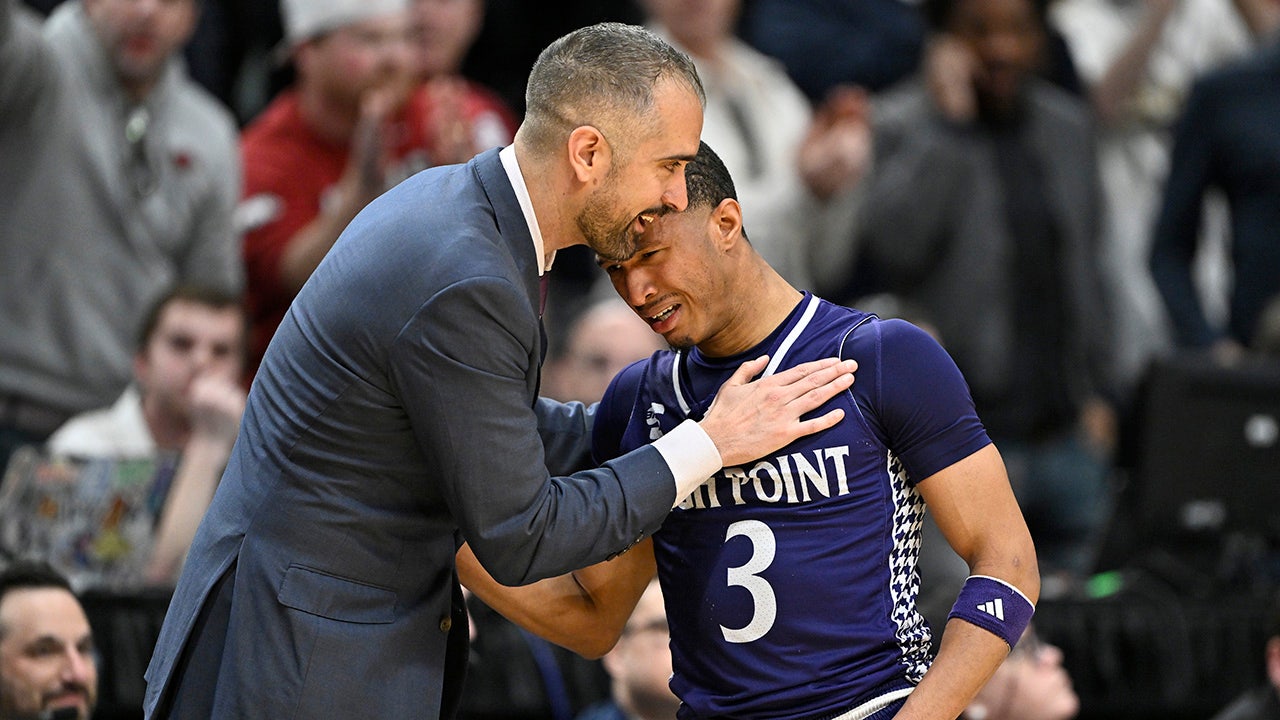
High Point Panthers head coach Flynn Clayman and guard Rob Martin (3) react in the second half against the Arkansas Razorbacks during a second round game of the men’s 2026 NCAA Tournament at Moda Center. (Craig Strobeck/Imagn Images)
With 7:04 to play, the Panthers took a 72-71 lead, to which the Razorbacks responded with a 10-2 run, putting them up by seven and giving them their largest lead of the night.
The game was then quickly tied at 83 after a wild run by High Point, but over the final 3:19, Arkansas outscored High Point, 11-5, to snatch the victory, despite a valiant effort from the Panthers.
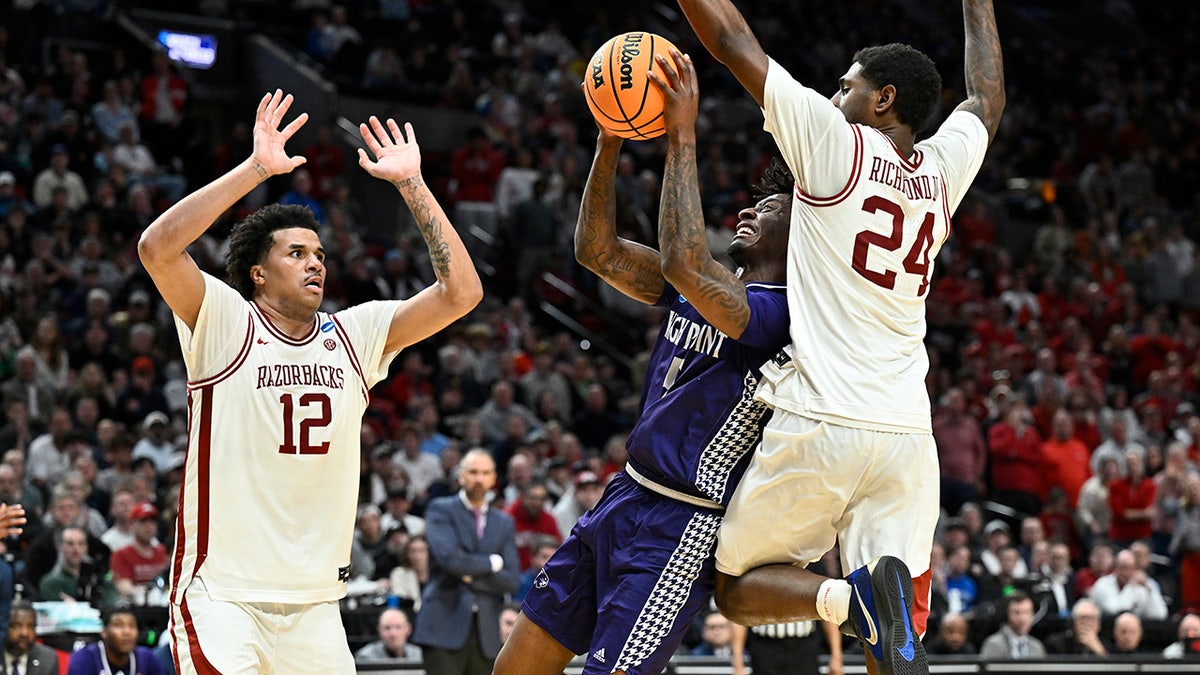
High Point Panthers forward Terry Anderson (5) drives against Arkansas Razorbacks forward Malique Ewin (12) and forward Billy Richmond III (24) in the second half during a second round game of the men’s 2026 NCAA Tournament at Moda Center. (Craig Strobeck/Imagn Images)
Arkansas was favored by 11.5, and while they couldn’t cover, it was another Sweet 16 appearance for legendary head coach John Calipari.
Two Panthers, Rob Martin (30) and Cam’Ron Fletcher (25), combined for 55 points, but Darius Acuff Jr. of Arkansas trumped everyone by dropping 36.
Arkansas will face the winner of No. 1 Arizona and No. 9 Utah State in the Sweet 16.
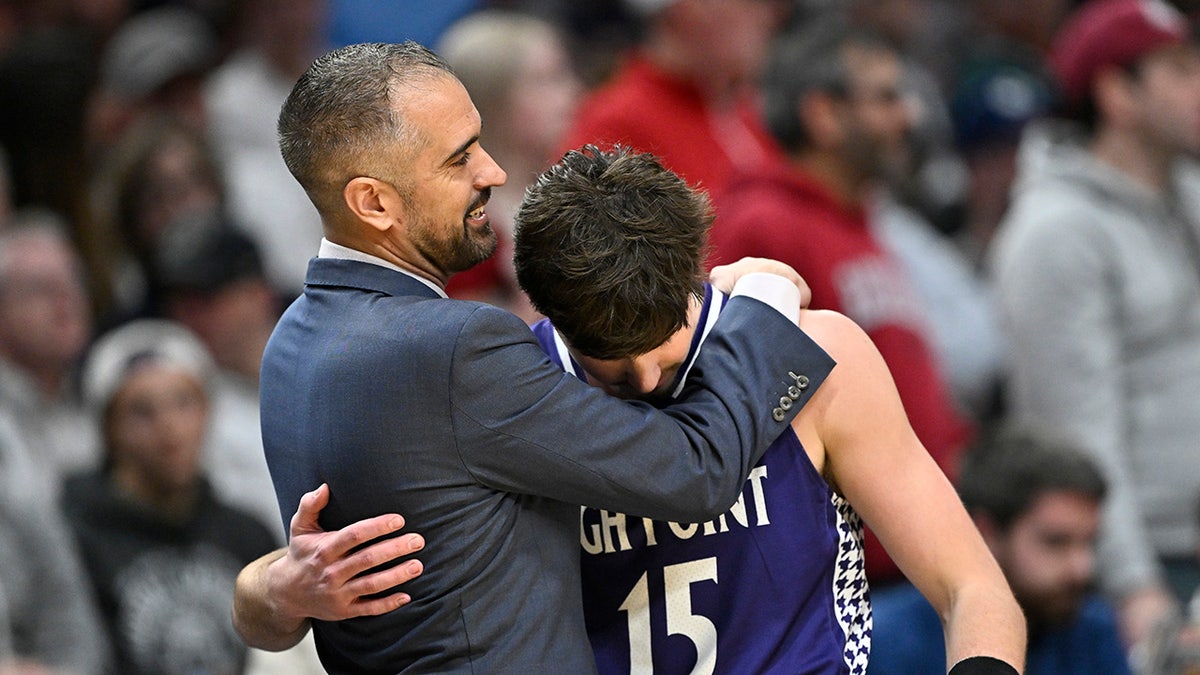
High Point Panthers head coach Flynn Clayman and forward Braden Hausen (15) react in the second half against the Arkansas Razorbacks during a second round game of the men’s 2026 NCAA Tournament at Moda Center. (Craig Strobeck/Imagn Images)
CLICK HERE TO GET THE FOX NEWS APP
High Point’s victory over Wisconsin on Thursday marked their first ever in March Madness after making the tournament last year for the first time.
Follow Fox News Digital’s sports coverage on X, and subscribe to the Fox News Sports Huddle newsletter
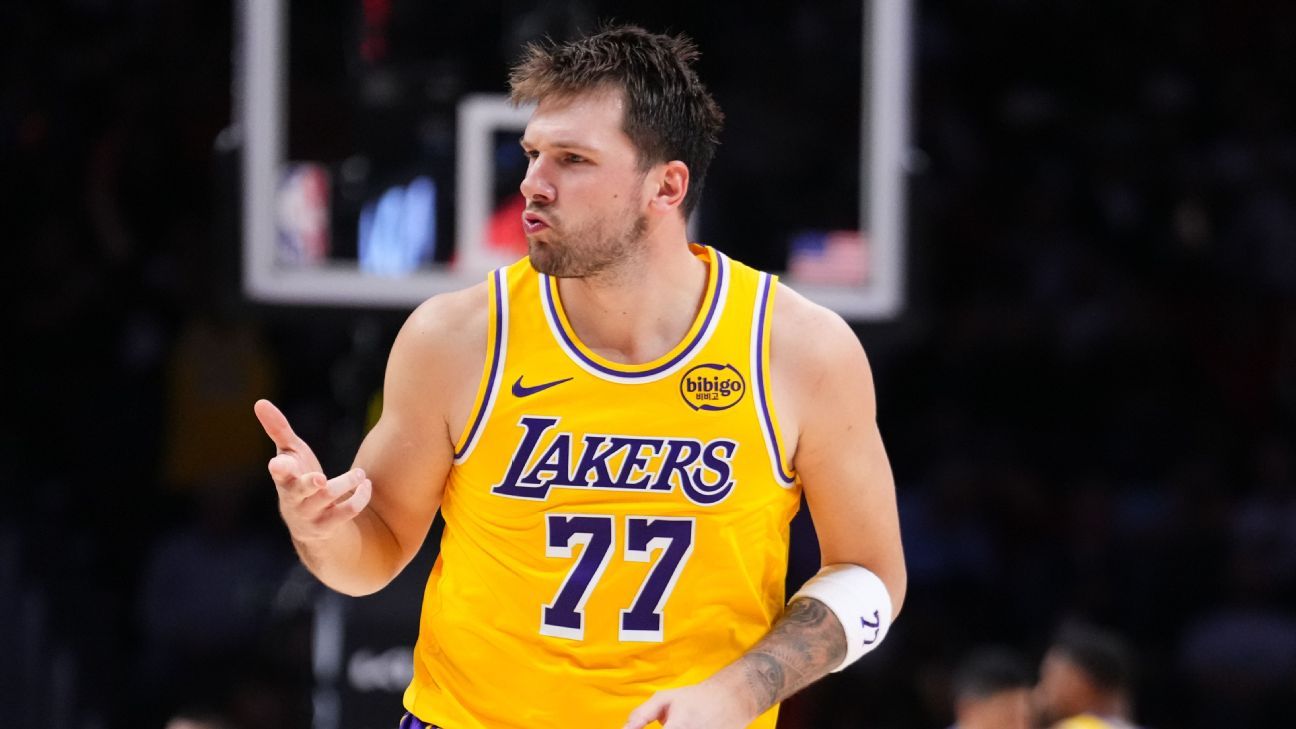
Luka Doncic is on fire, Daniss Jenkins has a great opportunity and Ayo Dosunmu is rockin’ for the Minnesota Timberwolves. Meanwhile, Giannis Antetokounmpo and the Milwaukee Bucks have different visions, Aaron Gordon is prepping for the playoffs and Mikal Bridges isn’t doing much right now.
With only three weeks left in the NBA’s regular season, enjoy the final Risers and Fallers column of the season. It’s been my pleasure!
Resources: Rankings | Adds/Drops | Scoring leaders | Player Rater | Mock draft lobby | Depth charts | Schedule | Injuries
Risers
2:32
Stephen A. makes case for Luka Doncic to win NBA MVP
Stephen A. Smith explains why Luka Doncic is “a top candidate” for MVP this season.
Luka Doncic, PG, Los Angeles Lakers (100% rostered in ESPN leagues)
Doncic has been on an historic eight-game run and capped it off with a 60-point bonanza in a win over Miami on Thursday night, the Lakers’ 11th win in their last 12 games. Doncic has averaged 50 points over the last two days/games and has scored at least 30 points in eight straight, all of which were Lakers wins.
The fact that he averaged 50 points in a back-to-back set in March is mind blowing and he had averaged 34.9 points, 9.0 rebounds, 7.9 assists and 5.0 3-pointers for the month going into Thursday’s game. He then hit nine 3-pointers and had five steals in that one, and is carrying fantasy teams right now.
He’s the first Laker to score 60 since Kobe Bryant did it in the “Mamba Out” game and his fantasy managers have been on easy street during the run. The only question left in fantasy is, did he peak too early? Unfortunately, the answer is probably ‘yes,’ as the fantasy playoffs are just getting ready to start for most of us. The good news is that the Lakers are going to keep trying to hang onto third-place in the West so Luka should keep putting up stellar numbers through the end of the season. And if he keeps playing like this he might end up with some MVP hardware, while his fantasy managers might end up with some hardware of their own.
Daniss Jenkins, PG, Detroit Pistons (21.0% rostered)
Cade Cunningham left Tuesday’s game after just five minutes with what was originally reported as back spams, but it turned out to be a serious injury in the form of a collapsed lung. He’ll be re-evaluated in two weeks, which is some of the worst fantasy news I’ve heard this season.
Jenkins stepped in for Cunningham on Tuesday and finished with 15 points and seven assists in 21 minutes, and then got the start on Thursday. Unfortunately, he hit just 3-of-16 shots to finish with nine points and five dimes in a win over Washington. But the good news is that he started, played 34 minutes, took more shots than anyone else on his team and even had a block.
Jenkins, who has played well when given an opportunity this season, was likely grabbed in 12-team leagues as soon as the Cunningham news broke thanks to his potential to help in most categories, including steals, blocks and threes. But regardless of what size league you play in, go check and make sure he’s not still available. He’s about to go on a two-week tear, if not longer.
Ayo Dosunmu, SG, Minnesota Timberwolves (33.0% rostered)
Dosunmu is going to get a huge opportunity due to Anthony Edwards‘ right knee inflammation, which will cause him to miss one-to-two weeks. Dosunmu has already played two games without Edwards and he’s been stellar, to the tune of 21 points, 7.0 rebounds, 4.0 assists, 1.5 steals and 2.0 3-pointers in two wins for the Wolves.
Dosunmu gets a bad rap in fantasy circles thanks to a lack of steals, blocks and 3-pointers and much of it is deserved, but he did have three steals on Thursday night and he should get about 34 minutes per game for the next two weeks.
Flip a coin as to whether he or Jenkins is the better pickup right now.
Fallers
1:32
Shams reveals latest on Giannis’ back-and-forth with Bucks
The ‘Get Up’ crew discusses the tension between Giannis Antetokounmpo and the Bucks over shutting him down for the rest of the season.
Giannis Antetokounmpo, PF/C, Milwaukee Bucks (98.3% rostered)
ESPN’s Shams Charania reported on Thursday that the Bucks and Antetokounmpo are in disagreement over whether or not he should play again this season. To his credit, Antetokounmpo wants to play, despite a current hyperextended knee. The reality is that while the Bucks have yet to be mathematically eliminated, they’re not going to make the playoffs … and Antetokounmpo is not healthy.
Even if he comes back to play this season, how many minutes are the Bucks going to be willing to give their franchise player in meaningless games? And what kind of damage will this impasse do to his relationship and future with the franchise? My guess is the team will get its way in the end and I’ll put Antetokounmpo’s over/under for games played the rest of the season at 2.5.
With those kinds of odds, I’m afraid he probably belongs on the waiver wire, assuming you don’t have an injured reserve spot available on your roster. Hold Antetokounmpo for as long as you can, but if you need to drop him to make the playoffs — or to win in the playoffs — it makes sense.
Bobby Portis (55.9% rostered) has been playing very well for the Bucks of late, while Ousmane Dieng (1.8% rostered) should be widely available and have a big opportunity for the final few weeks of the season.
Mikal Bridges, SG/SF, New York Knicks (96.0% rostered)
The Knicks are sitting comfortably in third place in the East and are 7-3 over their last 10 games. And while they haven’t played much competition, they did have a big win at Denver on March 6. But the Knicks’ player not getting much attention on SportsCenter, or anywhere else right now, is Bridges.
Over his last seven games Bridges is averaging just 7.0 points, 1.0 3-pointers, 0.7 steals and 1.3 blocks while shooting a dreadful 32% from the floor. Most of his fantasy appeal comes from his efficiency and ability to steal, block and hit 3-pointers, but it just isn’t happening for him right now. And with Jalen Brunson, Josh Hart, OG Anunoby and Karl-Anthony Towns doing all the heavy lifting for the Knicks, I don’t see it changing any time soon.
Bridges still has some fantasy appeal, but it’s crunch time in fantasy right now, and tough decisions are in order. If your team with Bridges on it is struggling, or if you’re in a field goal percentage battle, dropping Bridges isn’t a crazy idea. He’ll break out of the funk at some point, but the fact remains he’s going to likely be the fifth offensive option in New York the rest of the way.
Aaron Gordon, PF, Denver Nuggets (71.1% rostered)
Gordon is playing for the Nuggets again after a hamstring injury but Peyton Watson (hamstring) should be back any day now. That’s going to leave the Nuggets crowded up front with Gordon, Watson and Spencer Jones all needing minutes, not to mention Christian Braun, Bruce Brown and Tim Hardaway Jr. And the only thing the Nuggets should really care about is having Gordon healthy for the playoffs.
Gordon is struggling over his last five games, averaging just 13 points and 5.4 rebounds on 42% shooting. Meanwhile, Watson was playing at a pretty high level when he went down with his injury. I expect Gordon and Watson to be in a timeshare, at best, over the final few weeks of the season and I can envision Gordon’s minutes being monitored closely in hopes of having him 100% for the start of the playoffs.
Gordon is more important to the Nuggets than he is to your fantasy team and it makes sense for managers to look for a potential “silly-season” hero with upside for their playoff run. I would drop Gordon to pick up Jenkins, for example.


PSL matches to go ahead without spectators under govt’s austerity drive amid regional crisis: Naqvi

Journalist points out major flaws in new scathing Prince Harry, Meghan book

Muslims celebrate Eid ul Fitr with joy, togetherness across the globe

Chinese firm to invest $15.34 million in garment factory at BEPZA

Tips and Advice for Buying Used or Refurbished Electronics

UAE savings strategies 2026 explained: Best apps, tools, budget rules and smart money hacks to beat rising cost of living in emirates – The Times of India

-
 Fashion1 week ago
Chinese firm to invest $15.34 million in garment factory at BEPZA
-
 Tech1 week ago
Tips and Advice for Buying Used or Refurbished Electronics
-
Business1 week ago
UAE savings strategies 2026 explained: Best apps, tools, budget rules and smart money hacks to beat rising cost of living in emirates – The Times of India
-

 Politics1 week ago
Iran threatens US-linked oil facilities after Kharg Island bombed
-

 Entertainment7 days ago
Strategic oil stocks to be released ‘immediately’ in Asia and Oceania: IEA
-

 Sports1 week ago
College Basketball Invitational abruptly cancels 2026 tournament
-

 Sports1 week ago
Japan suffers shocking collapse to Venezuela in World Baseball Classic
-

 Sports7 days ago
Transfer rumors, news: Real Madrid open to Camavinga exit, as Premier League clubs circle