

Business
$175-Million Scam: How This 28-Year-Old Woman Fooled The World’s Biggest Bank


Last Updated:
A Forbes ’30 Under 30′ entrepreneur sold a startup on the promise of millions of users, until investigators said much of the data was fake, triggering a major fraud scandal



The bank launched an internal probe, which concluded that the user database supplied during the acquisition process had been largely fabricated.
In 2021, amid the gleaming towers of the global financial capital, a blockbuster business deal was quietly taking shape. On one side was 28-year-old entrepreneur Charlie Javice, founder of a college-aid startup named Frank. On the other was JPMorgan Chase, the world’s largest bank, eager to tap into a new generation of young customers.
The bank believed it had discovered a rising star. Javice claimed her platform was simplifying the complex process of applying for US federal student aid and had already attracted more than 42 lakh users. Convinced by the numbers and the promise of instant access to millions of potential future customers, JPMorgan agreed to acquire Frank for $175 million (roughly Rs 1,400 crore).
Javice’s credentials only strengthened the bank’s confidence. Raised in an affluent New York neighbourhood and educated at the prestigious Wharton School, she was widely profiled as a visionary young founder. She had already been featured on Forbes’ “30 Under 30″ list, celebrated as a champion of students struggling with tuition costs.
But beneath the glossy image, Frank was reportedly not performing at the level Javice projected. According to later investigations, the user base she claimed simply did not exist.
When JPMorgan sought verification of the 42 lakh users, Javice allegedly turned to a data science professor and commissioned a synthetic database containing millions of fabricated names, email addresses and birth dates. Investigators say this falsified data was then presented to the bank as genuine.
The acquisition went through, and Javice received a senior role and significant financial benefits as part of the deal. However, doubts surfaced soon after. When JPMorgan’s marketing team emailed what they believed were Frank’s millions of users, only about 1% of recipients engaged. A vast majority of the messages reportedly bounced back, indicating that the accounts were non-existent.
The bank launched an internal probe, which concluded that the user database supplied during the acquisition process had been largely fabricated. JPMorgan subsequently terminated Javice’s employment and filed a lawsuit, accusing her of fraud and misleading the bank.
Javice denied wrongdoing and countersued, alleging the bank was attempting to avoid contractual payments. The dispute quickly escalated into a global headline-maker, casting a harsh spotlight on the pressures and ethical lapses within the startup ecosystem.
The case has fuelled debate around the “fake it till you make it” culture that often rewards hype over fundamentals. Prosecutors allege that in the pursuit of rapid success and investor confidence, basic trust between companies, investors and the public was compromised.
Javice now faces multiple fraud-related charges in US courts. If convicted, she could face significant prison time.
 Click here to add News18 as your preferred news source on Google.
January 07, 2026, 19:32 IST
Read More
Business
Ajit Jain: Warren Buffett’s trusted executive Ajit Jain buys apartment in Gurugram for Rs 85 crore – The Times of India
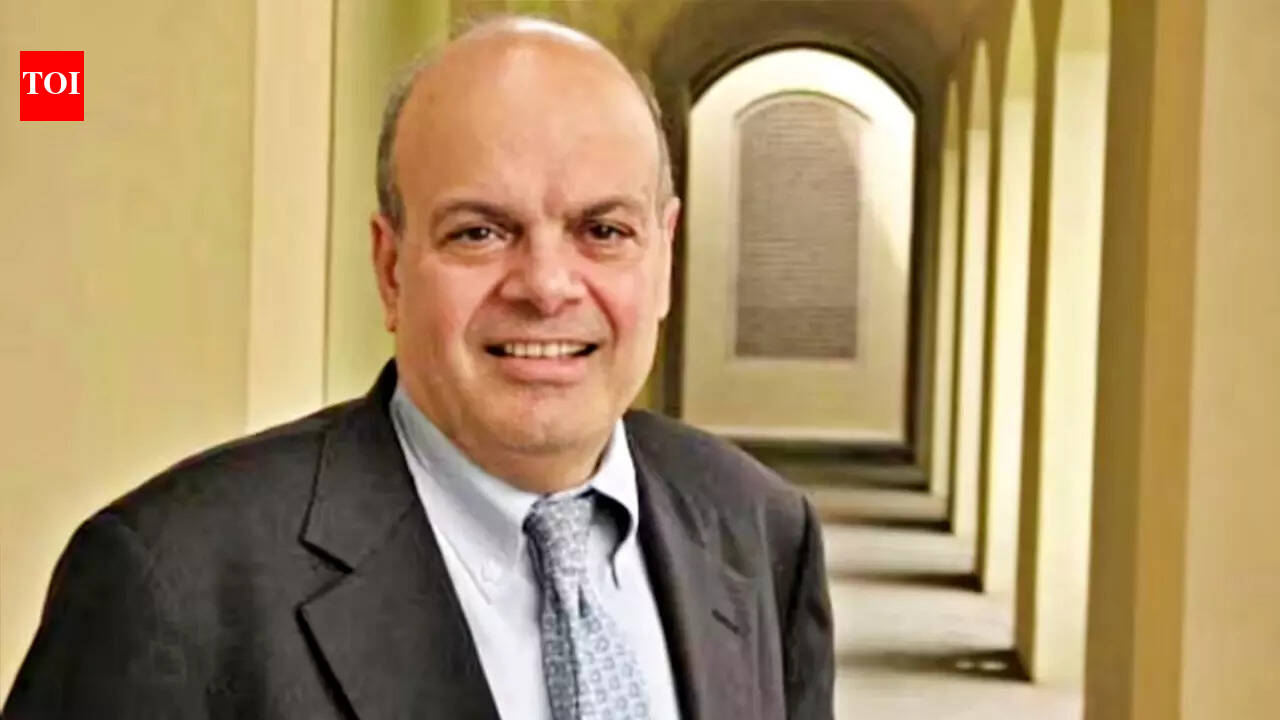
A 7,400 sq ft apartment at DLF The Camellias in Gurugram has been purchased by Berkshire Hathaway’s Ajit Jain. The vice-chairman overseeing insurance operations at Berkshire Hathaway, Ajit Jain, is regarded as one of Warren Buffett’s most trusted associates. The apartment has been bought for around Rs 85 crore, according to sources quoted in an ET report.Jain, who has spent most of his time living abroad, recently visited Delhi to complete the deal, the sources said. One person aware of the development said non-resident Indians account for more than 25% of DLF’s ultra-luxury housing portfolio, and Jain is among the most prominent buyers in this segment. The individual added that premium amenities offered at such developments are a major attraction for those who plan to spend only part of the year in India. Jain is widely considered one of the most influential Indian-origin business leaders in the United States.Property consultants noted that since the Covid period, ultra-high-net-worth individuals have increasingly favoured secure, gated condominium projects over independent bungalows, as such residences provide access to a wide range of on-site facilities.ET recently reported that an industrialist purchased four apartments at DLF’s new ultra-luxury project, The Dahlias, for close to Rs 380 crore, making it one of the country’s most expensive apartment transactions.In 2025, Gurugram saw the costliest property deal in the National Capital Region, overtaking Lutyens’ Delhi for the first time. Prices per square foot in the city have surpassed those in Mumbai and reached levels comparable with London and Dubai. Earlier, British entrepreneur Sukhpal Singh Ahluwalia had acquired an 11,416 sq ft apartment in the same project for Rs 100 crore.Info-x Software Technology, through its director Rishi Parti, had also purchased a 16,000 sq ft penthouse for Rs 190 crore.In October 2023, ET reported the first Rs 100-crore transaction at the same residential complex on Gurugram’s Golf Course Road.

A Lowe’s store in Concord, California, US, on Monday, Nov. 17, 2025.
David Paul Morris | Bloomberg | Getty Images
Lowe’s topped Wall Street’s quarterly revenue and earnings expectations on Wednesday, as the retailer’s sales grew more than 10% year over year.
The home improvement company said it expects total sales for the full current fiscal year to range between $92 billion and $94 billion, which would be a roughly 7% to 9% increase over the prior year. It said it projects adjusted earnings per share to be between $12.25 and $12.75 for the full year. Lowe’s said it expects comparable sales, a metric that takes out one-time factors, to be approximately flat to up 2%.
In a news release, CEO Marvin Ellison said the company’s strategy is resonating with its do-it-yourself customers and home professionals, even as higher mortgage rates and slower real estate sales challenge its industry.
“While the housing macro remains pressured, we are focused on directing what is within our control, which includes our ongoing productivity initiatives,” he said. “We remain confident that we are well-positioned to take share regardless of the macro environment.”
Shares of Lowe’s fell in premarket trading as the company’s earnings per share projections for the year fell short of analysts’ consensus expectations of $12.95, according to LSEG.
Here’s what Lowe’s reported for the fiscal fourth quarter compared with Wall Street’s estimates, according to a survey of analysts by LSEG:
- Earnings per share: $1.98 adjusted vs. $1.94 expected
- Revenue: $20.58 billion vs. $20.34 billion expected
Lowe’s net income for the three-month period that ended Jan. 30 dropped to $999 million, or $1.78 per share, from $1.13 billion, or $1.99 per share, in the year-ago quarter. Excluding one-time factors, including expenses associated with recent acquisitions, Lowe’s reported adjusted earnings per share of $1.98.
Revenue rose from $18.55 billion in the year-ago period.
Comparable sales for the quarter climbed 1.3%, higher than the 0.2% that analysts were expecting, according to StreetAccount. The company said in a news release that growth was driven by its gains with home professionals, online sales and home services, along with a strong holiday season.
Its competitor, Home Depot, on Tuesday beat Wall Street’s earnings and revenue expectations, but stuck by conservative full-year guidance. Its quarterly results reflected that home improvement demand remains tepid, as U.S. consumers continue to put off big projects because of high borrowing costs and housing prices as well as economic concerns.
Like Home Depot, Lowe’s has felt pinched by a tougher backdrop for the industry. Both have acquired companies that cater to contractors and other professionals, which tend to be a steadier source of business.
Last year, Lowe’s acquired Foundation Building Materials, a distributor of drywall, insulation and other interior building products for large residential and commercial professionals, for about $8.8 billion. It also bought Artisan Design Group, which provides design services and installation of flooring, cabinets and countertops for homebuilders and property managers, for about $1.33 billion.
Lowe’s has also made its own moves to reach customers who are delaying home purchases, such as launching a third-party marketplace to expand its mix of merchandise, tapping influencers to raise its visibility on social media and reaching out to young families by relaunching its kids’ program.
As of Tuesday’s close, Lowe’s shares are up nearly 16% year to date, surpassing the S&P 500’s roughly 1% gains during the same period. Its stock has risen about 15% over the past year, almost matching the S&P 500’s approximately 16% gains over that time.
Business
‘Civilisational shift’: TCS CEO K Krithivasan encourages AI adoption even if it ‘cannibalises revenue’ – The Times of India
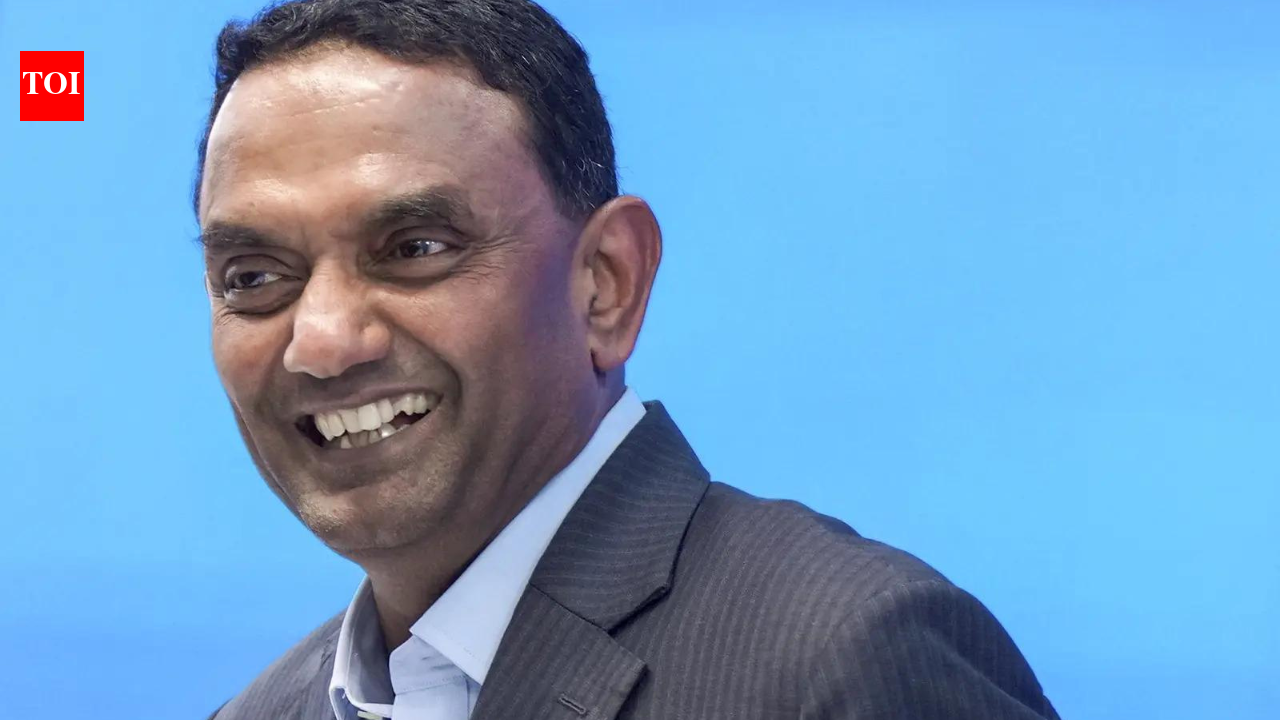
IT giant TCS encourages the use of artificial intelligence by its employees even if it affects their revenue streams, said its CEO, explaining the advantages of the firm’s approach. He described the adoption of AI as a ‘civilisational shift’.Speaking at the annual NTLF event in Mumbai, Managing Director and Chief Executive K Krithivasan said, “”We encourage our associates to go out (to the customers and use AI), even if it means cannibalising our revenues,” adding that the younger staff are faster to use than their senior employees.TCS is ensuring that each of its more than six lakh employees becomes “AI fluent,” Chief Executive Officer K Krithivasan said, emphasising that the company is not “afraid” of artificial intelligence impacting jobs.As part of this push, the company has encouraged associates to actively explore the use of AI in client projects, he said. Krithivasan added that employees are showing strong interest in acquiring AI skills, noting that there has been no need to introduce special incentives to drive adoption.Senior employees often consume large amounts of information but may not always translate that knowledge into practical outcomes, K Krithivasan added, highlighting the need for a more hands-on approach to artificial intelligence.He stressed that AI adoption goes beyond merely issuing prompts on generative AI platforms such as OpenAI’s ChatGPT, noting that employees must actively build solutions using AI tools. “It is not about just giving a few prompts,” he said, adding that staffers need to “get their hands dirty.”Krithivasan described AI as a “civilizational shift,” calling it a form of democratised knowledge capable of addressing problems that have remained unsolved for decades.He observed that AI has increasingly become a board-level priority, with chief information officers being tasked to identify and deploy relevant solutions. While AI is expected to drive productivity gains, he said TCS remains equally focused on delivering tangible benefits to customers through the technology.Addressing concerns around AI governance, Krithivasan said the company is also exploring frameworks where AI systems can help regulate and monitor other AI applications through the use of multiple agents.

Ajit Jain: Warren Buffett’s trusted executive Ajit Jain buys apartment in Gurugram for Rs 85 crore – The Times of India

Minister Piyush Goyal sets quality mantra for $35 trn India by 2047

Taylor Swift fans gush over Travis Kelce’s sweet remarks about future wife

-

 Entertainment1 week ago
Queen Camilla reveals her sister’s connection to Princess Diana
-

 Tech1 week ago
Rakuten Mobile proposal selected for Jaxa space strategy | Computer Weekly
-

 Politics1 week ago
Ramadan moon sighted in Saudi Arabia, other Gulf countries
-

 Entertainment1 week ago
Robert Duvall, known for his roles in "The Godfather" and "Apocalypse Now," dies at 95
-
 Business1 week ago
Tax Saving FD: This Simple Investment Can Help You Earn And Save More
-

 Politics1 week ago
Tarique Rahman Takes Oath as Bangladesh’s Prime Minister Following Decisive BNP Triumph
-

 Tech1 week ago
Businesses may be caught by government proposals to restrict VPN use | Computer Weekly
-

 Fashion1 week ago
Australia’s GDP projected to grow 2.1% in 2026: IMF