

Business
Day 3: Clean Max Enviro Energy IPO Vs Shree Ram Twistex IPO; Know GMP, Subscription And Reviews


Last Updated:
Clean Max Enviro Energy and Shree Ram Twistex IPOs are open for public subscription till 5 pm today; here’s which one looks better.




Clean Max Enviro Energy IPO Vs Shree Ram Twistex IPO.
Two mainboard IPOs — Clean Max Enviro Energy Solutions and Shree Ram Twistex — have been closed today, February 25. The IPOs offer investors a choice between a renewable energy infrastructure play and a textile manufacturing bet. Here’s a comparison based on subscription data, grey market premium (GMP), valuations and broker views.
Subscription Status (Day 3)
On Day 3, Clean Max Enviro Energy IPO was subscribed 0.99 times. QIB demand stood at 2.99x, NII at 0.57x and retail at 0.07x, indicating subdued interest from investors.
Shree Ram Twistex IPO saw overall subscription of 43.66 times. Retail demand was at 76.63x, while QIB participation was 3.94x and NII stood at 220.30x.
Price Band And Issue Size
Clean Max Enviro Energy IPO is a Rs 3,100-crore issue comprising Rs 1,200 crore fresh issue and Rs 1,900 crore offer for sale. The price band is Rs 1,000-Rs 1,053 per share and minimum retail investment is Rs 14,742 for one lot of 14 shares.
Shree Ram Twistex IPO is a much smaller Rs 110.24-crore fresh issue priced at Rs 95-Rs 104 per share. Retail investors need Rs 14,976 to apply for one lot of 144 shares.
Grey Market Premium (GMP)
Clean Max Enviro’s GMP stood at (-)Rs 3, implying an estimated listing price of Rs 1,050, suggesting negative listing.
Shree Ram Twistex GMP was Rs 16.5, indicating an estimated listing price of Rs 120.5, or about 15.87% potential upside.
Both companies will be listed on BSE and NSE on March 2.
Business Positioning
Clean Max is India’s largest commercial and industrial (C&I) renewable energy service provider with roughly 8% market share. Analysts note the segment has a potential market size of about Rs 3 lakh crore as corporates — which consume nearly half of India’s electricity — increasingly shift toward green energy.
Shree Ram Twistex operates in the textile sector as a cotton yarn manufacturer serving B2B markets. Industry estimates suggest India’s textile sector could grow from about $174 billion to $350 billion by 2030, driven by exports, sustainability trends and policy support.
Analysts’ Views
SBI Securities highlighted Clean Max’s capital-efficient model and relatively low leverage, but noted the IPO is valued at EV/EBITDA of about 21.7x (FY25) and 16.3x (annualised 1HFY26).
Aditya Birla Capital said, “At the upper price-band, the issue is valued at 16x EV/Ebitda, which according to us, is expensive,” though it assigned a ‘Subscribe for long-term’ rating citing industry growth visibility.
For Shree Ram Twistex, Swastika Investmart said valuation at around 29-30x P/E already factors in most future growth and advised investors seeking listing gains to avoid the issue. Master Capital Services noted investors may consider it as a long-term opportunity given sector growth prospects.
Use Of Proceeds
Clean Max will use Rs 1,125 crore from fresh proceeds to repay debt, with the remainder for general corporate purposes.
Shree Ram Twistex will deploy proceeds for business expansion and operational requirements as it is entirely a fresh issue.
Which IPO Looks Better?
For listing gains, Shree Ram Twistex currently shows stronger grey market sentiment and investor traction. Clean Max, on the other hand, has stronger QIB participation but muted GMP, suggesting institutional conviction but limited short-term listing pop expectations.
For long-term investors, both issues are being viewed positively but with valuation caution. Clean Max offers exposure to the fast-growing renewable C&I power segment, while Shree Ram Twistex provides a play on India’s expanding textile exports and domestic demand.
Disclaimer:Disclaimer: The views and investment tips shared in this article are for general information purposes only. Readers are advised to consult a certified financial advisor before making any investment decisions.
 Click here to add News18 as your preferred news source on Google.
Follow News18 on Google. Join the fun, play games on News18. Stay updated with all the latest business news, including market trends, stock updates, tax, IPO, banking finance, real estate, savings and investments. To Get in-depth analysis, expert opinions, and real-time updates. Also Download the News18 App to stay updated.
February 25, 2026, 11:52 IST
Read More

Business
Rs 20,000 crore gold, silver rush: What will people buy this Akshaya Tritiya? – The Times of India
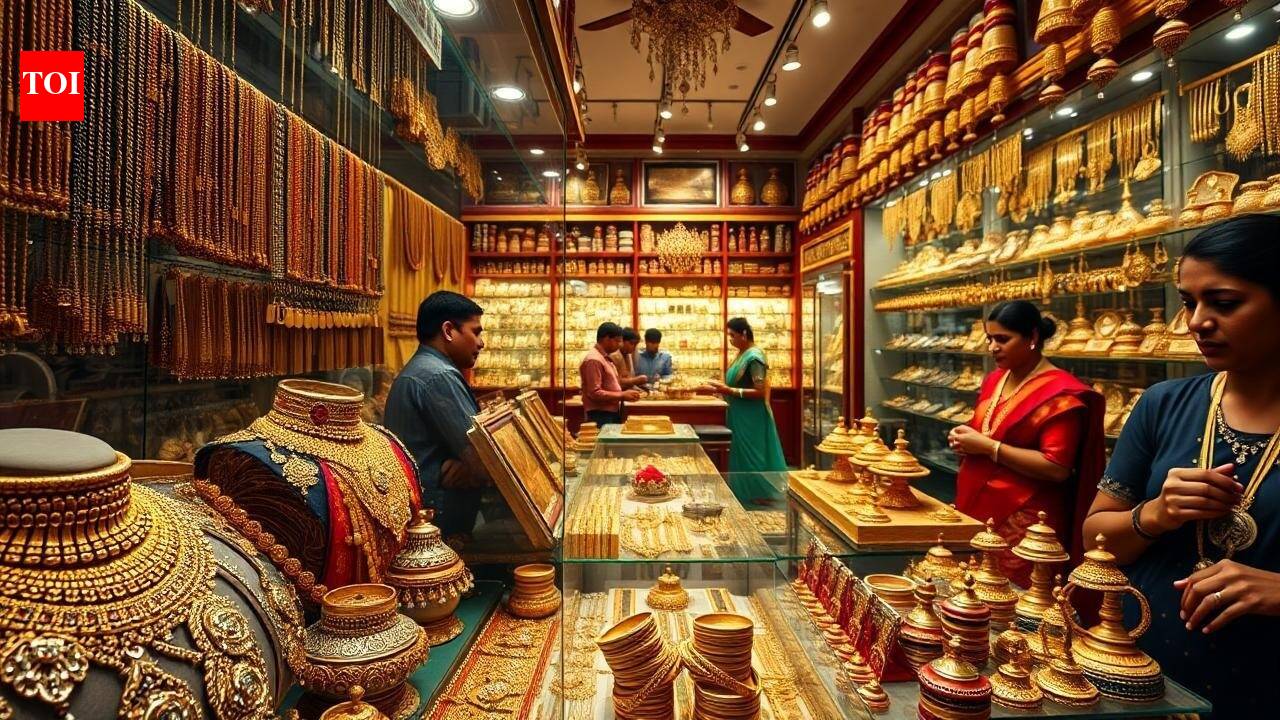
This Akshaya Tritiya, India’s gold and silver markets are heading for bumper purchases, with overall trade likely to cross Rs 20,000 crore even as record-high prices reshape buying patterns. The estimate, shared by the Confederation of All India Traders (CAIT), is higher than last year’s Rs 16,000 crore, signalling growth in value despite a sharp rise in bullion rates.Prices for the yellow metal have surged sharply over the past year, going from Rs 1,00,000 per 10 grams, to Rs 1.58 lakh. Meanwhile, silver has shown a steeper rally, jumping from Rs 85,000 per kilogram to Rs 2.55 lakh per kilogram. According to CAIT, this sharp escalation has not weakened demand, but is instead prompting consumers to make more deliberate and value-oriented purchases.Praveen Khandelwal, member of parliament from Chandni Chowk and secretary general of CAIT told ANI, “Akshaya Tritiya has traditionally been one of India’s most auspicious occasions for purchasing gold… While gold continues to dominate, the nature of purchasing is evolving significantly in response to steep price escalation.”Commenting on customer preference, CAIT national president BC Bhartia highlighted, “There is a clear shift towards lightweight, wearable jewellery, alongside a stronger focus on silver and diamond products. Attractive incentives such as reduced making charges and complimentary gold coins are also helping sustain consumer interest.”Despite the increase in overall trade value, the quantity of metals being sold tells a different story. Pankaj Arora, National President of the All India Jewellers and Goldsmith Federation (AIJGF), an associate of CAIT, explained that the projected Rs 16,000 crore gold trade amounts to nearly 10,000 kilograms (10 tonnes) at current rates. The value, spread across an estimated 2 to 4 lakh jewellers, translates to average sales of only 25 to 50 grams per jeweller, “clearly indicating a sharp decline in volume”.Meanwhile for silver, the estimated Rs 4,000 crore trade corresponds to around 1,56,800 kilograms (157 tonnes), resulting in average sales of about 400 to 800 grams per jeweller during the festival period. “These figures underline a critical shift: while the value of business is expanding due to rising prices, actual consumption is contracting,” Khandelwal said.This gap between value and volume is also reshaping consumer’s buying pattern, with smaller items and lightweight jewellery gaining popularity. At the same time, jewellers are facing challenges due to fluctuating prices, especially when it comes to managing inventory.Even so, festive demand remains steady, with markets witnessing healthy footfall. “Consumers are now adopting a more cautious and pragmatic approach, balancing traditional beliefs with financial discipline,” Khandelwal added.At the same time, it’s not just about physical gold anymore as consumers are increasingly exploring alternatives like digital gold, Sovereign Gold Bonds and gold ETFs, drawn by the promise of liquidity, safety and flexibility when prices are volatile.CAIT and AIJGF have urged jewellers to comply with mandatory hallmarking standards, including HUID certification, and advised buyers to verify the purity and authenticity of their purchases.

Lauren Elcock is among the young Londoners who say rising rents are forcing them to quit the capital.
Source link
As governments across the world restricted the movements of their citizens during Covid lockdowns from 2020, people spent more time online. We bought more online and socialised more online, and this brought us closer to the people who want to scam us. At the same time, realistic video impersonations, voices, websites, and texts became more commonplace, and scammers increased their use of social media including WhatsApp.

Rs 20,000 crore gold, silver rush: What will people buy this Akshaya Tritiya? – The Times of India

Prince Harry corrects blunder before peace with King Charles suffers again
The cost of rising rents: Working four jobs and pushed on to benefits

-

 Entertainment6 days ago
Palace left in shock as Prince William cancels grand ceremony
-

 Sports6 days ago
The case for Man United’s Fernandes as Premier League’s best
-

 Politics1 week ago
Chinese, Taiwanese will unite, Xi tells Taiwan opposition leader
-

 Entertainment1 week ago
Dua Lipa hits major career high ahead of wedding with Callum Turner
-
 Business1 week ago
100% road tax waiver for electric cars, new rules for 2, 3 and 4 wheelers – what Delhi govt’s draft EV policy says – The Times of India
-
 Business6 days ago
UK could adopt EU single market rules under new legislation
-
 Business1 week ago
The FAA wants gamers to apply for air traffic control jobs
-

 Fashion6 days ago
Energy emerges as biggest cost driver in textile margins