

Business
18 Billion-Dollar Rice Question: Why US And Canada Are Targeting India At The WTO

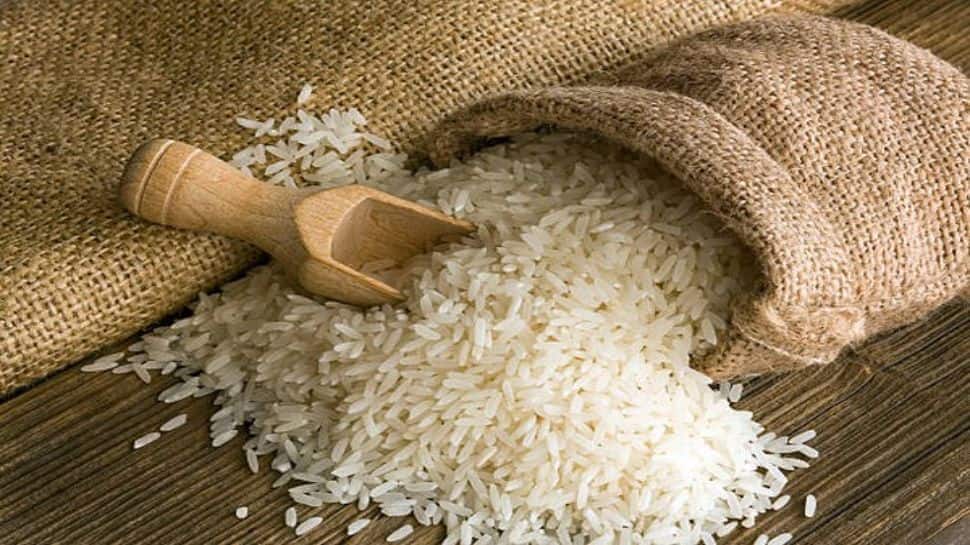
India Rice Export: The debate around India’s rice trade intensified this week after representatives from the United States and Canada raised objections at the World Trade Organisation (WTO). Their complaint centred on the worry that India’s growing presence in the global rice market may end up unsettling countries that rely on stable prices and dependable supplies.
People in the knowhow of the discussions said both delegations voiced the view that New Delhi’s plan to expand exports in the coming seasons might trigger tremors across international markets, especially for smaller economies that have little cushion when price trends change.
Union Minister Prahlad Joshi acknowledged the concerns but added that India’s intention remains unchanged. The government, he said, wants farmers to earn a fair return while the country continues to meet global demand in a balanced manner.
New Delhi has earlier indicated that it plans to double exports over the next few years, a projection that carries weight considering India already accounts for almost 40 percent of the world’s rice trade.
During its submission to the WTO, Canada alleged that India had been encouraging farmers to raise output through financial support and yearly increases in the minimum support price for paddy. It argued that such policies maximise production and create a surplus that eventually flows into international markets. The statement warned that this expansion could distort trade patterns and place other exporting countries under pressure, gradually altering price behaviour across the region.
The numbers behind India’s basmati shipments illustrate why the conversation has gathered momentum. In 2019-20, Basmati rice exports were valued at 4.33 billion dollars, before settling at over 4 billion dollars the following year.
The figure stood at 3.54 billion dollars in both 2021-22 and 2022-23, but it surged dramatically to 5.83 billion dollars in 2023-24 and inched further to 5.94 billion dollars in 2024-25.
These swings reveal how strongly global buyers continue to rely on India for premium aromatic rice, despite periodic turbulence in trade policies.
The non-Basmati segment has travelled an equally eventful path. In 2019-20, India exported rice worth 2.01 billion dollars in this category. The number rose steeply to 4.8 billion dollars in 2020-21 and then crossed 6.12 billion dollars in 2021-22. It climbed slightly to 6.35 billion dollars in 2022-23 before easing to 4.57 billion dollars in 2023-24.
By 2024-25, it had surged again to 6.52 billion dollars. These figures explain why competing exporters are watching every move taken by New Delhi. Even a modest change in India’s export policy can shift expectations for importers, traders and retailers in dozens of countries.
With the matter now gaining traction at the WTO, trade diplomats expect several more rounds of submissions and counter-submissions. India is preparing a detailed response that will outline its position and the rationale behind its support policies.
For now, both sides appear to be settling in for prolonged discussions, because few commodities reveal the global balance of power as clearly as rice, the grain that feeds more people on this planet than any other.
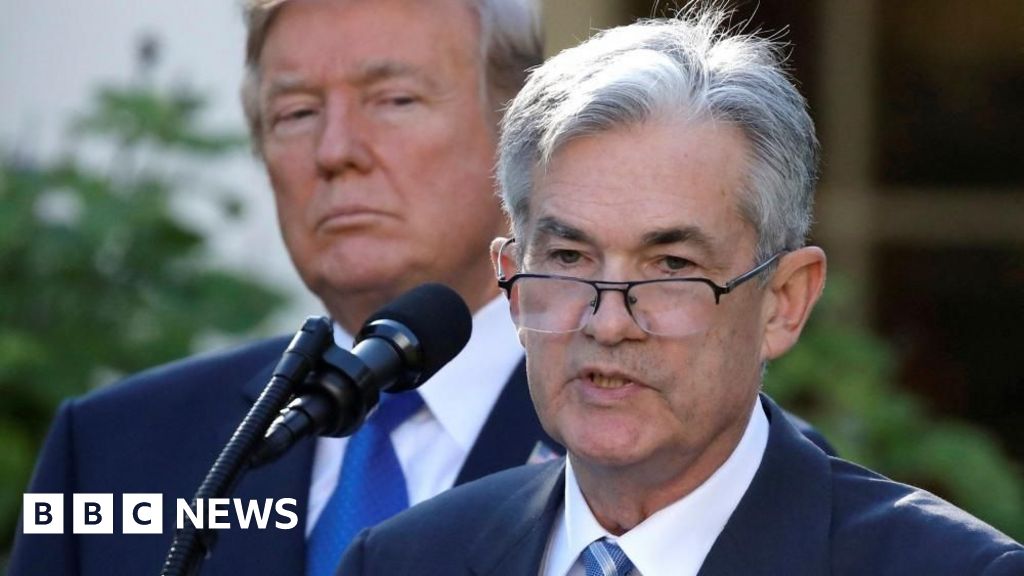
Powell’s term is nearing its end and the US Senate is considering Trump’s nominee for his replacement, Kevin Warsh. A key Republican, Thom Tillis, has withheld his support for Warsh unless the Trump administration would drop its investigation into Powell.
Business
Intel bags big gains! Chipmaker’s shares jump 26% on blockbuster results; how Trump admin benefits – The Times of India
Intel share price soared sharply on Friday after the chipmaker delivered a first-quarter performance that exceeded market expectations. And the win was not just for the chipmaker, but also the whole of US!The stock climbed 26.7% during trading on Friday, marking what could be its strongest single-day gain since 1987. Momentum continued after the closing bell, with shares rising a further 20% in after-hours trading as investors reacted to signs of a sustained turnaround driven by artificial intelligence.Intel reported revenue of $13.58 billion (€11.6bn) for the quarter, ahead of the $12.3 billion (€10.5 bn) forecast and up 7.2% from a year earlier. Adjusted earnings per share came in at $0.29, far exceeding expectations of $0.01.A key contributor to this performance was the company’s Data Centre and AI (DCAI) division, which delivered revenue of $5.05 billion (€4.2bn), up 22.4% year-on-year and well above analyst estimates of $4.41 billion (€3.77bn). The results indicate strong demand for Intel’s Xeon 6 processors and Gaudi 3 AI accelerators, particularly among enterprise clients and cloud service providers.Chief executive Lip-Bu Tan pointed to a broader shift in artificial intelligence usage as a major factor behind the growth. He said, “the next wave of AI will bring intelligence closer to the end user, moving from foundational models to inference to agentic.” He added, “This shift is significantly increasing the need for Intel’s CPUs and wafer and advanced packaging offerings.”The company also issued an upbeat outlook for the second quarter, forecasting revenue in the range of $13.8 billion (€11.8billion) to $14.8 billion (€12.6billion), surpassing investor expectations of $13 billion (€11.1billion).
But how is Washington winning?
The rally has had a direct impact on the US administration’s investment in Intel. In 2025, during a period of severe financial strain for the company, the administration of Donald Trump acquired a 9.9% stake in a move aimed at stabilising the business. The government invested $8.9 billion (€7.8bn) at a share price of $20.47 (€18.01), with $5.7 billion (€5bn) of that amount coming from previously approved but unpaid grants, according to the Euro News.At the time, Intel was facing multi-billion dollar losses and operational challenges, prompting concerns over its viability. As part of the intervention, the company cancelled planned factory projects in Germany and Poland, redirected focus towards US-based manufacturing, and reduced its global workforce by 25%, cutting around 25,000 jobs.Following the latest jump, Intel’s shares are now trading at $81.3 (€71.5), representing an increase of nearly 300% since the government first took its stake. The sharp rise highlights how the company’s improved financial performance has translated into substantial gains for the US administration.

Statistics Jersey says there have been “sharp increases” in some energy prices.
Source link


Iranian FM Abbas Araghchi lands in Pakistan ahead of renewed US talks

Mom’s Microwaved Coffee Won’t Stand a Chance With This Ember Smart Mug Deal

Giants legend Lawrence Taylor, 67, hospitalized after medical emergency: report

-

 Fashion1 week ago
France’s LVMH Q1 revenue falls 6%, shows resilience amid Iran war
-

 Tech1 week ago
CYBERUK ’26: UK lagging on legal protections for cyber pros | Computer Weekly
-

 Sports5 days ago
WWE WrestleMania 42 Night 2: Live match results and analysis
-

 Sports1 week ago
Faheem Ashraf backs Islamabad United’s push, calls league a ‘career-changing platform’
-

 Sports5 days ago
NCAA men’s gymnastics championship: All-time winners list
-
 Business1 week ago
PepsiCo earnings beat estimates as North American food business improves
-

 Tech1 week ago
Anthropic Plots Major London Expansion
-
 Business1 week ago
Oil prices fall again amid Middle East ceasefire hopes