

Entertainment
27th and counting: A constitutional makeover?

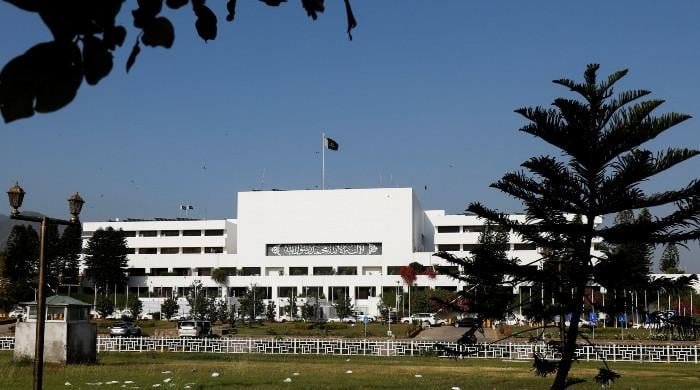
KARACHI: As discussions over the proposed 27th Amendment gather pace, analysts warn that the changes being contemplated could upend the country’s constitutional balance, while the government insists that any move will be made only after consensus and without ‘endangering democracy’.
The proposed 27th Amendment, said to include the creation of a Constitutional Court, possible reconfiguration of the National Finance Commission (NFC) Award and an amendment to Article 243, has sparked intense debate among political parties and legal experts.
While the PPP has confirmed that Prime Minister Shehbaz Sharif has sought its support for the move, opposition politicians and constitutional lawyers see the proposals as part of a larger attempt to dilute the gains of the 18th Amendment.
On Monday, PPP Chairman Bilawal Bhutto-Zardari said that the prime minister had approached his party for backing on the 27th Amendment.
Later that night, speaking to Geo News’ Shahzeb Khanzada, Prime Minister’s Adviser on Political Affairs Senator Rana Sanaullah dismissed the controversy, saying the proposed amendment was being “unnecessarily portrayed” as a storm and a bogeyman.
He insisted that “discussions on the matters raised by Bilawal Bhutto have been ongoing for months” and that “no constitutional amendment will be made without complete consensus”.
Sanaullah said that all stakeholders would be consulted before any draft was finalised and that any amendment introduced would “not endanger democracy”. On the proposed Constitutional Court, he said there was no disagreement on its formation since it was also a part of the Charter of Democracy.
“Our stance from day one has been that a constitutional court should exist”, he said. “Everyone agrees that such a court would handle matters more effectively and sustainably”.
Yet not everyone is convinced. Talking to journalist Hamid Mir, PTI senator Barrister Ali Zafar accused the government of being “less than truthful” about its intentions. “Government ministers had been lying and saying no 27th amendment was on the horizon. Now, Bilawal Bhutto Zardari has come clear on this,” he said. “If they wanted to bring an amendment, there should have been a debate, and then it should have been presented in parliament”.
Barrister Zafar argued that the proposals seemed to “tinker with presidential powers and the NFC”, warning that any rollback of provincial autonomy would amount to undoing the PPP’s 18th Amendment legacy.
Minister of State for Law and Justice Barrister Aqeel, however, maintained that “discussions are underway regarding the 27th Amendment, but formal work has not yet begun”.
He confirmed that “the purpose of amending Article 243 is to constitutionally recognise the field marshal title awarded to the army chief”, that the points of the amendment were “not final”, and that civil society would be consulted regarding the amendment.
Legal and constitutional experts contacted by The News expressed far deeper concerns. According to high court advocate Hassan Abdullah Niazi, the proposed changes would “mark a tragic conclusion to the 18th Amendment’s story”.
He says that what is being discussed would “curtail judicial independence via a special court, allow members of the executive to operate as judges, weaken provincial autonomy and expand the role of the military”.
“All of this”, Niazi says, “would cut at the very core of the constitutional order the 18th Amendment created”. He adds that it is “baffling how the government believes the people will buy their argument for a separate constitutional court when the experiment of a ‘constitutional bench’ has failed to deliver efficiency or expediency.”
“This is mainly about consolidating control over an already hamstrung judiciary”, he warns, adding that such an arrangement would not just duplicate judicial structures but “create a parallel system of constitutional adjudication entirely susceptible to political pressure”.
Explaining the concept, Niazi says a constitutional court would “likely be completely separate from the current Supreme Court. It would have its own staff, process, judges and jurisdiction. It is akin to the government creating a completely new court structure within Pakistan’s legal system”.
Such a move, he cautions, “will lead directly to a flood of issues for litigants, lawyers and judges, as it is incredibly difficult to parse constitutional cases from regular disputes in Pakistan”.
PILDAT President Ahmed Bilal Mehboob says the proposed components of the amendment reflect “the unfinished agenda of the 26th Amendment”, and while the idea itself is not unexpected, what surprised him was “the absence of amendment/expansion of Article 140-A to empower local governments, despite the fact that the Punjab Assembly unanimously demanded this amendment and the MQM included this as part of the coalition agreement signed with the PML-N”.
He feels that a Constitutional Court could “conform better with several international models than the compromise solution of the Constitutional Bench”, but has reservations about the Election Commission reforms being discussed.
“Breaking the ECP appointment logjam may result in reappointment of the incumbent CEC and ECP members for the next five years, as was proposed in the initial draft of the 26th Amendment. If it happens, it will be unfortunate and run counter to the neutrality of the ECP”, he says.
Mehboob adds that, while it would be difficult for the PPP to agree to any dilution of the current ring-fencing of provincial shares in the divisible pool, “the increasing need to boost defence spending may convince them and representatives of smaller provinces”. He also suggests that other parties should emulate the PPP’s step of calling a meeting of its CEC to deliberate on the proposals.
Barrister Ali Tahir, meanwhile, offers a far bleaker assessment: “Whatever remains of the existing constitutional structure is now being prepared for a complete demolition”.
He views the revival of the Constitutional Court proposal as a response to “concern in certain quarters” that the Supreme Court, in hearing the pending 26th Amendment case, could constitute a full bench and possibly strike it down. “If that happens”, he says, “it would deliver a very serious blow to the current hybrid political arrangement”. Hence, the constitutional court push.
Tahir describes the proposal to reintroduce executive magistrates as “in direct conflict with several Supreme Court judgments, most notably the Sharf Faridi case”, warning that under Article 175, “judicial power must remain completely independent from the executive”.
Bringing back executive magistracy, he says, would mean that “whatever limited relief the courts are still able to grant to citizens may also be taken away”.
Tahir further says that plans to allow the transfer of judges under a government-controlled or executive-dominated body “would destroy judicial independence”, and that tampering with Article 243 would amount to “institutionalising a new civil-military imbalance or entrenching the hybrid model further”.
Hafiz Ehsaan Ahmad Khokhar, advocate of the Supreme Court of Pakistan, calls for “a broad-based national dialogue engaging all political parties, constitutional institutions and provincial governments to introduce reforms that bring clarity, legislative competence and predictability to Pakistan’s constitutional and governance framework”.
Khokhar says the 18th Amendment was a landmark reform, but “the experience of its implementation exposed serious coordination gaps and fragmentation in national policymaking”.
The abolition of the Concurrent Legislative List, he says, weakened uniformity in critical areas and the 26th Amendment ended up deepening “internal divisions within the judiciary”. Khokar says that these developments “signal the need for a measured realignment”.
Khokhar also supports a Constitutional Court “endowed with exclusive jurisdiction over constitutional interpretation, intergovernmental disputes and fundamental rights litigation, which would consequently decrease the burden of regular high courts and the Supreme Court”. Such a court, he says, “would prevent controversies by establishing clear jurisdictional boundaries, avoiding internal judicial conflict and ensuring timely constitutional justice”.
On Article 243, Khokhar says the amendment should “codify tenure limits, define reappointment conditions and introduce transparent procedural requirements for appointments of the chiefs of army, navy and air staff”. He also favours reviving the executive magistracy. Still, as Barrister Tahir cautions, “there is a long road ahead before any consensus can be built to push something of this magnitude through parliament”.
Originally published in The News

Shania Twain has made her pitch to perform at Harry Styles and Zoë Kravitz’s wedding, and she’s not being subtle about it.
The 60-year-old country legend, who is currently opening for Styles on the first leg of his world tour, made the declaration during an appearance on SiriusXM’s The Pulse on Friday.
When host Joe “Brady” Blum floated the idea of Twain performing at the celebrity nuptials, she didn’t hesitate. “Oh! I would say yes if he asked,” she replied. “Just putting it out there, Harry.”
Twain is well placed to make the case, she and Styles are currently sharing stages together for the opening 12 shows of his world tour, all being held in London.
She described the invitation to open for him as “really nice,” adding that it made sense for him to begin there.
When Brady expressed hope that the pair might perform Man! I Feel Like A Woman! together again, Twain sounded equally keen.
“I hope we do, too,” she said.
As for the wedding itself, she was playfully realistic about the logistics. When asked whether she could be the entertainment, she mused aloud: “What if they disagree on that?”
Brady suggested that Kravitz’s father Lenny Kravitz could also have a say in the musical lineup, which prompted Twain to propose a rather appealing solution. “Right, him and I could sing it together,” she said with a smile.
Styles and Kravitz, 37, have been one of the most talked-about couples in entertainment since their relationship became public.
Kravitz was spotted last month wearing an impressive diamond ring, widely taken as confirmation of their engagement following a whirlwind romance of around eight months.
The Batman actress was previously engaged to actor Channing Tatum before they split in October 2024, and was briefly married to actor Karl Glusman from 2019 to 2020.
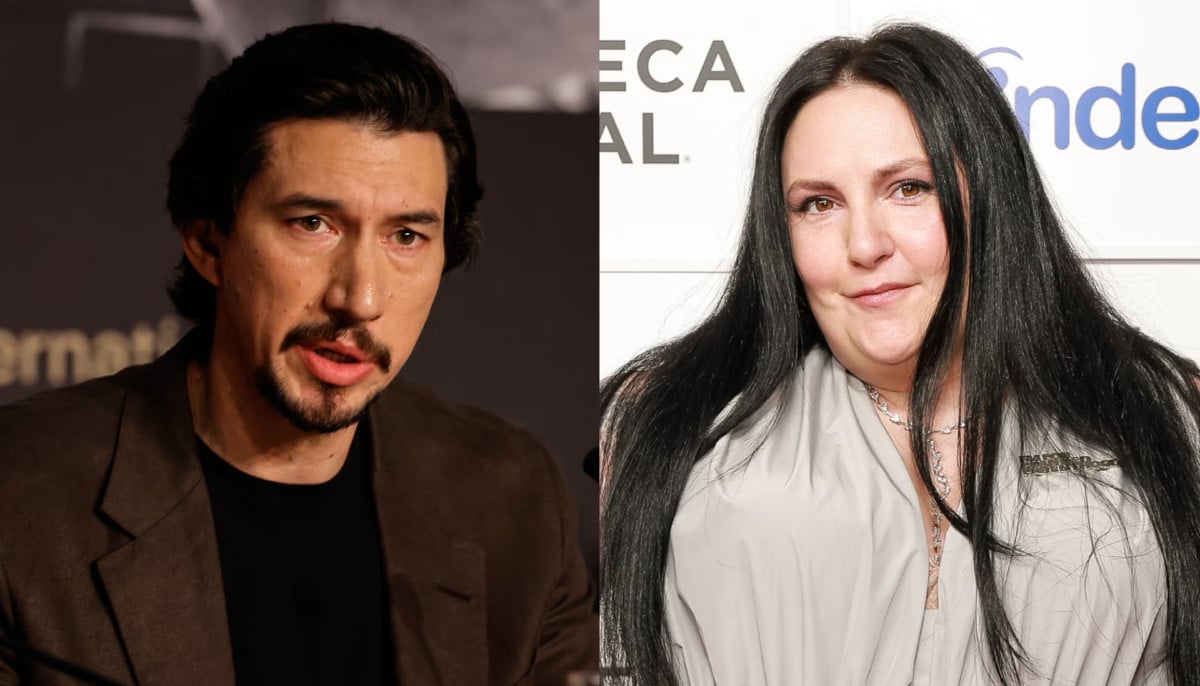
Adam Driver has finally responded to the explosive allegations Lena Dunham made about him in her memoir, and he did it with exactly one sardonic sentence.
Speaking at a Cannes Film Festival press conference for his new film Paper Tiger on Sunday, the 42-year-old was asked about the claims Dunham made in Famesick, her recently published tell-all.
His reply was brief and dry: “I have no comment on that, I’m saving it all for my book.”
It was a masterclass in saying nothing while saying quite a lot.
The response came weeks after Dunham’s 416-page memoir landed with considerable force, containing a series of serious allegations about Driver’s behaviour on the set of Girls, the HBO series on which he played Hannah Horvath’s volatile on-off boyfriend Adam Sackler.
Dunham accused him of screaming at her in her trailer, hurling a chair at the wall beside her, and punching a hole in his own trailer wall.
She also claimed he ignored the agreed blocking during their first intimate scene, physically manhandling her in a way that left her shaken.
“Stunned, I couldn’t speak for a moment,” she wrote, describing the confusion and self-doubt that followed.
Dunham has been candid about why she didn’t confront him at the time.
Speaking to The Guardian in April, she said: “At that point in my 20s, I still thought that’s what great male geniuses do, eviscerate you. Which is weird, because I was raised by a male genius who would never do that.”
The memoir also ventured into more personal territory, with Dunham claiming she and Driver came close to having an affair a month before he got engaged to his wife Joanne Tucker in 2012.
She wrote that she pulled back when he arrived at her New York home, choosing not to cross a line she felt would make returning to work impossible.
Driver, she alleged, later acknowledged the moment to her, saying: “When my girl was away, I realised I’m no good alone. I need someone to keep me in line.”
The Cannes press conference where Driver made his comment was for Paper Tiger, James Gray’s crime drama in which he plays former police officer Gary Pearl.

- Parents carry biggest responsibility currently
- Rehabilitation centres facing serious operational challenges
- Media urged against glamorising narcotics issue
KARACHI: Senior Sindh Minister Sharjeel Inam Memon on Sunday said the provincial government would conduct rapid random drug testing in schools to tackle increasing narcotics use among children.
“Unfortunately, we have not taken narcotics seriously,” Memon said while speaking to the media in Karachi, adding that drug abuse had become a global issue and a major concern across Pakistan.
He said several rehabilitation centres were being developed, but termed the situation a “challenge” for the government. Referring to a recent incident in Karachi, Memon said a drug-addicted child had opened fire on family members.
“When these people become zombies due to narcotics, they go beyond anyone’s control,” he said.
The senior minister said many people had turned narcotics into a profitable business and stressed that dismantling the network was the government’s responsibility.
“I do not want to name anyone, but this is an entire network,” he said, adding that naming individuals would only result in social media memes.
Memon also referred to a suspect identified as Anmol alias Pinky, calling her a woman involved in selling “poison” that was costing precious lives daily.
He urged the media not to glamorise the issue and said parents currently carry the biggest responsibility in protecting children from drug abuse.
“I am not talking about one government alone, but the entire country,” Memon added.


Shania Twain wants to sing at Harry Styles, Zoe Kravitz wedding

Weather & then war lead to tears in India’s onion basket

Adam Driver replies to Lena Dunham’s shock memoir claims

-

 Entertainment5 days ago
Conan O’Brien hat tricks as Oscar host
-

 Tech1 week ago
Could Contact-Tracing Apps Help With the Hantavirus? Not Really
-

 Tech1 week ago
I Tried the Best Captioning Smart Glasses, and Only One Leads the Pack
-

 Fashion4 days ago
Italy’s Zegna Group’s Q1 growth boosted by strong organic performance
-

 Sports1 week ago
Bobby Cox, legendary Atlanta Braves manager who led 1995 World Series champions, dead at 84
-

 Entertainment1 week ago
Martin Short: Facing tragedy with joy
-

 Entertainment7 days ago
Tom Brady gets back at Kevin Hart during Netflix roast
-

 Entertainment1 week ago
Martha Stewart: How to make an omelet