

Tech
3 Questions: How AI could optimize the power grid


Artificial intelligence has captured headlines recently for its rapidly growing energy demands, and particularly the surging electricity usage of data centers that enable the training and deployment of the latest generative AI models. But it’s not all bad news — some AI tools have the potential to reduce some forms of energy consumption and enable cleaner grids.
One of the most promising applications is using AI to optimize the power grid, which would improve efficiency, increase resilience to extreme weather, and enable the integration of more renewable energy. To learn more, MIT News spoke with Priya Donti, the Silverman Family Career Development Professor in the MIT Department of Electrical Engineering and Computer Science (EECS) and a principal investigator at the Laboratory for Information and Decision Systems (LIDS), whose work focuses on applying machine learning to optimize the power grid.
Q: Why does the power grid need to be optimized in the first place?
A: We need to maintain an exact balance between the amount of power that is put into the grid and the amount that comes out at every moment in time. But on the demand side, we have some uncertainty. Power companies don’t ask customers to pre-register the amount of energy they are going to use ahead of time, so some estimation and prediction must be done.
Then, on the supply side, there is typically some variation in costs and fuel availability that grid managers need to be responsive to. That has become an even bigger issue because of the integration of energy from time-varying renewable sources, like solar and wind, where uncertainty in the weather can have a major impact on how much power is available. Then, at the same time, depending on how power is flowing in the grid, there is some power lost through resistive heat on the power lines. So, as a grid operator, how do you make sure all that is working all the time? That is where optimization comes in.
Q: How can AI be most useful in power grid optimization?
A: One way AI can be helpful is to use a combination of historical and real-time data to make more precise predictions about how much renewable energy will be available at a certain time. This could lead to a cleaner power grid by allowing us to handle and better utilize these resources.
AI could also help tackle the complex optimization problems that power grid operators must solve to balance supply and demand in a way that also reduces costs. These optimization problems are used to determine which power generators should produce power, how much they should produce, and when they should produce it, as well as when batteries should be charged and discharged, and whether we can leverage flexibility in power loads. These optimization problems are so computationally expensive that operators use approximations so they can solve them in a feasible amount of time. But these approximations are often wrong, and when we integrate more renewable energy into the grid, they are thrown off even farther. AI can help by providing more accurate approximations in a faster manner, which can be deployed in real-time to help grid operators responsively and proactively manage the grid.
AI could also be useful in the planning of next-generation power grids. Planning for power grids requires one to use huge simulation models, so AI can play a big role in running those models more efficiently. The technology can also help with predictive maintenance by detecting where anomalous behavior on the grid is likely to happen, reducing inefficiencies that come from outages. More broadly, AI could also be applied to accelerate experimentation aimed at creating better batteries, which would allow the integration of more energy from renewable sources into the grid.
Q: How should we think about the pros and cons of AI, from an energy sector perspective?
A: One important thing to remember is that AI refers to a heterogeneous set of technologies. There are different types and sizes of models that are used, and different ways that models are used. If you are using a model that is trained on a smaller amount of data with a smaller number of parameters, that is going to consume much less energy than a large, general-purpose model.
In the context of the energy sector, there are a lot of places where, if you use these application-specific AI models for the applications they are intended for, the cost-benefit tradeoff works out in your favor. In these cases, the applications are enabling benefits from a sustainability perspective — like incorporating more renewables into the grid and supporting decarbonization strategies.
Overall, it’s important to think about whether the types of investments we are making into AI are actually matched with the benefits we want from AI. On a societal level, I think the answer to that question right now is “no.” There is a lot of development and expansion of a particular subset of AI technologies, and these are not the technologies that will have the biggest benefits across energy and climate applications. I’m not saying these technologies are useless, but they are incredibly resource-intensive, while also not being responsible for the lion’s share of the benefits that could be felt in the energy sector.
I’m excited to develop AI algorithms that respect the physical constraints of the power grid so that we can credibly deploy them. This is a hard problem to solve. If an LLM says something that is slightly incorrect, as humans, we can usually correct for that in our heads. But if you make the same magnitude of a mistake when you are optimizing a power grid, that can cause a large-scale blackout. We need to build models differently, but this also provides an opportunity to benefit from our knowledge of how the physics of the power grid works.
And more broadly, I think it’s critical that those of us in the technical community put our efforts toward fostering a more democratized system of AI development and deployment, and that it’s done in a way that is aligned with the needs of on-the-ground applications.
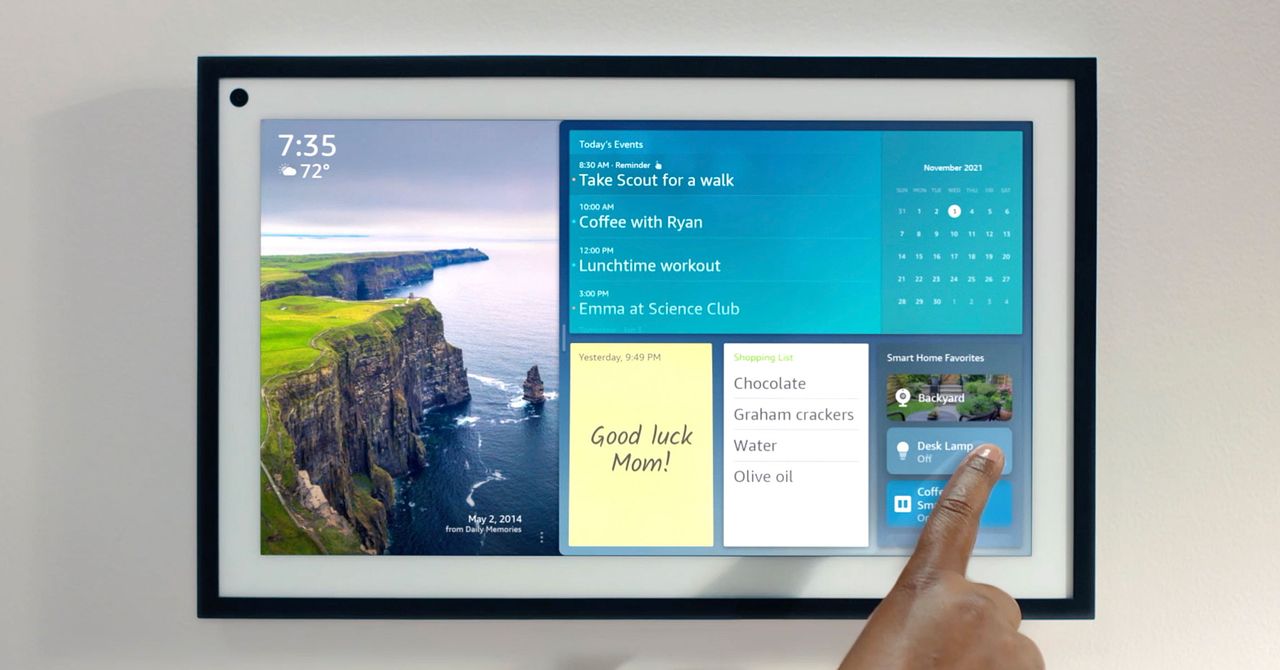
I stuck Amazon’s Echo Show 15 and its Alexa+ AI assistant in my kitchen for a month. Things have not gone well.
Source link

South Korean officials have warned that the US-Israel war with Iran could hit the global semiconductor supply chain if it disrupts the flow of critical industrial materials from the Middle East.
South Korea’s semiconductor sector, led by giants like Samsung Electronics and SK Hynix, produces about two-thirds of the world’s memory chips. If the Middle East’s supply of chipmaking materials is disrupted, semiconductor production could slow unless alternative sources are found quickly.
The Helium Problem
One material at risk is helium, which is essential in chip manufacturing for managing heat, detecting leaks, and maintaining stable temperatures in fabrication equipment. For many of these uses, there is no real substitute.
About 38 percent of the world’s helium is produced by Qatar, where large extraction facilities are tied to the natural gas industry. This concentration means that disruptions can quickly ripple through the global supply chain.
National oil company QatarEnergy declared force majeure on March 4, after stopping its gas production and downstream operations due to ongoing attacks. Downstream facilities turn gas into other products, including urea, polymers, methanol, and aluminum.
South Korea’s Industry Ministry said the country also depends on the Middle East for 14 other materials in chipmaking, such as bromine and some chip-inspection equipment. While some of these materials can be sourced domestically or from other markets, shifting suppliers in the semiconductor sector is difficult because chipmakers need to test and validate new sources to meet strict purity standards.
Companies say the situation is manageable for now. As reported by Reuters, SK Hynix said it has secured diverse supply chains and maintains sufficient helium inventories, adding that there is “almost no chance” its operations would be affected in the near term.
Contract chipmaker TSMC similarly said it does not currently anticipate a significant impact, while GlobalFoundries stated it is in direct contact with suppliers and has mitigation plans in place.
Stuck in Transit
Even if Qatar’s gas production restarts, the semiconductor industry is vulnerable to disruptions in regional shipping routes. Much of the world’s energy and petrochemical exports from the Persian Gulf pass through the Strait of Hormuz, a key maritime choke point.
If shipping through this corridor is interrupted for an extended period, it could slow the movement of industrial gases and petrochemicals that chipmakers rely on. Disruptions to oil and gas exports from the region have also already pushed global energy prices higher: Brent crude, the European benchmark, is priced at $80 per barrel at the time of publication.
Energy costs are a major factor in semiconductor production. Fabrication plants run large clean rooms that need constant electricity and cooling, so chipmakers are sensitive to changes in global energy prices. Industry representatives in South Korea warned that a prolonged conflict could push energy prices higher, likely leading to higher semiconductor production costs and potentially higher chip prices.
These risks come as semiconductor supply chains are already stretched by growing demand from AI computing. Chip demand from AI data center operators has tightened supply across several electronics sectors, including smartphones, laptops, and automobiles.
A Long-Term Problem
For now, the immediate impact on chip production is unclear. Major chipmakers usually maintain a mix of suppliers and stockpile specialty gases and chemicals to help weather short-term disruptions.
But if instability in the region continues, pressure on supply chains will likely grow. A drawn-out conflict that hits energy infrastructure, export facilities, or shipping routes could slowly squeeze the global supply of materials needed for chipmaking.
This could delay plans by major technology companies to expand artificial intelligence infrastructure in the Middle East. Firms such as Amazon, Microsoft, and Nvidia have been positioning the UAE as a hub for AI computing capacity.
This story originally appeared on WIRED Middle East.

Chances are that when you google “mattress store near me,” one of the first results you will see is Mattress Firm. This brick and mortar titan carries both established mattress brands like Serta and Sealy, as well as many online brands, like Purple, letting you go see for yourself if it’ll be the mattress for you. And if you were looking for an excuse to hop in the car and head over, we have a Mattress Firm coupon available right now, as well as tons of Mattress Firm promo codes to save big on those big (and small) purchases. Fingers crossed that you could start sleeping better, potentially as soon as tonight.
Upgrade Your Sleep Sale: Save Up to $600 (Plus Get a Free Adjustable Base)
This year, Mattress Firm wants to make it even easier (and more affordable) to upgrade your sleep with the Upgrade Your Sleep Sale. During this sale, you can save up to $600 and get a free adjustable base included on select mattresses, through April 28. You’ll receive a free Sleepy’s Basic adjustable base (a $300 value) with select mattress purchases—this means a free queen adjustable base with a minimum $499 purchase, or free king adjustable base with minimum $599 purchase.
Get 15% Off When You Sign Up for Emails
To make sure you never miss out on Mattress Firm discount codes, you can sign up for email notifications. By doing so, you automatically get one! You can get an extra 15% off on your first order. Heads up that it can’t be combined with other coupons, nor can it be applied to specific brands and models, including Nectar, Purple, Sealy Hybrid, Tempur-Pedic, Stearns & Foster, and Serta iComfort.
Free Adjustable Base (Up to $499 Value) With Select Mattresses
First and foremost, make sure you have or are getting a mattress that’s compatible with an adjustable base. If you’re all set bed-wise, but have been looking for the right time to buy an adjustable base, consider this your sign: select mattresses come with a free adjustable base (up to $499 value). At last, you can sit up in bed or kick up your feet to your heart’s content.
Score Up to $300 in Instant Credits and Gifts
Mattress Firm’s got a gift for you, just ‘cuz. For those eyeballing Tempur-Pedic, Sealy, and Sterns & Foster in particular, it’s your lucky day, as there are Mattress Firm coupon codes for all three of these brands.
Starting with Tempur-Pedic, when you buy a qualifying Tempur-Pedic mattress, you can receive a $300 Instant Credit on these adjustable bases: Tempur-Ergo, Tempur-Ergo Smart Base, Tempur-Ergo ProSmart Base, Tempur-Ergo ProSmart Air Base, or the Sealy Ease Base. Use code TEMPURGIFT. You can also get a $300 credit toward these same adjustable bases when you purchase a qualifying Stearns & Foster mattress: use code STEARNSGIFT at checkout.
Lastly, if you wanted to pair a Sealy mattress with the Sealy Ease adjustable base (or any of the aforementioned adjustable bases), there’s a Mattress Firm coupon for that, too. Use code SEALYGIFT at checkout, and get a $200 Instant Credit on select Sealy and Tempur-Pedic adjustable bases.
Take 20% Off With Military, Medical, Student, or Teacher Discounts
Sleep is a necessity for everyone. But for those who work all day on their feet, and have to be dialed in at all times, sleep is critical. This is especially true for first responders, nurses, doctors, and medical professionals. As a way to say “thank you” for all that you do, there’s a special mattress firm discount just for you. Use the Mattress Firm first responder discount for 20% off select purchases. It’s for one-time use, but renews every 90 days when you re-verify your status.
For military members, as a way to thank you for your service, you can use the Mattress Firm military discount for 20% off select purchases as well. It’s a one-time use code, but re-verify your status every 90 days, and you can get a new one!
If you’re a teacher or student, there’s also a Mattress Firm discount for you, too. To help you bounce back after long days teaching, or late nights studying, use this Mattress Firm student discount code for 20% off select purchases. Like the first responder and military coupons, it’s a one-time usage code that can be renewed every 90 days when you re-verify your status.


Stock market today: Which are the top losers and gainers on March 6- check list – The Times of India

Bangladesh road map aims at raising tax-to-GDP ratio to 15% by 2035

Watch: How war in Iran may affect food and fuel prices

-
 Business1 week ago
Attock Cement’s acquisition approved | The Express Tribune
-

 Fashion1 week ago
Policy easing drives Argentina’s garment import surge in 2025
-

 Politics1 week ago
What are Iran’s ballistic missile capabilities?
-
 Business1 week ago
India Us Trade Deal: Fresh look at India-US trade deal? May be ‘rebalanced’ if circumstances change, says Piyush Goyal – The Times of India
-

 Politics1 week ago
US arrests ex-Air Force pilot for ‘training’ Chinese military
-
 Business7 days ago
Greggs to reveal trading amid pressure from cost of living and weight loss drugs
-

 Sports7 days ago
LPGA legend shares her feelings about US women’s Olympic wins: ‘Gets me really emotional’
-

 Sports1 week ago
Sri Lanka’s Shanaka says constant criticism has affected players’ mental health