

Tech
3 Questions: How AI could optimize the power grid


Artificial intelligence has captured headlines recently for its rapidly growing energy demands, and particularly the surging electricity usage of data centers that enable the training and deployment of the latest generative AI models. But it’s not all bad news — some AI tools have the potential to reduce some forms of energy consumption and enable cleaner grids.
One of the most promising applications is using AI to optimize the power grid, which would improve efficiency, increase resilience to extreme weather, and enable the integration of more renewable energy. To learn more, MIT News spoke with Priya Donti, the Silverman Family Career Development Professor in the MIT Department of Electrical Engineering and Computer Science (EECS) and a principal investigator at the Laboratory for Information and Decision Systems (LIDS), whose work focuses on applying machine learning to optimize the power grid.
Q: Why does the power grid need to be optimized in the first place?
A: We need to maintain an exact balance between the amount of power that is put into the grid and the amount that comes out at every moment in time. But on the demand side, we have some uncertainty. Power companies don’t ask customers to pre-register the amount of energy they are going to use ahead of time, so some estimation and prediction must be done.
Then, on the supply side, there is typically some variation in costs and fuel availability that grid managers need to be responsive to. That has become an even bigger issue because of the integration of energy from time-varying renewable sources, like solar and wind, where uncertainty in the weather can have a major impact on how much power is available. Then, at the same time, depending on how power is flowing in the grid, there is some power lost through resistive heat on the power lines. So, as a grid operator, how do you make sure all that is working all the time? That is where optimization comes in.
Q: How can AI be most useful in power grid optimization?
A: One way AI can be helpful is to use a combination of historical and real-time data to make more precise predictions about how much renewable energy will be available at a certain time. This could lead to a cleaner power grid by allowing us to handle and better utilize these resources.
AI could also help tackle the complex optimization problems that power grid operators must solve to balance supply and demand in a way that also reduces costs. These optimization problems are used to determine which power generators should produce power, how much they should produce, and when they should produce it, as well as when batteries should be charged and discharged, and whether we can leverage flexibility in power loads. These optimization problems are so computationally expensive that operators use approximations so they can solve them in a feasible amount of time. But these approximations are often wrong, and when we integrate more renewable energy into the grid, they are thrown off even farther. AI can help by providing more accurate approximations in a faster manner, which can be deployed in real-time to help grid operators responsively and proactively manage the grid.
AI could also be useful in the planning of next-generation power grids. Planning for power grids requires one to use huge simulation models, so AI can play a big role in running those models more efficiently. The technology can also help with predictive maintenance by detecting where anomalous behavior on the grid is likely to happen, reducing inefficiencies that come from outages. More broadly, AI could also be applied to accelerate experimentation aimed at creating better batteries, which would allow the integration of more energy from renewable sources into the grid.
Q: How should we think about the pros and cons of AI, from an energy sector perspective?
A: One important thing to remember is that AI refers to a heterogeneous set of technologies. There are different types and sizes of models that are used, and different ways that models are used. If you are using a model that is trained on a smaller amount of data with a smaller number of parameters, that is going to consume much less energy than a large, general-purpose model.
In the context of the energy sector, there are a lot of places where, if you use these application-specific AI models for the applications they are intended for, the cost-benefit tradeoff works out in your favor. In these cases, the applications are enabling benefits from a sustainability perspective — like incorporating more renewables into the grid and supporting decarbonization strategies.
Overall, it’s important to think about whether the types of investments we are making into AI are actually matched with the benefits we want from AI. On a societal level, I think the answer to that question right now is “no.” There is a lot of development and expansion of a particular subset of AI technologies, and these are not the technologies that will have the biggest benefits across energy and climate applications. I’m not saying these technologies are useless, but they are incredibly resource-intensive, while also not being responsible for the lion’s share of the benefits that could be felt in the energy sector.
I’m excited to develop AI algorithms that respect the physical constraints of the power grid so that we can credibly deploy them. This is a hard problem to solve. If an LLM says something that is slightly incorrect, as humans, we can usually correct for that in our heads. But if you make the same magnitude of a mistake when you are optimizing a power grid, that can cause a large-scale blackout. We need to build models differently, but this also provides an opportunity to benefit from our knowledge of how the physics of the power grid works.
And more broadly, I think it’s critical that those of us in the technical community put our efforts toward fostering a more democratized system of AI development and deployment, and that it’s done in a way that is aligned with the needs of on-the-ground applications.

The base of the lamp has two slider buttons. One toggle adjusts the warmth, from cold white light all the way to red. One adjusts the intensity, from ultra-bright down to a glareless glow. Hard taps on each button skip ahead, while holding the toggle down on one side or another adjusts the light settings quite slowly—slowly enough I at first sometimes question whether it’s happening.
The maximum brightness is 1,000 lumens—the approximate intensity of a 75-watt incandescent bulb. At this brightness, the battery lasts about five hours. At a lower intensity, this can extend to as long as a dozen hours.
Red Shift
Photograph: Matthew Korfhage
There’s an added feature I have come to appreciate at night, which is the red-light mode. There’s little evidence that blue light from your little smartphone is keeping you awake at night. But numerous studies do show that blue light wavelengths can affect melatonin levels and thus your body’s circadian rhythm, while red light doesn’t do this.
Red light therapy is, of course, the province of TikTok as much as science—a field where wild exaggerations live alongside legitimate uses and benefits. For every sleep study showing that red light is superior to blue light when it comes to melatonin levels, there’s another showing that red light is associated with “negative emotions” before bed.
So I can only offer my own experience, which is that Edge Light Go’s red reading light offers me a pleasant liminal space between awake time and sleepy time, one not offered by a basic nightstand lamp. It allows me to sort of bask in a darkroom space that still lets me see and read, and drift off a little easier.
If I fall asleep, the light has an automatic 25-minute shut-off, which means I won’t do what I far too often do, which is drift off while reading and then wake up, alarmed, to a room filled with bright light in the middle of the night.
Caveats and Quirks

Photograph: Matthew Korfhage
This said, for all the virtues of portability, the Edge Light Go does not boast a base that’s heavy enough to stop the lamp from tipping over if I bend it forward from its lowest hinge. This can be an annoyance when trying to use the lamp as a reading light from a bedside table or the arm of a couch.

With reliable mobile connectivity still a major issue inside modern office buildings – particularly as energy-efficient materials block signal and user expectations remain high – connectivity infrastructure-as-a-service (IaaS) provider Freshwave has launched 5G on Omni to offer businesses “assured” indoor 5G connectivity from all the mobile network operators (MNOs).
Freshwave said that its mission is to invest expertise and capital to assure connectivity, bringing mobile operators, central and local government, and real estate providers to work together in new ways. It added that it has connected some of the biggest, most challenging wireless environments in the UK, including several central London boroughs and more than 2,000 buildings.
At launch in June 2024, the company’s Omni Network was described as a world first, offering 4G mobile connectivity indoors from all the UK mobile network operators via a combined small cell unit. It boasts more than six million square feet of real estate live or in-build.
Omni Network was previously only available on Andrew Onecell, but the solution is now multi-supplier, being available using Ericsson Radio Dot technology which is seeing use in the new 5G on Omni offer.
In another claimed first and the next stage in the evolution of the Omni Network, 5G on Omni is designed to deliver 4G/5G connectivity indoors from all the UK MNOs – EE, O2, and VodafoneThree – via the Ericsson’s Radio Dot System, extending the 5G carrier-grade mobile coverage to more spaces than ever before.
Aiming to address the aforementioned issue whereby building materials can potentially block mobile signals from reaching indoors, Freshwave said its dedicated multi-operator in-building mobile system can ensures everyone inside has the mobile connectivity they need, no matter which network they’re on.
Connecting securely to the MNOs’ networks, 5G on Omni is configured and controlled by Freshwave’s engineers via the company’s datacentre as a fully managed service. For organisations whose connectivity needs are met by 4G today, 5G on Omni provides a simple software upgrade path to 5G when required.
In addition, the company said that 5G on Omni uses up to 50% less energy than a traditional distributed antenna system (DAS), is faster and more cost effective to deploy with less cabling, and needs less space in the comms room.
Remarking upon the launch and its objectives, Simon Frumkin, Freshwave’s CEO, said: “After a world-first with Omni Network, I’m delighted we’re now able to offer our customers another first with 5G on Omni. It’s the next stage of assured indoor mobile connectivity, bringing all the operators indoors on 5G via small cells.
“Indoor connectivity is an essential productivity driver, as evidenced by our Mobile connectivity ROI index which found that the UK could gain £70bn of added value by eliminating mobile signal not-spots indoors. 5G on Omni represents an important step forward for indoor connectivity in the UK. We’re grateful to all the UK mobile operators and to our technology partner Ericsson for their collaboration in making this possible.”
Luca Orsini, head of Ericsson North Europe, added: “We’re thrilled to have collaborated with neutral host provider Freshwave to deliver 5G from all UK mobile operators on the Ericsson Radio Dot for the very first time. It highlights how shared indoor infrastructure can accelerate high-quality 5G coverage and capacity at a lower total cost of ownership than legacy solutions, ensuring organisations and users benefit from seamless connectivity regardless of their mobile provider.”
The service is also available via a pay-as-you-occupy model, which allows landlords to pay to cover shared areas in a building, while giving tenants the ability to contract directly with Freshwave to join the in-building system as and when they move in.
Freshwave claims 5G on Omni is already seeing strong demand and that it is in the process of deploying it at several other customer sites this year across sectors including financial services, luxury goods brands and a global fast moving consumer goods company. One of the early adopters of the service has been flexible office provider Workspace’s Record Hall site in central London, bringing 4G/5G mobile signal from all the MNOs to the offices and workshops there.
“Good connectivity should be something our SME customers don’t have to think about,” said Chris Boultwood, head of technology at Workspace. “With 5G on Omni from Freshwave now live at Record Hall, our customers can rely on seamless mobile coverage throughout the building, whichever network they use.”

For airlines to run critical operations on networks that are set up and run for them, removing the complexity and cost of managing connectivity themselves, air industry tech firm SITA has launched a new network solution designed to support the demands of complex airport and transport environments.
With around 2,500 customers, SITA technology supports more than 1,000 airports and more than 19,600 aircraft worldwide. The company said that it also helps more than 70 governments “strike the balance between secure borders and seamless journeys” and connects 45-50% of the industry’s data exchange to enable complex global networks to operate smoothly and reliably.
As part of the latter aim, the SITA Campus Network, powered by HPE Aruba Networking, aims to offer a managed network service covering more than 150 countries wherein SITA takes care of the design, procurement, shipping, installation, configuration and support for all devices involved. Boasting a low total cost of ownership (TCO), SITA is proposing “one of the most competitive” fully managed local area network/wireless local area network (LAN/WLAN) available in the industry.
Explaining the rationale for the launch, SITA noted that managing networks across multiple locations, devices and suppliers is complex and costly. Furthermore, it said that when networks are fragmented, performance suffers and disruptions can spread quickly.
SITA Campus Network is attributed with being able to remove this burden by delivering a fully managed network across wired and wireless environments. The campus network is claimed to combine “robust” connectivity with centralised, cloud-based management to ensure consistent, reliable performance across airport campuses and other large transport hubs.
Designed for high-density environments such as terminals, hangars and airline operations centres, the solution is said to support large volumes of users and devices without compromising performance, even during peak demand. By integrating HPE technology into its managed service, SITA’s customers get a network that is centrally operated by SITA while retaining the flexibility to use different technologies and vendors.
Available in more than 145 countries, with 24/7 operational support, SITA assured that by reducing the need for costly hardware and simplifying operations the network lowers both upfront investment and ongoing costs. Its pay-as-you-go model allows customers to scale usage up or down based on demand, with rapid deployment across locations.
This is said to reduce the need for on-site support, spare equipment and recurring training, freeing up IT teams to focus on higher-value activities. Where needed, the campus network connects to SITA’s global wide-area network services. This connectivity links more than 600 airports worldwide.
As is the norm with other leading networking solutions, the SITA Campus Network uses AI to improve visibility across the network, detect issues earlier and automate troubleshooting, helping reduce downtime. It also provides centralised management, allowing infrastructure and devices to be monitored and controlled across both on-site systems and remote environments.
Martin Smillie SITA senior vice-president of communications and data exchange, said integrating diverse systems and devices across airport environments is becoming more complex as operations become more connected: “At the same time, expectations on performance, resilience and security continue to rise. With SITA Campus Network powered by Aruba, we take on that complexity. We deliver a network that is set up, run and continuously optimised, so our customers can focus on keeping operations moving while maintaining control across increasingly demanding environments.”
Sujai Hajela, executive vice-president and general manager for enterprise campus and branch at HPE, added: “Airports and airlines have to support thousands of staff, passengers and mission critical systems across terminals, gates and airside areas – and any network issue shows up immediately as delays and frustration.
“SITA Campus Network powered by HPE Aruba Networking is built on our secure, AI-native technology to deliver a self-driving network that spots and fixes problems in real time, often before anyone notices, so operations keep moving and passengers stay connected.”


‘Summer House’ is going to get cancelled? details revealed

UK’s SwitchDye gets investment to scale eco-friendly dyeing

Prince William tries to squeeze into Formula E car on Louis’ birthday

-

 Fashion1 week ago
France’s LVMH Q1 revenue falls 6%, shows resilience amid Iran war
-

 Entertainment1 week ago
Is Claude down? Here’s why users are seeing errors
-

 Sports1 week ago
PSL 11: Peshawar Zalmi win toss, opt to field first against Quetta Gladiators
-

 Tech1 week ago
The Deepfake Nudes Crisis in Schools Is Much Worse Than You Thought
-

 Politics1 week ago
Iran in continuous message exchange with mediator Pakistan after US talks: Report
-
 Business1 week ago
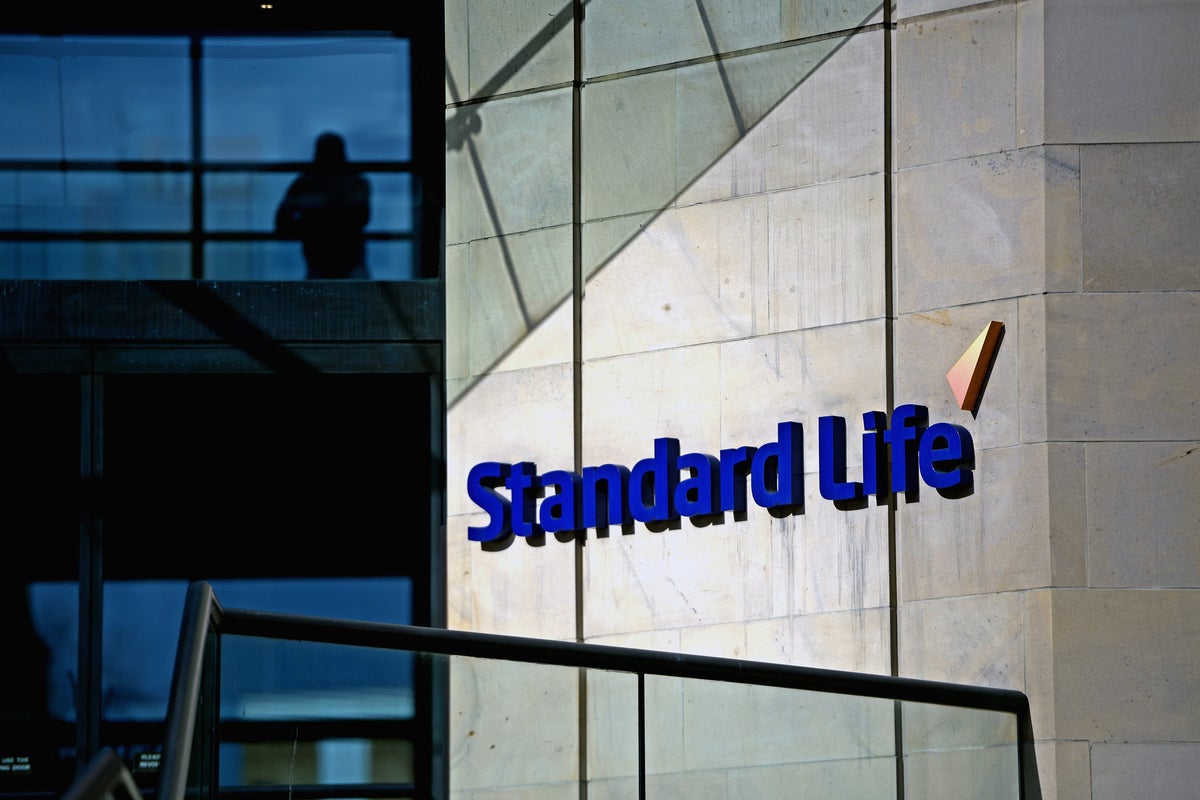
Standard Life buys rival in £2b deal to create savings giant
-

 Tech1 week ago
CYBERUK ’26: UK lagging on legal protections for cyber pros | Computer Weekly
-

 Sports1 week ago
World Cup kit ranking: Which teams will look best in 2026?