

Business
47% for defence, Rs 197 crore expenditure: A look at India’s first Budget in 1947 – The Times of India

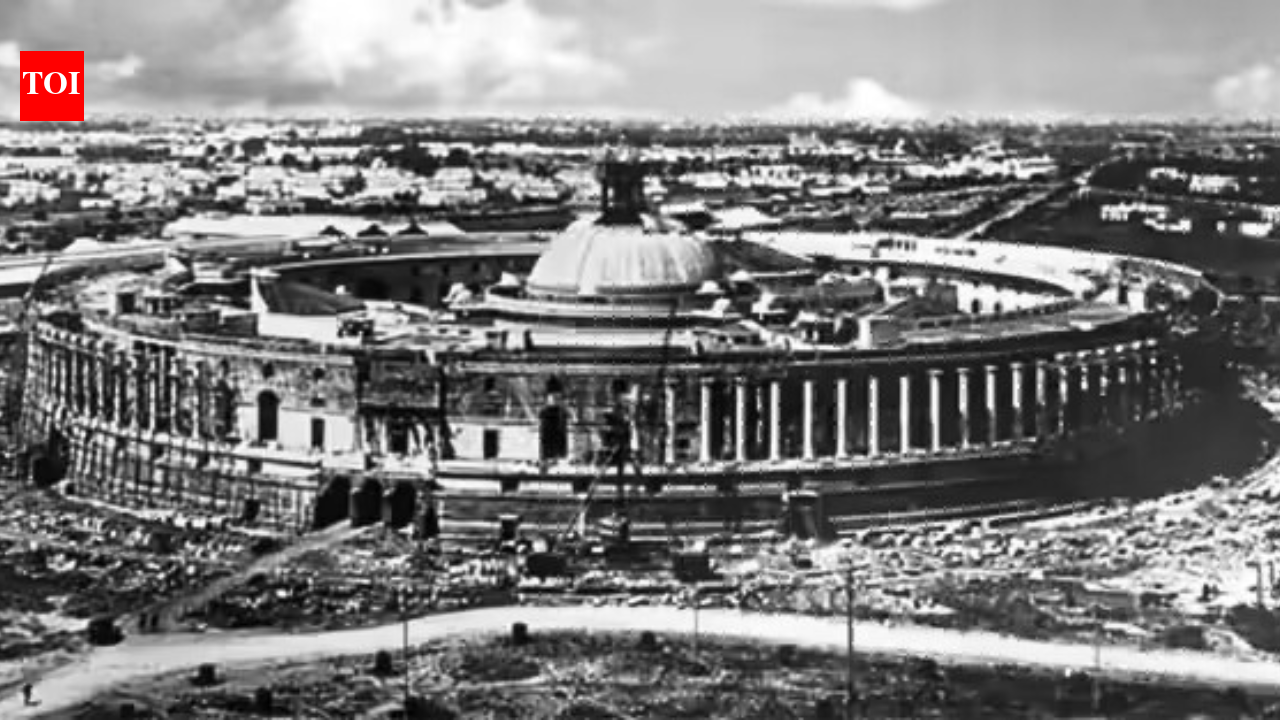
NEW DELHI: As India prepares for the Union Budget for 2026–27, scheduled to be presented on February 1, it is worth noting that when the country’s budgetary journey began, in a vastly different India, still finding its feet after independence.India’s first Union Budget was presented on November 26, 1947, three months after the country attained freedom. At the time, there was no elected Parliament. The Constituent Assembly, tasked with the monumental job of drafting the world’s lengthiest written Constitution, also functioned as the legislative body.The first finance minister of newly-independent nation, RK Shanmukham Chetty, presented the Budget in the House that would later evolve into the Parliament. The country was still grappling with the trauma of Partition, widespread violence, displacement and economic uncertainty.Chetty delivered a sweeping overview of India’s economic condition and laid out his financial roadmap. He described the Budget as an interim measure, covering seven and a half months from August 15, 1947, to March 31, 1948. The projected revenue was Rs 171.5 crore, while expenditure was estimated at Rs 197 crore, resulting in a fiscal deficit of Rs 26 crore.The Budget reflected India’s political and economic challenges of the time. Major allocations were directed towards Partition-related relief and rehabilitation, defence, and achieving self-sufficiency in foodgrains. Defence alone accounted for a substantial 47% of the total Budget outlay.According to the Institute of Chartered Accountants of India (ICAI), the 1947 Budget was meant for a period of seven and a half months, after which a full-year Budget was to take effect from April 1, 1948. Notably, it was also the first Union Budget in which India and Pakistan agreed to share the same currency until September 1948.Shanmukham Chetty later resigned as finance minister, and the responsibility passed to John Mathai, who presented the Union Budgets for 1949–50 and 1950–51. The 1949–50 Budget was significant as it was the first prepared for a united India that included all the princely states.Over the decades, the Union Budget has evolved, but secrecy around its preparation has remained absolute. Any leak of official figures can have serious consequences. Even today, the finance minister is not authorised to keep the crucial “Blue Sheet”, which contains key budget numbers. Only the joint secretary (Budget) is permitted to handle it.In the early years, budget documents were printed within the Rashtrapati Bhavan premises. After a data leak scare, the process was shifted to a government press on Minto Road, where it continued until 1980. Since then, budget papers have been printed in a basement at North Block, home to the finance ministry.The famous Halwa Ceremony marks the start of the printing process. Once it is held, officials involved in the Budget are effectively “locked in” to maintain secrecy. During this period, even the finance minister is not allowed to carry a mobile phone inside the secure zone.Under British rule, India’s fiscal system had been exploitative, designed primarily to serve colonial interests. Heavy taxation, combined with the economic impact of World War II, had left the country financially strained. At independence, India faced the daunting task of rebuilding an economy weakened by decades of colonial extraction.The early post-Independence budgets therefore focused on rehabilitation, reconstruction and stabilisation. Fiscal policies aimed to lay the foundation for agriculture, industry, education and nation-building, as the young republic charted its economic path.Fast forward to 2026, India is now preparing for the ninth consecutive Union Budget presentation by finance minister Nirmala Sitharaman under the Narendra Modi-led government. February 1, however, was not always Budget Day. Until 2017, the Budget was presented on the last working day of February. The date was advanced during the Modi government, with then-finance minister Arun Jaitley arguing that it would allow quicker implementation of budgetary measures within the same financial year.The buzz around this year’s Budget has grown with the start of the Budget Session of Parliament. President Droupadi Murmu, in her address to the joint sitting of both Houses, outlined the government’s vision of a “Viksit Bharat”, highlighting progress in social justice, economic growth, infrastructure, national security and global engagement. A day later, Prime Minister Narendra Modi described India as a self-confident nation and a “ray of hope for the world”.From a seven-month financial statement presented amid the chaos of Partition to a detailed annual roadmap for one of the world’s fastest-growing economies, India’s Union Budget reflects the country’s long and evolving economic journey.




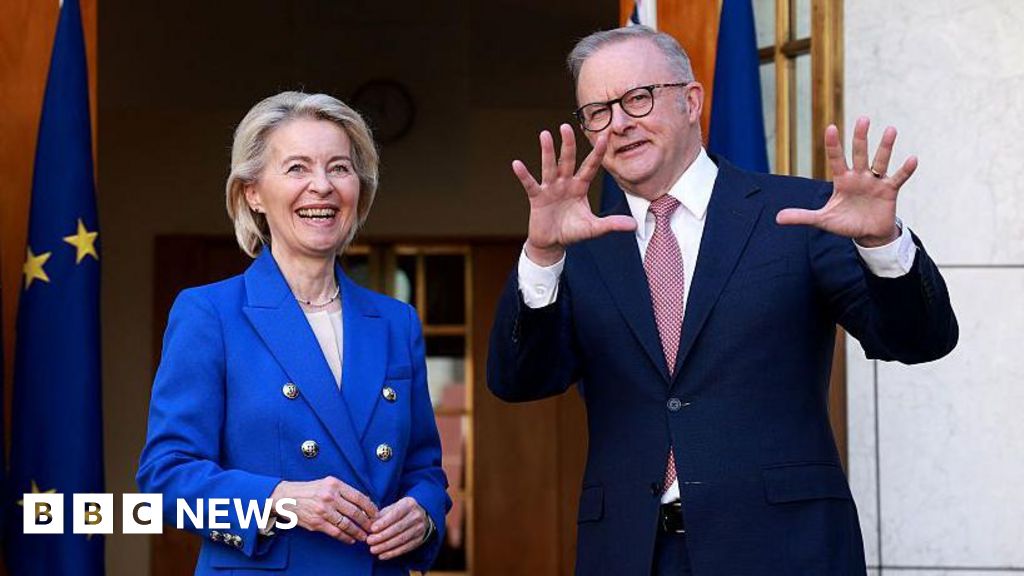
Australia and the EU sign sweeping trade and security deals after years of negotiations.
Source link
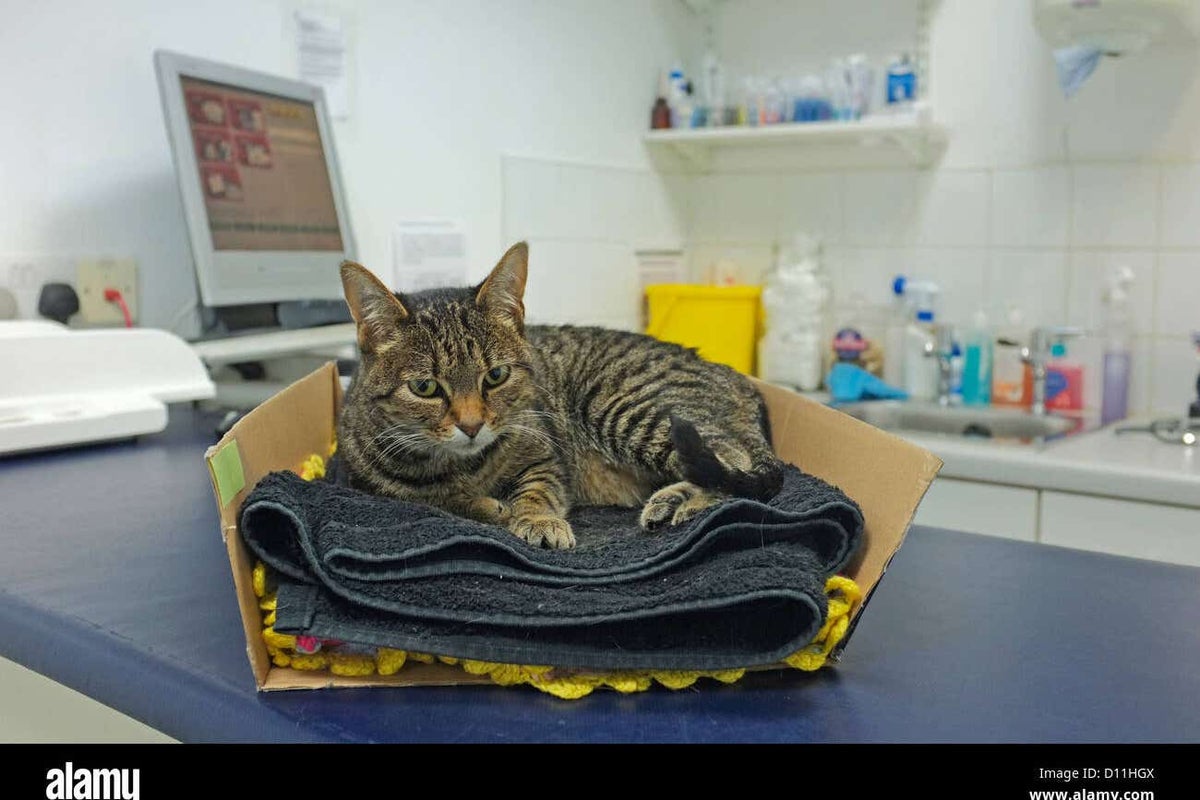
Vets will be legally bound to prescription fee caps and publishing price lists among new measures which will start coming into force later this year, the competition watchdog has announced.
The Competition and Markets Authority (CMA) said its final reforms for the sector will help pet owners better navigate the vet services market.
Other legally binding measures will include a price comparison website and mandatory branding by the large groups to boost competition and drive down prices.
The CMA said pet owners using a vet practice that is part of a larger chain can expect to see changes before Christmas, including standard price lists.
The measures follow the CMA finding that fees have risen at almost twice the rate of inflation, with pet owners not being given enough information about their vet and the prices of treatments.
Martin Coleman, chairman of the independent Inquiry Group, said: “This is the most extensive review of veterinary services in a generation, and today’s reforms will make a real difference to the millions of pet owners who want the best for their pets but struggle to find the practice, treatment and price that meets their needs.
“Too often, people are left in the dark about who owns their practice, treatment options and prices – even when facing bills running into thousands of pounds.
“Our measures mean it will be made clear to pet owners which practices are part of large groups, which are charging higher prices, and for the first time, vet businesses will be held to account by an independent regulator.
“Our changes put pet owners at the centre but also help vets by enhancing trust in the profession and protecting clinical judgment from undue commercial pressure – and that is important to ensure our pets continue to get the best care.”
The CMA said practices must publish a comprehensive price list for standard services, including consultations, common procedures, diagnostics, written prescriptions and cremation options under its new rules.
Prescriptions – for which “many” practices charge £30 or more for each – are to be capped at £21 for the first medicine and £12.50 for any additional medicines.
Practices must also provide a written estimate in advance for any treatment expected to cost £500 or more, including aftercare costs, as well as an itemised bill.
Emergency care will be the only exception for written estimates.
Prices and information about who owns the surgery are to be made available to pet owners through the Royal College of Veterinary Surgeons (RCVS) ‘Find a Vet’ service, which will share the data with third-party comparison sites.
Vet businesses must make it clear whether they are part of a group or an independent business, with details of group ownership to be displayed on signs at the surgery and online.
British Veterinary Association president Rob Williams said: “The majority of the CMA’s measures focus on increasing transparency and information, which will help pet owners make more informed choices and support competition, which is a really positive step.”
He added: “Delivering highly skilled veterinary medicine is costly and whilst we recognise prices have risen sharply in recent years this is due to a number of factors, including the higher costs all businesses are experiencing – and vet practices are not immune.
“Plus, thanks to advances in diagnostics and medical technology over the last 20 years, vets can now do much more to manage disease and injury in animals, whereas in the past the only option available may have been to euthanase.
“Owners today also have a greater expectation of their vet, with many expecting human quality healthcare for their pets and whilst this is possible to deliver, it comes at a cost.”
Business
Gold price prediction today: Pressure on gold prices to continue on March 24, 2026 amid US-Iran war? Check outlook – The Times of India

Gold price prediction today: Gold prices are likely to remain range-bound in the near future, says Praveen Singh, Head Currencies and Commodities, Mirae Asset ShareKhan
Source link


South Korea’s Misto Holdings’ 2025 profit jumps 31.6% on steady growth
Australia and EU agree sweeping trade deal in face of global uncertainty

How Jaxon Smith-Njigba’s contract extension impacts Seahawks

-

 Entertainment1 week ago
Strategic oil stocks to be released ‘immediately’ in Asia and Oceania: IEA
-

 Sports1 week ago
Transfer rumors, news: Real Madrid open to Camavinga exit, as Premier League clubs circle
-
 Business1 week ago
UK looking at all options to secure Strait of Hormuz, says Ed Miliband
-

 Tech1 week ago
Early Deals From the Amazon Spring Sale That Passed Our BS Test
-
 Business1 week ago
New Income Tax Act 2025 To Take Effect From April 1: 10 Key Changes That Will Affect Your Money
-

 Sports1 week ago
PCB files complaint over allowing Bangladesh to take review on penultimate ball – SUCH TV
-
 Business7 days ago
Stocks and pound rise as US rate call approaches
-

 Tech6 days ago
Justice Department Says Anthropic Can’t Be Trusted With Warfighting Systems