

Business
New Income Tax Act 2025 To Take Effect From April 1: 10 Key Changes That Will Affect Your Money


Last Updated:
The New Income Tax Act, 2025, effective April 1, 2026, replaces the 1961 Act. Key changes: PAN for high-value transactions, expanded HRA benefits, higher tax-free perquisites, etc




Income Tax Rules 2026: 10 changes that will impact your pocket
The New Income Tax Act, 2025 is set to come into effect from April 1, 2026, replacing the decades-old Income-tax Act, 1961 with a simplified and more streamlined tax framework. The new legislation aims to make tax laws easier to understand by reducing complex provisions, eliminating redundant sections, and reorganising the structure of the law to improve clarity for taxpayers, professionals, and businesses.
1. PAN Rules Overhauled for High-Value Transactions
Under the draft rules, PAN will be required for annual cash deposits or withdrawals of Rs 10 lakh or more (aggregate in a financial year). Currently, a per-day limit of Rs 50,000 is applicable in deposits, while withdrawals have no specific provision.
PAN will be mandatory for vehicle purchases of Rs 5 lakh or more, including two-wheelers. Currently, PAN is needed for all vehicles, except for two-wheelers, irrespective of value.
For immovable property transactions, including gifts and JDAs, exceeding Rs 20 lakh, PAN must be quoted.
PAN will now be mandatory for all insurance premium payments, regardless of amount. Currently, PAN is required if the premium is above Rs 50,000 in a fiscal year.
However, PAN will be required for hotel/ event payments above Rs 1 lakh per transaction, against the current Rs 50,000.
This replaces the earlier fragmented daily or transaction-based limits and introduces a more annualised reporting structure.
2. Cash Deposits & Withdrawals: Annual Threshold Introduced
Currently, PAN is required for cash deposits exceeding Rs 50,000 in a day. The draft rules shift focus to an annual aggregate threshold of Rs 10 lakh for both deposits and withdrawals.
This could mean tighter tracking of cash-heavy transactions while reducing paperwork for smaller daily banking activities.
3. HRA Benefits Expanded to More Cities
In a major relief for urban salaried taxpayers, Bengaluru, Pune, Ahmedabad and Hyderabad have been proposed to be treated as metro cities for House Rent Allowance (HRA) purposes.
This increases the HRA exemption cap to 50% of basic salary (from 40%) for employees living in these cities, potentially reducing tax liability for lakhs of professionals.
4. Higher Tax-Free Perquisite Limits
The draft rules enhance tax-free limits for certain employer-provided benefits, including official vehicles and employer-provided meals.
The earlier provisions were scattered and outdated. These have now been consolidated and rationalised to reflect current costs and business practices.
5. Property Transactions Threshold Raised
The PAN reporting threshold for immovable property transactions has been increased from Rs 10 lakh to Rs 20 lakh.
Importantly, this now explicitly includes gift transactions, joint development agreements (JDAs), and stamp value-based transactions.
This aligns reporting requirements more closely with prevailing property values.
6. Insurance Premium: PAN Now Mandatory for All
Earlier, PAN was required only if the annual insurance premium exceeded Rs 50,000. Under the draft rules, PAN will be mandatory for all insurance premium payments, regardless of amount. This may increase traceability of high-value policies and prevent misuse.
7. Vehicle Purchases: Two-Wheelers Included
Previously, PAN was required for all motor vehicles except two-wheelers. Now, the rule shifts to a value-based threshold of Rs 5 lakh, and it includes motorcycles and two-wheelers. This aligns compliance requirements with vehicle price escalation.
8. Crypto Exchanges Face Wider Reporting Requirements
Acknowledging the growing digital asset ecosystem, the draft rules expand information-sharing requirements for crypto exchanges. This could mean tighter reporting standards, improved traceability of crypto trades, and greater alignment with anti-tax evasion mechanisms.
9. CBDC Recognised as Valid Electronic Payment Mode
The draft rules formally recognise Central Bank Digital Currency (CBDC) as a valid electronic mode of payment. The Reserve Bank of India has already introduced the Digital Rupee in pilot phases. Recognition under tax rules integrates CBDC into mainstream tax compliance frameworks.
10. Massive Structural Simplification: Rules & Forms Reduced
One of the biggest structural reforms is simplification:
Rules reduced from 511 to 333
Prescribed forms reduced from 399 to 190
Provisions earlier scattered across multiple rules have been consolidated into topic-based frameworks. Operational details are increasingly moved to Schedules, making the rulebook shorter and more navigable.
March 15, 2026, 16:17 IST
Read More
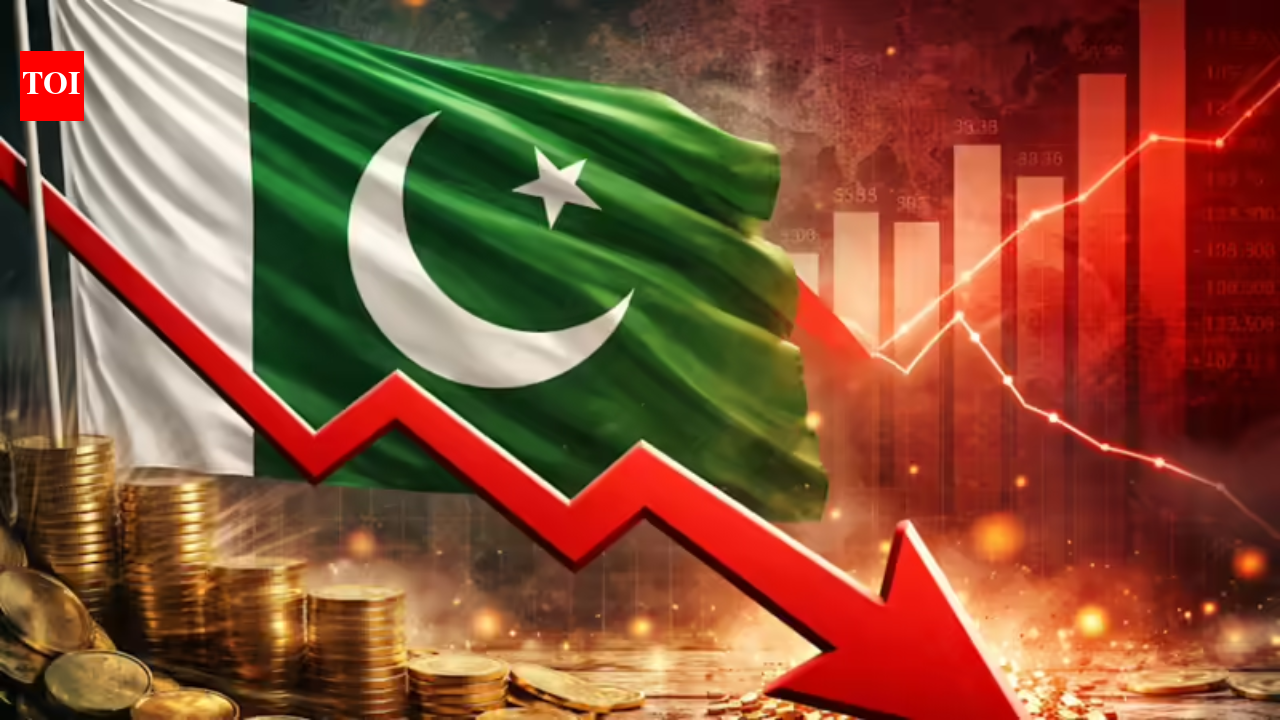
Pakistan’s struggling economy is likely to remain under sustained pressure, with double-digit inflation expected to persist if global oil prices continue to surge amid the ongoing Middle East crisis, according to a report by Dawn.Topline Securities Ltd, in its latest “Pakistan Strategy” report released Saturday, provided a grim assessment of the impact of rising energy costs and regional instability on the country’s economy and stock market. The brokerage described the situation as “prolonged and evolving,” warning that any improvement depends on an immediate and peaceful resolution to the conflict.The report, asx cited by ANI, said that under current conditions, inflation could average between 9 and 10 per cent over the next year, with fourth-quarter FY26 figures expected to exceed 11 per cent. These projections are based on oil prices at $100 per barrel, with every $10 increase adding around 50 basis points to inflation. If oil rises to $120 per barrel, annual inflation could reach 11 per cent, potentially forcing the State Bank of Pakistan into further aggressive interest rate hikes.The rising inflationary pressure is expected to slow economic growth. Topline Securities has cut its GDP forecast for FY27 to between 2.5 and 3.0 per cent from an earlier estimate of 4.0 per cent. Growth for FY26 is projected at 3.5 to 4.0 per cent, but the industrial sector remains vulnerable, with growth possibly dropping to just 1 per cent from nearly 4 per cent.According to Dawn, the current account deficit for FY27 could exceed $8 billion if the government fails to maintain strict import controls, worsening pressure on foreign exchange reserves. The fiscal deficit for FY26 is expected to range between 4.0 and 4.5 per cent of GDP, exceeding targets set by the International Monetary Fund.The Pakistan Stock Exchange has been among the worst-performing markets globally, reflecting the country’s heavy reliance on imported energy. Petroleum imports are projected to reach $15 billion in FY26, while Pakistan imports around 85 per cent of its energy needs. This dependence contributed to a 15 per cent decline in the market during the first quarter of the year.The economic outlook is further affected by a projected 3.5 per cent decline in remittances, with inflows from the Gulf Cooperation Council region expected to fall by 10 per cent. Exports are also forecast to decline by 4 per cent.On the currency front, the Pakistani rupee is expected to weaken to 298 against the US dollar by FY27. Persistent conflict could push depreciation beyond historical averages, increasing pressure on supply and demand.Dawn noted that while domestic exploration firms may eventually increase production to reduce reliance on liquefied natural gas imports, the near-term outlook remains marked by high interest rates, rising urea prices, and a growing dependence on emergency administrative measures to prevent a deeper economic crisis.
Business
OPEC+ set to agree third oil output quota hike since Hormuz closure, sources say | The Express Tribune

Seven OPEC+ members approve 188,000 bpd hike for June but increase remains symbolic until strait reopens
Ships and boats in the Strait of Hormuz, Musandam, Oman, May 1, 2026. PHOTO: REUTERS
OPEC+ is set to agree on Sunday a modest oil output hike, sources said, but the increase will remain largely on paper as long as the United States-Iran war continues to disrupt Gulf oil supplies.
Seven OPEC+ countries have agreed to raise oil output targets by about 188,000 barrels per day in June, the third consecutive monthly increase, the sources said and a draft OPEC+ statement showed.
The move is designed to show the group is ready to raise supplies once the war stops. It is also pressing on with plans to raise output targets despite the departure of the United Arab Emirates from the group this week, sources said.
Read: Oil prices trim gains after UAE exits OPEC, OPEC+
The seven members meeting on Sunday are Saudi Arabia, Iraq, Kuwait, Algeria, Kazakhstan, Russia, and Oman. With the UAE leaving, OPEC+ includes 21 members including Iran, but in recent years only the seven nations plus the UAE have been involved in monthly production decisions.
The Iran war, which began on February 28, and the resulting closure of Hormuz have throttled exports from OPEC+ members Saudi Arabia, Iraq and Kuwait, as well as from the UAE. Before the conflict, these producers were the only countries in the group able to raise production.
The output hike will remain largely symbolic until shipping through the Strait of Hormuz reopens and even then it will take several weeks if not months for flows to normalise, oil executives from the Gulf and global oil traders have said.
Read More: UAE reviewing multilateral ties after OPEC exit but rules out more departures, official says
The disruption propelled oil prices to a four-year high above $125 per barrel as analysts begin to predict widespread jet fuel shortages in one to two months and a spike in global inflation.
Crude oil output from all OPEC+ members averaged 35.06 million bpd in March, down 7.70 million bpd from February, OPEC said in a report last month, with Iraq and Saudi Arabia making the biggest cuts due to constrained exports.
OPEC+ seven members will meet again on June 7, the draft statement said.

Failing High Streets fuel a wider sense of political discontent which could prove crucial in the upcoming elections for English councils in May.
Source link


Princess Royal attends White Ensign Ceremony in Chatham

Israel approves deal to buy fighter jets from US

Karachi’s Shahrah-e-Bhutto to open before Eid ul Adha, announces CM Murad

-

 Tech6 days ago
A Brain Implant for Depression Is About to Be Tested in Humans
-
 Business6 days ago
‘I had £20,000 stolen and had to fight a 13-month fraud reporting rule to get it back’
-

 Tech6 days ago
Almost 90% of women leave tech industry within 10 years | Computer Weekly
-
 Business1 week ago
Pakistan’s oil market is fuelling the crisis | The Express Tribune
-

 Entertainment6 days ago
Melania Trump says ABC should ‘take a stand’ on late-night host Kimmel
-

 Tech5 days ago
This Ambitious Laptop Doesn’t Leave Much Room for Your Hands
-

 Sports5 days ago
Pro wrestling star Steph De Lander reveals how colleague’s advice helped lead her to title triumph at ACW
-

 Politics6 days ago
People of Iran are fighting bravely and heroically for their sovereignty: Putin tells Araghchi