

Politics
48 hours of confusion in Afghanistan during internet blackout

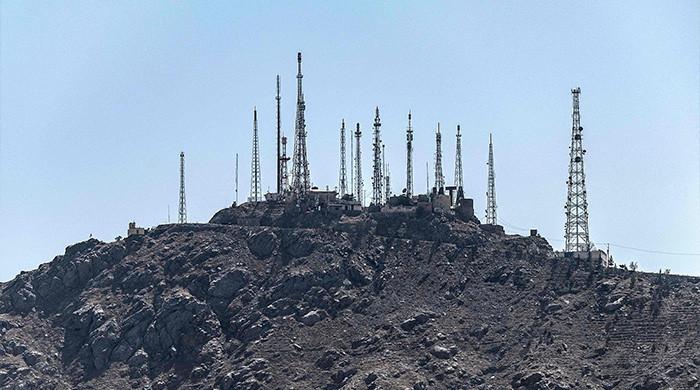
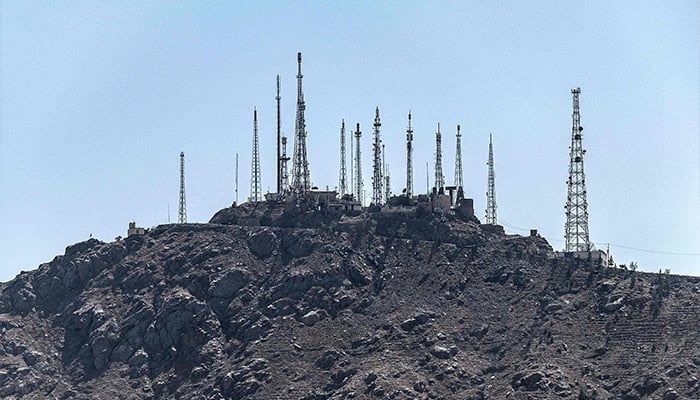
Paralysed banks, grounded planes and chaotic hospitals: for two days, life ground to a halt in Afghanistan after the Taliban unexpectedly cut off the internet and phone networks.
Authorities had for weeks been restricting broadband access in several provinces to prevent “vice” on the orders of the Taliban’s supreme leader.
But no one in Kabul was prepared for a nationwide shutdown.
Young Kabulis first travelled to high points in the mountainous capital, phones raised skyward, hoping to catch a signal. Then they tried buying SIM cards from different operators — before giving up.
For Afghanistan’s 48 million people, it became impossible to send news to their relatives or receive precious remittances from abroad to pay their bills.
Some residents of Herat and Kandahar travelled to border towns to pick up signal from neighbouring Iran and Pakistan.
But for the rest of the country, with no news from the outside world, rumours swelled to the rhythm of helicopters.
“The Americans are going to retake Bagram Air Base!” whispered the streets, after US president Donald Trump’s recent calls to have the US-built facility returned.
Others wondered, incorrectly, that the reclusive Supreme Leader Hibatullah Akhundzada and loyalists had replaced Interior Minister Sirajuddin Haqqani, who advocates a pragmatic approach to running the country.
As of Thursday, the Taliban authorities had still yet to comment on the shutdown.
‘A return to candlelight?’
Across the country, one of the poorest in the world, banking systems stopped functioning and the informal money exchange system used by much of the nation also broke down.
“Cash withdrawals, card payments, fund transfers — everything relies on the internet. We can’t do anything without it,” a private bank manager told AFP.
For Afghans, there was no choice but to survive on whatever cash they had on hand.
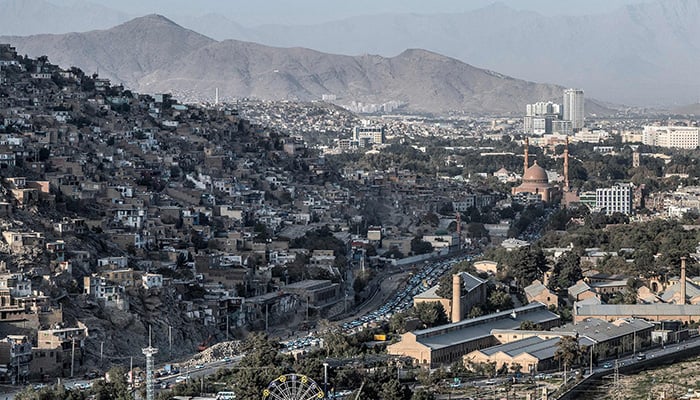
In the half-deserted streets, Taliban security personnel communicated via walkie-talkies.
“I’ve worked in security for 14 years and I’ve never seen anything like this,” he said on condition of anonymity.
“What next? Are we going to cut off the electricity and go back to candlelight?” added another civil servant, speaking on condition of anonymity.
Domestic and international flights were also grounded, but with no way to be warned, passengers continued to flock to airports.
Hospital emergency rooms lacked both staff and patients — as many Afghans were too frightened to travel.
Doctor Sultan Aamad Atef, Afghanistan’s only neurologist, saw a 30% drop in visits.
“Without online appointments, patients have to show up spontaneously and hope I can take them, or wait, sometimes for nothing,” he told AFP.
Wedding day drama
Overnight, two million Afghan women were deprived of online courses, according to the Malala Fund.
“I was so scared this would last and I wouldn’t be able to get my bachelor’s degree… studying remotely is all I have left,” a 20-year-old student told AFP on Wednesday.
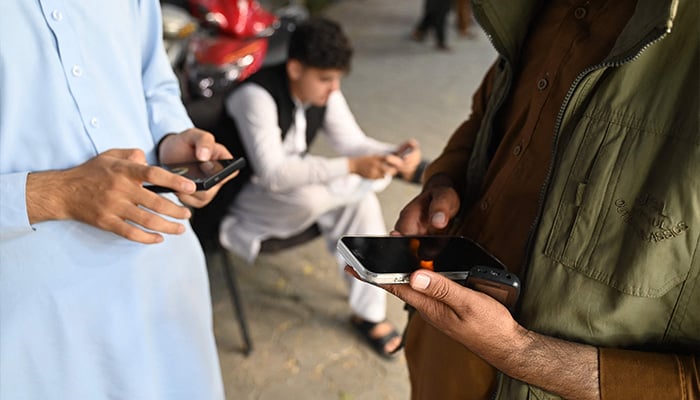
Her parents refused to send her younger brother to school without a mobile phone.
Restaurants without delivery services, the post office, travel agencies and shops all told AFP they had suffered heavy economic losses.
Weddings — often involving a lifetime of savings and up to 2,000 guests — became an “unmanageable situation”, a wedding hall boss in the capital Kabul told AFP.
“We plan weddings well in advance, but we can’t get any confirmation that the bride and groom, and their guests will even show up,” he told AFP, hours before the blackout ended on Wednesday night and the wedding went ahead.
“Ten years wouldn’t be enough to compensate for the economic losses of the last two days,” laments Khanzada Afghan, a grocery store manager in eastern Jalalabad, who sent his employees home.
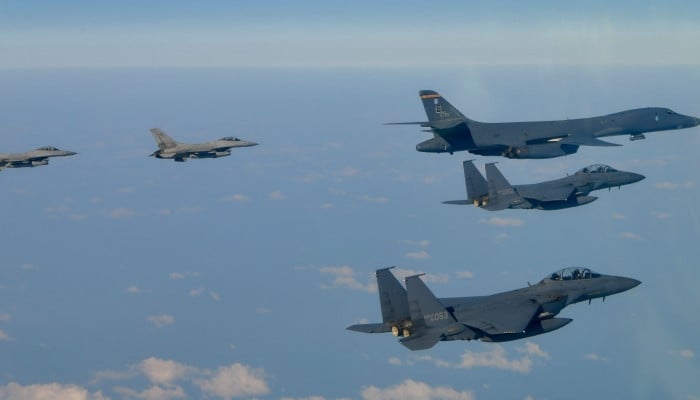

A South Korean fighter pilot has been ordered to pay 88 million won ($59,200) in damages over a 2021 mid-air collision he caused by trying to get photos and videos of himself flying, an official report said on Wednesday.
The pilot, whose identity was withheld, wanted to capture footage of his last sortie before reassignment, according to the report by the Board of Audit and Inspection.
While travelling at 578 kilometres per hour (359 mph), he had the pilot of a second plane and another colleague take snaps of him on their phones.
In search of the perfect shot, he flipped his jet and flew close to the other aircraft, resulting in a misjudgement that caused his left stabilator — a horizontal stabiliser on a plane’s tail — to collide with its wing.
There were no casualties, but the unsanctioned move caused 878 million won in damages.
The pilot’s manoeuvre, which had not been coordinated with others in his formation, caused the aircraft to “invert up to 137 degrees so that its upper side could be captured on video”, the report published on Wednesday said.
The defence ministry initially ordered him to pay the full amount but he appealed to the board, which reduced his liability to 10% of the total repair costs.
The board took into account that other pilots had previously conducted in-flight filming, and that he had still safely commanded the flight and returned to base without causing further damage.
“Since commissioning in 2010, the individual has served for an extended period as a fighter pilot, managing aircraft safely,” the report said.
While the report did not specify what type of aircraft was involved, the Yonhap news agency said it was an F-15K.


Children in Britain who are 17 or younger, and anyone born in the future, will never be able to legally buy cigarettes after lawmakers approved new stricter restrictions on smoking.
The Tobacco and Vapes Bill raises the legal age for buying tobacco by one year, every year, starting with people born on or after January 1, 2009, meaning affected age groups face a lifetime ban.
The law, which is due to receive royal assent next week, also tightens controls on vaping, including banning sales of vaping and nicotine products to under‑18s and restricting advertising, displays, free distribution and discounting.
The government says the measures will help reduce smoking and prevent young people from becoming addicted to nicotine, easing long-term pressure on the National Health Service.
Health Secretary Wes Streeting said the approval of the bill was a historic moment for the nation’s health.
“Children in the UK will be part of the first smoke-free generation, protected from a lifetime of addiction and harm,” he said.
“Prevention is better than cure — this reform will save lives, ease pressure on the NHS, and build a healthier Britain.”
Smoking causes about 64,000 deaths and 400,000 hospital admissions a year in England, according to official estimates, and costs the NHS around 3 billion pounds ($4 billion) annually, with wider economic costs exceeding 20 billion pounds.
Tighter rules on vaping
Vaping has also become a focus for policymakers, especially over concerns about youth uptake and nicotine addiction.
The government banned the sale of single-use or disposable vapes last year over concerns about youth use and environmental damage.
The new legislation will tighten those rules, with ministers gaining powers to regulate the flavours and packaging of tobacco, vaping and nicotine products through secondary legislation.
Around 10% of adults in Great Britain — an estimated 5.5 million people — use vapes, according to health charity Action on Smoking and Health, with levels broadly unchanged since 2024, suggesting growth has begun to plateau.
About half of people who vape are former smokers, while around 40% continue to smoke alongside vaping, the charity said.


DUBAI: Dubai has announced a major new metro project, with authorities saying the “Golden Line” will cost 34 billion dirhams ($9.25 billion) and is expected to be completed by September 9, 2032.
The planned “Golden Line” will run about 40 metres underground and connect 15 key areas across the emirate, according to details shared by the emirate’s ruler Sheikh Mohammed bin Rashid Al Maktoum on social media.
The project is expected to serve around 1.5 million people and support 55 major real estate developments currently under construction.
Dubai said the new line would expand the total length of its metro network by 35%, as part of broader efforts to improve transport infrastructure and accommodate population and urban growth.


Cambodia & Canada discuss strengthening economic ties

Trump administration in advanced talks for a rescue package for Spirit Airlines, source says

Iran war: Trump sanctions waiver or not – why India continues to buy Russian oil – The Times of India

-

 Fashion6 days ago
France’s LVMH Q1 revenue falls 6%, shows resilience amid Iran war
-

 Entertainment1 week ago
Is Claude down? Here’s why users are seeing errors
-

 Sports1 week ago
PSL 11: Peshawar Zalmi win toss, opt to field first against Quetta Gladiators
-

 Tech1 week ago
The Deepfake Nudes Crisis in Schools Is Much Worse Than You Thought
-

 Tech1 week ago
Human-machine teaming dives underwater
-

 Tech1 week ago
Bremont Is Sending a Watch to the Moon’s Surface
-
 Business1 week ago
BP sees ‘exceptional’ oil trading result as Iran war sends crude costs soaring
-

 Fashion1 week ago
What no one is saying about the 2026 apparel slowdown