

Tech
5 Crowdfunded products that actually delivered on the hype
Nemo enim ipsam voluptatem quia voluptas sit aspernatur aut odit aut fugit, sed quia consequuntur magni dolores.


Lorem ipsum dolor sit amet, consectetur adipisicing elit, sed do eiusmod tempor incididunt ut labore et dolore magna aliqua. Ut enim ad minim veniam, quis nostrud exercitation ullamco laboris nisi ut aliquip ex ea commodo consequat.
Nemo enim ipsam voluptatem quia voluptas sit aspernatur aut odit aut fugit, sed quia consequuntur magni dolores eos qui ratione voluptatem sequi nesciunt.
Et harum quidem rerum facilis est et expedita distinctio. Nam libero tempore, cum soluta nobis est eligendi optio cumque nihil impedit quo minus id quod maxime placeat facere possimus, omnis voluptas assumenda est, omnis dolor repellendus.
Nulla pariatur. Excepteur sint occaecat cupidatat non proident, sunt in culpa qui officia deserunt mollit anim id est laborum.
Sed ut perspiciatis unde omnis iste natus error sit voluptatem accusantium doloremque laudantium, totam rem aperiam, eaque ipsa quae ab illo inventore veritatis et quasi architecto beatae vitae dicta sunt explicabo.
Neque porro quisquam est, qui dolorem ipsum quia dolor sit amet, consectetur, adipisci velit, sed quia non numquam eius modi tempora incidunt ut labore et dolore magnam aliquam quaerat voluptatem. Ut enim ad minima veniam, quis nostrum exercitationem ullam corporis suscipit laboriosam, nisi ut aliquid ex ea commodi consequatur.
At vero eos et accusamus et iusto odio dignissimos ducimus qui blanditiis praesentium voluptatum deleniti atque corrupti quos dolores et quas molestias excepturi sint occaecati cupiditate non provident, similique sunt in culpa qui officia deserunt mollitia animi, id est laborum et dolorum fuga.
“Duis aute irure dolor in reprehenderit in voluptate velit esse cillum dolore eu fugiat”
Quis autem vel eum iure reprehenderit qui in ea voluptate velit esse quam nihil molestiae consequatur, vel illum qui dolorem eum fugiat quo voluptas nulla pariatur.
Temporibus autem quibusdam et aut officiis debitis aut rerum necessitatibus saepe eveniet ut et voluptates repudiandae sint et molestiae non recusandae. Itaque earum rerum hic tenetur a sapiente delectus, ut aut reiciendis voluptatibus maiores alias consequatur aut perferendis doloribus asperiores repellat.









“The trade-off isn’t only ethical or economic,” Andreaux adds. “It’s also about reliability, privacy and personal security.”
Abed Kataya, digital content manager at SMEX, a Beirut-based digital rights organization focused on internet policy in the Middle East and North Africa, says piracy in the region is shaped less by culture than by structural barriers.
“I see that piracy in MENA is not a cultural choice; rather, it has multiple layers,” Kataya tells WIRED Middle East.
“First, when the internet spread across the region, as in many other regions, people thought everything on it was free,” Kataya says. “This perception was based on the nature of Web 1.0 and 2.0, and how the internet was presented to people.”
Today, he says, structural barriers still lead many users towards illegal platforms. “Users began to watch online on unofficial streaming platforms for many reasons: lack of local platforms, inability to pay, bypassing censorship and, of course, to watch for free or at lower prices.”
Payment access also remains a major factor. “Not to mention that many are unbanked, do not have bank accounts, lack access to online payments, or do not trust paying with their cards and have a general distrust of online payments,” Kataya adds.
Algerian students also share external hard drives loaded with television series, while in Lebanon streaming passwords are frequently shared across households. In Egypt, large Telegram channels distribute content across different genres, including Korean dramas, classic Arab films and underground music.
“We grew up solving problems online,” says Mira. “When something is blocked, you find a way around it. It’s … a fundamental human instinct.”
Streaming Platforms Adapting
Andreaux says StarzPlay has tried to address some of the payment barriers that limit streaming adoption in the region. “StarzPlay recognized early that payment friction was a regional barrier to adoption,” he says. “That’s why we invested in flexible subscription models and alternative payment methods, including telecom-led billing options that make access easier across different markets.”
At the same time, international media companies are working together to combat piracy through the Alliance for Creativity and Entertainment (ACE), a coalition of film studios, television networks and streaming platforms that targets illegal distribution of films, television and sports content. Its members include global companies such as Netflix as well as regional players like OSN Group, which operates the streaming service OSN+ across the Middle East and North Africa.
Kataya notes that legitimate streaming platforms are still expanding across the region. “The user base of official streaming platforms has been growing in the region,” he says. “For example, Shahid, the Saudi platform, is expanding and Netflix has dedicated packages for the region.”
“Other players, like StarzPlay and local platforms in Egypt, are also finding their place,” Kataya adds. “Social media also plays a huge role, especially when a film is widely discussed or controversial.”
Piracy carries legal and security risks, Andreaux says. “Rather than just ‘free streaming’, piracy exposes consumers to malware and insecure payment channels,” he says. “It also weakens investment in local content by depriving creators of revenue and reducing jobs.”
But the structural barriers described by users across the region remain. For many viewers in North Africa and the Levant, the challenge is not choosing between piracy and legality—it is whether legitimate access exists at all.
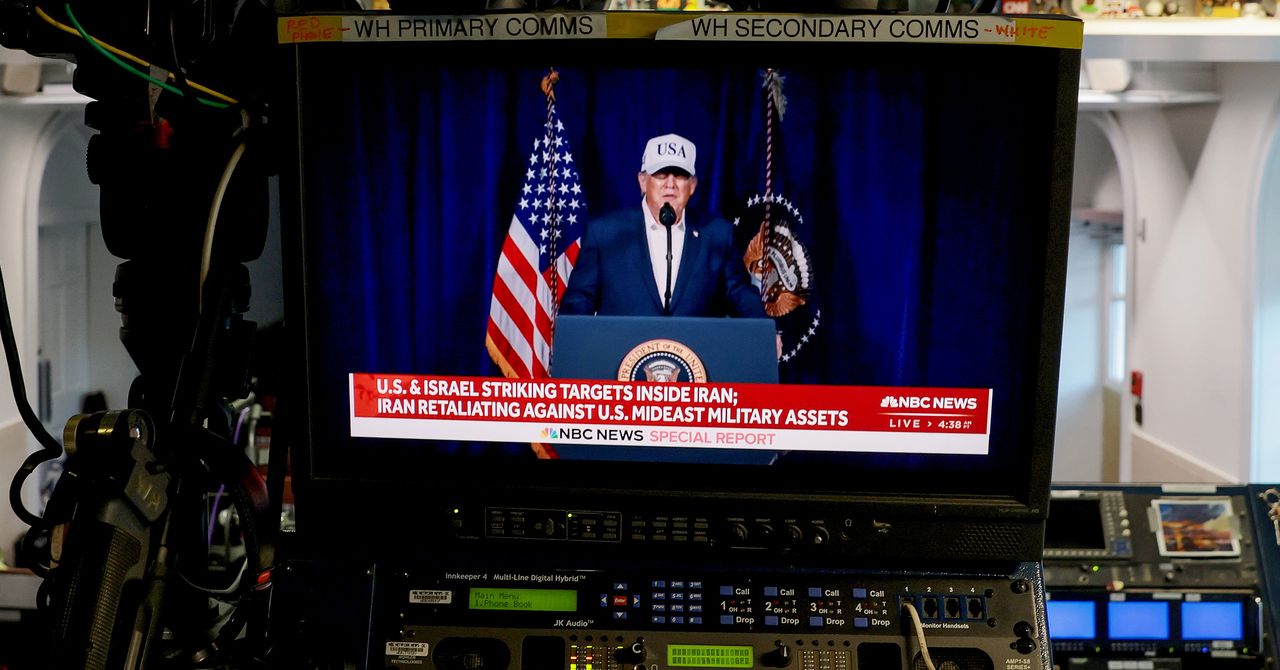
Minutes after Donald Trump announced that the US and Israeli governments had launched a “major combat operation” against Iran in the early hours of Saturday morning, disinformation about the attack and Tehran’s response flooded X.
WIRED has reviewed hundreds of posts on X, some of which have racked up millions of views, that promote misleading claims about the locations and scale of the attack.
Elon Musk’s social media platform is a verifiable mess: In some cases, alleged video footage of the attack shared in posts on X are actually months or years old. In several posts, video footage of apparent attacks have been attributed to incorrect locations. A number of images shared on X appear to be altered or generated with AI. Other posts attempt to pass off video game footage as scenes from the conflict.
X did not respond to a request for comment. Under Musk’s stewardship, X has become a haven for disinformation, especially during major global breaking news events. At the beginning of the Israel-Hamas war, and more recently during anti-immigration enforcement protests in LA, the platform has drowned in inaccurate and faulty posts.
Almost all of the most viral posts reviewed by WIRED on Saturday came from accounts with blue check marks, meaning they pay X for its premium service and could be eligible to earn money based on how much engagement their posts generate, even if the content is false. While some posts with disinformation have a community note appended beneath them to correct the record, they remain up on the site, and it’s unclear how many people viewed them before the notes appeared.
One video posted by a blue check mark account claimed to show ballistic missiles over Dubai; the clip actually showed Iranian ballistic missiles fired at Tel Aviv in October 2024. The post has been viewed over 4.4 million times.
One of the most viral clips shared on X in the hours after the attack claims to show an Israeli fighter jet being shot down by Iranian air defense systems. The video has been shared by dozens of accounts, including one post which has been viewed more than 3.5 million times. The provenance of the video is unclear, but there have been no credible reports of any Israeli jets being shot down over Iran on Saturday.
Another account that claims to be an expert in open source intelligence posted a video showing explosions, alongside the caption: “6 Iranian Hypersonic Missiles hit the Indian-invested Israeli Haifa port. Massive damages reported.” The video has been viewed 64,000 times, but the footage was actually captured last July and shows an Israeli attack on the defense ministry in Damascus, Syria.
In a number of cases, pro-Iranian accounts have been using images and footage from Saturday’s attacks to falsely claim successful strikes against Israel. “IRANIAN MISSILE IMPACT IN TEL AVIV RIGHT NOW,” the Iran Observer account wrote in a post featuring an image of Dubai. The post had been viewed over 200,000 times before it was deleted, but dozens of other posts sharing the same image and making the same claims remain on X.
Tehran Times, a news outlet aligned with the Iranian government, posted what appears to be an AI-generated image on X which claims to show that “an American radar in Qatar was completely destroyed today in an Iranian drone strike.” The use of AI generated images was flagged on X by Tal Hagin, a senior analyst with open source intelligence company Golden Owl. While there are reports that drone and missile attacks targeted the US Navy’s 5th Fleet headquarters in Bahrain, there are no reports yet of similar successful attacks in Qatar.
A pro-Trump account, which also features a blue check mark, posted images claiming to show the before and after pictures of the palace of Iranian Supreme Leader Ali Khamenei, which was targeted during Saturday’s missile attacks. (In a post on Truth Social, Trump claimed Khamenei was killed in an attack.) While the after picture appears to accurately show the palace after the attack, the before picture shows the Mausoleum of Ruhollah Khomeini, which is located on the other side of Tehran. The post has been viewed 365,000 times.

“This is just not the right pathway forward,” Isaacman said.
A senior NASA official, speaking on background to Ars, noted that the space agency has experienced hydrogen and helium leaks during both the Artemis I and Artemis II prelaunch preparations, and these problems have led to monthslong delays in launch.
“If I recall, the timing between Apollo 7 and 8 was nine weeks,” the official said. “Launching SLS every three and a half years or so is not a recipe for success. Certainly, making each one of them a work of art with some major configuration change is also not helpful in the process, and we’re clearly seeing the results of it, right?”
The goal therefore is to standardize the SLS rocket into a single configuration in order to make the rocket as reliable as possible, and launching as frequently as every 10 months. NASA will fly the SLS vehicle until there are commercial alternatives to launch crews to the moon, perhaps through Artemis V as Congress has mandated, or perhaps even a little longer.
Is Everyone on Board?
The NASA official said all of the agency’s key contractors are on board with the change, and senior leaders in Congress have been briefed on the proposed changes.
The biggest opposition to these proposals would seemingly come from Boeing, which is the prime contractor for the Exploration Upper Stage, a contract worth billions of dollars to develop a more powerful rocket that was due to launch for the first time later this decade. However, in a NASA news release, Boeing appeared to offer at least some support for the revised plans.
“Boeing is a proud partner to the Artemis mission and our team is honored to contribute to NASA’s vision for American space leadership,” said Steve Parker, Boeing Defense, Space & Security president and CEO, in the news release. “The SLS core stage remains the world’s most powerful rocket stage, and the only one that can carry American astronauts directly to the moon and beyond in a single launch. As NASA lays out an accelerated launch schedule, our workforce and supply chain are prepared to meet the increased production needs.”
Solid Reasons for Changing Artemis III
NASA’s new approach to Artemis reflects a return to the philosophy of the Apollo program. During the late 1960s, the space agency flew a series of preparatory crewed missions before the Apollo 11 lunar landing. These included Apollo 7 (a low-Earth-orbit test of the Apollo spacecraft), Apollo 8 (a lunar orbiting mission), Apollo 9 (a low-Earth-orbit rendezvous with the lunar lander), and Apollo 10 (a test of the lunar lander descending to the moon, without touching down).
With its previous Artemis template, NASA skipped the steps taken by Apollo 7, 9, and 10. In the view of many industry officials, this leap from Artemis II—a crewed lunar flyby of the moon testing only the SLS rocket and Orion spacecraft—to Artemis III and a full-on lunar landing was enormous and risky.
The Artemis II crew rehearse a walkout from the Neil A. Armstrong Operations and Checkout Building at NASA’s Kennedy Space Center.Photograph: Joe Raedle/Getty Images


Holly Willoughby could be next big digital star after Gordon Ramsay

The Piracy Problem Streaming Platforms Can’t Solve

Greggs to reveal trading amid pressure from cost of living and weight loss drugs

-
 Business1 week ago
US Top Court Blocks Trump’s Tariff Orders: Does It Mean Zero Duties For Indian Goods?
-

 Fashion1 week ago
ICE cotton ticks higher on crude oil rally
-

 Entertainment1 week ago
The White Lotus” creator Mike White reflects on his time on “Survivor
-

 Politics1 week ago
Pakistan carries out precision strikes on seven militant hideouts in Afghanistan
-
 Business1 week ago
Eye-popping rise in one year: Betting on just gold and silver for long-term wealth creation? Think again! – The Times of India
-

 Sports1 week ago
Brett Favre blasts NFL for no longer appealing to ‘true’ fans: ‘There’s been a slight shift’
-

 Sports1 week ago
Kansas’ Darryn Peterson misses most of 2nd half with cramping
-
 Politics1 week ago
US Supreme Court strikes down Trump’s trade tariff measures