

Business
5% voluntary ethanol blending proposed | The Express Tribune


ISLAMABAD:
A committee formed by Prime Minister Shehbaz Sharif has recommended 5% voluntary ethanol blending with petrol based on commercial viability and in consultation with oil marketing companies.
The committee, headed by Minister for Petroleum Ali Pervaiz Malik, had been tasked with exploring options for fuel blending. It submitted a report to the Prime Minister’s Office, which asked it to present the study to the deputy prime minister. Oil industry officials point out that the current ethanol production from sugarcane crushing stands at only 400,000 to 450,000 tons per year. Ethanol exports from Pakistan have been used for blending to produce E10-E15 fuel. At present, most of the ethanol produced in the country is exported due to price incentives.
The committee also conducted a price comparison. The monthly average of ethanol and petrol prices indicates that ethanol remains consistently cheaper than petrol. The average difference is calculated at $225 per ton. The committee noted that due to reduced energy content in ethanol, its price needed to be lower by 20% to 30% in order to become cost-effective. Infrastructure will also require notable investment. The committee was of the view that significant capital investment should be pumped into ethanol storage and blending facilities.
Vehicle compatibility has been evaluated too. According to the committee, new vehicles are compatible with E5 and E10 fuels. However, Pak Suzuki Motor Company has declared incompatibility with ethanol blending in the case of older vehicles and two-wheelers. The committee took up for discussion sustainable supplies as ensuring consistent supply was a challenge, particularly when export prices were higher.
Previous attempts at ethanol blending
A pilot project for blending 10% ethanol (E-10) was introduced through state-run oil marketing company Pakistan State Oil (PSO), which continued from 2010 to 2012. The project was initiated in Sindh and later expanded to Punjab.
The E-10 price was kept lower by Rs2.50 per litre compared to the regular petrol price through the petroleum levy differential. PSO was allowed to utilise Rs1.70 per litre for the development of infrastructure over a period of two years.
However, the project was stopped in 2012 due to the sudden unavailability of ethanol. As its export prices picked up, the producers preferred to export. Only PSO had been tasked with implementing the project. It was introduced as a separate grade, requiring substantial investment. Auto manufacturer Pak Suzuki declared that E-10 was not suitable for consumption in its vehicles.
Global best practices
Brazil launched ethanol blending in 1975 with E10 and currently E27 is being offered. It ensured consistent long-term policy implementation and investment in infrastructure with the objective of reducing reliance on imported fuels and curbing greenhouse gas (GHG) emissions.
The South American nation introduced flex-fuel vehicles in 2003, which can run on E25-E100. It is also the largest producer of sugarcane, accounting for 25% of global production.
India initiated ethanol blending in 2003 with E5 and currently it is selling E10 and is moving to E20. It has adopted a consistent long-term policy, the diversification of feedstock and regulated ethanol prices.
The objective is to reduce dependence on imported fuel and emissions intensity. It has become the second-largest producer of sugarcane with 19% of global production.
Earlier, the US launched ethanol blending in 1970 and currently E10 is being used across the nation. In some states, higher blending ratios are applied. The United States sets flexible annual blending targets depending on the availability of ethanol. Its aim is to reduce GHG emissions and enhance rural income. It is the largest producer of corn-based ethanol.



Business
Indian electronic firms seek PLI 2.0, eye 30–35% share in global mobile production by FY31 – The Times of India
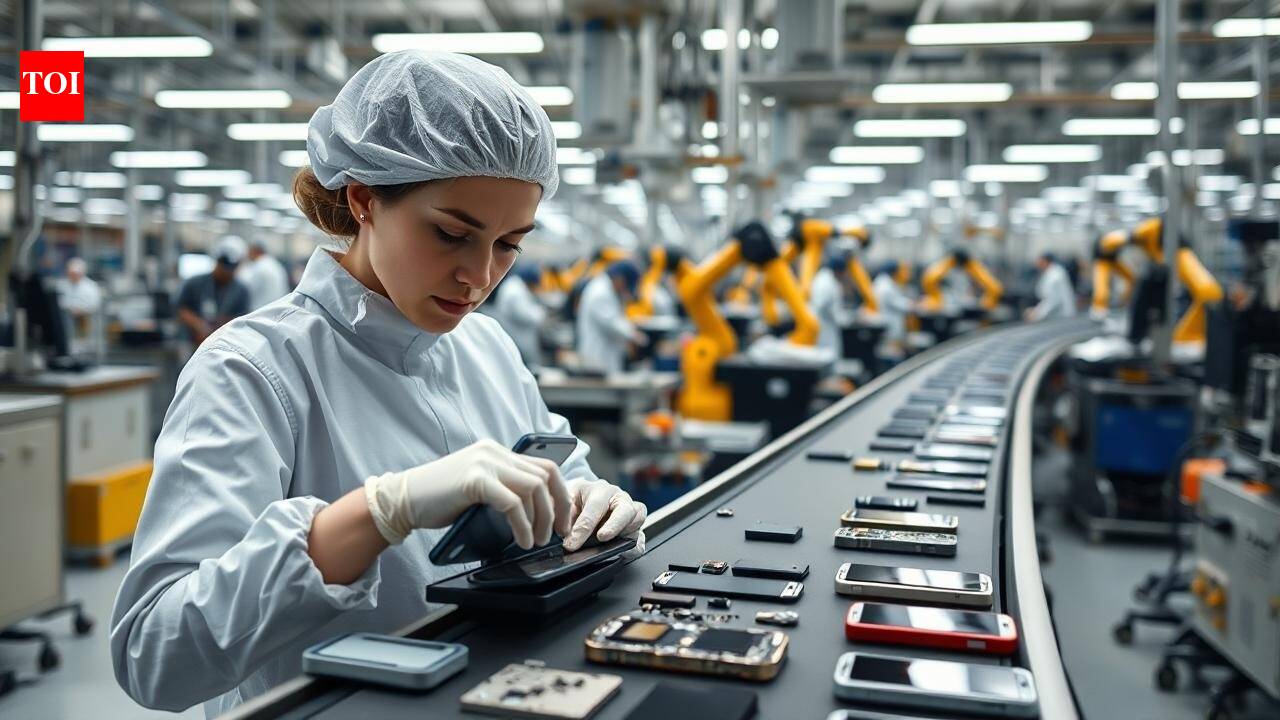
With the production-linked incentive (PLI) scheme now over, India’s electronics industry has pitched a fresh expansion plan, seeking continued government support as it eyes a strong jump in manufacturing and exports over the next five years. During discussions with the ministry of electronics and IT (MeitY), the industry said that by FY31, India could capture 30–35% of global mobile production. This would take annual output to $110–130 billion, with exports estimated at $55–70 billion. At present, according to ET, India accounts for about 15% of global mobile phone production, with manufacturing output exceeding $64 billion. Industry executives said the current production-linked incentive (PLI) scheme has played a key role in this growth. With the scheme set to end on March 31, companies are pushing for a new version to keep the momentum going. Talks are underway on a proposed PLI 2.0 scheme, which is likely to run from 2026 to 2031. Government officials said a new incentive programme is being considered, though details have not yet been finalised. The industry has also shared a roadmap with the government to meet production and export targets by FY31. “With a strong foundation, we have an opportunity to achieve 30-35% of global mobile production in the next five years,” Pankaj Mohindroo, chairman of India Cellular and Electronics Association (ICEA), told ET. “To realise this ambition, it is critical to sustain the current momentum and continue investments. We are actively engaging with the government to shape the next phase of this growth journey.” Industry players said increasing India’s global share would help strengthen the supply chain, deepen the manufacturing ecosystem and support research and development at scale. One executive said scale is more important than value addition alone for long-term sustainability. The government is also examining how much domestic value addition should be required for incentives and how exports can be increased without breaching World Trade Organization norms. Experts said the growth in production will depend largely on exports, as domestic demand is expected to weaken. India’s smartphone market could shrink by more than 13% this year due to rising memory costs, which may push device prices up by 15–40%, according to an earlier report. Data from the commerce ministry showed smartphone exports rose 47.4%, from $20.44 billion in 2024 to $30.13 billion in 2025. The United States accounted for $19.7 billion, or 65% of total exports. Meanwhile, China’s smartphone exports fell from $132.6 billion to $120.6 billion during the same period, with shipments to the US declining sharply due to fentanyl-related tariffs. India’s tariff advantage in the US market has narrowed after the US Supreme Court struck down sweeping global tariffs imposed by the Trump administration. China continues to have an advantage due to its strong supply chain and advanced manufacturing capabilities, while India is still developing these.
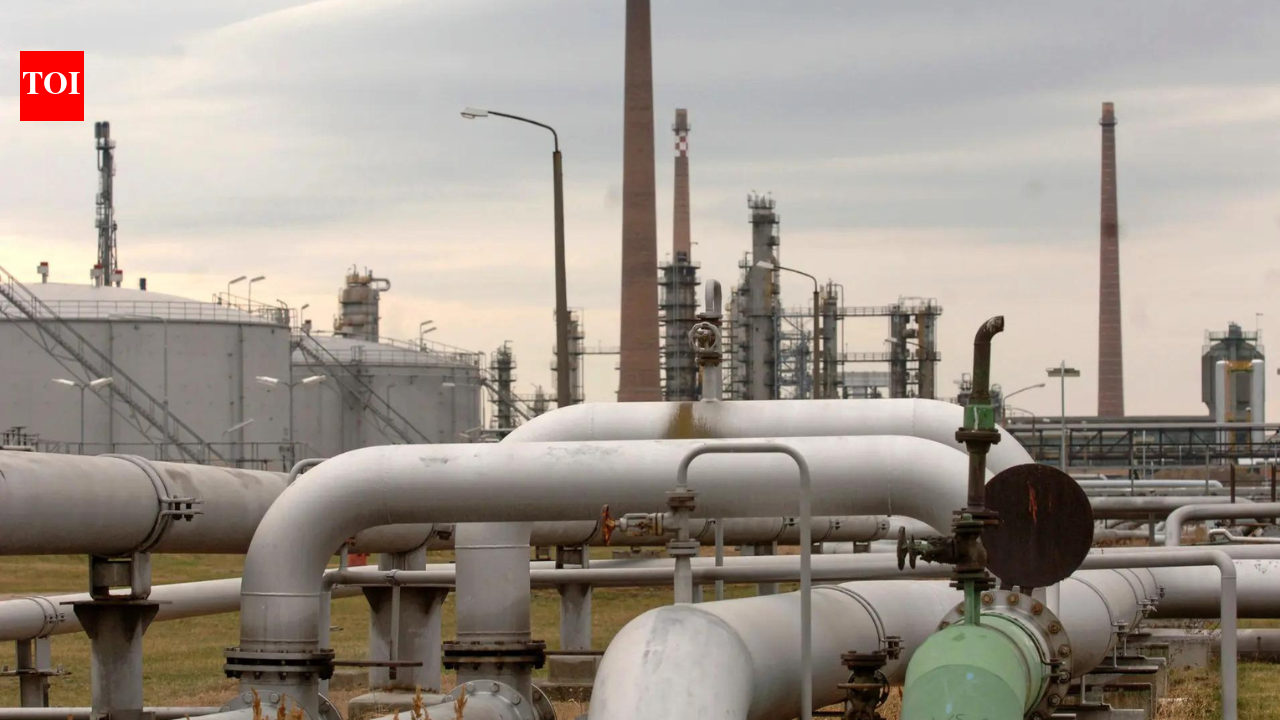
NEW DELHI: Govt on Saturday significantly increased export duties on diesel and aviation turbine fuel to dissuade oil refiners from exporting these fuels and to ensure adequate availability in the domestic market amid ongoing tensions in West Asia. The ministry of finance issued a series of notifications hiking the export duty on diesel by more than 150% – from Rs 21.5 per litre to Rs 55.5 per litre – with immediate effect. The levy on ATF, or jet fuel, was increased from Rs 29.5 per litre to Rs 42 per litre. The export duty on petrol continues to be nil. Under the revised structure, the special additional excise duty on high-speed diesel has been raised to Rs 24 per litre, while the road and infrastructure cess now stands at Rs 36 per litre, which means a large chunk will now flow to the Centre. Govt said these duties are not meant to boost revenue, but to stop fuel exporters from taking undue advantage of price differences. The Centre had, on March 27, imposed an export duty of Rs 21.5 per litre on diesel and Rs 29.5 per litre on ATF in a bid to check windfall gains, as fuel was in short supply in international markets due to a squeeze on energy supplies amid the military conflict and export curbs imposed by China. It had also slashed excise duty on diesel and petrol to shield consumers and oil companies from the impact of high crude prices. Retail prices of automobile fuels in India have not increased despite high volatility in the international crude market, while only a small part of the international price pressure has been passed on to domestic flights. The windfall tax on exports of diesel and ATF helps the Centre partly offset the impact of the excise duty cut. On March 27, govt had estimated revenue gains from export duties at around Rs 1,500 crore in a fortnight. The further hike in export duties is likely to lead to higher revenue gains. In a statement, the ministry of petroleum had said, “At a time when international diesel prices have surged sharply, the levy is designed to disincentivise exports and ensure that refinery output is directed first tow-ards meeting domestic demand.“
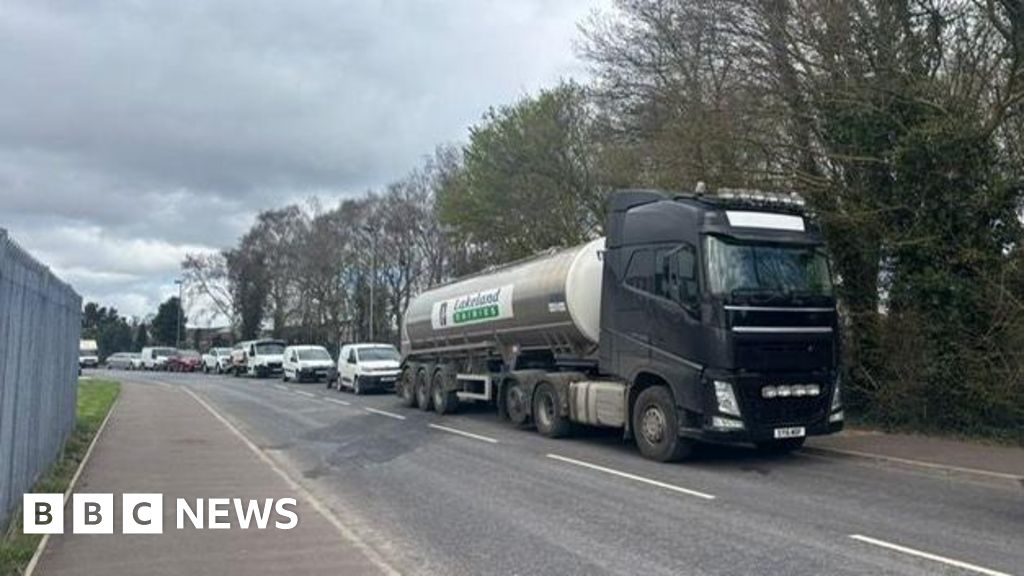
A convoy of vans, lorries, tractors, and even a limousine took part in a slow moving protest around the town centre on Saturday afternoon.
Source link


IRGC Navy warns military vessels of ‘firm response’ to attempts at crossing Strait of Hormuz
[CinePlex360] Please moderate: “Meta’s lat
Indian electronic firms seek PLI 2.0, eye 30–35% share in global mobile production by FY31 – The Times of India

-

 Entertainment1 week ago
Joe Jonas shares candid glimpse into parenthood with Sophie Turner
-

 Tech1 week ago
Our Favorite iPad Is $50 Off
-

 Fashion5 days ago
India’s exports face reset as EU links trade to carbon metrics: EY
-

 Sports1 week ago
UConn Final Four run could trigger a $50M furniture giveaway for Massachusetts-based Jordan’s Furniture
-

 Entertainment1 week ago
Blake Lively reacts to harassment claims dismissal against Justin Baldoni
-
 Business1 week ago
Video: Why Is the Labor Market Stuck?
-

 Politics1 week ago
Iran can sustain Strait of Hormuz closure for years, will cut US military logistics: Official
-

 Entertainment1 week ago
Barbie Ferreira reveals where she stands with ‘Euphoria’ girls after exit