

Tech
6 Great After-Christmas Deals to Spend Your Gift Cards On


After-Christmas deals are an excellent way to redeem any gift cards or cash you got for Christmas. You can purchase something you actually want, and you can do it for less money than usual. I’ve scoured the Internet for truly good after-Christmas deals on the gear that we’ve hand-tested on the WIRED Reviews team. Many of these sales will end this weekend, so keep that in mind while you’re shopping. Find all the highlights below.
For more inspiration, check out some of our recently updated buying guides, including the Best Office Chairs, the Best Cheap Phones, and the Best Space Heaters.
WIRED Featured Deals:
Anker Laptop Power Bank for $88 ($47 off)

We love this beefy power bank. Its 25,000-mAh capacity is more than enough for fully charging your iPhone between 4 and 6 times, and it can deliver up to 165 watts to two devices meaning that you can charge your laptop, gaming console, or anything else you fancy. The built-in USB-C cable doubles as a carrying loop. There’s also a nifty display that’ll give you at-a-glance information on remaining battery, temperature, charging speeds, and more. It has pass-through charging support and only takes about two hours to fully recharge. This deal price matches what we saw on Black Friday.
Google Pixel 10 for $599 ($200 off)
-
Photograph: Julian Chokkattu
-
Photograph: Julian Chokkattu
-
Photograph: Julian Chokkattu
-
.png)


Pixel 10, Pixel 10 Pro, and Pixel 10 Pro XL
There was an on-page coupon (PIXEL10) that had the best price we’ve tracked for any of the phones in the Google Pixel 10 lineup. That coupon is not available as of Saturday morning, but it may be back—clip it if you see it. This is still a good deal on the smartest Android phones you can buy, with fantastic cameras, snappy processors, gorgeous displays, and more AI integration than the average person needs. Check out our dedicated buying guide to figure out which Google Pixel 10 is right for you. If you’re in the market for an upgrade, now is a good time to buy considering that we’ve never seen any phone in this flagship lineup sell for less.
Bruvi BV-01 Brewer Bundle for $228 ($120 off)—Clip the Coupon

Photograph: Louryn Strampe
I’ve tested a lot of pod coffee makers, and the Bruvi BV-01 is my favorite. This deal price is the best we see outside of special events like Black Friday and Cyber Monday. The brewer is cute and looks great on a counter, with a large reservoir, an intuitive touchscreen display, and a built-in wastebin that collects used pods for you. The best part are the proprietary B-Pods, which are designed to biodegrade in a landfill. The bundle gets you the machine plus an assortment of bestselling coffee and espresso pods to get you started.
Fitbit Charge 6 for $100 ($60 off)

The Fitbit Charge 6 has been at the top of our fitness tracker buying guide since we first tested it. It’s attractive, affordable, accessible, and on sale for a match of the best deal we’ve seen. It’ll play well with iOS and Android, and it has a solid suite of features that’ll cover almost anyone’s needs—including skin temperature, heart rate readings, ECGs, activity and workout tracking, and more. The battery lasts for at least a week on a single charge. This deal comes with a six-month subscription to Fitbit Premium, which normally costs $10 per month.
Hydro Flask Standard Mouth Water Bottle for $30 ($10 off)

Photograph: Dick’s Sporting Goods
Hydro Flask
Standard Mouth Water Bottle
This budget-friendly deal gets you a steal on the best reusable water bottle. Hydro Flask bottles are durable, portable, and easy to cover in all the stickers you’ve been hoarding. The handle is flexible, the bottle is leakproof, and every component is dishwasher safe (though you may want to opt for hand-washing if you do end up plastering it in stickers). A few different colors are on sale at this price.
Beats Powerbeats Pro 2 for $200 ($50 off)
-Reviewer-Photo-SOURCE-Ryan-Waniata.jpg)
If hitting the gym is one of your New Year’s resolutions for 2026, the Beats Powerbeats Pro 2 are worth considering. They’re the best workout headphones we’ve tested thanks to their comfortable and ergonomic fit, noise cancelation, spatial audio, a heart rate monitor, and the fact that they play well with both iOS and Android phones. The sound is solid, the battery life is good, and they’re water-resistant. This deal price comes within $20 of the best we’ve seen. Every color—orange, lavender, grey, and black—is on sale.
Power up with unlimited access to WIRED. Get best-in-class reporting and exclusive subscriber content that’s too important to ignore. Subscribe Today.








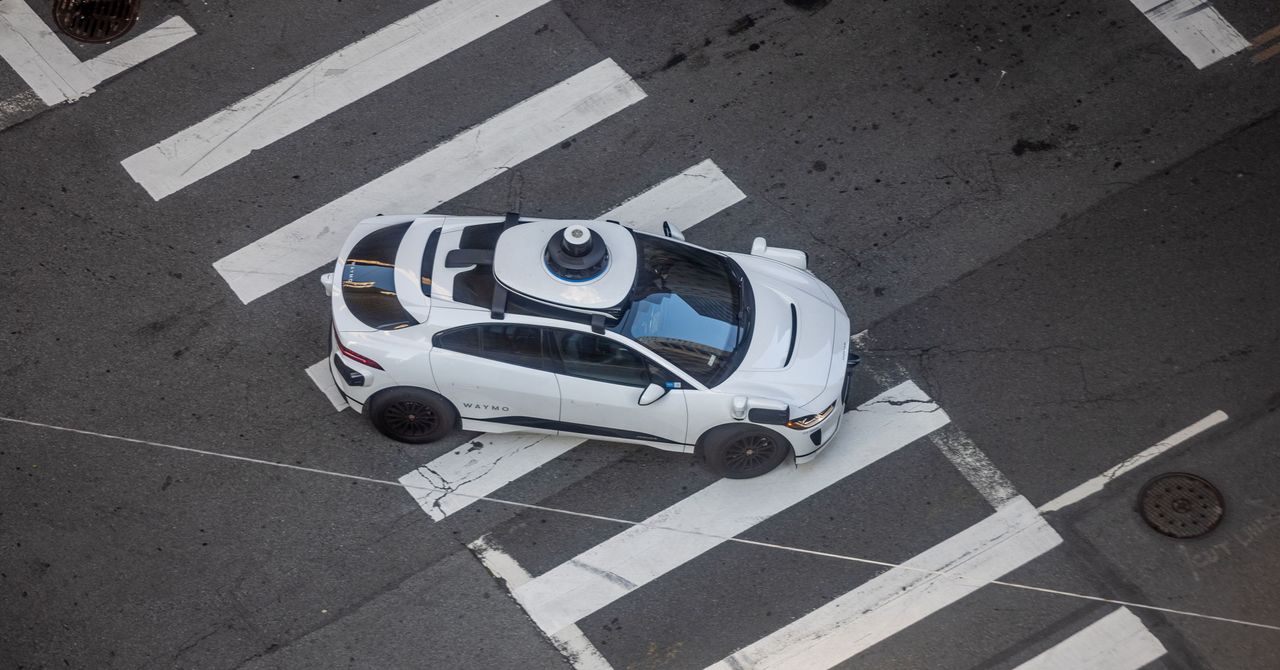
One of the purported advantages of self-driving car tech is that every car can learn from one vehicle’s mistakes. Here’s how Waymo puts it on its website: “The Waymo Driver learns from the collective experiences gathered across our fleet, including previous hardware generations.”
But in Austin, Waymo’s vehicles struggled for months to learn how to stop for school buses as drivers picked up and dropped off children. An official with the Austin Independent School District (AISD) alleged that the vehicles had, in at least 19 instances, “illegally and dangerously” passed the district’s school buses while their red lights were flashing and their stop arms were extended rather than coming to complete stops, as the law requires.
In early December, Waymo even issued a federal recall related to the incidents, acknowledging at least 12 of them to federal regulators at the National Highway Traffic Safety Administration (NHTSA), which oversees road safety. According to federal filings, engineers with the self-driving vehicle company had “developed software changes to address the behavior” weeks before.
But even after the recall, the school-bus-passing incidents continued, according to school officials and a report from the National Transportation Safety Board (NTSB), an independent federal safety watchdog that’s also investigating the situation.
Now, email and text messages between school officials and Waymo representatives, obtained by WIRED through a public records request, show the lengths that the Austin public school district and Waymo went to try to solve the problem. AISD even hosted a half-day “data collection” event in a school parking lot in mid-December, the documents show, with several employees pulling together school buses and stop-arm signals from across the fleet so the self-driving car company could collect information related to vehicles and their flashing lights.
Still, by mid-January, over a month later, the school district reported at least four more school-bus-passing incidents had taken place in Austin. “The data we collected from the beginning of the school year to the end of the semester shows that about 98 percent of people that receive one violation do not receive another,” an official with the school’s police department told the local NBC affiliate that month. “That tells us that the person is learning, but it does not appear the Waymo automated driver system is learning through its software updates, its recall, what have you, because we are still having violations.”
The situation raises questions about the self-driving technologies’ curious blind spots and the industry’s ability to compensate for them even after they’ve been spotted.
Self-driving software has long struggled with recognizing flashing emergency lights and road safety devices with long, thin arms, including gates and stop-arms, says Missy Cummings, who researches autonomous vehicles at George Mason University and served as a safety adviser to the NHTSA during the Biden administration. “If [the company] didn’t fix this a few years ago, the more they drive, the more it’s going to be a problem,” she says. “That’s exactly what’s happening here.”
Waymo did not respond to WIRED’s requests for comment. A spokesperson for the Austin Independent School District referred WIRED to the NTSB while the incidents are under investigation. A spokesperson for the NTSB declined to answer WIRED’s questions while its investigation continues.
Illegal Passing
By midwinter of 2025, AISD officials were frustrated. In one of the 19 incidents alleged by a lawyer for the district in a letter later released by federal road safety regulators, a Waymo passed a school bus letting off children “only moments after a student crossed in front of the vehicle, and while the student was still in the road.”
“Alarmingly,” the lawyer wrote, five of the alleged incidents had occurred after Waymo had assured the district that it had updated its software to fix the problem. Federal regulators with the NHTSA had already launched a probe into the behavior. “Austin ISD is evaluating all potential legal remedies at its disposal and intends to take whatever action is necessary to protect the safety of its students, if required,” the lawyer warned.
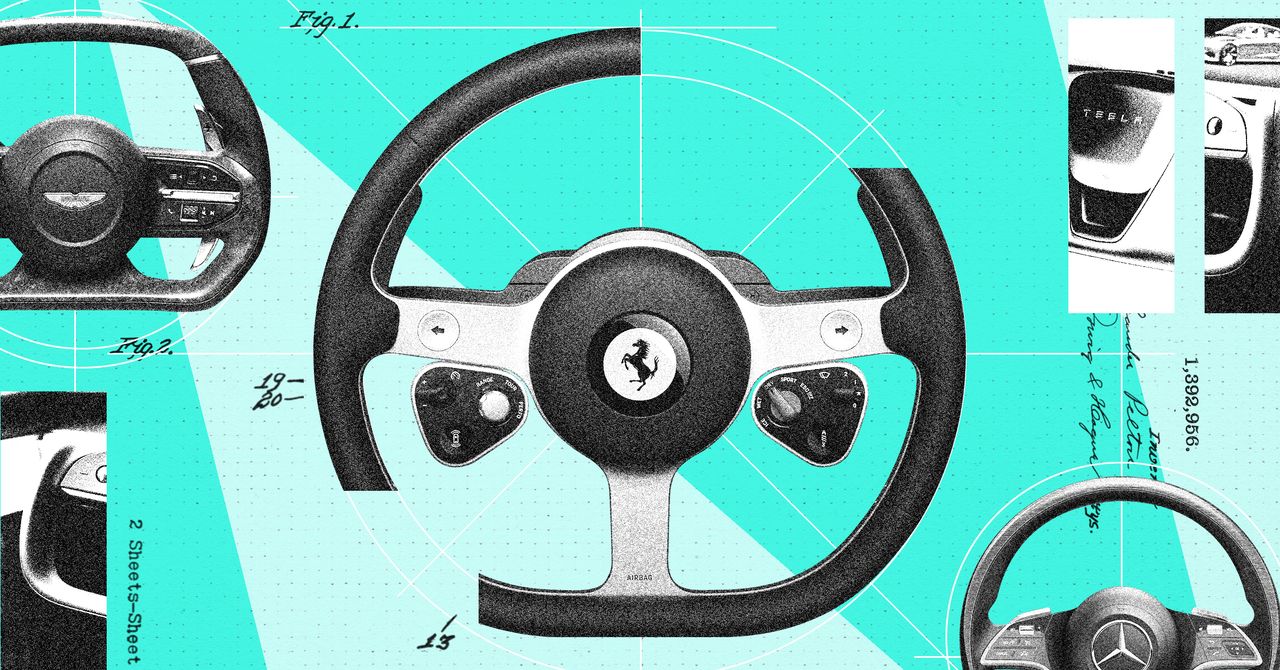
Cars didn’t always have steering wheels. The very first car—the 1885 Benz Patent-Motorwagen, invented by Karl Benz—used a tiller system: a horizontal bar with a handle mounted to a vertical bar. The lever-like handle was similar in many respects to a boat’s rudder. Amazingly, it would be another nine years before French engineer Alfred Vacheron saw sense and fitted the first known steering wheel to his 4-horsepower Panhard for the Paris-Rouen race. Just four years later, in 1898, Panhard made the infinitely preferable and safer steering wheel standard on all its cars. And we’ve been using them ever since.
Hans-Peter Wunderlich is Mercedes’ creative director of interior design. He has been designing steering wheels for 35 years. “I started in 1991 on my first,” he tells me. “A steering wheel is really the most challenging and difficult element to sculpture, to design, to develop in the car.” It is so difficult that Wunderlich has used the wheel as a test on potential recruits.
“When we hire a designer, I have given them the task, after I see a nice portfolio, to draw me a steering wheel,” he says. “The steering wheel is, for me, the proof. Should I hire them or not? If a designer is able to create a perfect steering wheel, even just as a scribble, then they will be a good designer for the total interior of a car.”
It was this challenge, in part, that attracted Ive and his team. “Our starting point was trying to understand the essential nature of the problem to be solved, and that normally means dismissing received wisdom,” Ive tells me. “A car is the aggregation of multiple products, and, in many ways, we’re designing furniture. We’re designing complex and sophisticated input methods. One of the challenges was to try to create cohesion. You don’t get something to be cohesive by a set of rules. That was a wonderful new challenge, and one wrestled with over a number of years.”
For both Ive and Wunderlich, science accompanies the art of design. They talk of the intricacies of the ergonomics, the logic of the switches, factoring in an “exploding element in the center” (the airbag), which is getting more and more complicated, says Wunderlich. “Even the rim is an ergonomic science in itself,” he adds, saying that his team works hand in glove with Mercedes’ in-house ergonomics department on these stages. “It’s almost 50-50. We get requirements data from engineering and ergonomics.”
Spinning Out
Look closely at your steering wheel rim; in cross-section, it won’t be round. Cut it into segments, and each will likely have a different profile, aiming to optimize grip wherever your hands grasp the wheel. Even the padding has to be just right. “It mustn’t be like bone but also not too fat. You need a nice balance,” Wunderlich says. “[It must say] this car is solid, it’s quality, it’s strong, it’s powerful, but it’s not crude.”
“If you hold the wheel on the three and nine o’clock positions, you can carve in with your fingers on the rear of the rim—so you have the hump, the scallop of the rim,” Wunderlich says. “And then we carve into a valley where your fingers could rest. That means your hands can close. You have the feeling you’re holding the car. This is so challenging, because in that area you have such a technical structure to maintain—complex electronics and heating elements. We torture the engineers to keep that area so small so we can sculpt it out.”
Ive tortured Raffaele De Simone, Ferrari’s chief engineer and head development driver. De Simone is sometimes described at the company as “Customer No. 1” because, apparently, no Ferrari road car leaves the factory until he is satisfied with its performance.

After a relatively quiet few months, Amazon is bringing back another of its famously invented shopping holidays. The Amazon Spring Sale is in its third year, running now through March 31. Like during last year’s event, Amazon is promising customers thousands of deals across various daily, themed categories.
Of course, as we’ve seen in the past with Prime Day, Black Friday, and Cyber Monday, the true discounts on good products will likely be buried among junk deals on shoddy wares. The WIRED Reviews team tests gear all year long, and we fact-checked discounts on the products we actively recommend to our friends, family, and readers. We’ve highlighted the best deals from the Amazon Spring Sale below.
Be sure to check out our other deals coverage for vacuum discounts, smart bird feeders, and more.
Updated March 27, 2026: We’ve added additional deals, removed expired discounts, and checked for accuracy throughout.
WIRED Featured Deals:
Our audiophile reviewers test more headphones than anyone would deem sane or necessary. The Sony WH-1000XM6 are the pair they’ve declared the best wireless headphones of all, with “the best noise reduction on Earth.” You’ll also get 30 hours of battery life, multipoint Bluetooth pairing, folding ear cups and a travel case, sparkling and clear sound, and fabulous controls. They’re nearly perfect. When they’re not on sale for this price, they’re selling for the full MSRP. If you’re in the market, now is the time—or, if you’re not ready right now, wait until the next time they’re on sale for this price.


Riyadh opens rail freight route linking eastern ports to Jordan border

Iran deal may be finalized ‘soon’, says Trump

UK consumer inflation remains flat at 3% YoY in Feb

-

 Politics6 days ago
Afghanistan announces release of detained US citizen
-

 Tech6 days ago
Can a Home Appliance Fix the Problem of Soft-Plastic Waste?
-

 Sports1 week ago
Men’s March Madness live tracker: Updates on Saturday’s games
-
 Business6 days ago
Property Play: Home flippers see smallest profits since the Great Recession, real estate data firm says
-

 Entertainment6 days ago
UN warns migratory freshwater fish numbers are spiralling
-

 Sports1 week ago
Arne Slot: Liverpool’s defeat to Brighton ‘hurts a lot’
-

 Sports6 days ago
Broadcast industry CEO says consolidation is ‘essential’ to compete for NFL soaring media rights prices
-
 Business6 days ago
Gold prices soar in Pakistan – SUCH TV