

Tech
The Physics Behind the Quadruple Axel, the Most Difficult Jump in Figure Skating


In figure skating, the quadruple axel is generally considered the most difficult jump. Until 2022, when US skater Ilia Malinin—currently riding high as the “Quad God” at the 2026 Winter Olympics—started doing them, they seemed impossible. Landing one, naturally, can give an athlete a higher score. But for skaters who aren’t generational talents like Malinin, grasping exactly how to pull off a quadruple axel can be tricky. But physics can offer some clues.
In 2024, the journal Sports Biomechanics published a study by Toin University researcher Seiji Hirosawa that brought science a little closer to understanding how quad axels work. One of the biggest factors? Getting high. Like 20 inches off the ground high.
In the current scoring system of figure skating competitions, the jury, which in the case of the Milano Cortina Games consists of two technical specialists and a technical controller, assigns a score to each technical element, namely jumps, spins, and steps. However, the scores for the more difficult jumps, such as triple or quadruple jumps, are higher than those for the other technical elements, so skaters must perform them correctly in order to win competitions.
Generally speaking the axel is the most technically complex of the jumps. There are three main types, each distinguished by their takeoffs: toe, blade, or edge. Most are named after the first person to do them; the axel is named after Norwegian skater Axel Paulsen. It is also the only one that involves a forward start, which leads the athlete to perform a half-turn more than other jumps. A simple axel, therefore, requires one and a half rotations to complete, while a quadruple axel requires four and a half rotations in the air.
To shed light on the specific kinematic strategies used by athletes to perform the quadruple axel jump, Hirosawa’s study focused on footage of two skaters who attempted this jump in competition. Using data from what’s known as the Ice Scope tracking system, researchers analyzed several parameters: vertical height, horizontal distance, and skating speed before takeoff and after landing.
Contrary to previous biomechanical studies, which suggested that jump height does not change significantly, Hirosawa’s study found that increasing jump height is crucial to successfully performing a quadruple axel jump. Both skaters, in fact, aimed to achieve significantly greater vertical heights in their attempts to perform this jump than in the triple axel.
“This suggests a strategic shift toward increasing vertical height to master 4A [quadruple axel] jumps, in contrast to previous biomechanical research that did not emphasize vertical height,” the study concluded.
Increased jump height, Hirosawa adds, provides increased flight time by allowing a large number of rotations around the longitudinal axis of the body. Short version: jump higher, turn more. “The results of this study provide valuable insights into the biomechanics of quadruple and triple axel jumps, update existing theories of figure skating research, and provide insights into training strategies for managing complex jumps,” the study concludes.
Easier said than done—unless you’re Ilia Malinin.












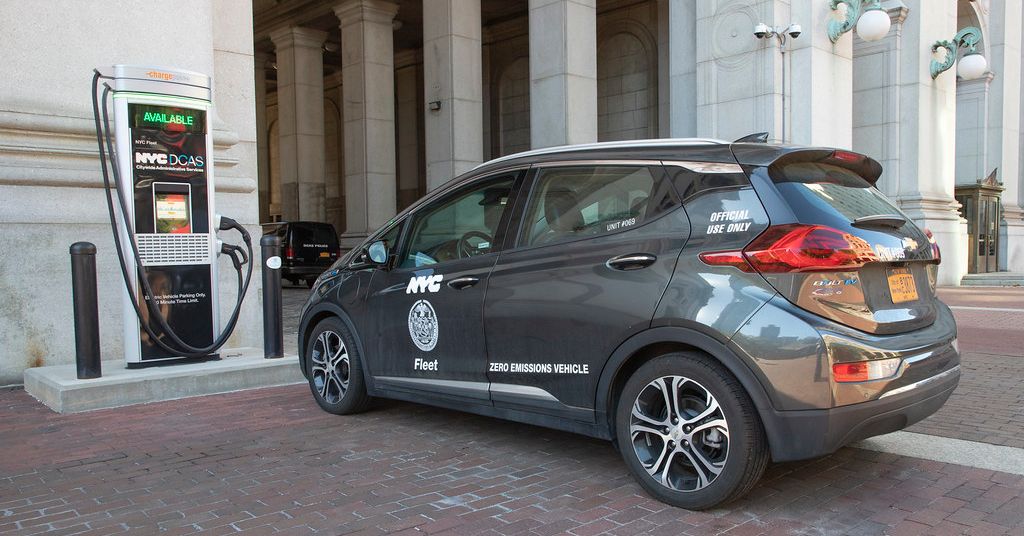
It is indeed a weird time to be an automaker, as US federal incentives disappear and support dwindles for newer electric-powered cars. “Manufacturers would really like to know what the future will be and what are the rules,” says Mike Finnern, the senior vice president and zero-emission fleet lead at WSP, a consulting firm. Guarantees of large, future orders from fleet managers like city governments, but also private businesses, “will help them be stable for a while.”
EVs are a nice fit for government fleets, Finnern says. Surveys suggest that regular car buyers are still plenty apprehensive about shifting to a plug-in from gas cars they’re used to, and they want cars with even longer ranges, even if they seldom use the whole battery. But governments know exactly how their vehicles are used, can more precisely control charging, and are able to see that today’s ranges of 250 to 400 miles per charge fit their needs fine. Plus, EVs might help governments save money on fueling and maintenance. Private operators like Amazon aren’t stopping their forays into EVs, and “they wouldn’t do it if it didn’t pencil out,” he says.
“I regret every electric and hybrid vehicle we haven’t bought yet,” says Kerman. “It would’ve shielded us from the doubling of fuel costs that we’re now enduring.” By partnering with the US Department of Transportation, his agency has found that switching to battery electrics improves New York City’s vehicle energy economy by 6 percent.
Still, both governments say they have plenty to learn about how and where EVs fit best and that the partnership will help them share and create best practices so that other cities might eventually follow.
One big takeaway from the government’s experience so far is that officials need to be proactive and mindful about getting city workers on board. There are technical challenges—maintenance workers need to be retrained to maintain EVs instead of gas-powered vehicles, and everyone needs to remember to plug them in—and trickier morale ones, too.
Workers don’t always appreciate sudden changes. And while New York’s data suggests that the intelligent speed assistance built into many of its new EVs reduces speeding and possibly crash severity in city vehicles, employees have lingering worries about workplace surveillance. (In March, the city workers’ union reached an agreement outlining how data collected from city vehicles might be used in disciplinary actions.)
A workforce that’s enthusiastic about EVs can make all the difference. “We’ve seen some deployments be really successful and some, not so much. They have the exact same problems, but some were able to overcome them because their people were excited about it and trained,” Finnern says.
Courtesy of California Internal Services Department
Haynes, who used to work with Kerman in New York before moving to Los Angeles, recalls that he was once an EV skeptic but changed his mind once Kerman coaxed him into trying out a Tesla. It was, above all, fun.
“I will tell you, no one goes into these electric cars, walks out and says, ‘I hate this car,’” Kerman says. “They all say, ‘I love the car.”

IPad? Never heard of it.
I have been using Android tablets pretty much since the first one came out, and I’ve never felt the need for anything made by any fruit companies. Android tablets make great “nice to have” entertainment centers, or they can be complete lightweight laptop replacements for travel.
Whatever your use case, I’ve tested just about all the Android tablets out there, and these are the best, depending on what you need them for. If you want to see how these stack up next to those iPad things, check out our guide to all the tablets on the market.
Be sure to check out our other buying guides, including the Best Amazon Fire Tablets, Best iPad, and Best iPad Accessories.
Table of Contents
The Best Android Tablet
-
Photograph: Julian Chokkattu
-
Photograph: Julian Chokkattu
-
Photograph: Julian Chokkattu


The best overall Android tablet I’ve tried in the OnePlus Pad 3. The Qualcomm Snapdragon 8 Elite chip offers great performance, with plenty of power for gaming, photo editing, and watching 4K video. The 13.2-inch LCD screen offers an excellent 3.4K resolution with a 144-Hz refresh rate (again great for gaming), and 12-bit color. Would I like to see an OLED screen? Sure, but no tablet at this price has one, not even the iPad Air. The Pad 3’s screen is one of the nicer LCD panels I’ve tested, and easy to read even in bright sunlight. One of the nice things about the LCD rather than OLED screen is that the Pad 3 has excellent battery life. I’ve watched back-to-back movies on plane flights and barely dipped below the halfway mark, and thanks to the 80-watt fast-charging point, you can recharge to 50 percent in under half an hour, with a full recharge taking about 1.5 hours. I also love that it loses hardly any power in standby mode. OnePlus rates it to 70 days of standby mode, but that’s with the WiFi off. In the real world, I can leave it lying around for a week, and it’ll still have 70 percent charge.
Part of the reason I think the Pad 3 is the best tablet for most people is that not only is it great for consuming content (it’s how I watch the majority of the baseball games I watch), it’s possible to get work done on it as well. OnePlus’ OxygenOS software is the best multi-tasking UI for Android tablets. I even prefer it to Apple’s iPadOS thanks to its Open Canvas system. Using Open Canvas, you can place three apps side by side, which is admittedly cramped, but still useful, or you can do what I do and use apps two side by side and expand a third at the bottom and scroll down to get to it. For me, that means a text editor at the bottom, which I effectively use in full screen, and then I can scroll up to get to my web browser and secondary app, which live side-by-side. It’s a great way to work; the only drawback is the OnePlus Pad keyboard, which I don’t love.
The keyboard is sold separately for $200 (it’s currently unavailable in the US), and while it’s a fine keyboard, with good key travel and a decent-sized trackpad, it really only works on a perfectly flat surface. In other words, it’s fine if you’re sitting at a table of some sort, but pretty much unusable in your lap. It really limits the usefulness of the Pad 3, and I’m hoping OnePlus will improve the design in a future version. Unfortunately, that’s somewhat unlikely as OnePlus is currently in a merger with Realme and its future is murky to say the least. We’ve already seen the Pad 4 debut in India (with little more than a chip and battery update), but so far, nothing for the rest of the world.
The Luxury Android Tablet
-
Photograph: Julian Chokkattu
-
Photograph: Julian Chokkattu


Samsung
Galaxy Tab S11 and Tab S11 Ultra
Samsung’s Galaxy Tab S11 and Tab S11 Ultra are the iPad Pro of the Android world. They’ve got the flagship specs, and at a mere 0.20 inches thick (5.1 mm), the Ultra matches the look at well. They are slightly heavier than an iPad Pro, but not enough that I actually notice the difference. Unlike the prior generation Tab S10 series, there’s no middle “Plus” model anymore. You have the 11-inch Tab S11 and the biggie, the 14.6-inch Tab S11 Ultra. Both run Android 16 out of the box, have 120-Hz AMOLED displays, and can hit a peak brightness of 1,600 nits. Samsung uses a MediaTek processor, the Dimensity 9400+, which is closely matched to the Qualcomm Snapdragon 8 Elite in the OnePlus Pad. Both models get 12 GB of RAM (if you go for the 1-terabyte Ultra model, the RAM goes up to 16 GB). Storage is expandable via microSD.

As it looks to evolve its line of vehicles in a market place increasingly dependent on IT and communications, global automaker Stellantis has expanded its partnership with mobile technology platform provider Qualcomm. The move enables Level 2+ hands-free autonomy at scale across millions of vehicles on a single, unified platform, replacing the fragmented tech stacks that Stellantis said have long defined the industry.
As part of the deepened collaboration, Stellantis and Qualcomm Technologies have entered a non-binding letter of intent for the Stellantis-owned automated driving and simulation company, aiMotive, to join Qualcomm Technologies.
The stated core mission of Stellantis is to “give customers the freedom to choose the way they move”, embracing the latest technologies and creating value for all its stakeholders. Its portfolio of iconic and innovative automotive brands includes Abarth, Alfa Romeo, Chrysler, Citroën, Dodge, DS Automobiles, Fiat, Jeep, Lancia, Maserati, Opel, Peugeot, Ram, Vauxhall, Free2move and Leasys.
The context of the evolution of the partnership is the dynamic that vehicles continue to evolve to be more centralised and technology-driven meaning the need for high-performance compute and AI capabilities is accelerating. The collaboration is designed to highlight the growing role of scalable semiconductor platforms in enabling faster innovation, improved efficiency and better experiences for customers.
Through its latest collaboration with Qualcomm, and by deployment of the Snapdragon Ride Pilot platform, Stellantis is said to be extending its beyond cockpit and connectivity to power advanced driver assistance systems (ADAS) and automated driving, establishing a common, scalable technology foundation across its auto brands and driving cost efficiency through platform standardisation.
Together, Stellantis and Qualcomm Technologies are primarily aiming to deliver smarter, more intuitive and safer vehicle experiences to customers. It is also designed to deliver safer, smarter and more seamless in-vehicle experiences.
Qualcomm believes that what makes the collaboration particularly significant is its breadth. The technologies now power ADAS, cockpit, and connectivity across Stellantis vehicles – all integrated as a unified platform within STLA Brain, the digital backbone of Stellantis vehicles.
STLA Brain connects all electronic systems and enables over the air (OTA) updates enhancing cockpit, connectivity and ADAS performance. The scalable technology foundation aims to accelerate time to market, enable continuous feature upgrades and enhance the driving experience.
Its service-oriented architecture separates software from hardware and is attributed with delivering continuous innovation and AI readiness. The result is said to be a consistent foundation across the lineup, faster deployment and continuous over-the-air improvement, which is something Qualcomm said is hard to replicate.
Built to scale across brands and segments, Snapdragon Digital Chassis SoCs are being deployed to support Stellantis’ broader strategy to improve cost efficiency through platform standardisation. The agreement includes the Snapdragon Ride Pilot ADAS platform that can scale from active safety and regulatory features to Level 2+ hands-free autonomy and beyond, enabling ADAS features across millions of Stellantis vehicles.
Building on existing work across cockpit and connectivity, the expanded collaboration will attempt to support greater compute performance and AI-driven capabilities across Stellantis’ vehicle portfolio.
“Our customers deserve seamless, next-generation experiences that continuously evolve to meet their driving needs. By deploying this intelligent platform across our global portfolio, Stellantis is delivering on that promise with unprecedented speed and efficiency,” said Ned Curic, Stellantis chief engineering and technology officer. “This is made possible through our strategic collaboration with Qualcomm Technologies, which allows us to scale smarter, connected capabilities across all our brands.”
Nakul Duggal, executive vice-president and group general manager, automotive, industrial and embedded IoT of Qualcomm Technologies, added: “This expansion reflects the scale and depth of what Qualcomm and Stellantis have built together. Snapdragon Digital Chassis enables scalable deployment of unified compute power and advanced driving capabilities across vehicles and brands, and extending that across the full Stellantis portfolio marks a meaningful inflection point for both companies and for the drivers who experience it.”
As it was announcing its collaboration, Qualcomm revealed that its automotive business has surpassed $5bn in annual revenue and is tracking toward $6bn this fiscal year, with more than one million vehicles already in production running ADAS on Snapdragon Ride, stating that this marked a clear shift from roadmap to real-world deployment. ADAS now represents roughly a third of the company’s automotive pipeline.


Stellantis unveils $70 billion turnaround plan, targets positive cash flow by 2028

ICE cotton sees mixed trend as rain forecasts weaken sentiment

Britney Spears police report sheds new light on singer’s March DUI arrest

-

 Entertainment1 week ago
Conan O’Brien hat tricks as Oscar host
-

 Fashion1 week ago
Italy’s Zegna Group’s Q1 growth boosted by strong organic performance
-

 Entertainment5 days ago
Where Pete Davidson, Elsie Hewitt stand after breakup: Details revealed
-
 Business1 week ago
Tui issues update on summer jet fuel shortage fears
-

 Tech1 week ago
Microsoft releases rare zero-day free Patch Tuesday update | Computer Weekly
-

 Fashion1 week ago
Canada, Vietnam seek broader trade cooperation
-
 Business1 week ago
Jersey Election 2026: Cost of living concern in St Helier Central
-

 Entertainment7 days ago
Emilia Clarke recalls near-death incident while filming ‘Game of Thrones’