

Business
8 Most Expensive Mistakes Young People Make With Money


Managing money is one of the biggest challenges young people face, especially when freedom meets a limited budget. While earning and spending may seem simple, small mistakes can quickly snowball into costly consequences. Recognizing these common pitfalls can help teens and young adults build smarter habits, avoid debt, and make their money work for them.
Relying Too Much On Credit Cards: Many young adults treat credit cards as “free money,” ignoring interest rates. High balances can quickly spiral into debt, damaging credit scores. Misusing credit also reduces financial flexibility for emergencies. Using credit responsibly, paying the full balance each month is essential to avoid paying hundreds or even thousands in unnecessary interest. (Image: AI-generated)

Not Tracking Spending: Without monitoring daily expenses, it’s easy to overspend on small purchases that add up. Late fees, impulsive buys, and unnecessary subscriptions can drain accounts. Tracking spending helps identify patterns, set budgets, and prioritize savings. Simple apps or spreadsheets can prevent financial leaks and keep money working toward real goals. (Image: AI-generated)

Skipping An Emergency Fund: Unexpected events car repairs, medical bills, or tech emergencies can hit hard without a financial safety net. Without an emergency fund, young people often rely on credit cards or loans, accumulating debt. Saving even a small portion of income monthly creates a buffer, preventing minor setbacks from becoming expensive financial disasters. (Image: AI-generated)

Overspending On Lifestyle Upgrades: Buying a luxury car, expensive clothes, or high-end electronics early in life can quickly drain finances. Young people often chase appearances rather than stability. Prioritizing needs over wants and saving for big purchases ensures lifestyle choices don’t compromise future financial goals or lead to unnecessary debt. (Image: AI-generated)

Not Saving For Early Retirement: Starting retirement savings in your 20s may seem premature, but compound interest is a powerful tool. Delaying contributions means missing years of growth that could amount to thousands or millions later. Even small monthly deposits in a retirement account or IRA can make a significant difference over time. (Image: AI-generated)

Falling For “Get Rich Quick” Schemes: Young adults are often tempted by schemes promising rapid wealth—cryptocurrency fads, shady investments, or multi-level marketing. These can result in severe financial loss. Research, patience, and understanding risk are crucial. Long-term growth through safe, proven investment strategies is far more reliable than chasing instant riches. (Image: AI-generated)

Neglecting Insurance: Skipping health, car, or renter’s insurance might save money short-term but can be financially catastrophic during accidents or emergencies. Unexpected medical bills or damages can wipe out savings. Even basic insurance coverage is an affordable safety net that protects against losses far greater than the premium. (Image: AI-generated)

Failing To Educate Themselves About Money: Financial literacy is crucial, yet often overlooked. Not understanding budgeting, investing, or taxes can lead to repeated mistakes and missed opportunities. Reading books, attending workshops, or following credible financial resources equips young people with the knowledge to make informed decisions and avoid costly errors throughout life. (Image: AI-generated)

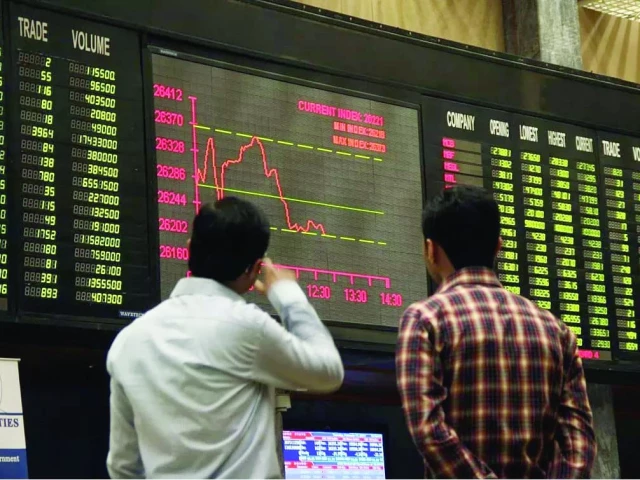



A surge in prices at the pump due to the Iran war has pushed the inflation rate to 3.3%.
Source link

Vista House, a private home in Westlake, Georgia, sponsored by Vista Global during the Masters.
Credit: VistaJet
A version of this article first appeared in CNBC’s Inside Wealth newsletter with Robert Frank, a weekly guide to the high-net-worth investor and consumer. Sign up to receive future editions, straight to your inbox.
Private jet companies are rolling out the red carpet for their top clients at the Masters Tournament, as competition shifts from the air to the ground with lavish hospitality events and experiences.
Thousands of private jets are expected to fly in and out of Augusta, Georgia, and nearby airports for the Masters in the coming days, making it one of the most important events of the year. NetJets, the industry leader, expects more than 775 flights into and out of Augusta, marking a 35% to 40% increase from last year, the company said. Flexjet is projecting about 350 to 400 flights, and Vista projects over 20 flights a day.
“Demand is off the charts,” said Mike Silvestro, CEO of Flexjet. “The Masters is like nothing else.”
On the private jet calendar, Davos, the Super Bowl, Cannes, the Kentucky Derby, the Monaco Grand Prix and Art Basel all attract plenty of private jets and wealthy attendees. But the Masters has a unique combination of tens of thousands of well-heeled attendees and a full week of events, creating a constant flow of clients flying in and out.
The swarm of Gulfstreams, Phenoms and Challengers is straining Augusta Regional Airport. Kenneth Hinkle, director of aviation services at the airport, said it had 3,294 flights last year and he expects an increase this year. The airport raised its “special event fee” this year by 25%, to between $150 and $4,000 per plane, depending on size, and expanded its jet parking area to accommodate 200 jets at a time.
The competition among private jet companies for landing slots, parking spaces and access to and from the terminal has grown so fierce that many companies have moved to nearby airports in Thomson, Georgia, or Aiken, South Carolina.
A photo rendering of NetJets’ new Augusta terminal.
Credit: Courtesy of NetJets
The real battle however, begins after the jets land. Jet companies are renting out mansions to create branded pop-up clubs, hiring Michelin-star chefs and well-known mixologists, hosting nightly parties with the biggest names in golf, and vying to attract the top players and announcers as headliners. Many are even staging private concerts with Grammy-winning country stars.
The spending is all part of a new race in the private jet business.
Private jet flights hit an all-time record in 2025, with 3.9 million departures, up 34% from pre-Covid levels. Recent U.S. government shutdowns and airport delays have only increased demand, jet companies say.
“We want to stay connected with our customers beyond just when they’re the air with us,” said Pat Gallagher, President of NetJets. “We’re a world lifestyle business. We’re a luxury business. If somebody asks me what business I’m in, I don’t say I’m in the travel or aviation space. I’m in the hospitality business.”
Longtime Masters fans say the hottest ticket of the week outside the Augusta National Golf Club is the NetJets Friday night party. NetJets won’t disclose any details on the location or entertainment for this year’s bash. But past parties have been hosted by sports commentator Jim Nantz and featured musical guests like Noah Kahan, Chris Stapleton and Zac Brown.
For the rest of the week, NetJets clients can use the brand’s hospitality venue to relax, grab a meal or drink, or hold a meeting. Some of NetJets’ more than 30 golf ambassadors who are playing at the Masters are also expected to pass through. Gallagher said the Masters is one of nearly 100 events a year now hosted by NetJets.
The company also just announced a new private jet terminal at Augusta Regional. The project, still under construction, includes 432,000 square feet of ramp space for jet parking.
“The number of jets that are parked on the [Augusta] runways, it’s like nothing you’ve ever seen from a from an aviation perspective,” Gallagher said.
Vista Global will be hosting clients at Vista House, a private home in Westlake, Georgia, that will be transformed into a branded hospitality venue in its signature silver and red. It will have nightly dinners, entertainment and special appearances by Vista brand ambassadors Gary Player, Jon Rahm, Phil Mickelson and Patrick Reed.
Vista hosted its big welcoming party Wednesday night with a private concert. The company said the goal is to give Vista House the same brand feel of its planes, from flight attendants serving in their Moncler-designed uniforms, to Vista’s signature scent designed by Le Labo to its ever-popular Vista beach towels. Clients of VistaJet and XO — both owned by Vista Global — will get access to Vista House as well hospitality space at the Double Eagle Club, close to the Augusta National Golf Club.
Vista said some of its clients fly in from as far away as Japan, South Korea, Singapore, India and Brazil.
“I think the Masters, especially in the past five years, has become more pronounced for us,” said Leona Qi, president of VistaJet U.S. “It’s a place where our clients — the ultra-high-net-worth individuals and corporate executives — go to not just to watch the game, but to really connect with each other and get deals done. And to share the passion and the experience with each other.”
Wheels Up will open the “Wheels Down Club” in Augusta, just a 10-minute walk from the entrance to Augusta National. The club, a temporary structure built around an existing home, will offer 11,000 square feet of hospitality space. Guests can valet their cars, get snacks and drinks in between rounds and check in their phones (a prized service since no cellphones are allowed on the course).
Wheels Up is running a “Wheels Down Club,” just a 10-minute walk from the entrance to Augusta National at the Masters.
Credit: Wheels Up
Wheels Up, now controlled by Delta Air Lines, expects to host 600 guests a day at the club. Big names on the program include Delta CEO Ed Bastian; Eric Kutcher, the North America chair of McKinsey & Co.; and Apple executive Eddy Cue, along with pro golfers. Chef José Andrés will host a “Jamon and Caviar” tasting and mixologist Tyler Zielinski will be making his signature “tiny cocktails.”
“The Masters has really become our tentpole event,” said Kristen Lauria, chief marketing officer for Wheels Up. “Whether it’s for members, whether it’s for prospects, or whether it’s for our partners who entertain their clients on the ground, it’s becoming bigger and bigger and bigger.”
Lauria said Wheels Down events will continue to expand into other sports, like tennis, equestrian and motorsports, as well as culinary and luxury lifestyle events. She said the clubs also help attract new clients who come in as guests of existing members.
“As I look at different ways to create demand, it’s really about going to where our customers are and where our members are,” she said. “Time is of the essence for our members. So showing up where they’re already going or where they’re planning to be, is a return in and of itself.”
Flexjet is taking a different approach. Rather than joining the spending spree of pop-up clubs and parties, the fractional jet company says it’s focused solely on its core business of getting clients to and from the event.
With Augusta Regional Airport highly congested during Masters week, Flexjet decided this year to move its operations to the Thomson-McDuffie Regional Airport in Thomson, Georgia. The airport is a short drive to the course at Augusta, is closer to the areas where attendees usually stay, and will allow Flexjet clients to get in and out quickly.
“The infrastructure in Augusta is taxed,” Silvestro said. “We’re trying to stay ahead of the curve and have the experience that we deliver to our customers be as seamless and stress-free as possible.”
Silvestro said clients will have an exclusive executive area at Thomson and can be picked up and dropped off right in front of their planes. He said the Masters has become so oversaturated with parties and events that Flexjet’s clients already have too many events to choose from.
“I shake my head at some of the hospitality extravagances from some of the people that are operating our space,” he said. “We see people doing certain things in and around our space that don’t make a lot of sense to us.”
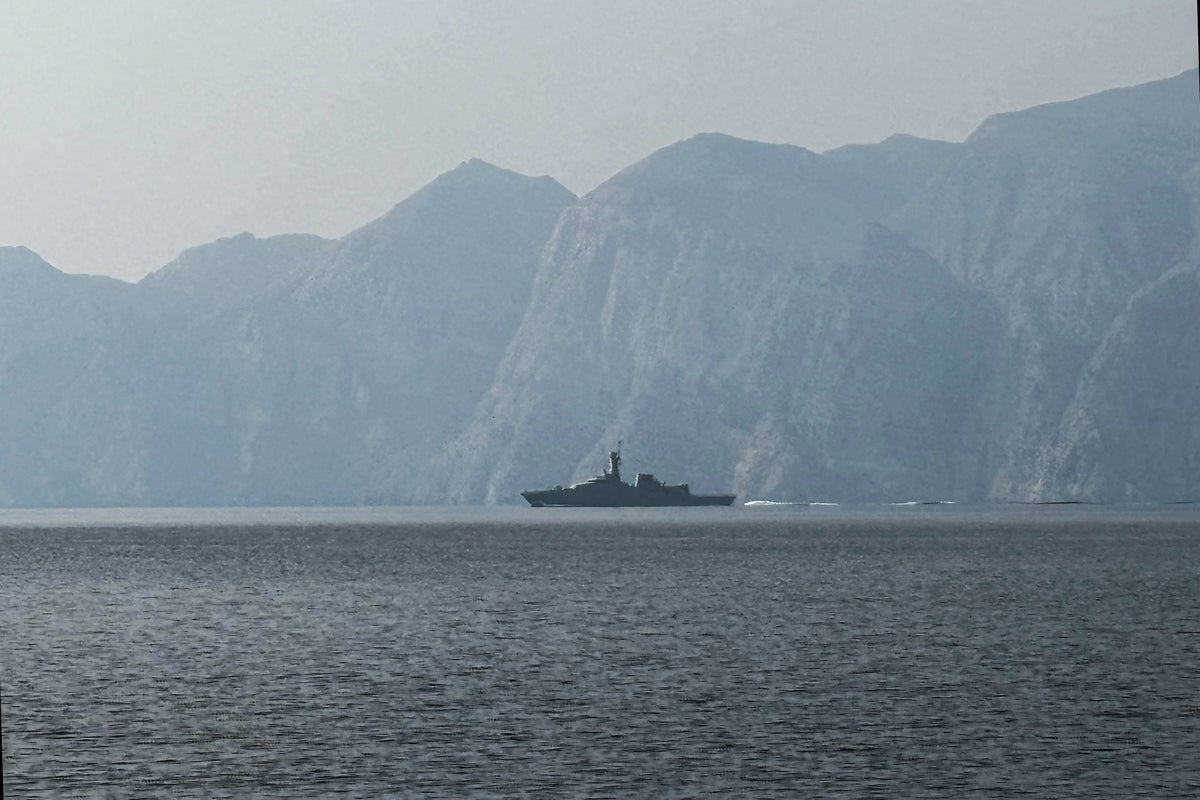
The Strait of Hormuz is still not fully open despite the US–Iran ceasefire, according to the head of Abu Dhabi’s state oil company.
Sultan Al Jaber, the chief executive officer of the Abu Dhabi National Oil Company, said in a post on LinkedIn that “access is being restricted, conditioned and controlled” through the world’s most critical waterway.
“The weaponisation of this vital waterway, in any form, cannot stand. This would set a dangerous precedent for the world – undermining the principle of freedom of navigation that underpins global trade and, ultimately, the stability of the global economy,” Mr Al Jaber wrote.
“An estimated 230 vessels sit loaded with oil and ready to sail. They, and every vessel that follows, must be free to navigate this corridor without condition. No country has a legitimate right to determine who may pass and under what terms. Iran has made clear – through both its statements and actions – that passage is subject to permission, conditions and political leverage. That is not freedom of navigation. That is coercion.”
Iran effectively shut down the Strait of Hormuz, a vital maritime route that normally carries about a fifth of the world’s oil and gas, after US and Israeli attacks in late February, leaving around 1,400 ships stranded on either side.
However, despite the US–Iran truce agreed on Wednesday, which supposedly included reopening the strait, very few ships have actually moved.
This uncertainty has pushed energy prices higher and caused stock markets across Asia and Europe to fall, as fears grow that the truce may already be breaking down and tensions could escalate again.
“Every day the strait remains restricted, the consequences compound. Supply is delayed, markets tighten, prices rise. The impact is felt beyond energy markets, in economies, industries and households worldwide. Every day matters. Every delay deepens the disruption,” Mr Al Jaber wrote.
Asian stocks mostly rose on Friday, following gains on Wall Street, while oil prices also edged higher amid a fragile Iran ceasefire and upcoming US-Iran talks. Major indices, including South Korea’s Kospi and Japan’s Nikkei 225 posted strong gains, with Japanese retailer Fast Retailing surging after raising profit forecasts.
London’s FTSE 100, Hong Kong’s Hang Seng and China’s Shanghai Composite Index also climbed, even as China reported softer-than-expected inflation.
Elsewhere, Australia’s S&P/ASX 200 slipped, while Taiwan and India saw moderate gains.
Oil and gas prices have swung sharply amid the ongoing uncertainty. Brent crude jumped more than 4 per cent to above $99 (£74) a barrel on Thursday, while US crude surged 8 per cent to over $102, reversing a steep drop the previous day when Brent had fallen more than 13 per cent to a four-week low.
“The initial wave of relief following president Trump’s two-week ceasefire announcement has quickly given way to underlying doubts,” IG Australia market analyst Tony Sycamore said.
“All eyes remain firmly on tanker tracker flows through the Strait of Hormuz for any signs of increased activity ahead of peace talks scheduled in Pakistan.”
Gas markets showed a similar pattern: UK gas prices edged up after a 15 per cent plunge, and European natural gas futures rebounded from recent lows.
Tensions remained high as Iran’s Revolutionary Guard Corps warned of a “regret-inducing response” if Israel continued its strikes on Lebanon, which have already caused heavy casualties.


Drewry WCI rises for sixth consecutive week, Hormuz a concern

Afrika Bambaataa, hip-hop pioneer and founder of Universal Zulu Nation, dies at 68

Sights and sounds from the second round of the Masters

-
 Business1 week ago
Jaguar Land Rover sees sales recover after cyber attack
-
Uncategorized1 week ago
[CinePlex360] Please moderate: “Trump signals p
-

 Entertainment7 days ago
Joe Jonas shares candid glimpse into parenthood with Sophie Turner
-

 Tech7 days ago
Our Favorite iPad Is $50 Off
-

 Sports7 days ago
UConn Final Four run could trigger a $50M furniture giveaway for Massachusetts-based Jordan’s Furniture
-
 Business7 days ago
Video: Why Is the Labor Market Stuck?
-

 Entertainment7 days ago
Blake Lively reacts to harassment claims dismissal against Justin Baldoni
-
 Politics7 days ago
Iran can sustain Strait of Hormuz closure for years, will cut US military logistics: Official