

Business
8 Most Expensive Mistakes Young People Make With Money


Managing money is one of the biggest challenges young people face, especially when freedom meets a limited budget. While earning and spending may seem simple, small mistakes can quickly snowball into costly consequences. Recognizing these common pitfalls can help teens and young adults build smarter habits, avoid debt, and make their money work for them.
Relying Too Much On Credit Cards: Many young adults treat credit cards as “free money,” ignoring interest rates. High balances can quickly spiral into debt, damaging credit scores. Misusing credit also reduces financial flexibility for emergencies. Using credit responsibly, paying the full balance each month is essential to avoid paying hundreds or even thousands in unnecessary interest. (Image: AI-generated)

Not Tracking Spending: Without monitoring daily expenses, it’s easy to overspend on small purchases that add up. Late fees, impulsive buys, and unnecessary subscriptions can drain accounts. Tracking spending helps identify patterns, set budgets, and prioritize savings. Simple apps or spreadsheets can prevent financial leaks and keep money working toward real goals. (Image: AI-generated)

Skipping An Emergency Fund: Unexpected events car repairs, medical bills, or tech emergencies can hit hard without a financial safety net. Without an emergency fund, young people often rely on credit cards or loans, accumulating debt. Saving even a small portion of income monthly creates a buffer, preventing minor setbacks from becoming expensive financial disasters. (Image: AI-generated)

Overspending On Lifestyle Upgrades: Buying a luxury car, expensive clothes, or high-end electronics early in life can quickly drain finances. Young people often chase appearances rather than stability. Prioritizing needs over wants and saving for big purchases ensures lifestyle choices don’t compromise future financial goals or lead to unnecessary debt. (Image: AI-generated)

Not Saving For Early Retirement: Starting retirement savings in your 20s may seem premature, but compound interest is a powerful tool. Delaying contributions means missing years of growth that could amount to thousands or millions later. Even small monthly deposits in a retirement account or IRA can make a significant difference over time. (Image: AI-generated)

Falling For “Get Rich Quick” Schemes: Young adults are often tempted by schemes promising rapid wealth—cryptocurrency fads, shady investments, or multi-level marketing. These can result in severe financial loss. Research, patience, and understanding risk are crucial. Long-term growth through safe, proven investment strategies is far more reliable than chasing instant riches. (Image: AI-generated)

Neglecting Insurance: Skipping health, car, or renter’s insurance might save money short-term but can be financially catastrophic during accidents or emergencies. Unexpected medical bills or damages can wipe out savings. Even basic insurance coverage is an affordable safety net that protects against losses far greater than the premium. (Image: AI-generated)

Failing To Educate Themselves About Money: Financial literacy is crucial, yet often overlooked. Not understanding budgeting, investing, or taxes can lead to repeated mistakes and missed opportunities. Reading books, attending workshops, or following credible financial resources equips young people with the knowledge to make informed decisions and avoid costly errors throughout life. (Image: AI-generated)





Business
US stock market today (April 10, 2026): S&P 500, Nasdaq rise on tech gains after inflation data – The Times of India

US equity benchmarks traded mixed on Friday, with the S&P 500 and Nasdaq moving higher on strength in technology stocks after March inflation data came in line with expectations, while investors kept a close watch on geopolitical tensions in the Middle East.US consumer prices rose the most in nearly four years in March, driven by higher oil prices linked to the Iran conflict and continued tariff pass-through. Despite this, traders maintained expectations that the US Federal Reserve will hold borrowing costs steady this year, scaling back earlier bets of two rate cuts prior to the conflict, according to Reuters.“When paired with Thursday’s PCE data, the message is clear: inflation remains sticky – and that optimistically assumes the energy surge proves to be a temporary headwind rather than a lasting recalibration,” said Bret Kenwell, US investment analyst at eToro. “It should keep policymakers on pause, unless we see a more notable deterioration in the labor market or the broader economy.”San Francisco Fed President Mary Daly told Reuters on Thursday the oil shock from the Iran war would extend the timeline on bringing inflation back to the US central bank’s 2% target.At 10:15 a.m. ET, the Dow Jones Industrial Average was down 109.60 points, or 0.23%, at 48,076.20, while the S&P 500 gained 10.56 points, or 0.15%, to 6,835.22, and the Nasdaq Composite rose 123.70 points, or 0.54%, to 22,946.11.Gains were led by technology stocks, with the S&P 500 information technology index advancing 0.8%, supported by chipmakers. Nvidia rose 1.8% and Broadcom climbed 4.4%, while the Philadelphia Semiconductor index touched a record high of 8,926.08.However, declines in financial stocks, down 0.8%, limited the broader upside. Goldman Sachs and Travelers weighed on the Dow.On a weekly basis, Wall Street’s main indexes were poised for gains, with the S&P 500 and Dow set for their strongest weekly rise since November and June, respectively.Investor sentiment was supported by the two-week ceasefire between Washington and Tehran, along with remarks from Israeli Prime Minister Benjamin Netanyahu indicating efforts to initiate direct talks with Beirut. However, the Pakistan-brokered truce showed signs of strain, with both sides accusing each other of violations ahead of talks scheduled for Saturday.“This is a headline-driven market… as long as the ceasefire holds and the market sees a path toward relative calm in the Middle East, investors should be able to look through disruptions,” said Jeff Buchbinder, chief equity strategist at LPL Financial.Separately, preliminary data showed the University of Michigan’s consumer sentiment index fell to 47.6 in April, below economists’ expectations of 52, according to a Reuters poll.US-listed shares of Taiwan Semiconductor Manufacturing, the world’s largest contract chipmaker, rose 2.7% after reporting stronger-than-expected first-quarter revenue.CoreWeave advanced 6.8% after announcing a multi-year agreement with Anthropic and pricing its convertible bond offering at a premium.Advancing stocks outpaced decliners by a 1.22-to-1 ratio on the NYSE and by 1.07-to-1 on the Nasdaq. The S&P 500 recorded 17 new 52-week highs and 18 new lows, while the Nasdaq logged 84 new highs and 70 new lows.

The trade body for European airports said if the Strait of Hormuz did not open in the next three weeks, there could be shortages.
Source link

A surge in prices at the pump due to the Iran war has pushed the inflation rate to 3.3%.
Source link


Pacers fans go viral after animated conversation caught on camera during Nets game in Brooklyn

Management of Strait of Hormuz has entered new stage: IRGC

Kiyan Anthony returning to Syracuse for sophomore season

-
 Business1 week ago
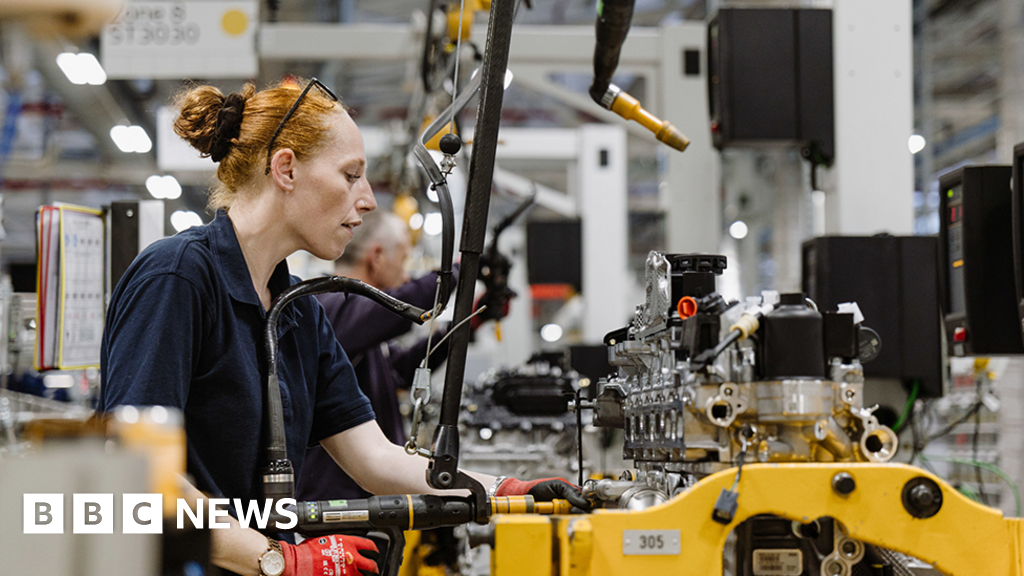
Jaguar Land Rover sees sales recover after cyber attack
-
Uncategorized1 week ago
[CinePlex360] Please moderate: “Trump signals p
-

 Entertainment1 week ago
Joe Jonas shares candid glimpse into parenthood with Sophie Turner
-

 Tech7 days ago
Our Favorite iPad Is $50 Off
-

 Sports7 days ago
UConn Final Four run could trigger a $50M furniture giveaway for Massachusetts-based Jordan’s Furniture
-
 Business1 week ago
Video: Why Is the Labor Market Stuck?
-

 Entertainment7 days ago
Blake Lively reacts to harassment claims dismissal against Justin Baldoni
-

 Politics1 week ago
Iran can sustain Strait of Hormuz closure for years, will cut US military logistics: Official