

Business
8th Pay Commission: NC JCM Seeks OPS Restoration, Revised ToR And Jan 1, 2026 Rollout Date

Last Updated:
NC JCM urges Prime Minister Narendra Modi and Nirmala Sitharaman to amend 8th Pay Commission ToR, restore Old Pension Scheme, and more.

8th Pay Commission: The ToR acts as the foundation document of any pay commission.
8th Pay Commission: As the 8th pay commission has begun working after the notification of Terms of Reference (ToR) last month, the National Council (Staff Side) of the Joint Consultative Machinery (NC JCM) has sought the intervention of the Prime Minister Narendra Modi and Finance Minister Nirmala Sitharaman. The body has urged them to amend major changes to the Terms of Reference (ToR) of the 8the Pay Commission, according to a report of Economic Times.
It has also sought restoration of the Old Pension Scheme (OPS) for central government employees under National Pension System (NPS).
According to ET report, Shiva Gopal Mishra, secretary of NC JCM, in the letter to the PM and FM suggested amendments to the 8th Pay Commission ToR, calling them important to serve the ‘large interest’ of current and retired central government employees.
NC JCM has sought amendments in the matter related to restoration of “expectations of stakeholders” clause that existed in the 7th CPC, removal the phase ““unfunded cost of non-contributory pension schemes”, declaration of January 1, 2026 as the implementation date, and offer 20% interim relief to employees and pensioners.
The body as quoted by ET said that the missing of “expectations of stakeholders” clause sends a discouraging signal.
In the letter, the body has urged to restore the commutation after 11 years with 5% additional pension every five years after retirement and revision coverage for all pensioners.
The body has sought the restoration of the OPS for those who joined government service on or after January 01, 2024. The body said it’s reflect the long-standing demand for financial security after retirement.
Headed by Justice (Retd.) Ranjana Desai, the 8th Pay Commission is expected to submit the recommendations on salaries, basic pay, fitment factor, and all of that to within 18 months. It couldn’t be possible to submit before mid-2027 and then recommendations will be passed through the Cabinet before becoming effective retrospectively from January 01, 2026.

Varun Yadav is a Sub Editor at News18 Business Digital. He writes articles on markets, personal finance, technology, and more. He completed his post-graduation diploma in English Journalism from the Indian Inst…Read More
Varun Yadav is a Sub Editor at News18 Business Digital. He writes articles on markets, personal finance, technology, and more. He completed his post-graduation diploma in English Journalism from the Indian Inst… Read More
November 23, 2025, 14:17 IST
Read More
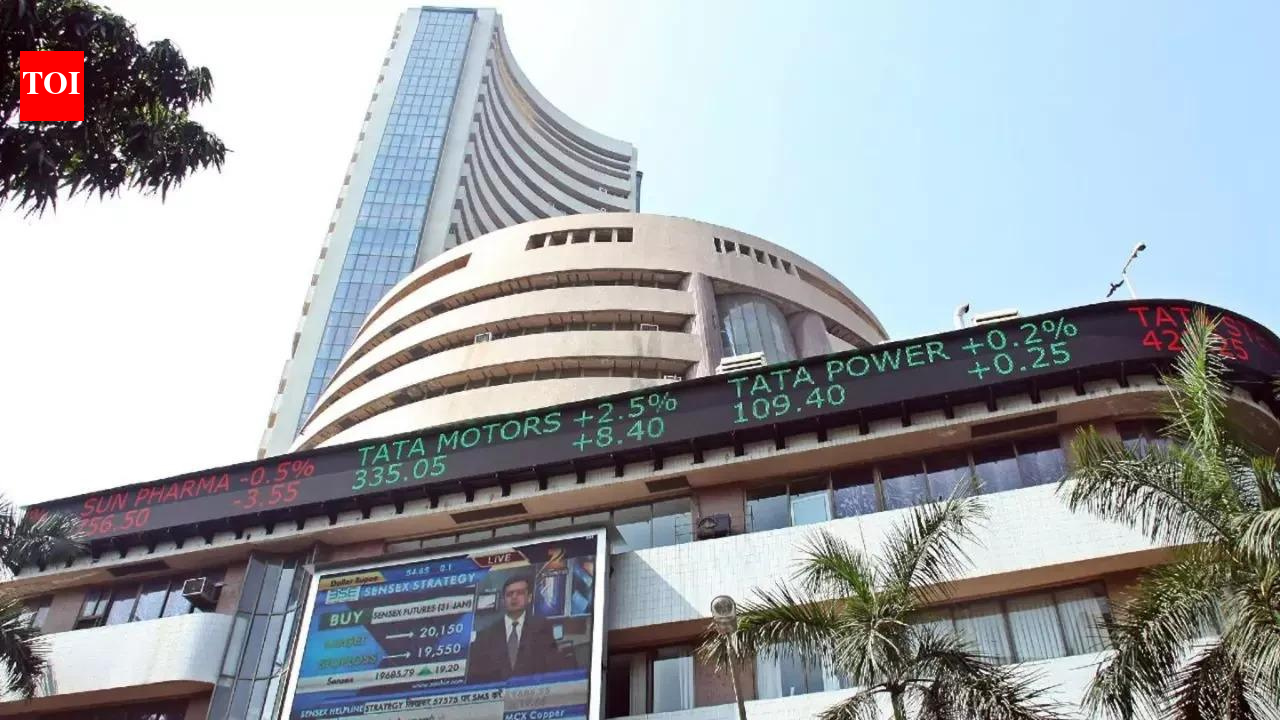
Stock market rallied sharply on Monday, with the Sensex soaring more than 1,000 points and the Nifty reclaiming the 24,000 mark, as easing geopolitical tensions in West Asia and falling crude oil prices boosted investor sentiment globally.The 30-share BSE Sensex jumped 1,073.61 points, or 1.42 per cent, to close at 76,488.96, while the NSE Nifty 50 surged 312.40 points, or 1.32 per cent, to settle at 24,031.70.The rally came after optimism grew around a possible agreement between the United States and Iran, following remarks by US President Donald Trump over the weekend that a deal was “largely negotiated”.
Nifty50 top gainers
| Company Name | Current Price (Rs) | Price Change | % Change |
|---|---|---|---|
| Eicher Motors | 7,414 | 433.00 ↑ | 6.20% ↑ |
| Adani Ent. | 2,850 | 132.00 ↑ | 4.88% ↑ |
| Bajaj Finance | 941.90 | 25.40 ↑ | 2.77% ↑ |
| Tata Motors PV | 373.25 | 9.90 ↑ | 2.73% ↑ |
| L&T | 4,033 | 107.00 ↑ | 2.72% ↑ |
| HDFC Bank | 786.85 | 20.10 ↑ | 2.62% ↑ |
| Eternal | 247.67 | 5.72 ↑ | 2.37% ↑ |
| Bajaj Finserv | 1,807 | 41.40 ↑ | 2.35% ↑ |
| Kotak Bank | 392.85 | 8.71 ↑ | 2.27% ↑ |
| Shriram Finance | 961.95 | 21.00 ↑ | 2.23% ↑ |
Sensex top gainers
| Company Name | Current Price (Rs) | Price Change | % Change |
|---|---|---|---|
| Bajaj Finance | 941.90 | 25.40 ↑ | 2.77% ↑ |
| L&T | 4,033 | 107.00 ↑ | 2.72% ↑ |
| HDFC Bank | 786.85 | 20.10 ↑ | 2.62% ↑ |
| Eternal | 247.67 | 5.72 ↑ | 2.37% ↑ |
| Bajaj Finserv | 1,807 | 41.40 ↑ | 2.35% ↑ |
| Kotak Bank | 392.85 | 8.71 ↑ | 2.27% ↑ |
| ICICI Bank | 1,292 | 27.50 ↑ | 2.18% ↑ |
| SBI | 969.60 | 20.40 ↑ | 2.15% ↑ |
| Axis Bank | 1,311 | 25.80 ↑ | 2.01% ↑ |
| Titan Company | 4,159 | 79.40 ↑ | 1.95% ↑ |
Nifty50 top losers
| Company Name | Current Price (Rs) | Price Change | % Change |
|---|---|---|---|
| Max Healthcare | 1,001 | -22.40 ↓ | -2.19% ↓ |
| ONGC | 284.95 | -5.06 ↓ | -1.75% ↓ |
| Hindalco | 1,100 | -9.61 ↓ | -0.87% ↓ |
| Nestle India | 1,414 | -9.50 ↓ | -0.67% ↓ |
| Bajaj Auto | 10,491 | -58.50 ↓ | -0.56% ↓ |
| Infosys | 1,169 | -6.00 ↓ | -0.52% ↓ |
| TCS | 2,308 | -9.11 ↓ | -0.40% ↓ |
| Tata Consumer | 1,187 | -4.60 ↓ | -0.39% ↓ |
| HUL | 2,197 | -7.10 ↓ | -0.33% ↓ |
| Sun Pharma | 1,841 | -4.00 ↓ | -0.22% ↓ |
Sensex top losers
| Company Name | Current Price (Rs) | Price Change | % Change |
|---|---|---|---|
| Infosys | 1,169 | -6.00 ↓ | -0.52% ↓ |
| TCS | 2,308 | -9.11 ↓ | -0.40% ↓ |
| HUL | 2,197 | -7.10 ↓ | -0.33% ↓ |
| Sun Pharma | 1,841 | -4.00 ↓ | -0.22% ↓ |
| Kwality Wall’s | 26.33 | -0.06 ↓ | -0.19% ↓ |
Oil prices tumble as Iran deal hopes rise
Investor confidence improved as markets increasingly priced in the possibility of a diplomatic breakthrough between Washington and Tehran, which could lead to the reopening of the Strait of Hormuz and ease global energy supply concerns.According to news agency ANI, market expert Ponmudi R said optimism surrounding a potential US-Iran agreement revived risk appetite across global markets.“Investor sentiment improved significantly after Donald Trump stated over the weekend that a deal was ‘largely negotiated’, encouraging markets to increasingly price in the possibility of a near-term diplomatic resolution,” he said.He added that markets would look for the “successful implementation of a lasting peace agreement and the credible reopening of the Strait of Hormuz”.Brent crude prices dropped sharply below the $100 per barrel mark and were trading around $98 per barrel, down more than 5 per cent during the session.The Indian rupee also recovered strongly, gaining 48 paise to trade at Rs 95.21 against the US dollar after recent weakness.
Banking stocks lead market rally
Financial stocks led the gains on Dalal Street. Bajaj Finance, Larsen & Toubro, HDFC Bank, Eternal, Bajaj Finserv and Kotak Mahindra Bank emerged among the top Sensex gainers.Sectorally, Nifty PSU Bank rose 2.73 per cent, while Nifty Private Bank advanced 2.02 per cent, as per ANI. Nifty Auto climbed 1.66 per cent and Realty gained 1.54 per cent.However, FMCG stocks remained under pressure. Infosys, Tata Consultancy Services, Sun Pharma and Hindustan Unilever were among the laggards.
Global markets gain amid improving sentiment
Asian markets also ended higher on Monday amid improving global risk appetite. Japan’s Nikkei 225 surged 2.76 per cent, while Taiwan’s weighted index jumped 3.15 per cent.European markets were trading in positive territory, while US markets had settled higher on Friday.Meanwhile, Foreign Institutional Investors (FIIs) offloaded equities worth Rs 4,440.47 crore on Friday, according to exchange data.
Business
PSX gains over 2,500 points as US-Iran peace hopes fuel bullish rally | The Express Tribune

KSE-100 surges past 170,000 intraday on strong institutional buying, easing geopolitical tensions
KARACHI:
The Pakistan Stock Exchange (PSX) extended strong bullish momentum on Monday as the benchmark KSE-100 Index hovered around 170,423.30 points at 1:24pm, up 2,579.06 points or 1.54% in intraday trade.
During the session, the benchmark index touched an intraday high of 171,519.26 points, while the day’s low was recorded at 170,161.66 points. Market participation remained strong, with traded volume reaching 125.96 million shares and total traded value standing at Rs11.75 billion.
Read: PSX gains 2,248 points in mixed week
Investor sentiment remained upbeat amid reports of a likely peace agreement between the United States and Iran, which boosted confidence across regional markets and improved risk appetite among investors.
Analysts said the rally was driven by aggressive institutional buying and renewed optimism over easing geopolitical tensions following progress in US-Iran negotiations.
The previous close of the KSE-100 index was 167,844.24 points.
Trump said on Saturday that an agreement would include the reopening of the Strait of Hormuz, without giving further details.
Source link


Financial conditions, oil prices concerns for India: RBI Bulletin

US govt formally implements extension of AGOA till 2026 end
Stock market today: Which are top gainers and losers on NSE & BSE on May 25? Check list

-

 Entertainment1 week ago
Where Pete Davidson, Elsie Hewitt stand after breakup: Details revealed
-

 Tech1 week ago
Why Is Your Grill So Dumb? The Best Grills Set Temp Like an Oven
-

 Tech1 week ago
This Solar-Powered Smart Sprinkler Keeps My Lawn Watered Without Any Power Cables
-

 Fashion4 days ago
ICE cotton sees mixed trend as rain forecasts weaken sentiment
-

 Fashion5 days ago
US cotton planting advances to 41%, concerns persist in Texas
-
 Fashion7 days ago
Turkiye’s current account deficit expected to widen in 2026: Minister
-

 Fashion1 week ago
India’s Pearl Global’s FY26 revenue crosses $521 mn milestone
-

 Fashion6 days ago
Nigeria Kwara Garment Factory, KWS Garment Production Village ink pact