Business
8th Pay Commission: Railways Trims Costs To Manage Wage And Pension Burden As Likely Effective Date Nears
Last Updated:
Indian Railways starts cost-cutting ahead of 8th Pay Commission, set for retrospective implementation from January 01, 2026, to manage higher wage and pension expenses.

8th Pay Commission impact: Railways tightens spending before Jan 1, 2026
8th Pay Commission: Even though the 8th Pay Commission is expected to submit its report within 18 months of its formation, the implementation of recommendations will be likely effected retrospectively from January 01, 2026.
With the likely date of implementation nears, Indian Railways has reportedly begun cost-cutting across maintenance, procurement and energy use to avoid a big financial burden in the form of higher wages and pensions to current and ex-employees once the 8th Pay Commission takes effect, according to Times of India report.
After delays, the 8th Pay Central Pay Commission has been finally constituted by the Central government in October this year with the notification of Terms of Reference (ToR) to review the wages and allowances of its staff and pensioners.
The pay panel is constituted every 10 years to review the wages and allowances of its workforce. The 7th Pay Commission’s recommendations were implemented from January 01, 2016, with arrears paid within the 2016-17 financial year.
According to a TOI report, Indian Railways recorded an operating ratio (OR) of 98.90 per cent in 2024–25, leaving a net revenue of Rs 1,341.31 crore.
For 2025–26, the Railways has set a target OR of 98.42 per cent, with net revenue estimated at Rs 3,041.31 crore, highlighting continued pressure on margins despite higher revenues.
As per TOI report quoting officials, the railway will reduce its reliance on borrowing as Indian Railway Finance Corporation (IRFC) annual payments are expected to decline from 2027-28 on the back of recent capital expenditures funding through gross budgetary support (GBS).
8th Pay Commission Implementation Timeline
In the latest update, Minister of State for Finance Pankaj Chaudhary has said the timing and funding of the 8th Pay Commission will be decided later.
“The 8th Central Pay Commission (CPC) has already been constituted. The Terms of Reference (ToR) of the 8th Central Pay Commission have been notified vide Ministry of Finance’ Resolution dated 03.11.2025. The number of Central Government employees is 50.14lakh and the number of pensioners is 69 lakh approximately. The date of implementation of the 8th Central Pay Commission shall be decided by the government. Government will make appropriate provision of funds for implementing the accepted recommendations of 8th CPC,” Chaudhary said in response to a query in the Lok Sabha on December 8, 2025. The question was about whether the government proposes to implement the 8th Pay Commission with effect from January 1, 2026.
He added that the 8th Central Pay Commission will devise the methodology and procedure for formulating its recommendations.
“As specified in the Resolution notified on November 3, 2025, the 8th Central Pay Commission will make its recommendations within 18 months from the date of its constitution,” the MoS Finance added.
December 15, 2025, 13:44 IST
Read More

Business
100% FDI In Insurance Gets Cabinet Approval; Bill Likely In Parliament Next Week: Reports
New Delhi: The Union Cabinet, chaired by Prime Minister Narendra Modi, on Friday approved a proposal to allow 100 per cent foreign direct investment (FDI) in insurance companies in a major economic reform that does away with the 74 per cent limit that was in place for such investments.
The Cabinet approval will pave the way for attracting more foreign investment in the insurance sector, increase competition which in turn will benefit customers.
The Insurance Laws (Amendment) Bill 2025 is likely to be introduced during the ongoing winter session of Parliament which draws to an end on December 19.
The Lok Sabha bulletin lists the Insurance Laws (Amendment) Bill 2025, aimed at boosting insurance penetration, accelerating sectoral growth and development, and improving the ease of doing business, among the 13 legislative items for discussion in the parliamentary session.
Finance Minister Nirmala Sitharaman had, during the presentation of the Union Budget for 2025-26, announced a proposal to increase the foreign investment limit in the insurance industry from 74 per cent to 100 per cent as part of broader financial sector reforms.
The finance ministry has recommended revising several sections of the Insurance Act, 1938. These proposed changes include increasing the FDI limit to 100 per cent, lowering paid-up capital requirements, and creating a composite licence framework.
As part of a wider legislative overhaul, amendments will also be made to the Life Insurance Corporation Act 1956 and the Insurance Regulatory and Development Authority Act 1999, in addition to the Insurance Act 1938.
Changes to the LIC Act are intended to give its board greater authority over operational matters, such as opening new branches and hiring staff.
The overarching purpose of the amendment is to strengthen policyholder protections, bolster financial security, and encourage more participants to enter the insurance market, thereby supporting economic expansion and job creation.
These reforms are expected to improve industry efficiency, simplify business operations, and push insurance penetration forward to achieve the vision of Insurance for All by 2047, according to an official statement.
Business
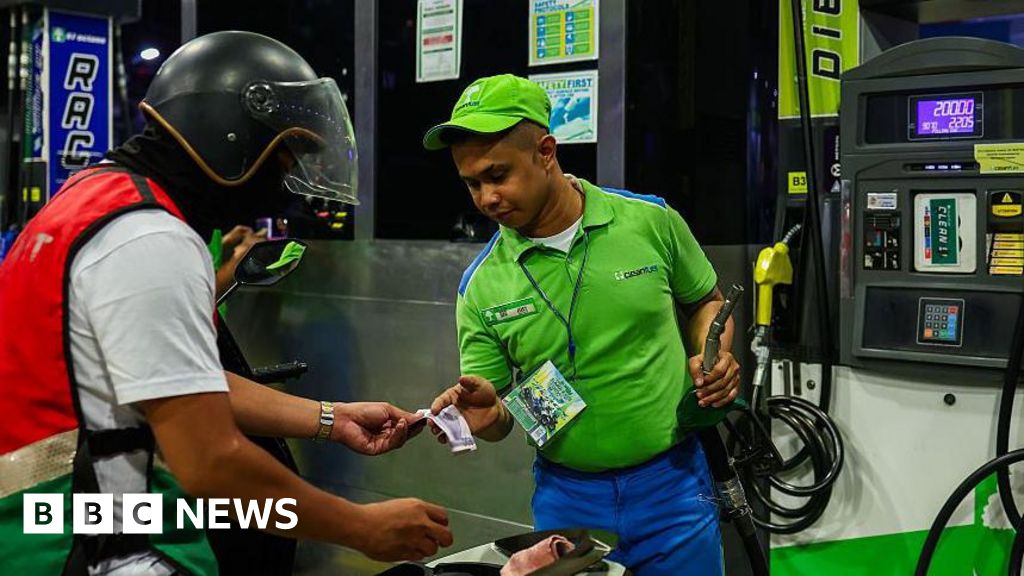
Petrol, Diesel Fresh Prices Announced: Check Rates In Your City On December 15
Last Updated:
Petrol, Diesel Price On December 15: Check City-Wise Rates Across India Including In Delhi, Mumbai and Chennai.
Petrol, Diesel Prices On May Dec 15
Petrol and Diesel Prices on December 15, 2025: OMCs update petrol and diesel prices daily at 6 AM, aligning them with fluctuations in global crude oil prices and currency exchange rates. This daily revision promotes transparency and ensures consumers have access to the most up-to-date and accurate fuel prices.
Petrol Diesel Price Today In India
Check city-wise petrol and diesel prices on December 15:
| City | Petrol (₹/L) | Diesel (₹/L) |
|---|---|---|
| New Delhi | 94.72 | 87.62 |
| Mumbai | 104.21 | 92.15 |
| Kolkata | 103.94 | 90.76 |
| Chennai | 100.75 | 92.34 |
| Ahmedabad | 94.49 | 90.17 |
| Bengaluru | 102.92 | 89.02 |
| Hyderabad | 107.46 | 95.70 |
| Jaipur | 104.72 | 90.21 |
| Lucknow | 94.69 | 87.80 |
| Pune | 104.04 | 90.57 |
| Chandigarh | 94.30 | 82.45 |
| Indore | 106.48 | 91.88 |
| Patna | 105.58 | 93.80 |
| Surat | 95.00 | 89.00 |
| Nashik | 95.50 | 89.50 |
Key Factors Behind Petrol and Diesel Rates
Petrol and diesel prices in India have remained unchanged since May 2022, following tax reductions by the central and several state governments.
Oil Marketing Companies (OMCs) update fuel prices daily at 6 am, adjusting for fluctuations in global crude oil markets. While these rates are technically market-linked, they are also influenced by regulatory measures such as excise duties, base pricing frameworks, and informal price caps.
Key Factors Influencing Fuel Prices in India
-
Crude Oil Prices: Global crude oil prices are a primary driver of fuel prices, as crude is the main input in petrol and diesel production.
-
Exchange Rate: Since India relies heavily on crude oil imports, the value of the Indian rupee against the US dollar significantly affects fuel costs. A weaker rupee typically translates to higher prices.
-
Taxes: Central and state-level taxes constitute a major portion of retail fuel prices. Tax rates vary across states, leading to regional price differences.
-
Refining Costs: The cost of processing crude oil into usable fuel impacts retail prices. These costs can fluctuate depending on crude quality and refinery efficiency.
-
Demand-Supply Dynamics: Market demand also influences fuel pricing. Higher demand can push prices up as supply adjusts to consumption trends.
How to Check Petrol and Diesel Prices via SMS
You can easily check the latest petrol and diesel prices in your city through SMS. For Indian Oil customers, text the city code followed by “RSP” to 9224992249. BPCL customers can send “RSP” to 9223112222, and HPCL customers can text “HP Price” to 9222201122 to receive the current fuel prices.
December 15, 2025, 07:28 IST
Read More
Business
Spain’s commitment to renewable energy may be in doubt
Guy HedgecoeAragón, north-eastern Spain
Juan Antonio DomínguezOn the edge of the sleepy town of Figueruelas, a single, vast wind turbine spins around, casting its shadow over the buildings nearby.
It’s a reminder of the importance of renewable electricity in this windswept area of Aragón, in north-eastern Spain, whose plains are host to many of the country’s wind and solar energy farms.
Figueruela’s status as a symbol of Spain’s green transition has been further boosted recently, as work starts nearby on the construction of a vast factory that will produce batteries for electric vehicles.
Chinese firm CATL and the Netherlands-based Stellantis are investing a combined €4bn ($4.7bn; £3.5bn) in the facility. Yao Jing, China’s ambassador in Spain, described it as “one of the biggest Chinese investments Europe has ever seen”.
Luis Bertol Moreno, mayor of the town, says the area was a logical choice for the project.
“We’re in Aragón, where there’s wind all year round, there are lots of hours of sunshine, and we are surrounded by wind turbines and solar panels,” he says.
“Those [energy sources] will be crucial in generating electricity for the new factory, and I understand that was the key reason for building it here in Figueruelas.”

The factory can be seen as vindication of Spain’s energy model, which prioritises renewable sources. In 2017, renewables contributed just a third of Spain’s electricity production, but last year they represented 57%.
By 2030, the government wants them to contribute 81% of electricity output.
Earlier this year, Prime Minister Pedro Sánchez summarised his government’s approach as he delivered a riposte to US President Donald Trump’s pro-fossil fuel “Dig, baby, dig” slogan. “Green, baby, green,” said the Socialist, as he pointed to the benefits of renewable energy.
However, in recent months, Spain’s all-in commitment to renewables has come under scrutiny. This was in great part due to an 28 April blackout that left homes, businesses, government buildings, public transport, schools and universities in the dark across Spain and neighbouring Portugal for several hours.
With the government unable to offer a full explanation for the outage, the country’s energy mix became a fiercely-debated political issue. Alberto Núñez Feijóo, leader of the conservative opposition, accused the government of “fanaticism” in pursuing its green agenda, suggesting that an over-reliance on renewables might have caused the incident.
Feijóo and others on the right advocated a rethink of the national energy model.
The fact that, a week before the blackout, solar generation in mainland Spain registered a record 61.5% of the electricity mix has fuelled such claims.
Yet the government and national grid operator Red Eléctrica have both denied that the outage was linked to the preponderance of renewable energy sources in Spain.
“We have operated the system with higher renewable rates [previously] with no effect on the security of the system,” says Concha Sánchez, head of operations for Red Eléctrica. “Definitely it’s not a question of the rate of renewables at that moment.”
Ms Sánchez said the blackout was caused by a combination of issues, including an “unknown event” in the system moments before, which saw anomalous voltage oscillations.
However, Red Eléctrica and the government are still awaiting reports on the incident that they hope will determine the exact cause. A cyber-attack has repeatedly been ruled out.
Meanwhile, since April, Spain’s electricity mix has been modified somewhat, with greater reliance on natural gas, reinforcing the notion that the country is at an energy crossroads.
AFP via Getty ImagesSpain’s nuclear industry, which currently contributes around 20% of national electricity, has been particularly vocal since the blackout, pushing back against government plans to close the country’s five nuclear plants between 2027 and 2035.
With many European countries undergoing a nuclear renaissance, the planned closures make Spain something of an outlier. The companies that own the Almaraz plant in south-western Spain, due to be the first to shut down, have requested a three-year extension to its life until 2030. That request is currently under consideration.
Ignacio Araluce, president of Foro Nuclear, an association that represents the industry, says Spain is the only country in the world that is scheduling the closure of nuclear plants that are in operation. He believes nuclear energy provides stability while being compatible with the green energy transition.
“It’s prudent to have a mix of renewables and nuclear energy,” he says.
Mr Araluce praises renewable sources because they only require natural elements to generate electricity, but points out that they are not able to operate around the clock or when weather is unfavourable.
“How can you produce energy in those hours when the renewables are not producing?” he asks. The answer, he added, is “with a source like nuclear, that is not producing CO2, that is producing all hours of the year”.
The political opposition is staunchly opposed to the nuclear shut-down. The far-right Vox, criticising what it saw as a lack of explanation by the government for the April blackout, recently described nuclear power as “a crucial source of stability”.
AFP via Getty ImagesMs Sánchez acknowledges that there is room for improvement for Spain’s electricity model, pointing to the Iberian peninsula’s relative isolation from the European grid compared to most of its EU neighbours. She also sees storage as an issue.
“While we have taken a good path when it comes to renewable installation, we cannot say the same regarding storage,” she says. “We need to foster storage installation.”
Spain’s political panorama adds an element of uncertainty to its energy future. The Socialist-led coalition has been mired in corruption scandals and its parliamentary majority appears to have collapsed in recent weeks, raising the possibility of a snap election in the coming months.
A right-wing government, which polls suggest would be the likely outcome, would almost certainly place less emphasis on renewables and advocate a partial return to more traditional energy sources.
But in the meantime, Spain’s renewable transition continues.
And for Figueruelas, in Aragón, that means not just cheap, clean energy, but investment. The town’s population, of just 1,000, is due to increase dramatically, with 2,000 Chinese workers scheduled to arrive to help build the new battery plant, which is expected to create up to 35,000 indirect jobs once it starts operating.
“These kinds of investments revitalise the area, they revitalise the construction sector, hostelry,” says local man Manuel Martín. “And the energy is free – it just depends on the sun and the wind.”
-
Politics1 week agoThailand launches air strikes against Cambodian military: army
-
Fashion1 week agoGermany’s LuxExperience appoints Francis Belin as new CEO of Mytheresa
-
Politics1 week agoZelenskiy says Ukraine’s peace talks with US constructive but not easy
-
Politics1 week ago17 found dead in migrant vessel off Crete: coastguard
-
Politics4 days agoTrump launches gold card programme for expedited visas with a $1m price tag
-
Tech6 days agoJennifer Lewis ScD ’91: “Can we make tissues that are made from you, for you?”
-
Business5 days agoRivian turns to AI, autonomy to woo investors as EV sales stall
-
Entertainment1 week agoToo big to fail? IndiGo crisis exposes risks in Indian aviation